Questions we've had about native plants
1. Is it true you can only plant natives in fall? In most areas of California you can plant all year. A native plant is no different than a non-native plant in limited planting schedules. You can't plant through five feet of snow in the Sierras, nor is it a good idea to plant in Barstow in July (we've done both with little problems, but it's nicer to plant in January in Barstow and May in the Sierras). See 'when to plant' for more information.
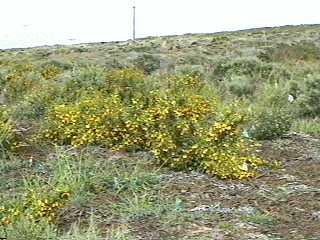
2."How do I make a grassland?" Grasslands exist only where the soils have high Boron (>2ppm), high Sodium (>300ppm), are seasonally flooded, or are very shallow (less than a foot). If your garden doesn't have one or more of these problems it will make a very poor grassland, but a great weed patch! The labor to make the area a grassland is about one man- hour per square meter per month from December to June. If your yard is 20 feet by 50 feet that comes out to about 700 man hours per year. Herbicides are of limited use because the wildflowers and forbs like Sisyrinchium bellum, Sidalcea spp and Lupinus spp. make up least 50% of the plants present and it is difficult not to kill them along with the weeds. Also see the grassland community page.
3."Can I get a replacement? The squirrels, deer, neighbor dog, 2 year old or other 'wild' animal ate my plant. "
(We usually will give a replacement plant if the plant promptly disappeared, but you will be quizzed.)
If you have a two year old have him/her help you plant the plant
and become part of the garden effort. If you have a puppy that has
eaten every shoe and piece of furniture in the house, either wait a
year to plant, or cage the plant. If the place you're planting has a
squirrel/gopher hole every three inches, kill or trap the rodents out
before you plant. Rodents don't usually bother natives, but if your
plant is the only living thing for hundreds of feet it will be
'sampled'. For dealing with deer see the deer page.
Occasionally we get someone who just tries to scam the system, but
it's surprisingly low.
4. "Should I amend the planting hole or add mycorrhizal inoculum to the soil?
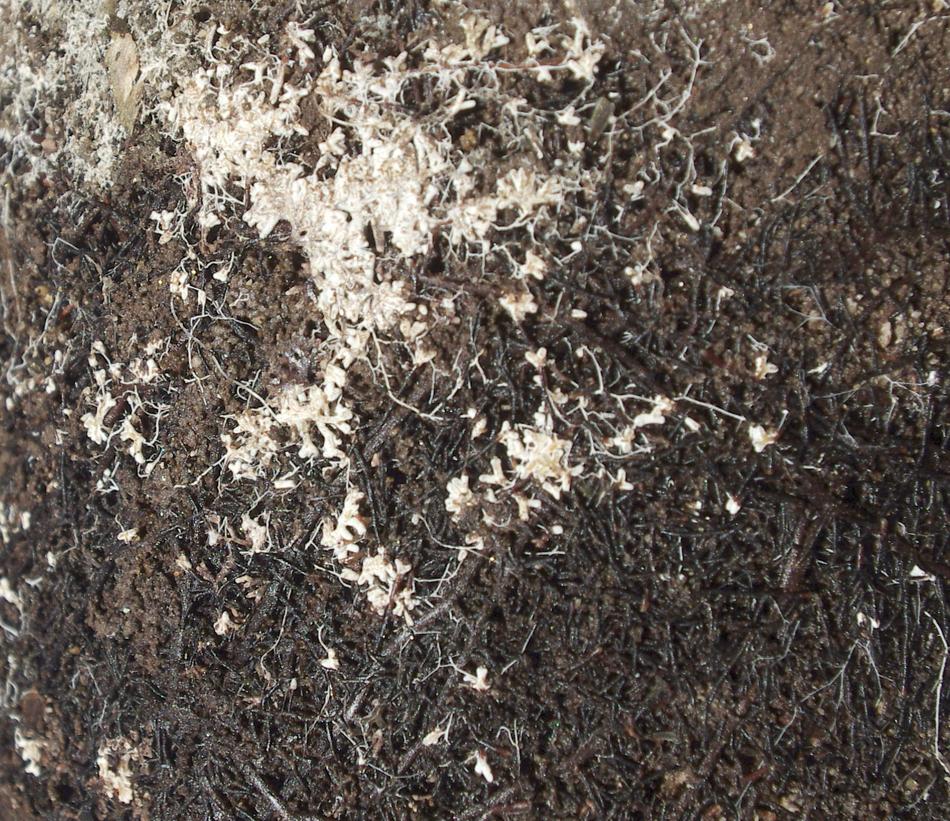
DO NOT AMEND the soil. If you don't know what mycorrhiza is, don't worry about it. If you do, don't buy this 'snake oil'. Save your money. Mycorrhiza is already in your soil or the soil on the plant you're planting. Mycorrhiza inoculum is great for strawberry fields, acid mine tailings and other sterile sites, not for a native system or your yard. If you design and plant your garden or restoration right, the mycorrhiza will be there.
5. "What
kind of mulch should I use?"
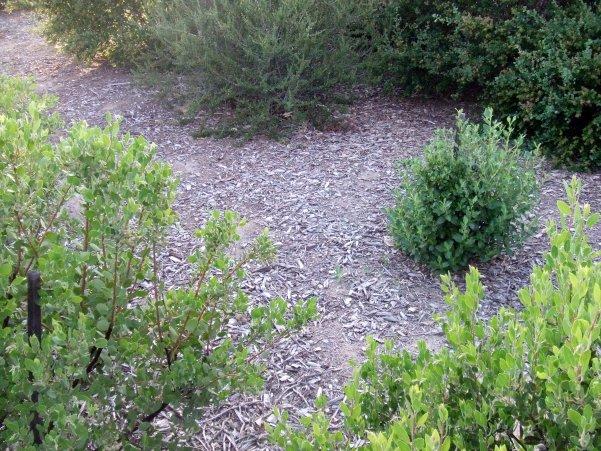
Most plants thrive with shredded redwood bark, oak leaves and twigs or
any debris that fell off your plant, or tree chippings. Desert plants
don't want mulch but a few rocks seem to help them out. Bad mulches for
natives include: grass clippings, straw, manure, gravel, black plastic
sheets or other synthetic mulches (these things literally cook the
soil. really bad!!!), compost, Eucalyptus or walnut chippings, bark
nuggets, newspaper, this list goes on endlessly. We are amazed at what
people come up with. Just remember, mulch should retain soil moisture,
suppress weeds, add nutrition to the soil as they break down, provide
habitat for good soil organisms, prevent soil erosion on new plantings
or slopes. See the planting guide for more
details.
6. "Should I wash the roots off with soapy water?"
My goodness, NO! (This response has been heavily edited to protect any
sensitive ears) This question is extremely weird to us, but we keep
getting asked it. (Do not be surprised if we look for an antenna
growing out of your left ear if you ask it!) There's a microecosystem
on each root ball that we work very hard to make happy so the plant can
live in your garden for decades. Ripping the soil up and working to
remove that system usually kills the plant, or at least stunts it. Most
natives don't want their root disturbed.
7. "How do you or I know what plant community my garden is
supposed to be in?"
We've tried to develop a model of California before the first trappers
showed up and track where the plant communities
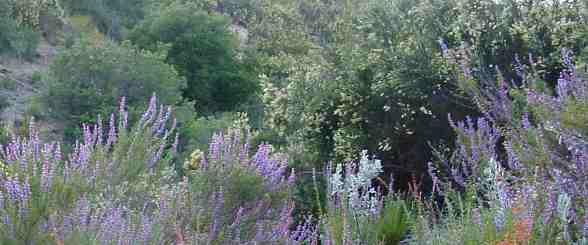
were. We have given you access to that information on the zip codes page and on mynativeplants.com
8. "How should I water?" Do not use drip irrigation. Water with a hose or overhead sprinkler for at least the first watering. The first watering is generally 50% of the water for the life of the plant. Second watering is 25%, third 12% and so on. Water about 30-50 gallons/plant with the first watering if you're planting spring, summer or fall. In normal winters watering is much more optional and varies by year and location. See the watering page.
9. "What does "Las Pilitas" mean? The best answer we've heard is a variation of the 'water hole' or 'water trough'. The Las Pilitas Creek has has some areas where it runs over solid rock and makes these clean little puddles of water.
11. "What can I plant under my oak tree?" Plant things that don't need water and like deep leaf litter! Watering puts a lot of stress on your oak tree and may eventually kill it. And all those leaves are very important for your oak tree. See how to take care of your mature (elderly, over the hill) oak tree. Some common plants that occur under coast live oaks naturally are, Ribes sanguineum var. glutinosum, R. malvaceum, R. indecorum, R.viburnifolium, Rhamnus californica, Salvia spathacea, Lonicera hispidula, Holodiscus discolor, Keckiella breviflora, Satureja douglasii, Symphoricarpos mollis, Stachys ajugoides and Solanum xanti. If the shade is light some of the medium -sized Ceanothus and Arctostaphylos work well along with the Diplacus species. For more shade plants, see the shade garden page just remember to use the ones that don't need water.
12. "How did you get started and what are your qualifications?" Celeste has a M.S. in Biological Sciences, Bert has a B.S. in Chemistry with two years graduate work in Chemistry and was a California licensed Landscape Contractor for 35 years doing Native Landscapes. Penny has a B.S. in Biological Sciences. Ian has a degree in Math. We started the nursery 40 years ago when we were still in college.
Regina Dugan, “If you don't already have a nerd in your life, you should get one.”