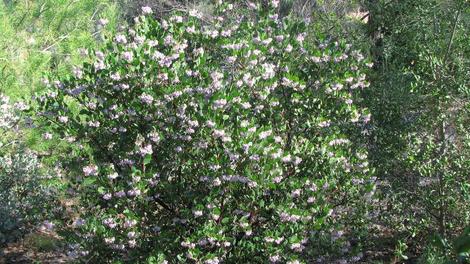
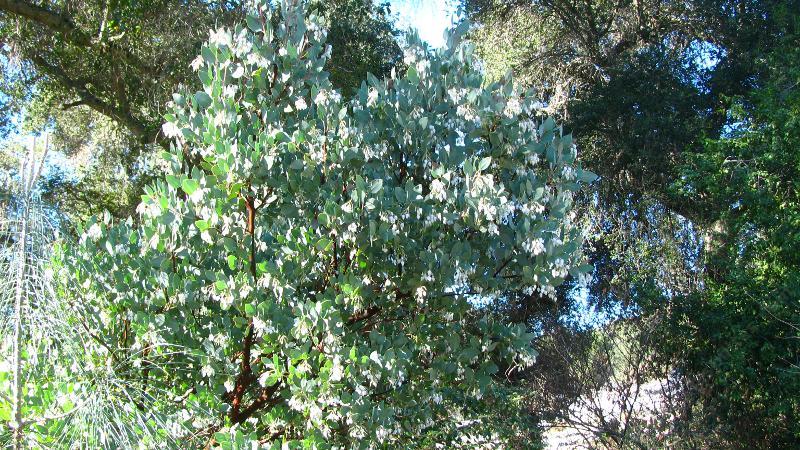
Manzanita is the
common name for the genus
Arctostaphylos. There are more than forty species of Arctostaphylos in
California not to mention all the subspecies and hybrids. Species grow
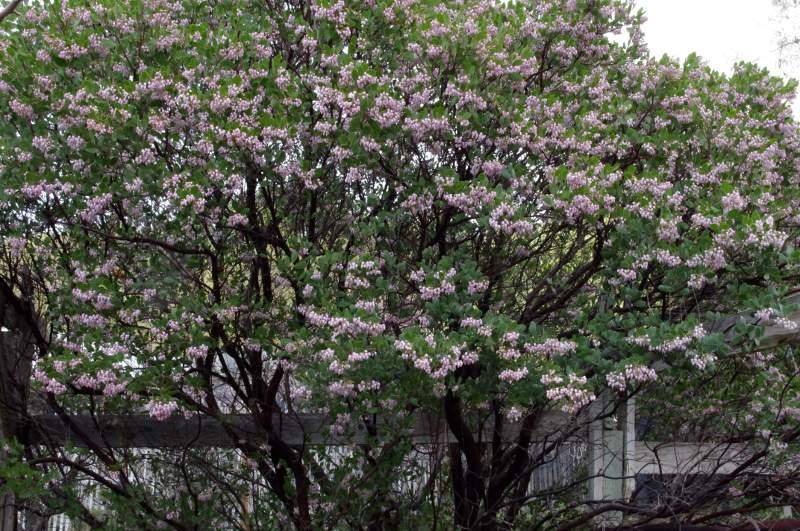
from two inches (some of the coastal species) to twenty feet (many
interior species). Manzanitas are popular for their shiny red or
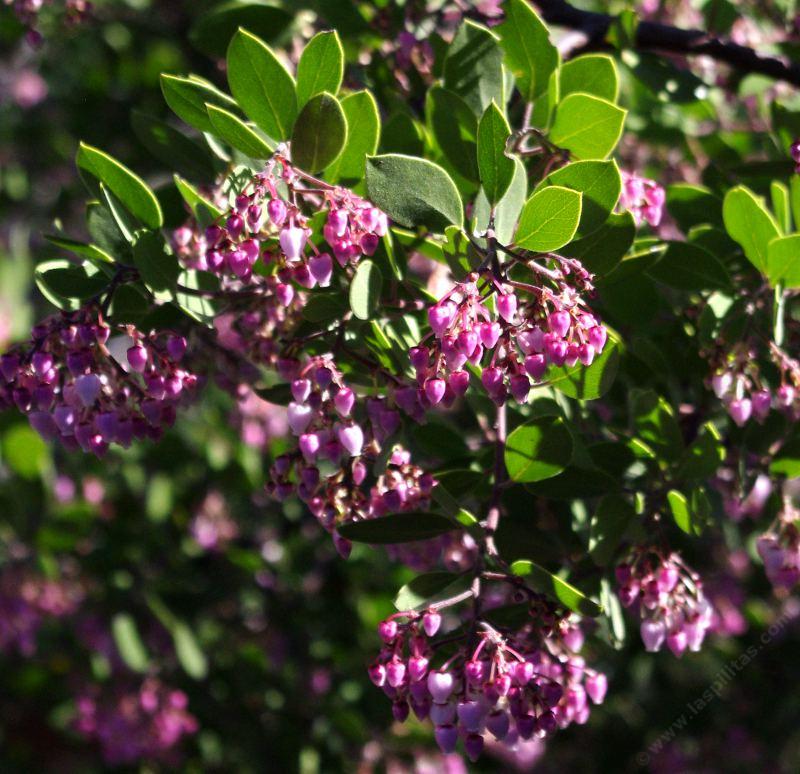
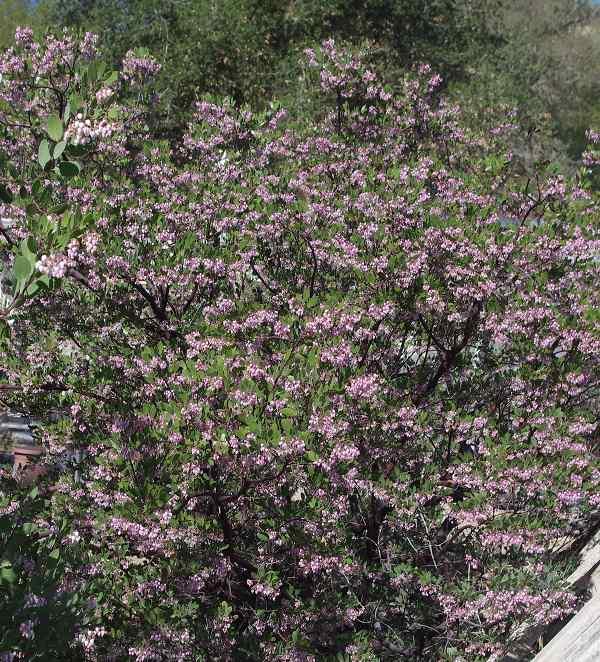
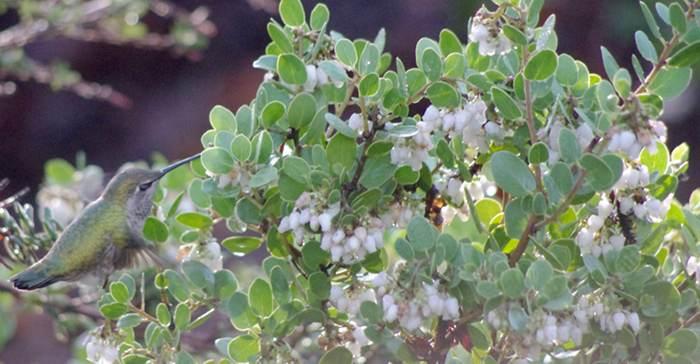
mahogany colored bark. Manzanitas have urn-shaped flowers that vary
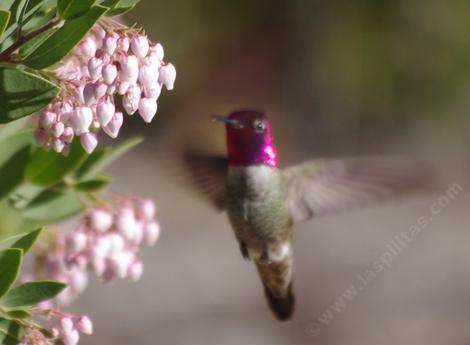
from pink to white and are popular with hummingbirds. They are very
drought tolerant and evergreen, always looking green and healthy even
in the hottest, driest part of the summer. Manzanita (Arctostaphylos
spp) is of the family Ericaceae. Plants in this
family are
highly mycorrhizal
(associated with symbiotic fungi). This allows them to survive in many
harsh environments, however it also makes them very susceptible to over
watering and fertilizing. They really do no like to be watered or
fertilized. If grown correctly these plants, especially the larger
forms, will grow for more than 100 years.
Manzanitas are
easy in most of California and missing from most landscapes. The only
problem areas are the desert areas(use Arctostaphylos
pungens or Arctostaphylos
glauca) and the areas of beach sand or adobe clay.
The sandy
areas need to use the sand lovers, the clay areas the clay lovers.
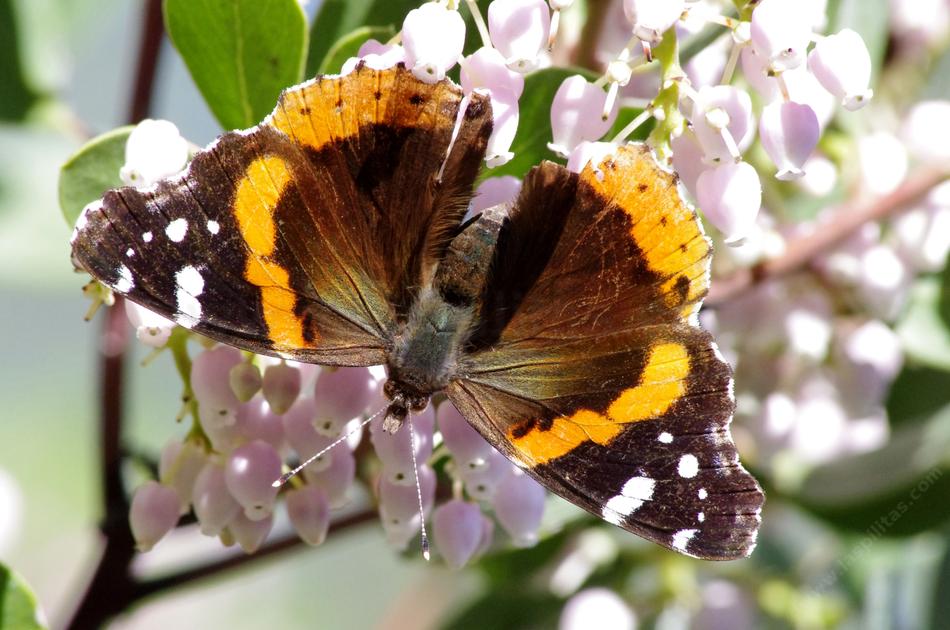
Manzanitas are great wildlife plants. Providing nectar for butterflies,
hummingbirds
and native insects (they're cool!). Many of the manzanitas regulate their nector to attract different insects, butterflies and hummingbirds during the day. See Arctostaphylos otayensis, Otay Manzanita for more.
Use manzanitas to replace plants like Rhaphiolepis (Arctostaphylos
'Howard McMinn'), Privet (Arctostaphylos
'Mama Bear'), Honeysuckle as a ground cover and
Lantana (Arctostaphylos
franciscana), Ivy, (Arctostaphylos
'Wayside' ) Escallonia, (Arctostaphylos
'Howard McMinn' or 'Seninel'
), Abelia (Arctostaphylos
'Sonoma') to name a few.
Mix with Ceanothus
and monkey
flowers
for more color!
1. 'Austin
Griffith'
ManzanitaAustin Griffith's is a hybrid between Arctostaphylos densiflora 'Sentinel' and Arctostaphylos manzanita 'Dr. Hurd'. It grows to 10 ft or so tall and 6 feet wide. In our garden it has been easily held to 6 ft. tall and 4 ft. wide. It prefers a sandy soil but will tolerate clay. The bark is dark brownish red. It has red stems and large flower clusters of small pink flowers with the foliage a glossy green. Our plant has a somewhat weeping twisted habit. The hummingbirds love it. Video clip of Hummingbird defending an Austin Griffin.
2. 'Baby Bear'
Manzanita, Arctostaphylos
X Densiflora stanfordiana or baker ( Named for the
greenhouse it came
up in. One of the three little bears. I don't know where Goldilocks is.)
'Baby Bear' manzanita grows to
about six feet
high and between six and eight feet wide. It has burgundy colored bark
and is more red near the extremities. It has very pink flowers and is
popular with the hummingbirds. 'Baby bear' manzanita is a hybrid
between Arctostaphylos stanfordiana bakeri 'Louis Edmunds'
(now Arctostaphylos bakeri ssp. bakeri) and Arctostaphylos
densiflora ‘Sentinel'. As almost always, the naturally
occurring hybrids can be very blossomy and stable.
3. 'Emerald
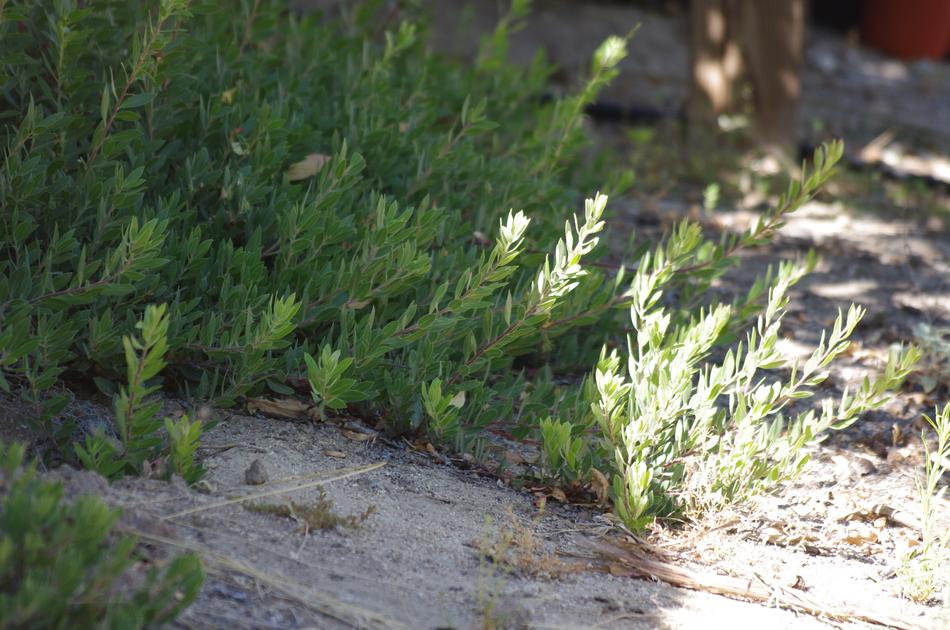
Carpet' Manzanita, Arctostaphylos X uva-ursi
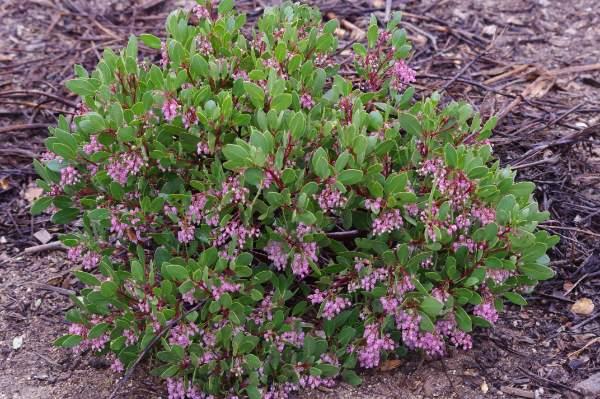
Emerald carpet is a hybrid between Arctostaphylos uva-ursi and Arctostaphylos nummularia. This manzanita needs a rich, well-drained soil to look green, in infertile soils it will look yellow.
Greensphere
manzanita is an
evergreen shrub that grows very slowly to five feet with dark green
foliage and a rounded form. It is a hybrid between Arctostaphylos
nummularia and Arctostaphylos uva-ursi. It has red shiny
bark. It
is fairly easy to grow, just slow. It should be hardy to at least -10,
maybe -20 deg F.


Ian Bush is a seedling of Arctostaphylos densiflora, and is a probable hybrid with the other parent being Arctostaphylos pungens. It grows to about five feet. This manzanita has smooth red bark. For such a small manzanita it is incredibly fast!

This manzanita was
named for John Dourley at Rancho
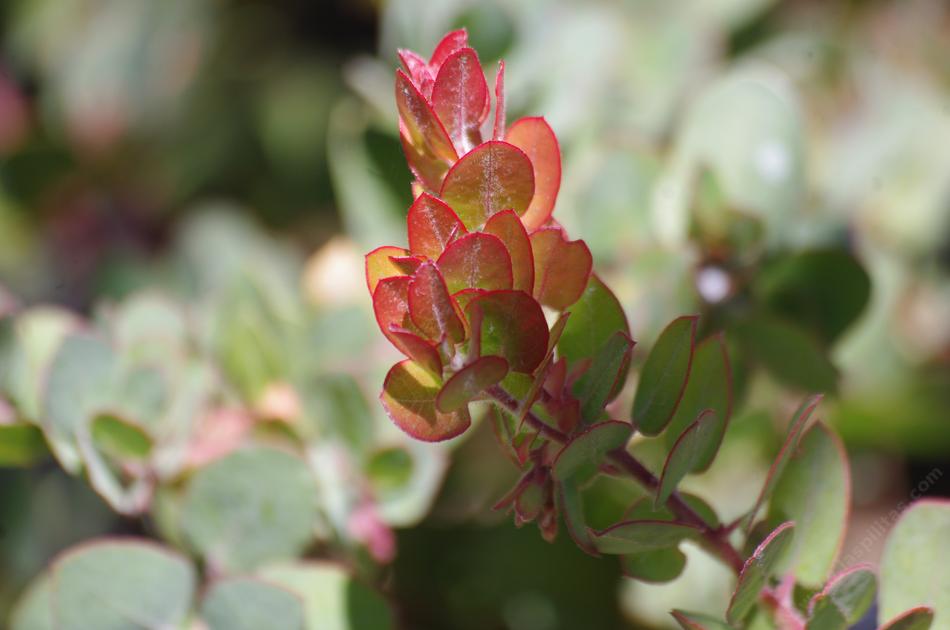
Santa Ana by Mike Evans at Tree of Life Nursery. The new growth is
reddish bronze. It grows from 5-7 wide and 2-3 feet high. I'd guess
this cultivar likes regular water and garden conditions, something it
doesn't get here.
7. 'La
Panza' Manzanita, Arctostaphylos X silvicola
La Panza manzanita is a hybrid of Arctostaphylos silvicola and Standforiana Bakerii. The foliage starts out a velvety gray and becomes a smooth celan gray with age. It grows to about eight feet tall.


'Mama Bear' has wonderful pinkish white flowers the hummingbirds like. The burgundy trunk and grey-green foliage make the six to eight feet tall by three to five feet wide manzanita standout. 'Mama Bear' is a hybrid between Arctostaphylos stanfordiana bakeri 'Louis Edmunds'(now Arctostaphylos bakeri ssp. bakeri) and Arctostaphylos densiflora 'Sentinel'. In the wild Arctostaphylos densiflora forms miles of hybrids with Arctostaphylos stanfordiana and Arctostaphylos manzanita. As almost always, the naturally occurring hybrids can be very blossomy and stable.

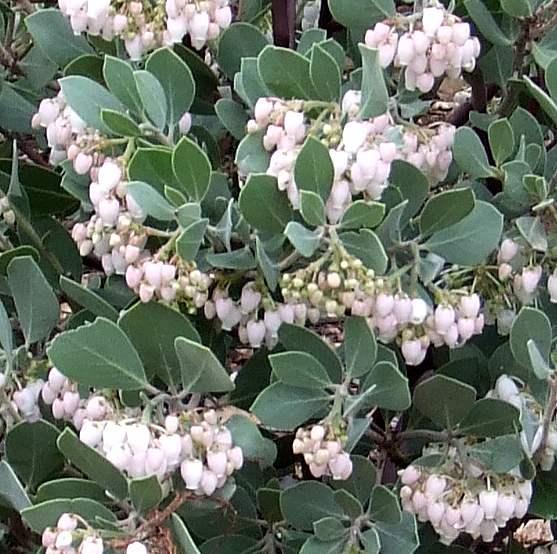
'Margarita Pearl' is a seedling of Arctostaphylos glauca that has very large flowers and berries. We're not sure if it is all Big Berry manzanita (glauca) or a hybrid between glauca and wellsii, it looks like a super glauca. Flowers are large and pure white. The foliage is a bright gray on new growth and dull gray on old growth. It grows to about 8 feet.
10. 'Pacific
Mist'
Manzanita, Arctostaphylos X 
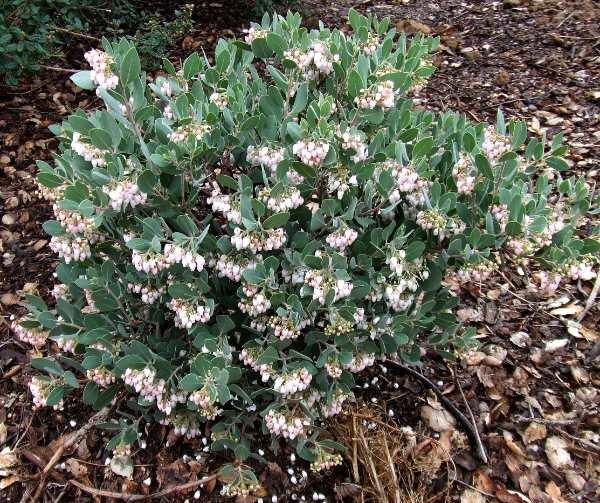
'Pacific Mist' Manzanita is a low growing gray manzanita that grows to about three feet. It does not tolerate the dry heat of the interior. It prefers coastal environments.

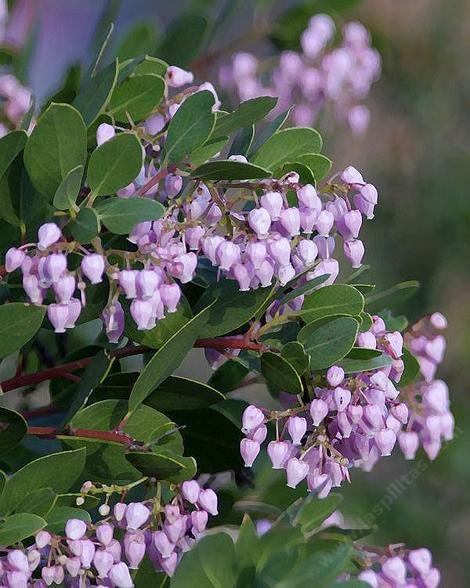
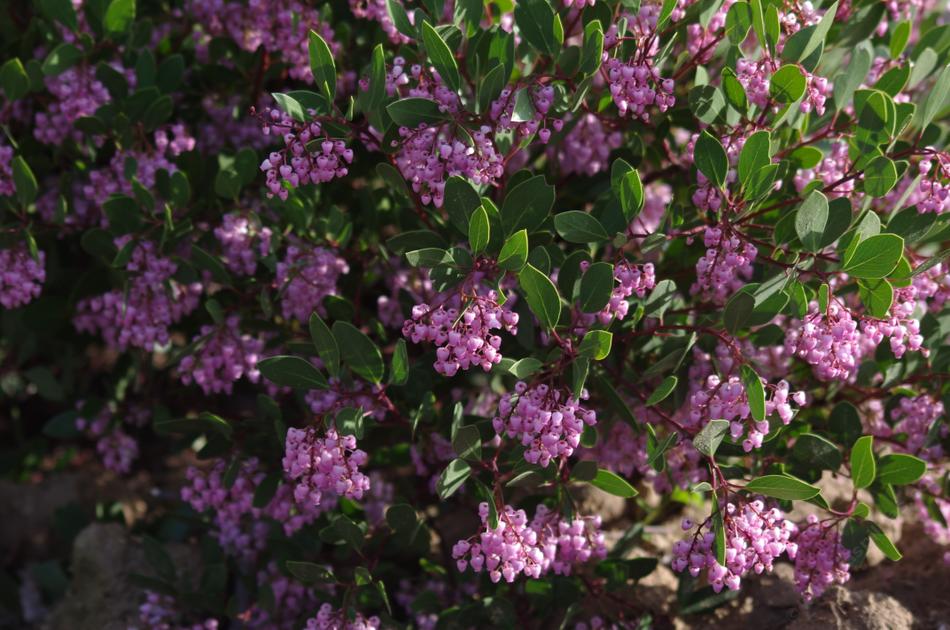
'Sonoma' manzanita has large pink flowers. The foliage is neat, green and glossy. The bark is deep red and clean. The plant keys to Arctostaphylos stanfordiana, but the plant has something else in it and appears hybrid. The other parent could be Arctostaphylos densiflora or Arctostaphylos manzanita. They all occur next to each other in the wild, and all hybridize with each other.
‘Sunset' Manzanita
is a sprawling, evergreen
shrub, three feet high and six feet wide. This hybrid is a cross of Arctostaphylos
hookeri and Arctostaphylos pajaroensis.
It has dark red
bark, white flowers, and bright bronzy red new growth. It is very
drought tolerant.