

How to create a Hummingbird Garden in California
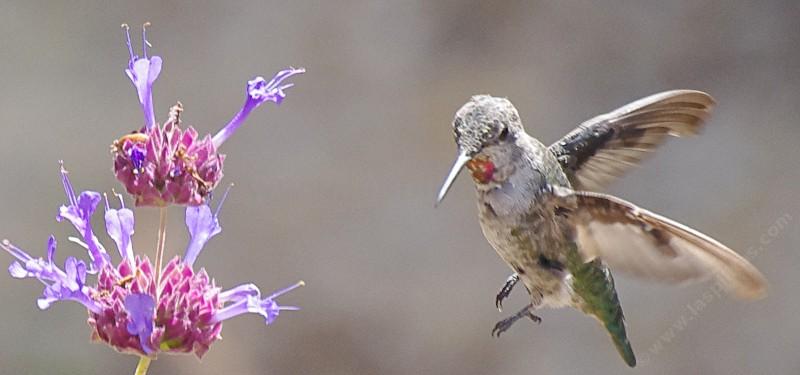
I wish I had a work force of hummingbirds to work in the nursery. They could haul pots, collect seeds, take cuttings, weed, answer the phone, deliver plants, protect the place from deer, chipmunks, and squirrels, all at the same time. The humming fights (bird brawls) might be a problem, though. Since hummingbirds have to eat twice their body weight in nectar and insects each day, they’re protective of their good food sources in the garden and will fight aggressively to defend them. Hummingbirds do tend to try the red flowers first but their sugar content is what they really are looking for regardless of color.
"Hummingbirds are capable of exerting strong selection on the nectar rewards of flowers" (Schemke and Bradshaw, PNAS, Oct. 12,1999, vol. 96, n21 11919-11915) The general tendency to frequent red flowers is not because hummingbirds like red flowers, but because bees avoid red flowers and the lack of bees means that there is usually better nectar quantity and quality in red flowers.
These
species of hummingbirds have been found in California.
Broad-billed
hummingbird, Cynanthus
latirostris
Xantus's
hummingbird, Hylocharis
xantusii
Violet-crowned
hummingbird, Amazilia
violiceps
Blue-throated
hummingbird, Lampornis
clemenciae
Ruby-throated
hummingbird, Archilochus
colubris
Black-chinned
Hummingbird
-
Archilochus alexandri
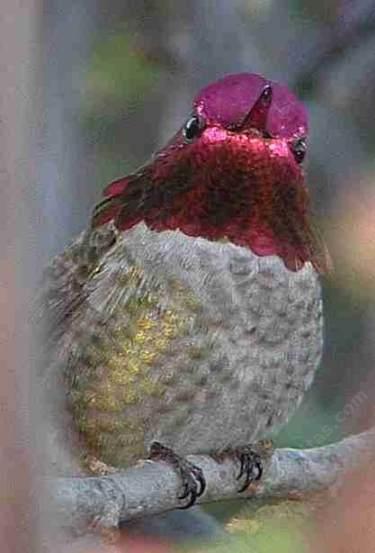
Anna's
hummingbird, Calypte anna
The
following are species of concern and have been negatively
impacted by the introduction of weeds and destruction of
California’s habitat, primarily the coastal sage scrub
plant community.
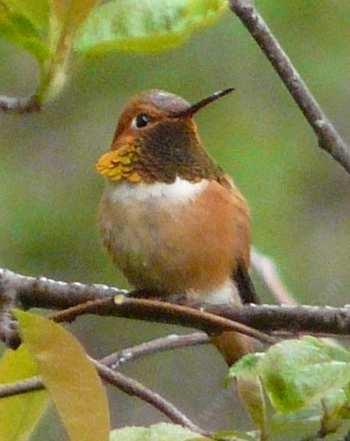
Allen's
hummingbird, Selasphorus
sasin (SC)
Costa's
hummingbird, Calypte costae (SC)
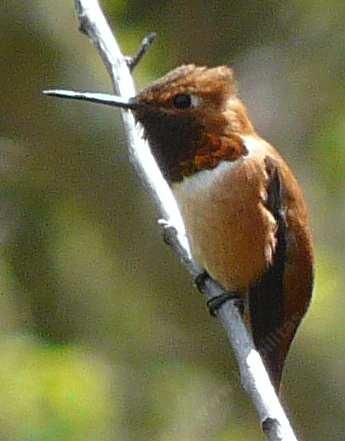
Rufous
hummingbird, Selasphorus rufus
(SC)
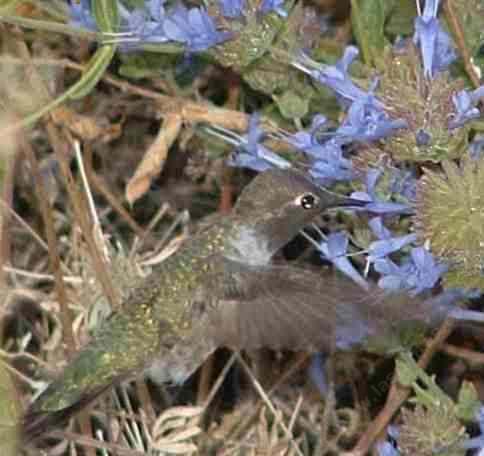
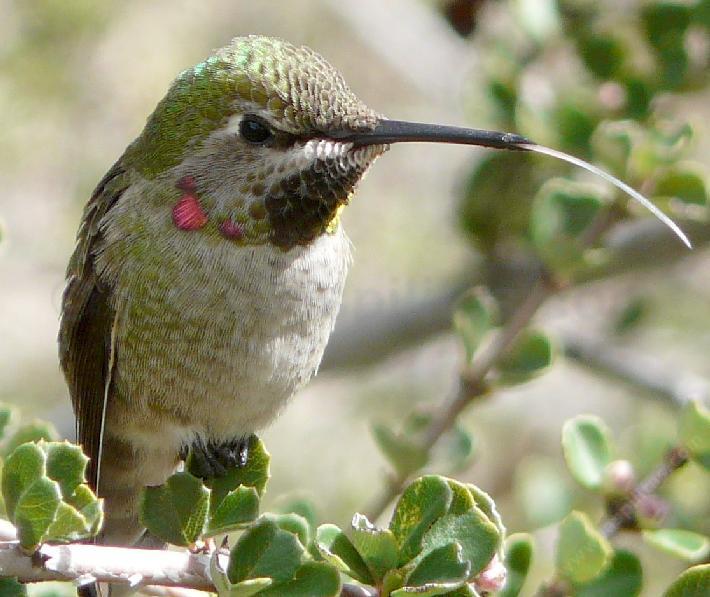
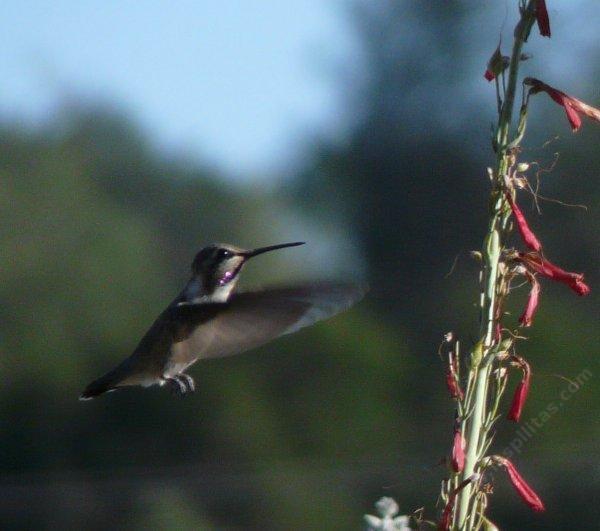
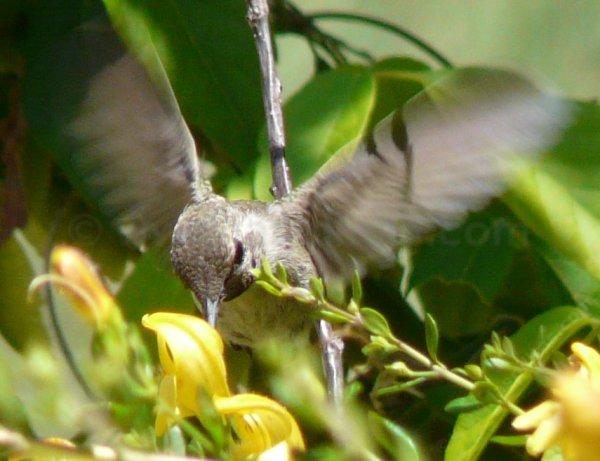
They can live for 8 years. They can fly at 40 miles per hour for 500 miles and dive bomb you at 60 miles per hour building up air for a loud CHIRP next to your ear (Typical Anna's Hummingbird). One pulled my hair (that's rather difficult because of the lack there of) as I pruned a manzanita. Another hummingbird chest butted me at 30 mph. Weird to have one of these little guys get so mad (insane?) as to bounce off of your forehead (although he could just be a bad flier). Now don't get dressed in helmet and safety glasses to walk near a Zauschneria. These little birds are small and usually do not do things that will hurt themselves, or you. But they can ming the hum out of you.

Since nectar production is about 2-4 mg per flower (Lange, R. S. and P. E. Scott. 1999. Hummingbird and bee pollination of Penstemon pseudospectabilis. Journal of the Torrey Botanical Society 126: 99-106.) they need to consume 50g/day,(http://www.env.gov.bc.ca/wat/wq/refer ence/foodandwater.html#references) or visit between 1000 and 2000 flowers every day. They drink from each flower 2-3 times per day. So your yard needs between 400 and 1000 flowers to support one bird. That sounds ridiculous, but the nursery is supporting at least 20 birds in spring and summer, and 5-10 in winter (bad winters there are a few very cold birds out there, hustling coal.)
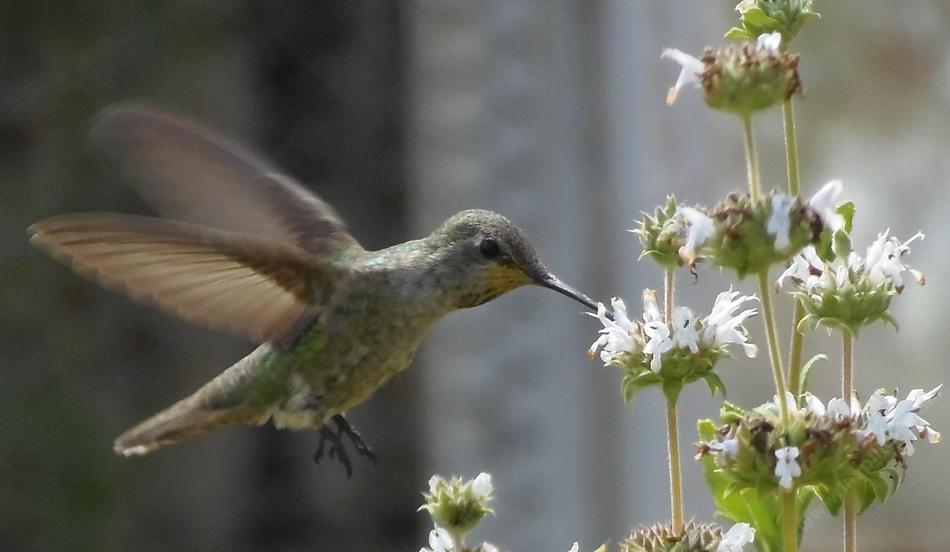
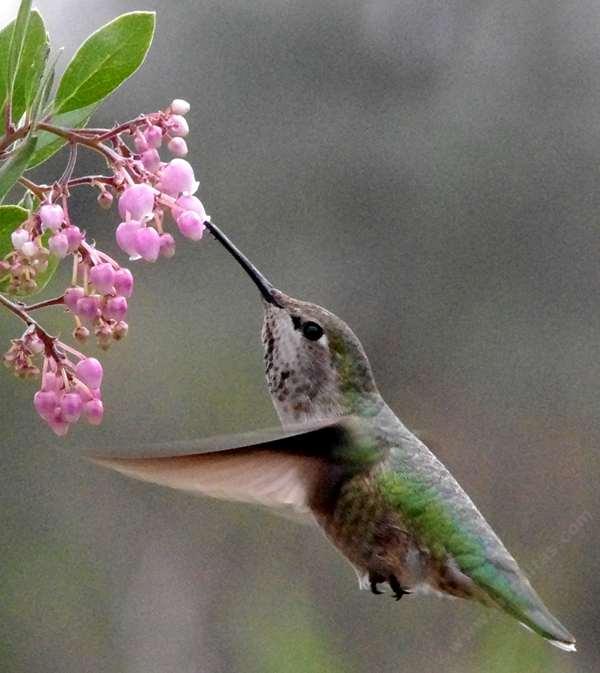
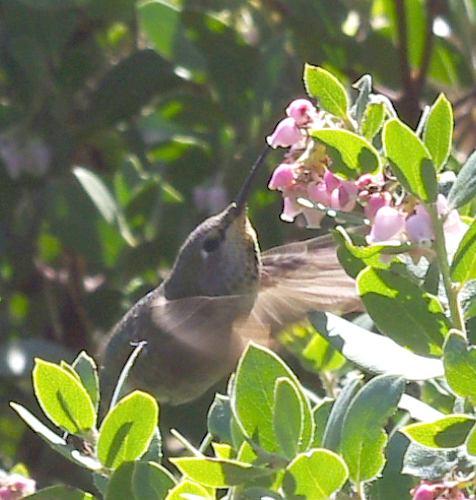
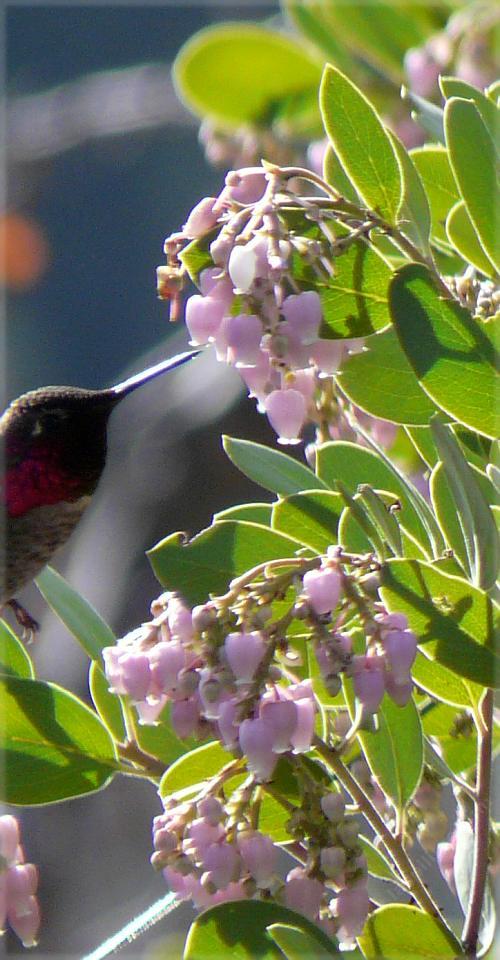
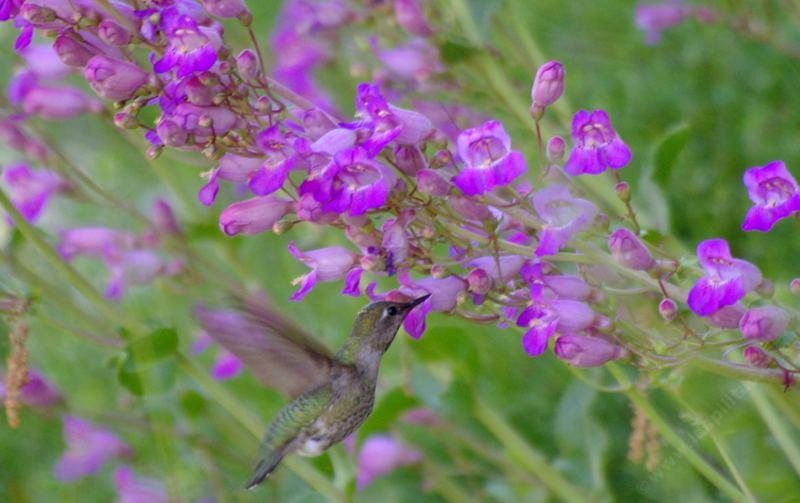
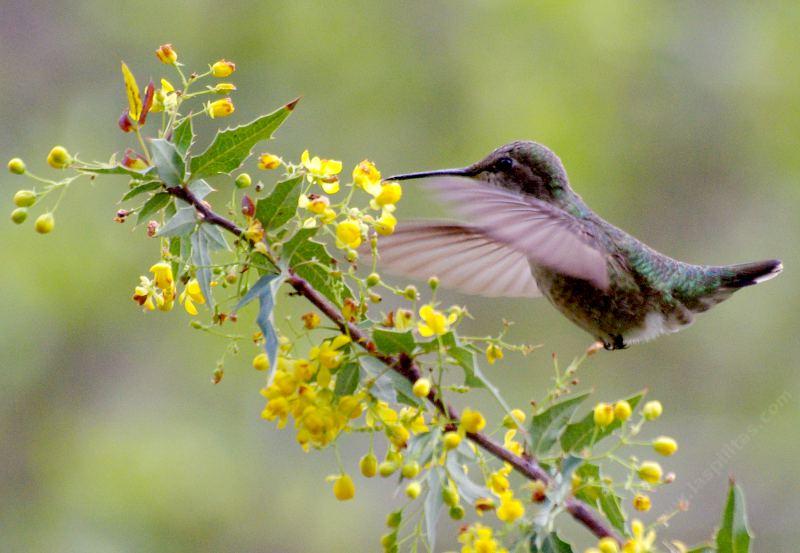
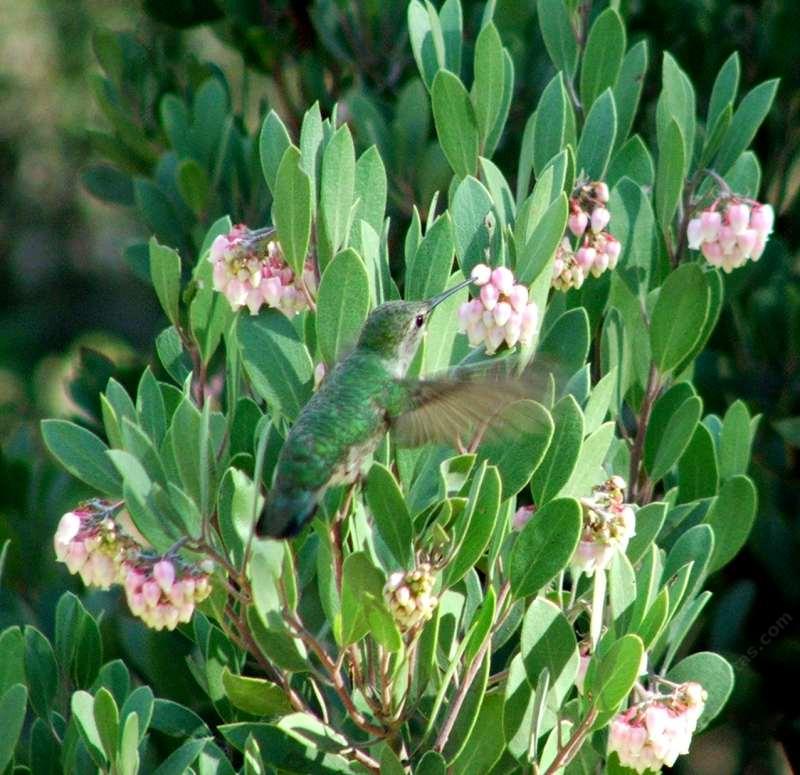
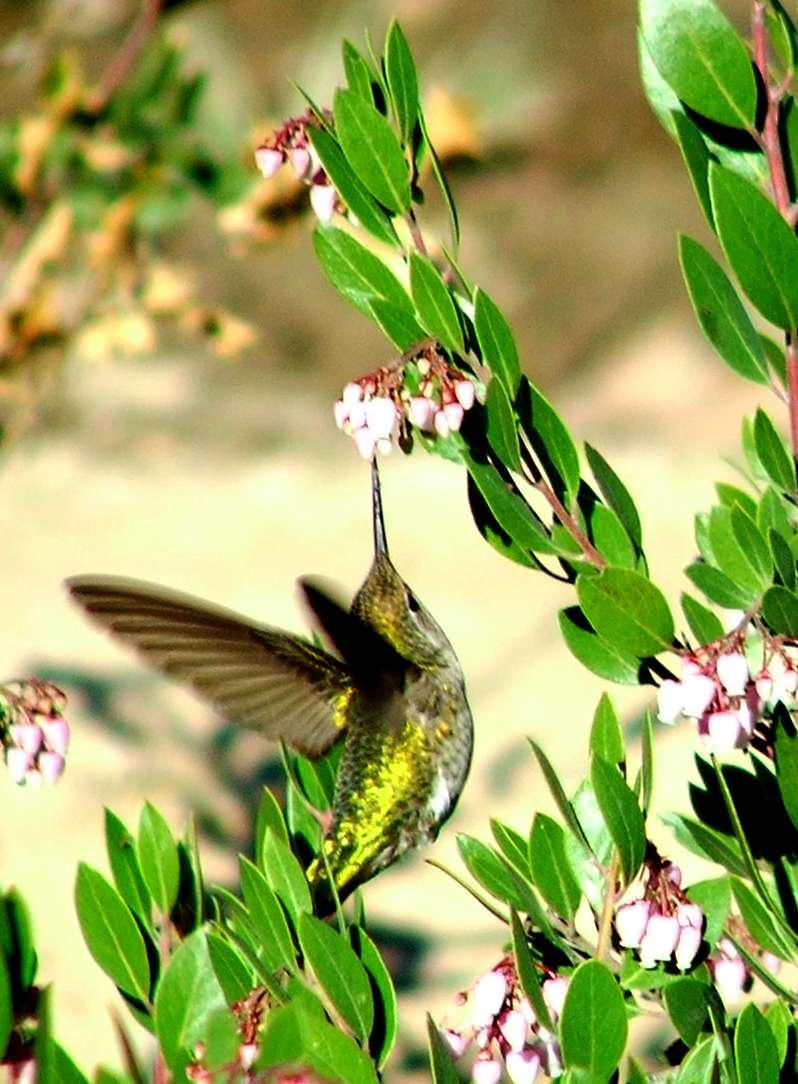
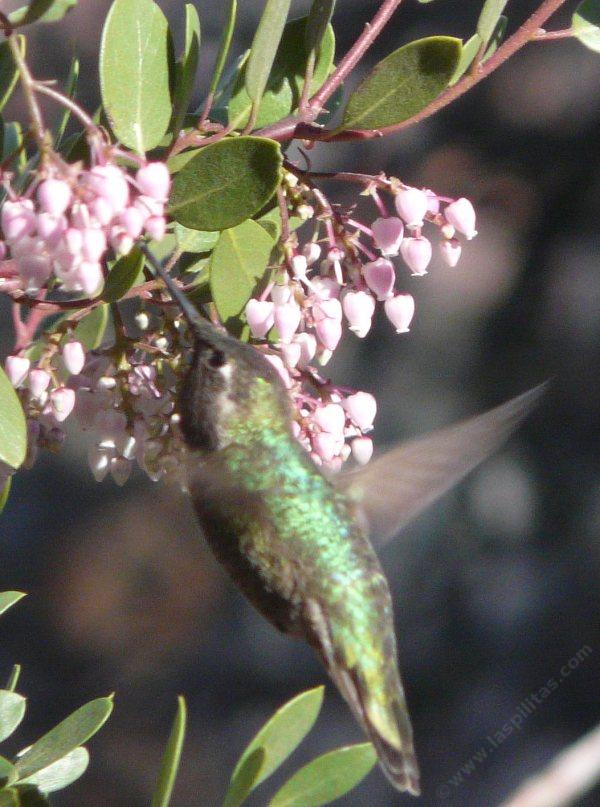
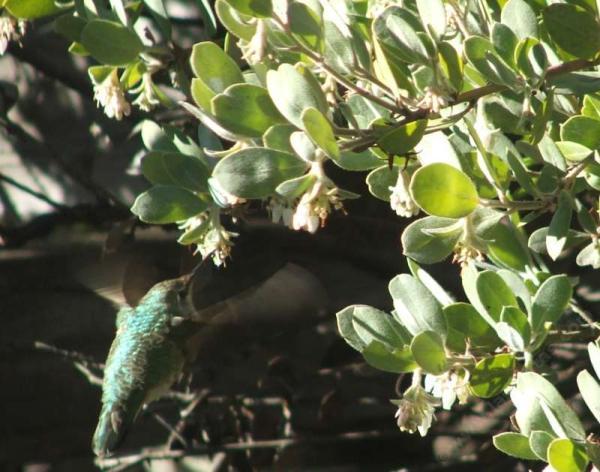
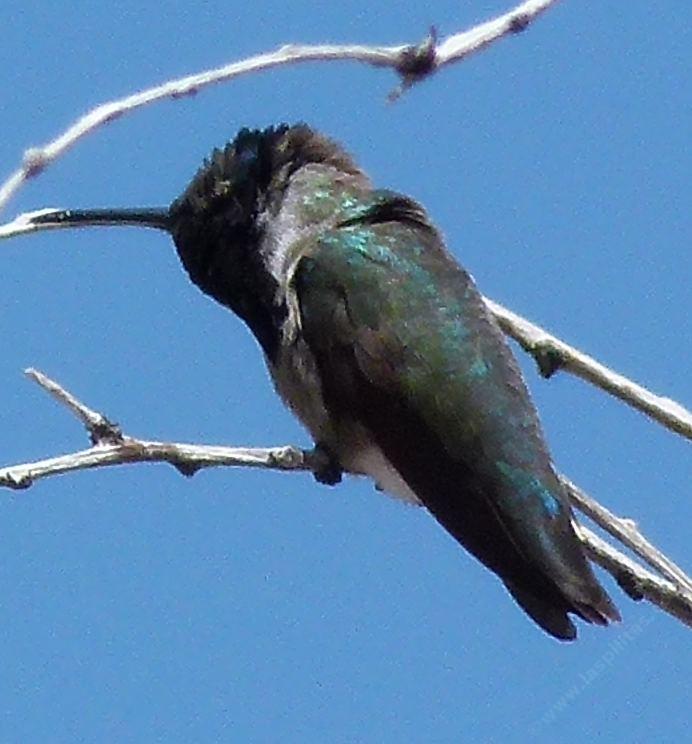
The ginger bread houses with frosting gardens are sterile to the wildlife. There is no wildlife value there. No hummingbirds flying around. There might be a few mangy, dispirited butterflies that were too weak to fly away, or a few wino hummingbirds hanging with the gang of English sparrows, starlings, jays and house finches. But there is not a colony of native wildlife nesting and breeding (uh-oh). Hummingbirds may come to those types of yards but they may just visit a few alien flowers and leave, or stay but be unable to breed, or be at risk for disease. They have certain types of plants that they use during certain times of the year. picture of a hummingbird on a manzanita.
Native Hummingbird Plants for your Garden
Click on the plant links to learn more about these plants and get ordering information(By the approximate month they flower.)
January through March
Ribes species, Currants and Gooseberries Almost all Currants and Gooseberries are used by hummingbirds. Ribes can flower anytime from October through March.
Keckiella antirrhinoides, Yellow bush snapdragon Is a garden shrub with fragrant yellow Penstemon flowers, March – May.
Opuntia species, Cacti Yes, cacti are used by the hummingbirds.
Arctostaphylos species, Manzanita The manzanitas can flower from February (‘Austin Griffin') through May, sometimes even June (‘Howard McMinn').
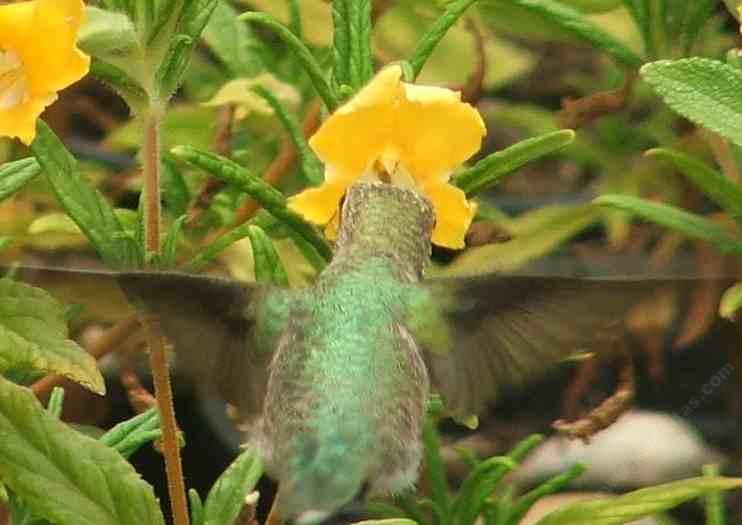
Diplacus species, Monkey flowers of all colors are used by hummingbirds, but they really prefer the red ones, Diplacus puniceus, Diplacus rutilus and Mimulus cardinalis. Monkey flowers are a showy addition to a hummingbird garden.
Dudleya species, Live Forever is an excellent rock wall plant. And as it is a succulent it is very drought tolerant. It naturally occurs in rock outcroppings.
Erysimum species, Wallflowers are randomly worked in an opportunistic way. Hummingbirds prefer manzanitas but like to add a little spice to their life with a tasty treat from a wallflower.
Symphoricarpos species, Snowberry. Many of the snowberries flower April through July. The hummingbirds are not crazy for the flowers, but will live on them when more tasty flowers in the garden are not available.
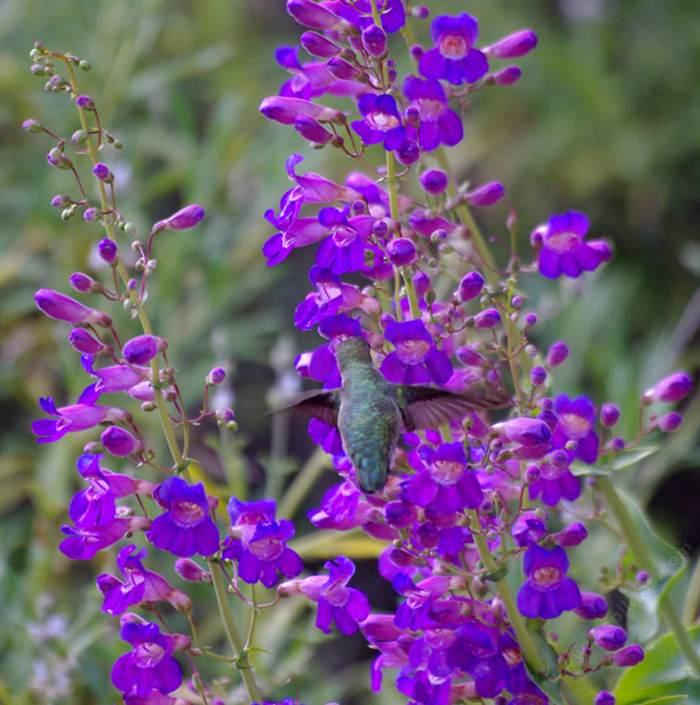
Penstemon species flower from April through July. Although they are commonly blue, they can be yellow, red, pink, and orange another show stopper in the garden.
June-August
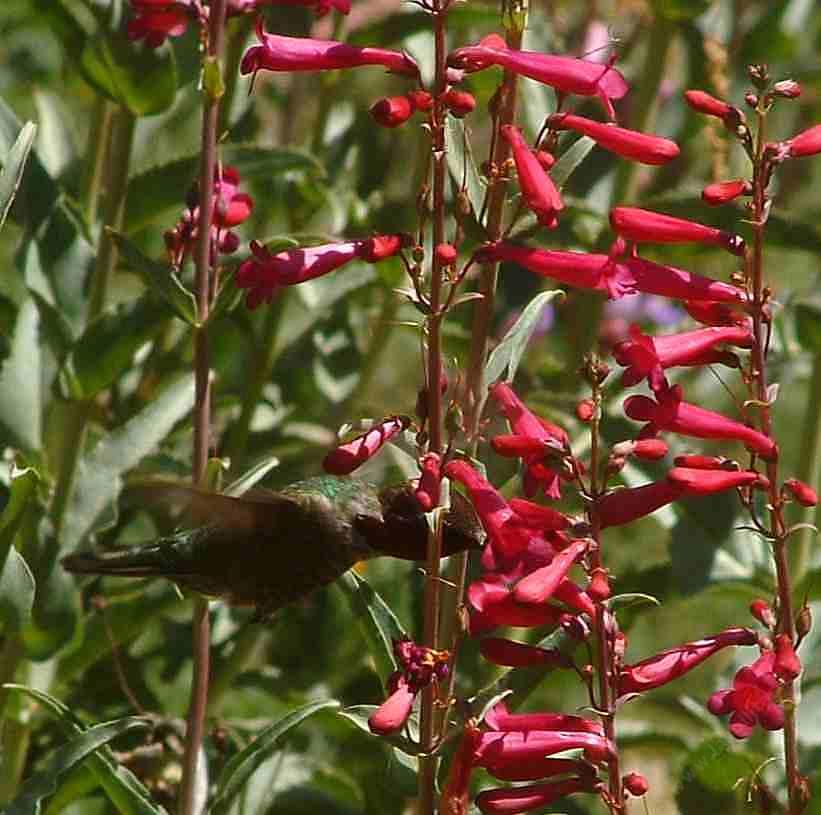
Penstemon species, most notably Scarlet bugler, Penstemon centranthifolius, a hummingbirds dream.
Keckiella cordifolia , Heart-Leafed Penstemon
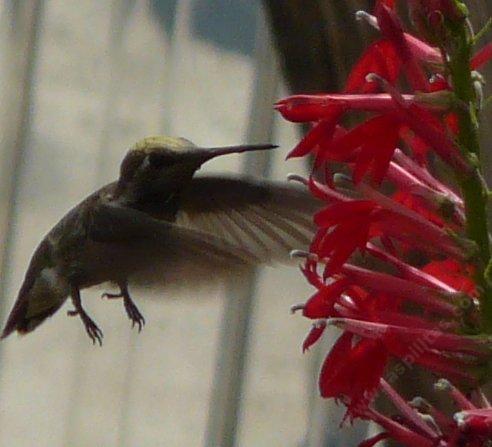
Lobelia species are used by the hummingbirds in mid-summer. The small blue flowers of Lobelia dunnii are used a little, the Large flowers of Lobelia cardinalis are used a lot.
Mimulus cardinalis, the scarlet monkey flower flowers most of the summer and is guarded by the birds.
Stachys species, Magenta Butterfly Flower , the hedge nettles are used as a side dish as the hummingbirds protect the Mimulus and Diplacus species. Put the Stachys in a moist part shade section of the garden.
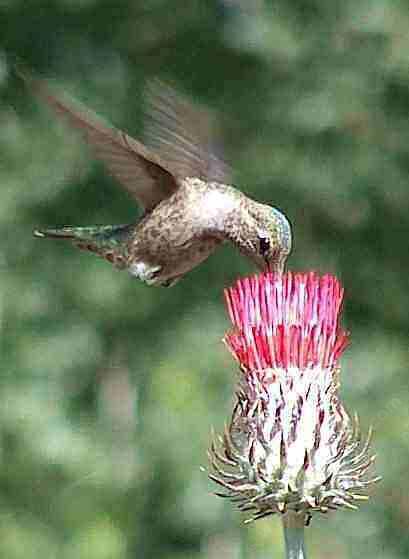
Cirsium occidentale, Red thistle This flowers is very popular with hummingbirds. as well as monarch butterflies.
Comarostaphylis diversifolia Summer Holly, we're almost always out of this one, and it is difficult, but if you live in Coastal Areas of Southern California it is a great summer flowering bush for hummingbirds.
Antirrhinum multiflorum, Multi-flowered Snapdragon with it's purple and yellow flowers are used as the hummingbirds migrate through as a filling station.
Aquilegia species, California columbines are aggressively used by the hummingbirds. Our columbines are largely hummingbird pollinated whereas many of the non-native ones are wind pollinated.
Lonicera species, Honeysuckles are used in varying degrees. The Lonicera hispidula is the preferred flower and it survives well in most gardens.
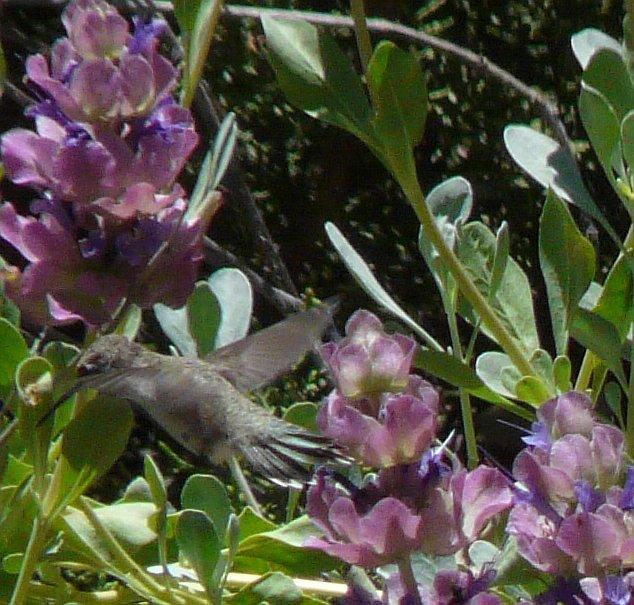
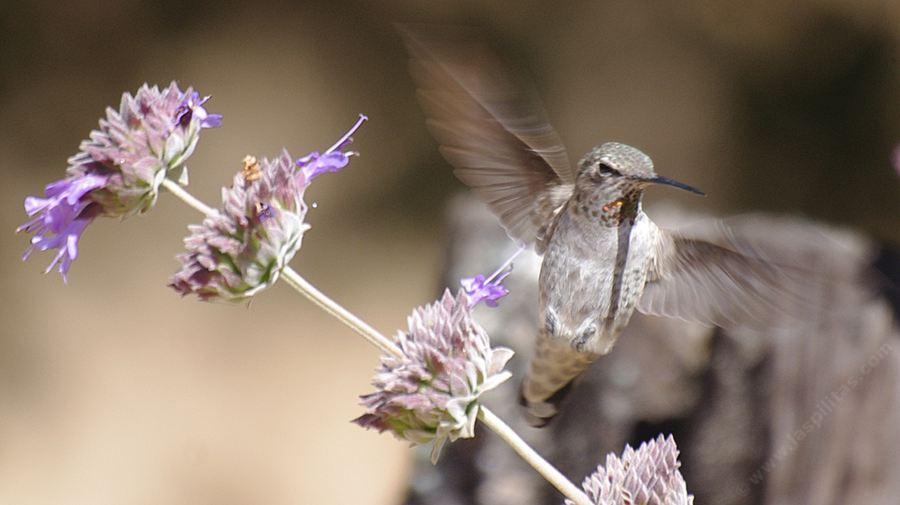
Salvia species, Sages, such as Salvia 'Pozo Blue', Salvia mellifera, Salvia brandegei, Salvia clevelandii are all well liked by hummingbirds. And not to forget hummingbird sage, Salvia spathacea. A sage garden can be an experience when eight or ten hummingbirds fight continuously around you.
Lilium species, the California lilies almost swallow the birds when they work the flowers, but the orange forms are used regularly. Lilium pardalinumLilium humboldtii are both happy to help out the hummingbirds. (We can't show you a good picture of the hummingbird in the flower as all you'll see if the tail.)
September- December
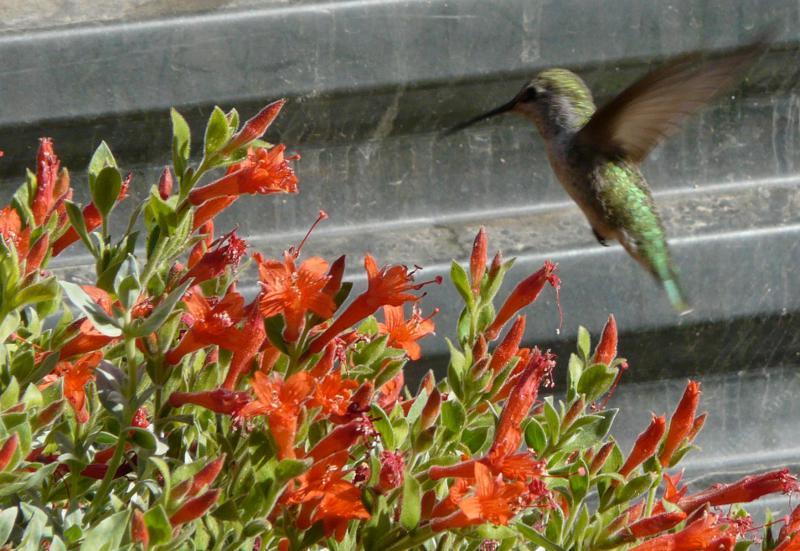
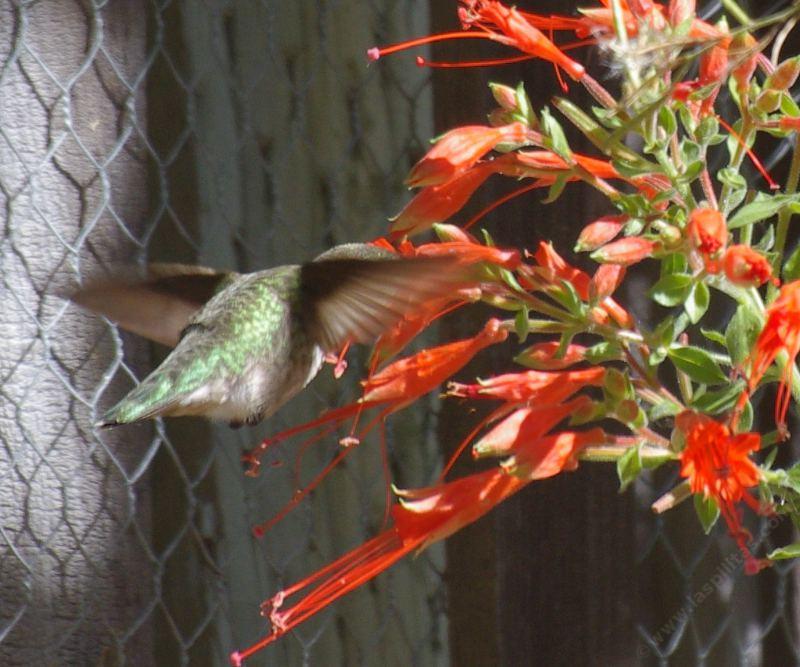
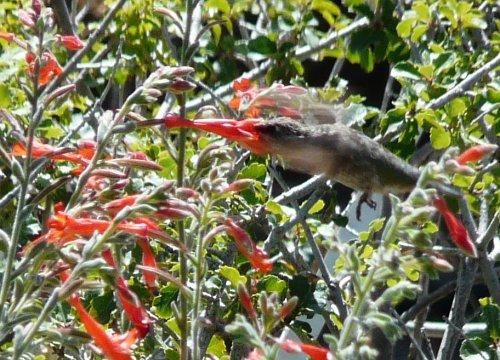
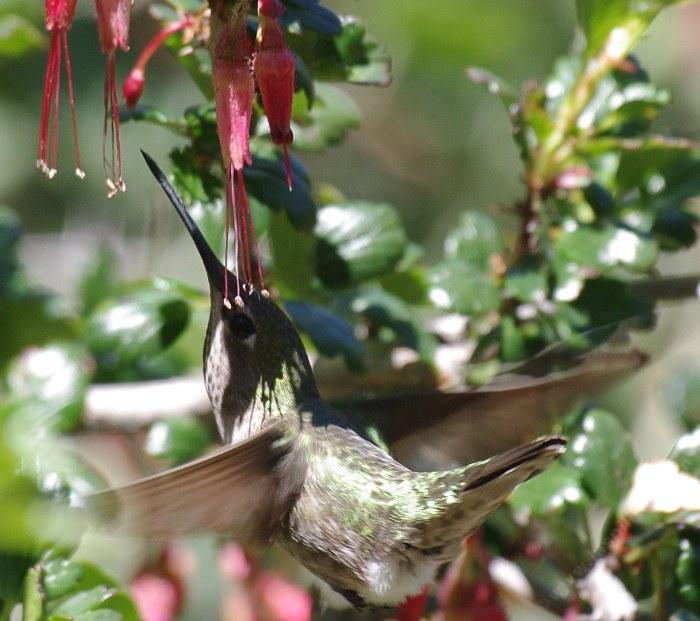
Just plant, Zauschneria species, California fuchsia everywhere in your garden. The California fuchsias can flower from July through December. They flower and flower, trim off the old flowers, and they flower more. They are excellent in rock walls. California fuchsias can tolerate garden water as well as being very drought tolerant. These flowers come in white, pink, and red with gray or green foliage. The vary in with from a couple of inches tall to a couple of feet.