California native sages
Sages, Salvias, truly drought tolerant California Native plants.
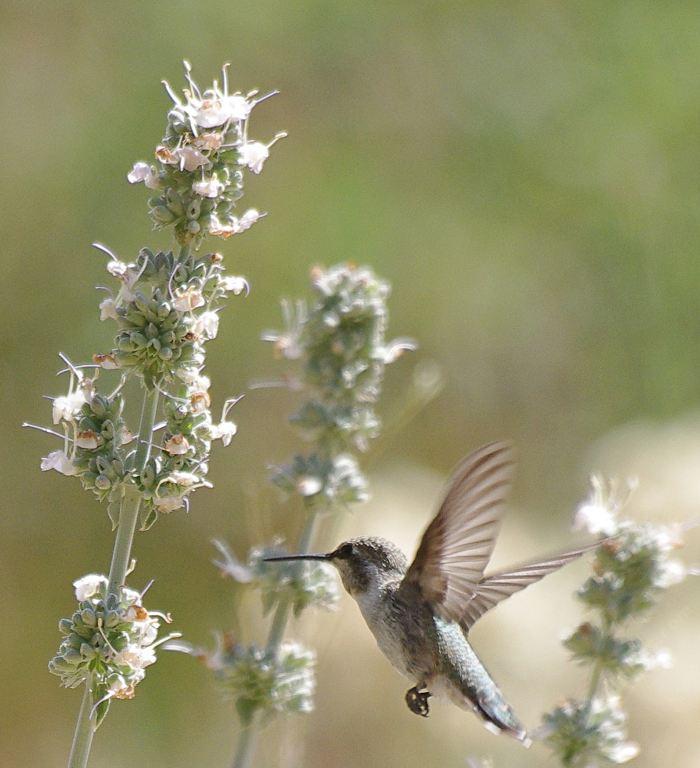
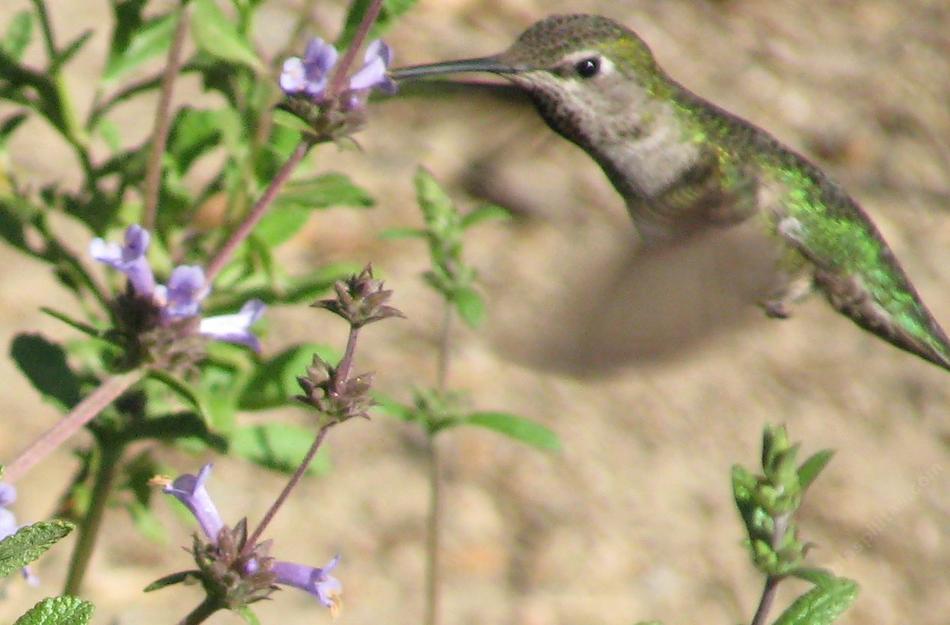
Depending on the flora there are 17 or 18 sages native to California. In California, the sages are visited by hummingbirds, bumblebees, wasps and bees. (Hummingbirds kill for sages. They defend the sages in their territory like they are the only water in the desert.) Sages are native in California along the coastal areas, parts of the Sierra Nevada mountains and into the upper desert.(The Creeping Sage, can sometimes be found in the lower elevations of the Sierra Nevada mountain range.) In much of central California Black Sage, Salvia mellifera, sometimes grows along the west side of the San Joaquin Valley. In areas like Los Angeles and San Diego, as much as a third of the vegetation may have been sages mixed with oaks (Quercus spp.), Toyons (Heteromeles arbutifolia), Mountain lilac (Ceanothus spp.), California sagebrush (Artemisia californica) and Rhus species. Sages can live for 30 or more years and are very drought tolerant. We have a few on the nursery property that were mature 23 years ago and are still living, even in a bad drought.White Sage (Salvia apiana)
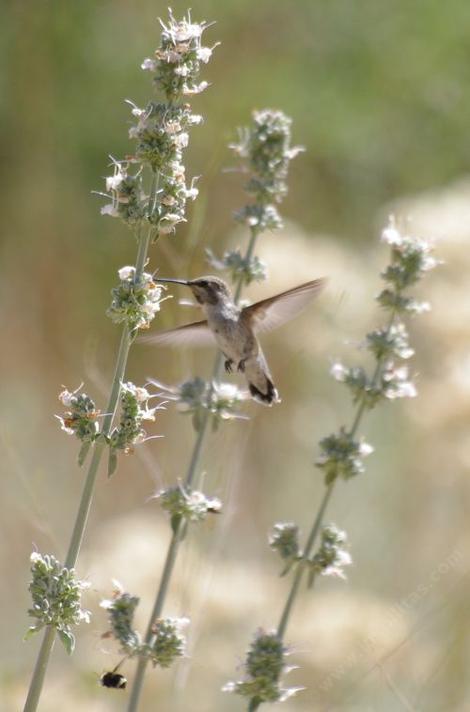
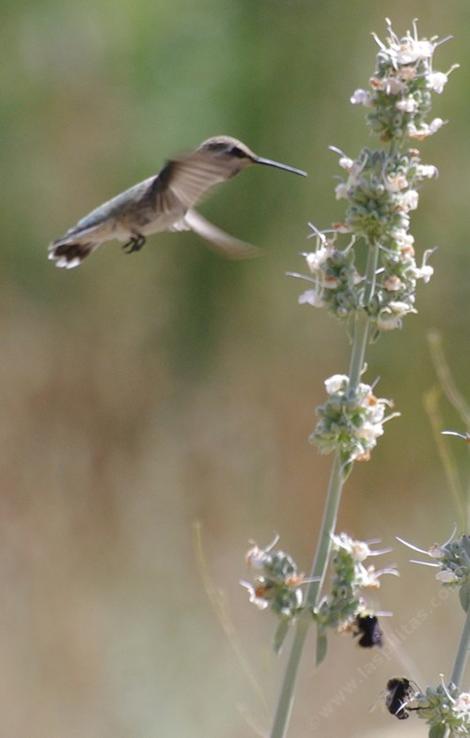
White Sage (Salvia apiana) is used as a smudge stick by many upscale white folks while whole hillsides are ripped out of the ground in California. The 'sticks'(whole bushes, roots and all) are stuffed into old, dirty Chevy, Dodge and Ford Vans and driven to New York, Portland and other far away places. White sage has been killed out of many areas of California by this practice. The main pollinators for White Sage are the humble bumblebee and small native wasps. These guys are hard little workers that bother no one but whose nectar sources have been replaced in California with weeds. They'll fly into the flower face and then crawl into the flower's neck and sip the nectar.(I've only been stung once by a bumble, I sat on him accidentally. The flower wasps are similar, no problem unless you start to smash one, then wow! They hurt! If it didn't hurt so much they'd be cute walking around grumbling (they actually swing their head back and forth like they're cursing) that they had to sting you because you're big, blind and stupid for not seeing them. White sage is a stunner if you place it in amongst a series of greens like Dwarf Coyote Brush, or in front of a rock wall with a bench in front of it where people can watch the humble bumble at work.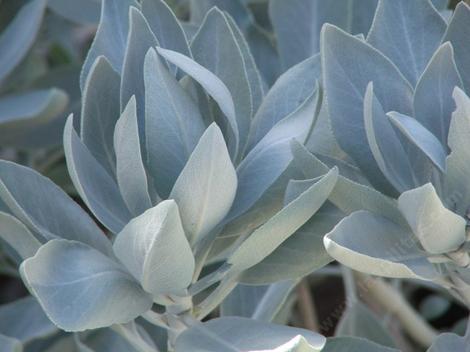
Salvia apiana compacta, Compact White Sage
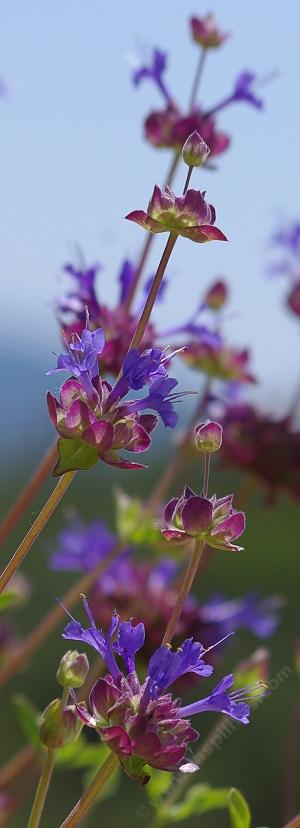
This compact white sage looks a lot like regular white sage but it is smaller and neater. It has the same chalky white foliage and clean white flowers.
This Sage grows up to 6000 ft. in the San Jacinto Mountains of Southern California.
Salvia brandegei, Brandegees Sage
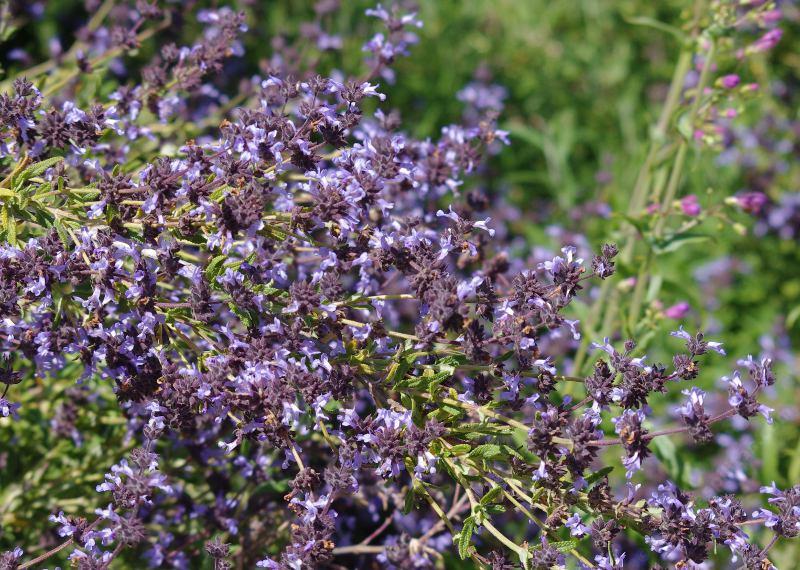
Island Black Sage is a wonderful form of Black Sage that grows on the islands off the coast of southern California. A kind of sprawling perennial that grows to 3 feet tall and 4 feet wide. The deep cobalt blue flowers are well liked by hummingbirds and butterflies. It has proven hardy to 10 degrees F and tolerant of clay or sand. Mix with Diplacus species., Salvia 'Gracias' and Penstemons for a showy hummingbird garden. Island black sage is fairly drought tolerant and can survive in most gardens with no water after the first year.

Salvia clevelandii, Alpine Cleveland sage or Musk Sage
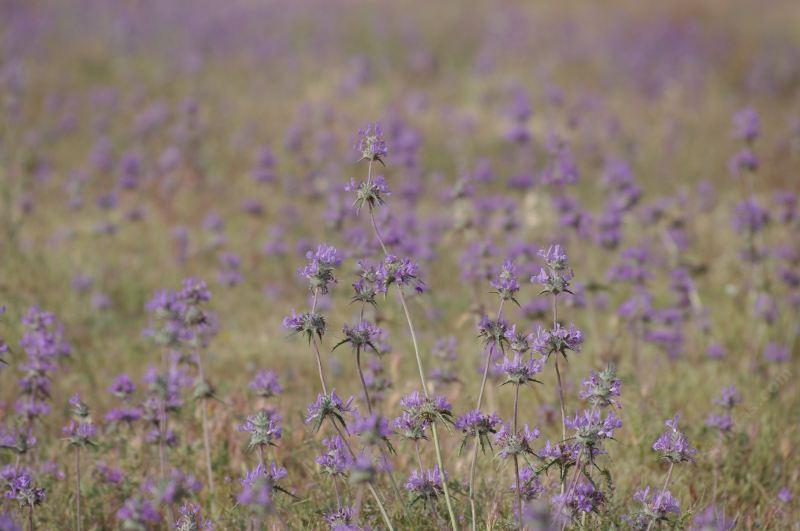
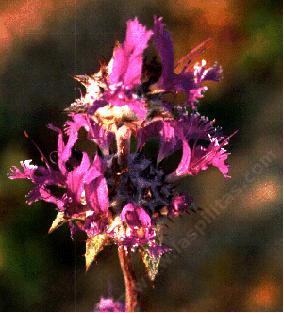
This is a from of Cleveland sage that was found near the
town of Alpine in Southern California. It was growing out of a
decomposed granite road cut in full sun. Alpine Cleveland Sage has
large blue flowers, is
very floriferous, loved by hummingbirds, and is
also very drought tolerant. Although our California sages are not
reliable in Oregon and Washington, one customer reported that this
one preformed best in Portland.

Salvia clevelandii, Winnifred Gilman Cleveland or Musk Sage
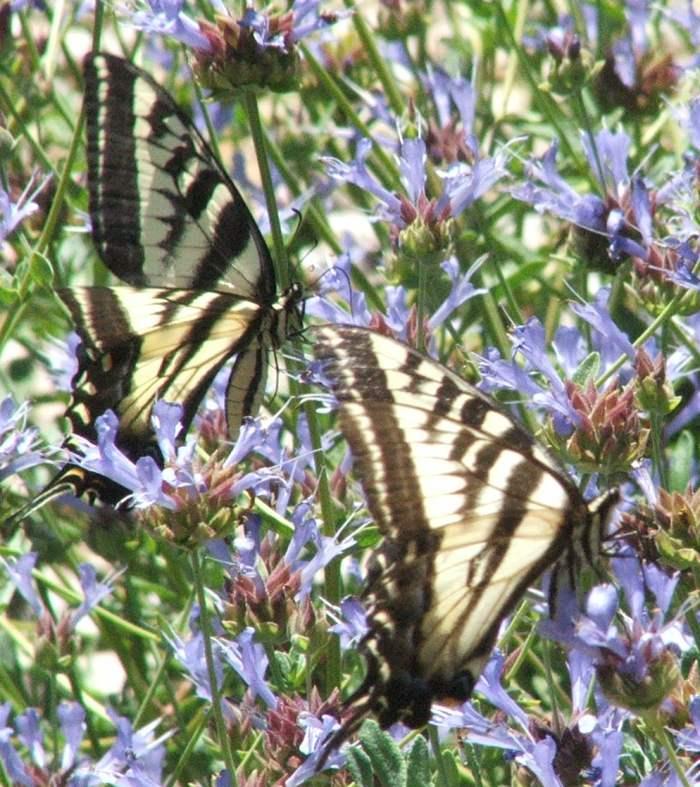
The most fragrant of the native sages is probably Cleveland or Musk Sage, Salvia clevelandii. The deep sky blue flowers send up fireworks about the Fourth of July and last well into August attracting a crowd of party -going beneficial insects. Musk sage grows near the coast in San Diego and inland to the edge of the Anza Borrego desert.
Salvia columbariae, Chia
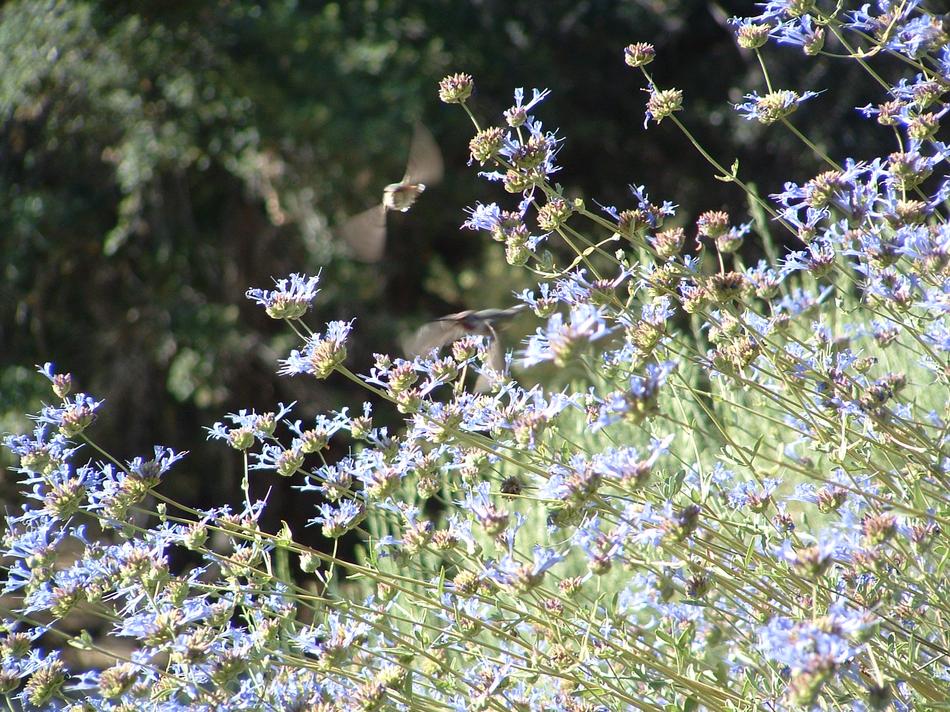
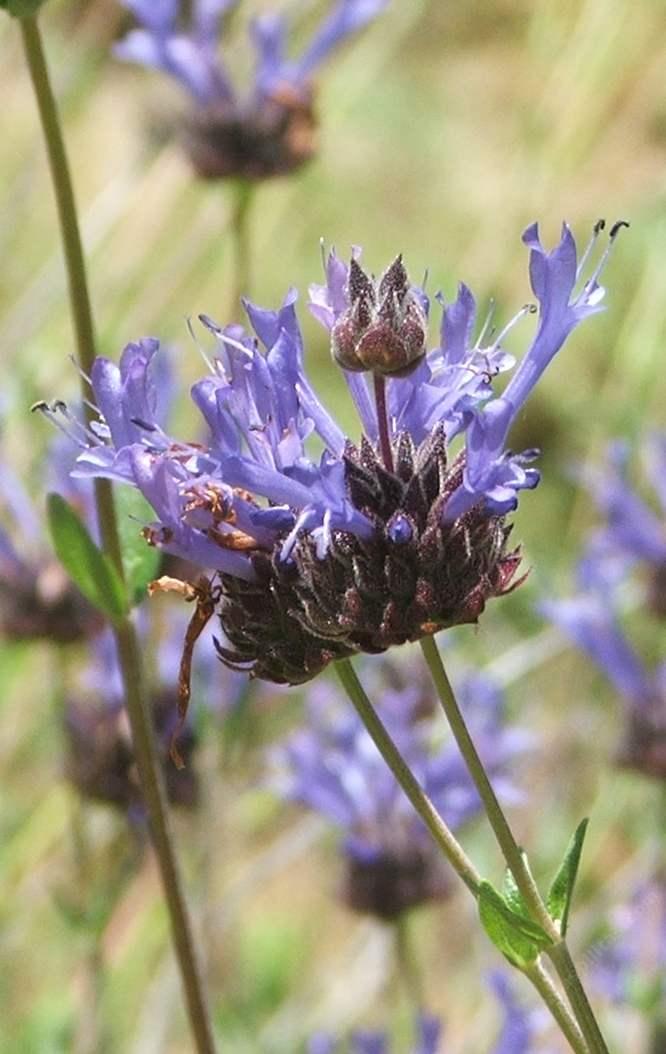
Chia is a lovely, annual sage that makes a great pet (ha ha chia pet) or a decent wildflower show on gravelly sandy soils. The seeds were eaten by the indigenous California people. It can be found in clean areas between the chaparral. The leaves are deeply dissected and very crinkly.


Salvia dorrii, Desert Sage
Desert sage is one tough desert-edge plant. It grows along the eastern side of the Sierra Nevada mountains from Lassen county to just Victorville area and east to Nevada in gravelly washes and rocky outcrops. This sage only grows to 2 or 3 feet but can stop traffic when it's in flower. It will die in most watered gardens, in clay, or with much winter rain, abuse it with drought and sun, and it will thrive.
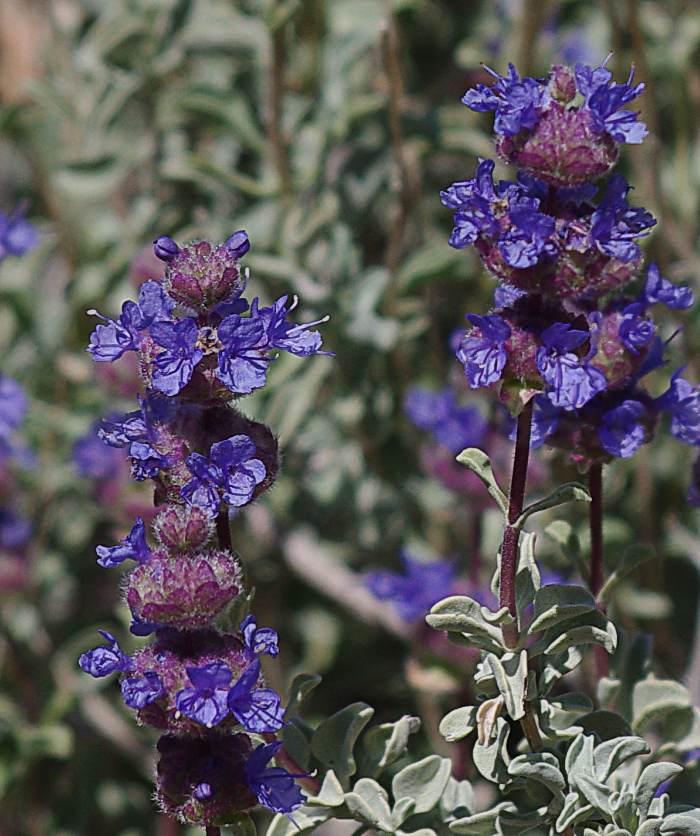
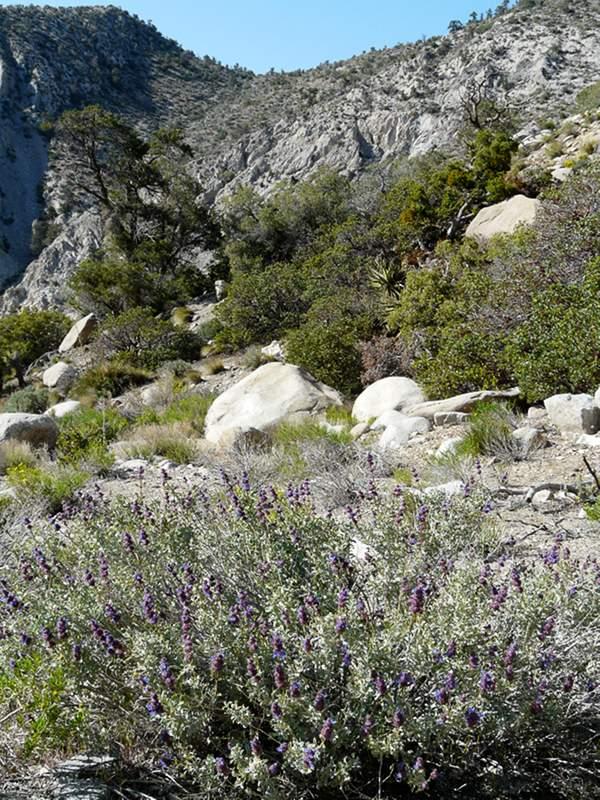
Salvia eremostachya, Santa Rosa Sage,
grows in dry stream beds and gravelly slopes along the western edge of the Colorado desert from about Palm Springs to Baja. Santa Rosa Sage has lumpy leaves and pale blue flowers.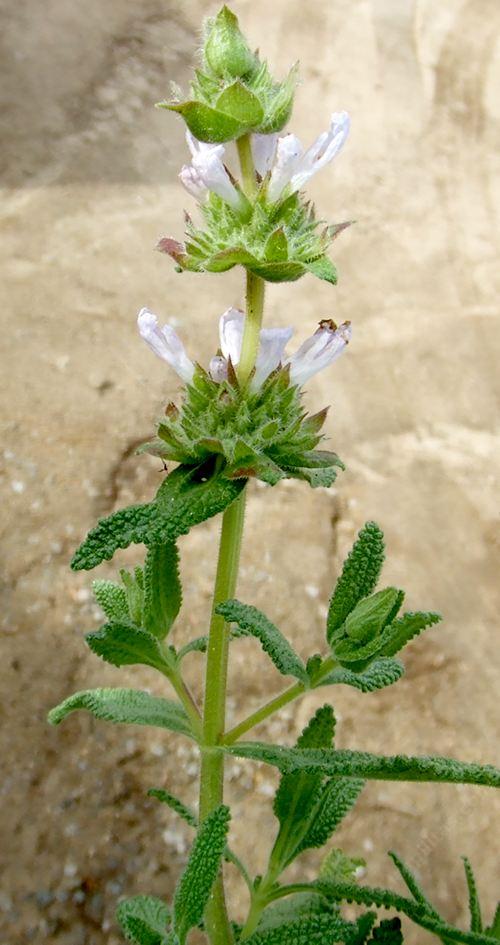
Salvia funerea, Death Valley Sage
Do not expect to see Death Valley Sage in a nursery any time soon. It grows on limestone in the desert. If we ever did get it to grow it's doubtful you wouldn't kill it looking at it. It is very specific where it wants to grow and that's not in a nursery or your yard.
Salvia leucophylla Purple Sage
Purple sage is the largest sage native to California, can reach 6 feet in height in the wild. In the garden do not give it much water, as it can grow into an eight foot tumble weed. Purple sage grows from Santa Maria south. Its crinkly gray foliage is almost white. Purple sage's flowers are a soft violet spiral that look like a landing towers for hummingbirds and native insects. Purple Sage likes a clay or loamy soil. It will grow in sand, but not at its best. Use in the back of a native planting or sage garden and as a contrast plant. Along the coast it is a satisfactory bluff plant.
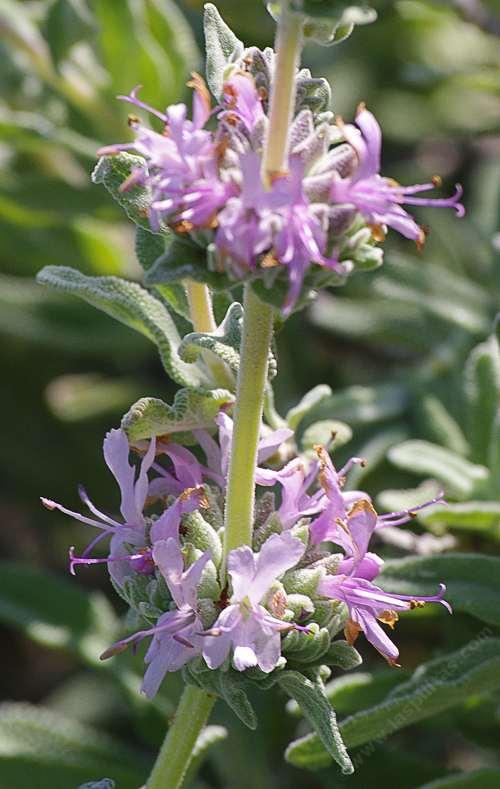
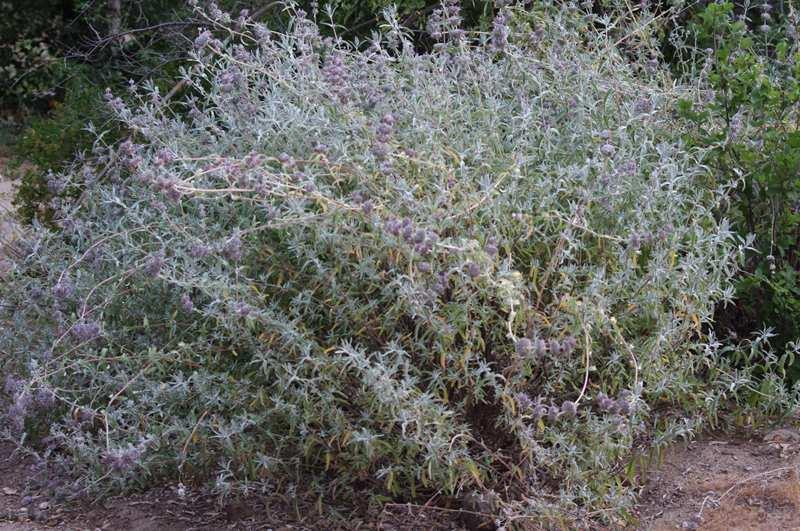
Salvia leucophylla, Pt. Sal
A gray mounding groundcover sage that has purple flowers and has done as well on coastal bluffs as in the interior. heat. Very drought tolerant in most of California. Tends to grow about one foot tall and 3 foot wide. With time it can get to 2 foot tall and 8 foot across. It can take to Southern California sotuh facinf slopes.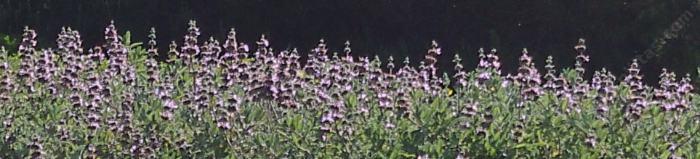
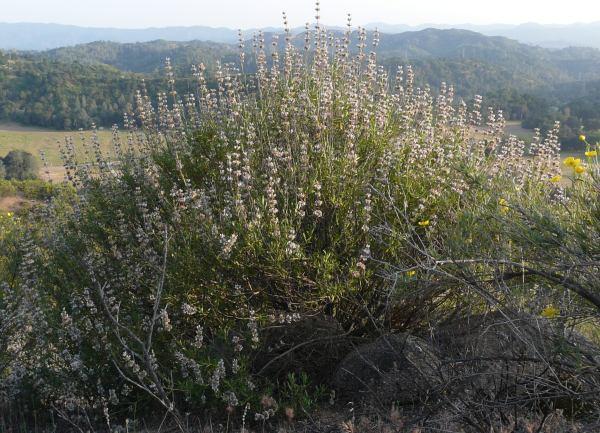
Salvia mellifera, Black Sage
Black sage is native within about 50 miles of the coastal areas of California from San Diego up to about San Francisco. The fragrance is different from Musk Sage, in that when you brush against Black Sage wafts of CHAPARRAL fragrance follow you. Hummingbirds, small native flies and butterflies like the flowers. Quail and small birds like the seeds. Black Sage is a dominant plant in its range. This sage grows in sand in Los Osos, clay in San Luis Obispo, under redwoods in Santa Cruz, and mixed with junipers in the Temblor mountain range. This is a very long lived, stable sage that looks good most all of the year.
Salvia mellifera repens, Creeping Black Sage
This is a low growing black sage, one of several forms and varieties out there. The varieties that we have seen are all much lower and more spreading than Black Sage and definitely more frost sensitive. They would do well in areas where height is a problem, as in obscuring a view. Black Sage and the other sages of California have been little used in cooking but each one has its own special fragrance and most people burn the wood with oak wood in the barbecue to flavor the meat in that way.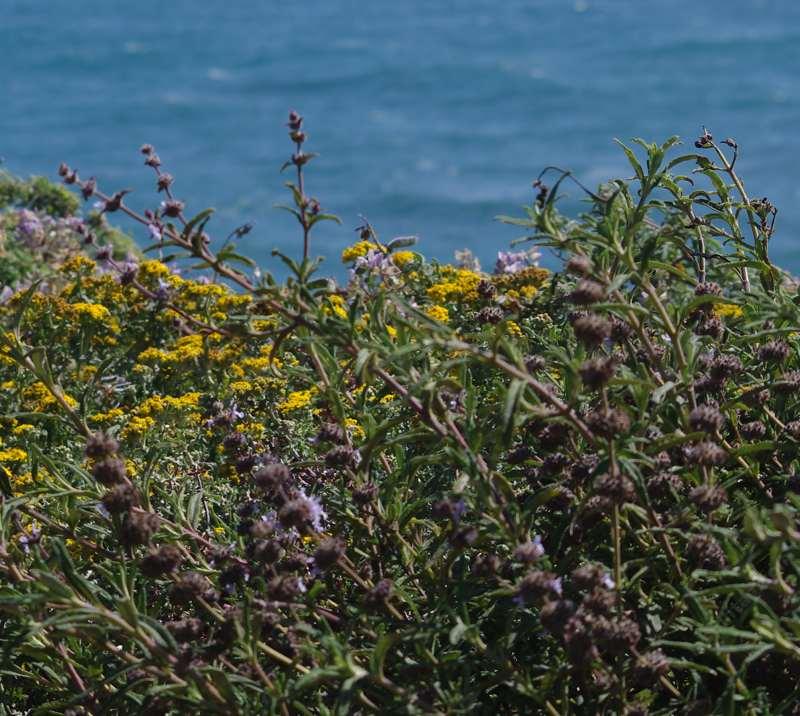
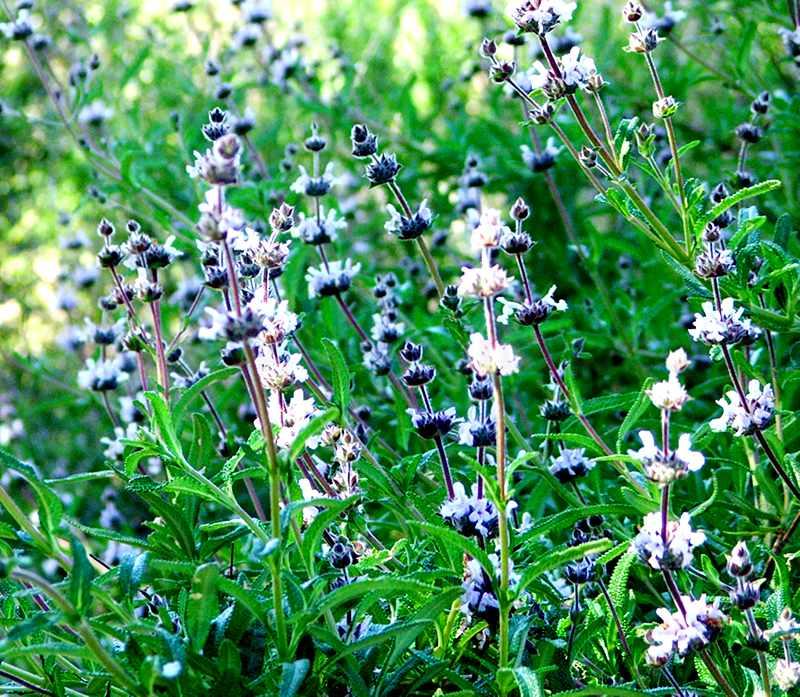
Salvia mohavensis
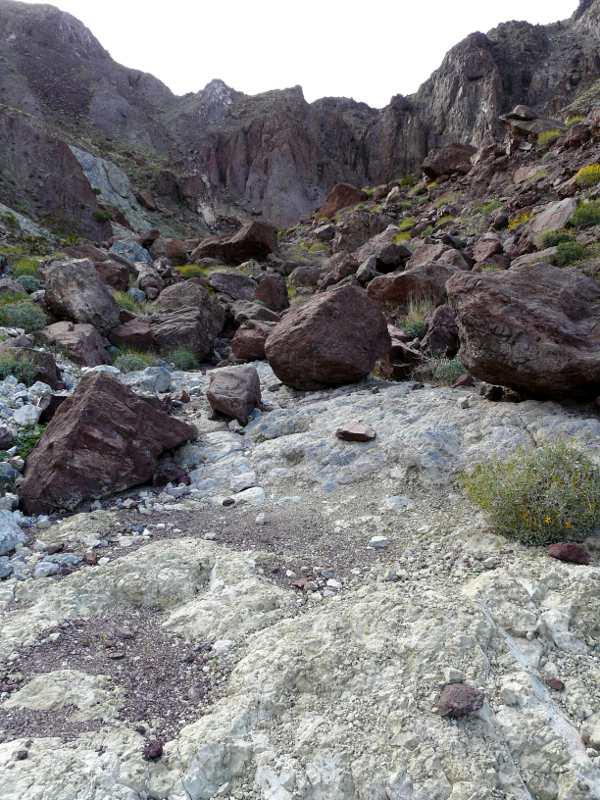
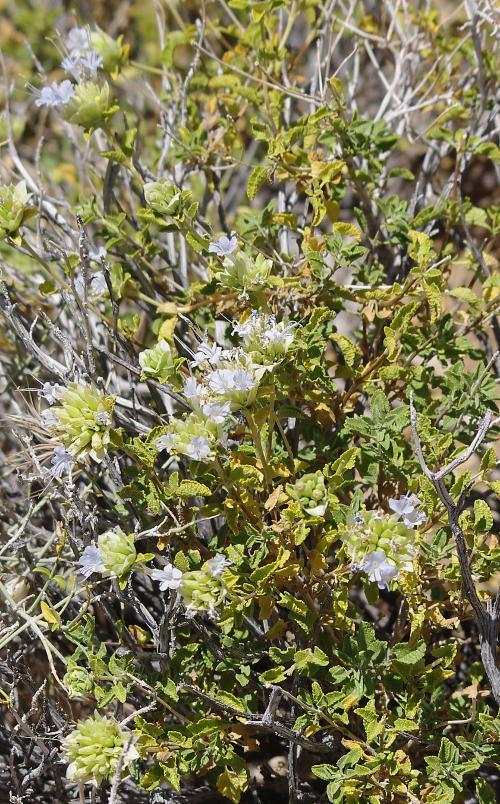
Mohave sage grows in volcanic rock outcroppings and east facing washes in the Mohave desert. Weird to see a green sage in the middle of a dry desert situation. Sometimes in nearly solid lava rock, sometimes in a wash.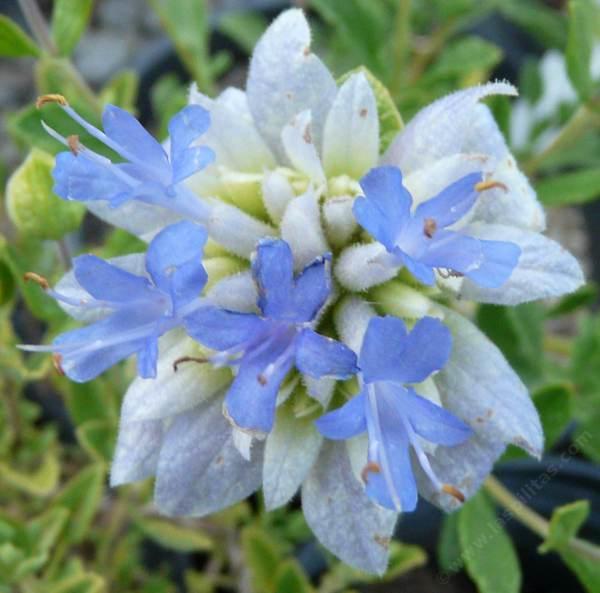
Salvia munzii, San Diego Sage
Munz's Sage grows right at the Mexican border in a real badlands of drought, sun, and wind. This sage will go deciduous in its normal range in late summer, making it probably the most drought tolerant of the garden tolerant sages. In a garden it is a cute little perennial sub-shrub with blue flowers. It looks so delicate in the garden, yet its habitat is awfully hot and dry.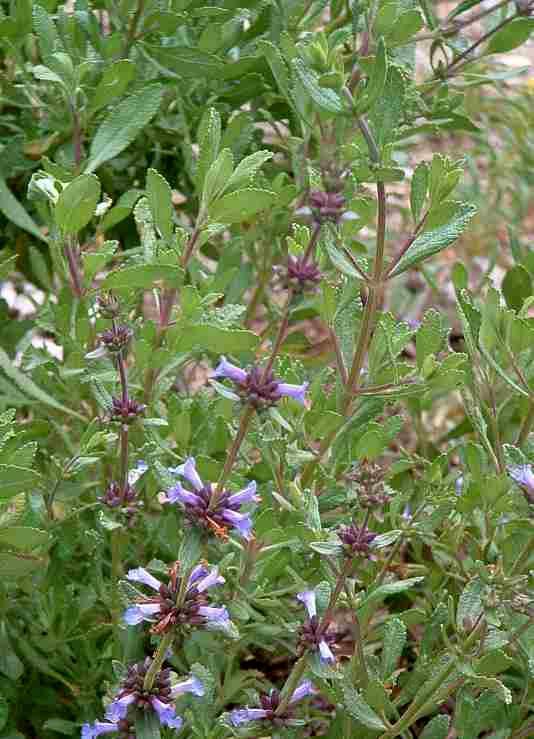
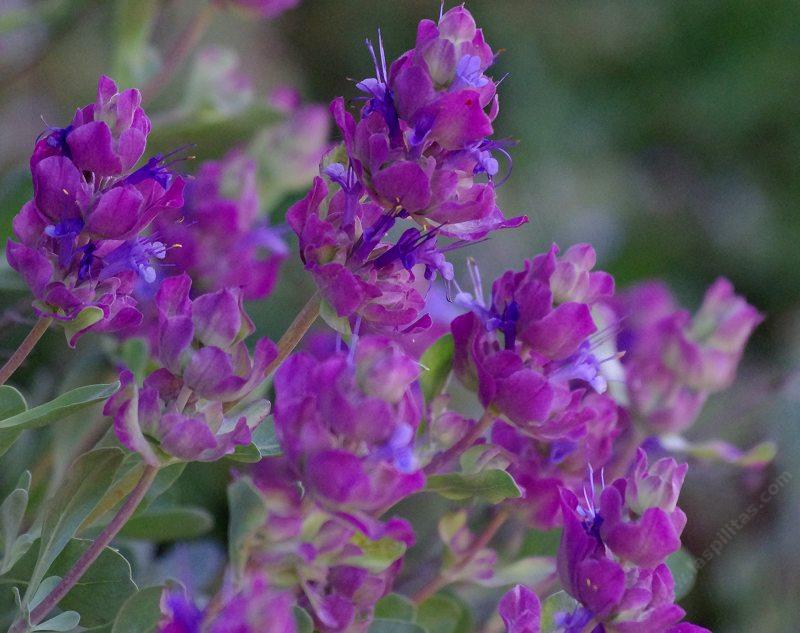
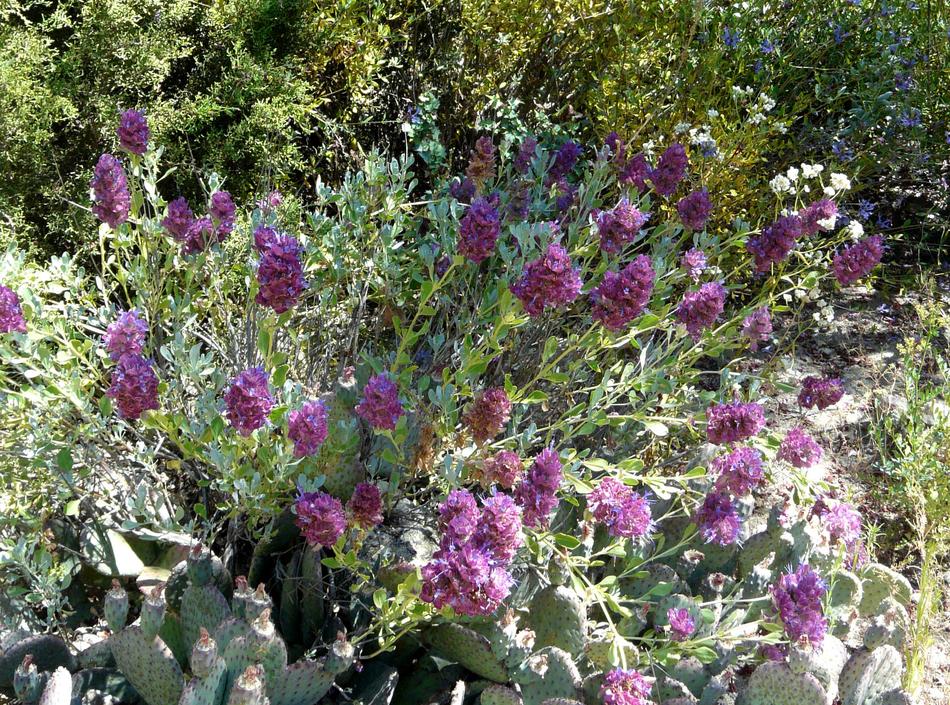
Rose Sage, Salvia pachyphylla
Rose Sage is the queen of California sages. The flowers are elegant, showy on a very clean, smooth plant.Some years the flowers are almost as big as the plant! Fragrance is not as good as Musk Sage, but the flowers are pink and lavender with hints of blue. The foliage on Mountain desert sage is as white as white sage but more neat and the plant more compact with stunning flowers. Mountain desert sage can be grown in most gardens as long as you keep it dry after the first year. Sneak out and water in the summer and this drought loving plant will probably die.
Creeping Sage Salvia sonomensis)
is a trailing groundcover that lives in the more mesic chaparral edges and along the edges of the yellow pine forest. Creeping Sage commonly grows in clay that is very wet in winter, but dry in summer.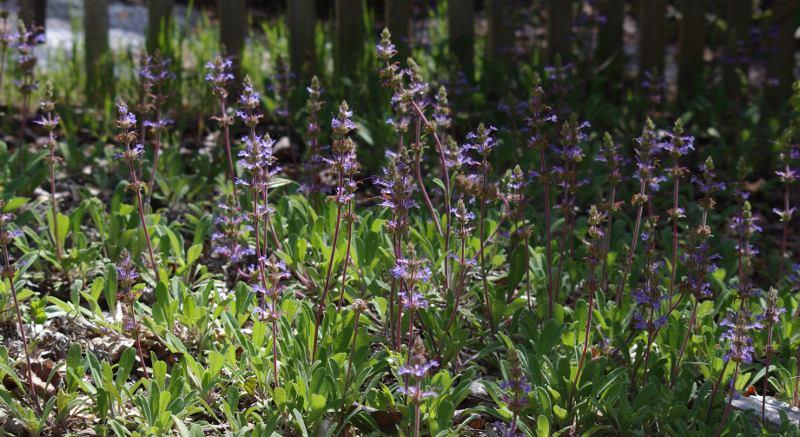
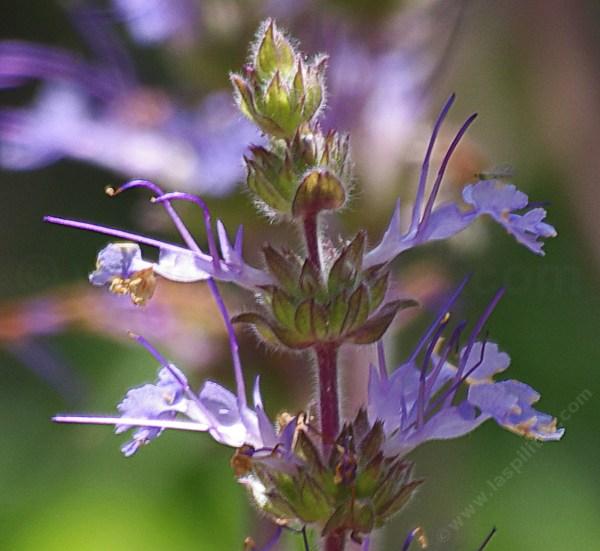
Salvia sonomensis, Farmar-Bower or Golden Creeping Sage
is the yellow flowered form of Creeping Sage.Occasionally a summer shower will wash the foliage off, but the ground stays dry. If you wish to grow Creeping Sage water it once every week or so for the first year, then one or two waterings extra in spring, along with 2-3 summer dust wash-offs. Salvia sonomensis is drought tolerant in it's range, everywhere else it needs its wash off.
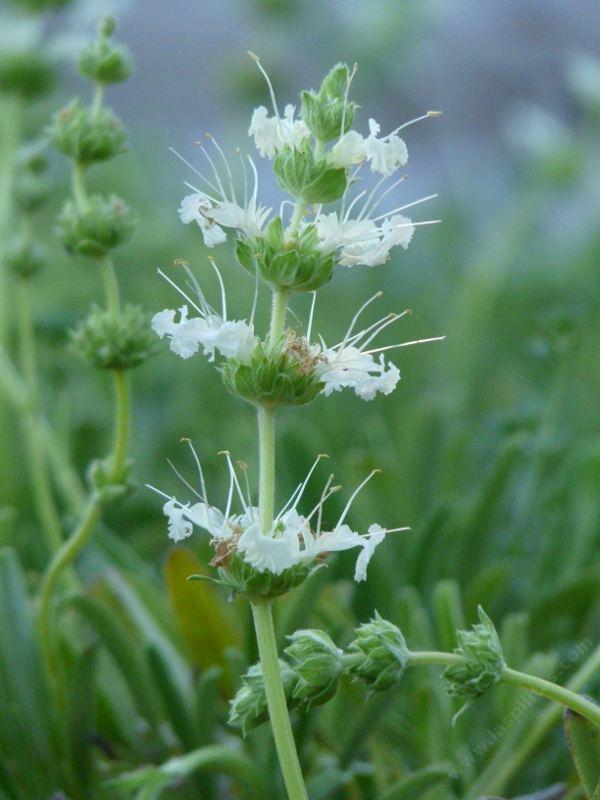
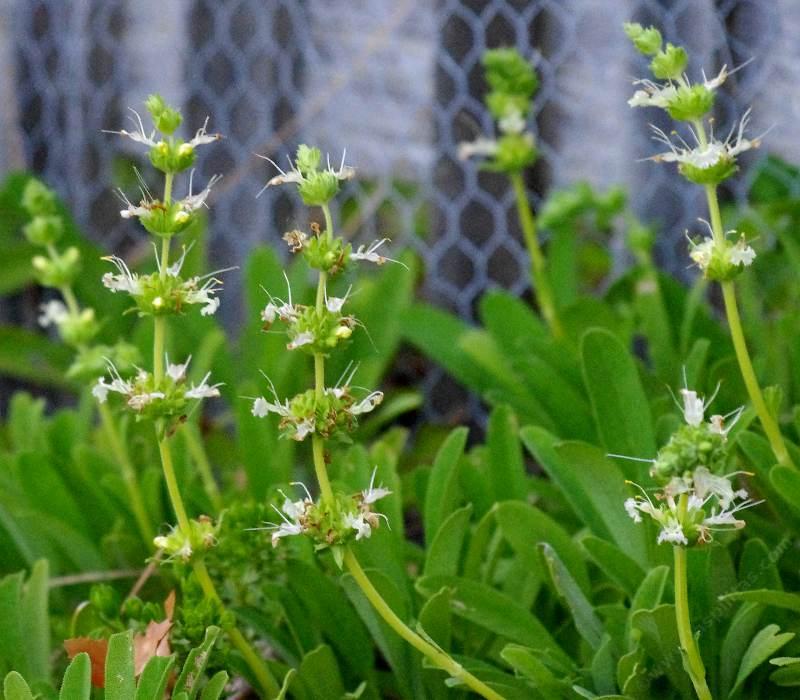
Salvia spathacea, Hummingbird Sage
We grow several forms of Hummingbird Sage. Hummingbird sage is a groundcover usually found under oaks, but may also grows in sunny areas in chaparral. Under Coast Live Oaks, Quercus agrifolia, Hummingbird Sage can cover areas 100 feet across forming a solid mat of large deep green leaves followed by magenta flowers staked out by resident hummingbirds.Hummingbird Sage has been very effective on coastal bluffs. It can tolerate full sun along the coast, long drought and tolerates full salt spray. Plant it beside a rock and watch it grow! Hummingbird Sage also likes extra spring water and summer wash-offs
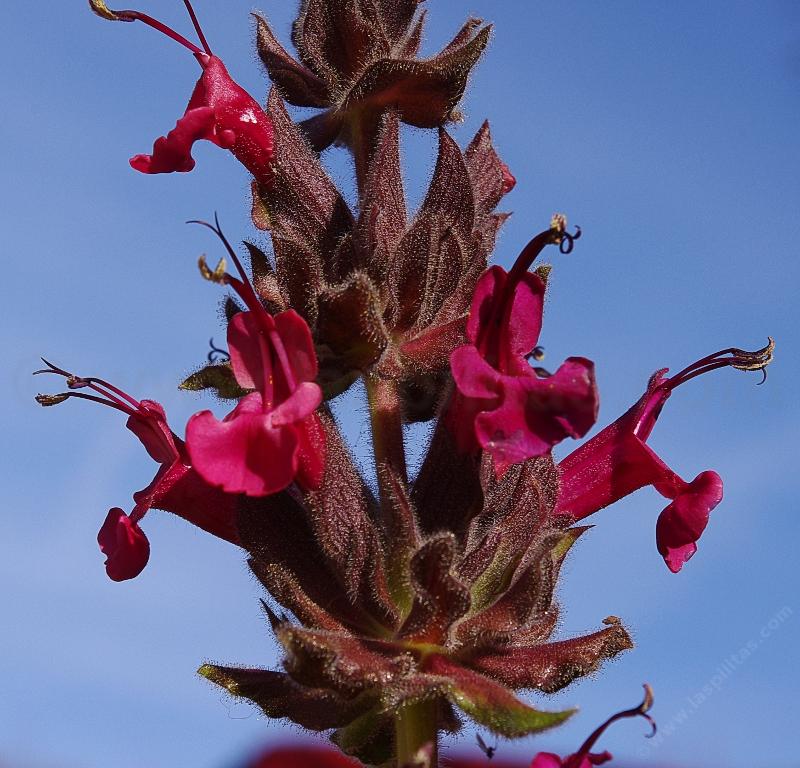
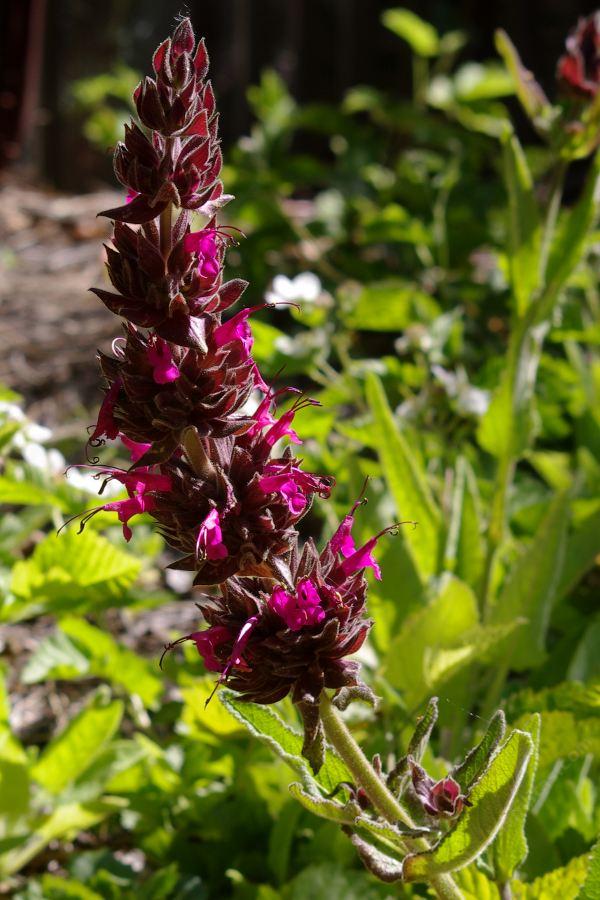

Salvia vaseyi, Wand Sage
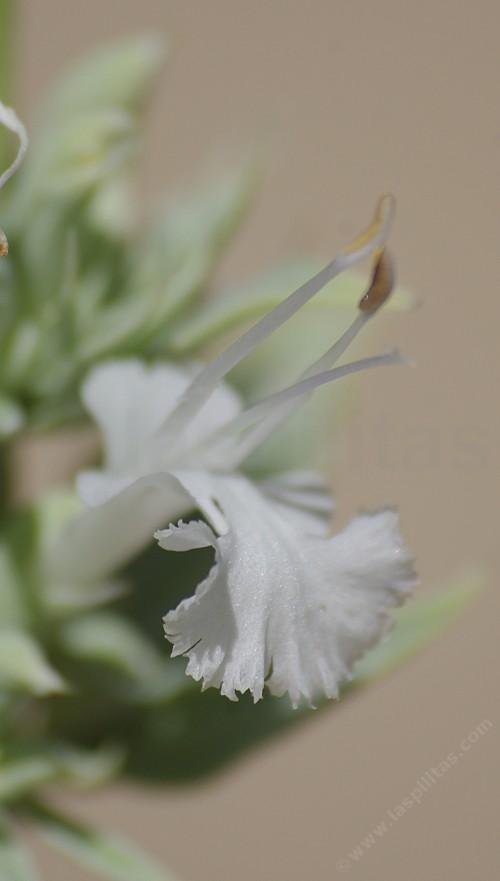
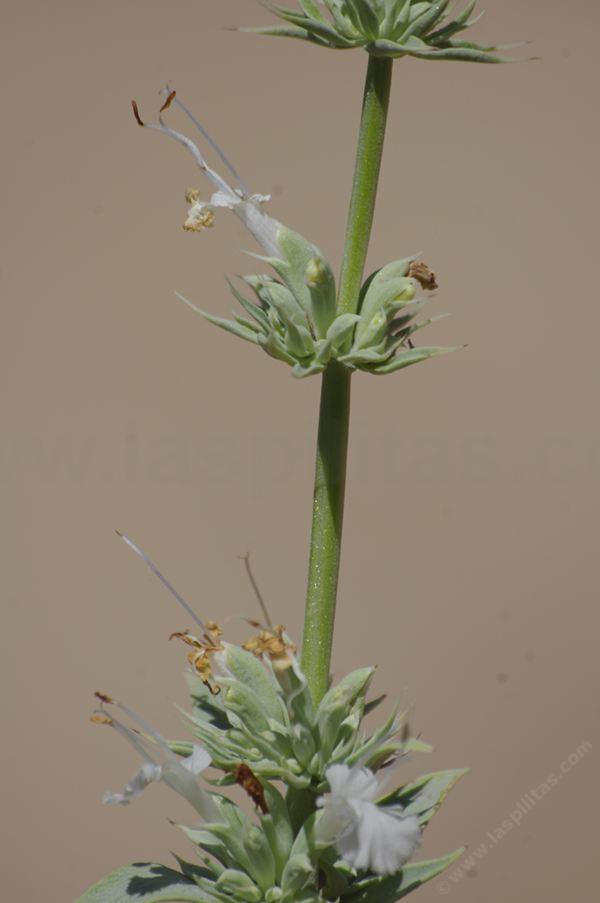
Wand sage is a funny looking sage that is looks kinda like a compact white sage with smaller bumpy foliage.
California Sage hybrids
These sages are hybrids between native species in California. Some are naturally occurring; others were developed in gardens. These are some of the most beautiful sages but many are also shorter-lived than their parents and not as stable. These are very popular with birds and butterflies. The plants must be similar enough to their wild parents for the wildlife to know what to do with them.

Salvia Celestial Blue
'Celestial Blue' is a hybrid of Salvia clevelandii, Salvia pachyphylla and Salvia leucophylla. It is hardy to 0 degrees F, drought tolerant, heat tolerant and it seems, even garden tolerant. The flowers start appearing in May and hold until the first weeks of July.The foliage smells as Musk Sage but is smooth and not nearly as folded and crinkly as either Salvia clevelandii or S. leucophylla. (Las Pilitas Nursery introduction: 1999). We planted some in an area where everything else has died of drought(we do not cuddle our plants), the plants have done fine and flowered with no water, other than a dust down once. (Felt sorry for the dirt covered plant.)

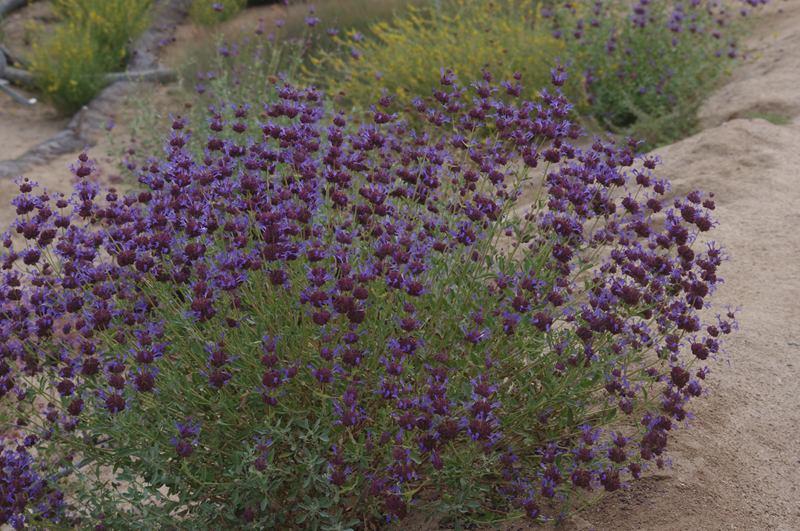
Salvia Pozo Blue, ' Salvia clevelandii X leucophylla
'Pozo Blue' is a hybrid between Purple Sage and Cleveland Sage. 'Pozo' grows to about 4 feet. high, and 5 feet wide and has the flowers and fragrance of Musk sage but is hardy to 0 F. like Purple Sage. 'Pozo Blue' tolerates and even thrives in sand or clay, coastal, mountain or desert gardens. It also has proven to be VERY drought tolerant. We, that is Las Pilitas Nursery, introduced it in 1989. The original plants are 21 years old with no water. They survive dry hot summers and drought and are still a mass of flowers in July. Where this one is planted most of the 'drought tolerant' plants in the trade would fry in a few hours, (it's very toasty).Cal Trans has used these along some of the 101 roadsides, planted and watered once and it did fine with no further irrigation. (not really a reliable idea)
Salvia Pozo Blue is really showy and forms a nice round shrub. It is especially popular with California Quail, hummingbirds, and lots of butterflies including the California Dog Face.
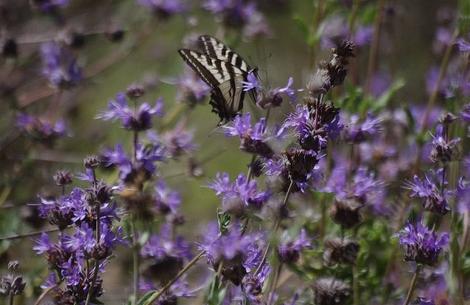
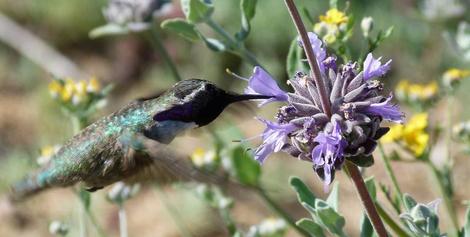
Salvia Bee's Bliss
looks a lot like Salvia Gracias. We can't find much information about the history of this sage. Low growing with blue flowers. Not as explosive as 'Gracias'. Some have said they are the same plant, but Gracias cannot have any water, 'Bee's Bliss' is Ok with some water.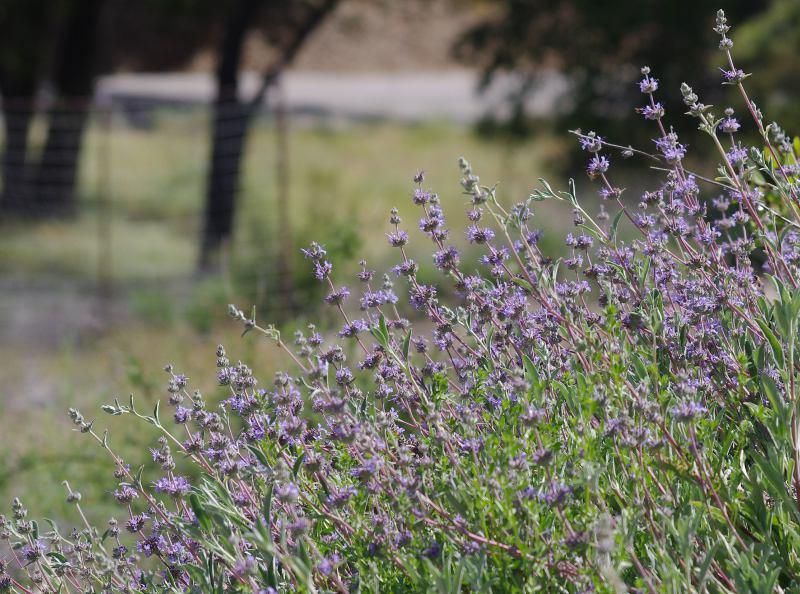

Salvia 'Gracias' clevelandii X sonomensis
Salvia 'Gracias' has gray-green foliage and pale purple flowers. It is very low growing only about 6 inches to a foot tall. It makes an excellent ground cover. It tolerates dry climates the way a species would. It survived in our demonstration garden on 12 inches of rainfall in full sun with temperatures regularly exceeding 100 degrees F. It is great for covering up retaining walls or stabilizing rock walls. It drapes gracefully down the face of the wall and can tolerate reflected heat off the wall. We have used it in very high deer areas and it has been ignored by them. It attracts lots of butterflies and hummingbirds.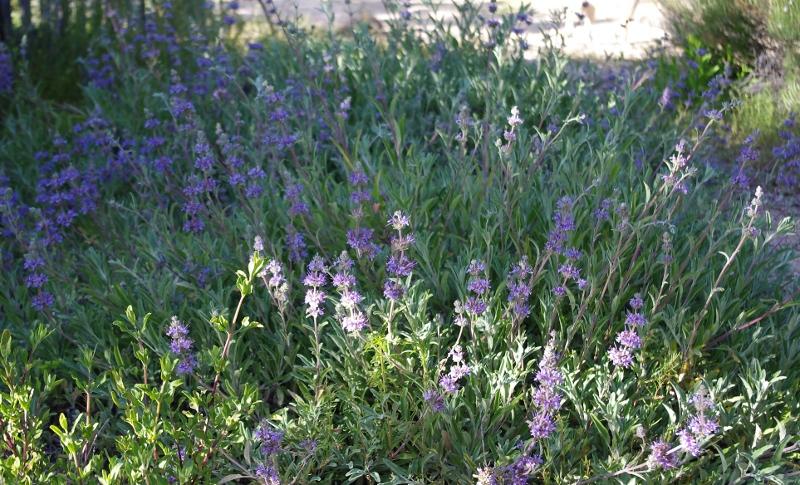
Salvia 'Dara's Choice'
'Dara's Choice' is a hybrid between Salvia mellifera and something else, maybe Salvia sonomensis. It has green foliage and a decent blue flower. The growth rate is exceptional.Similar to Salvia Mrs Beard.
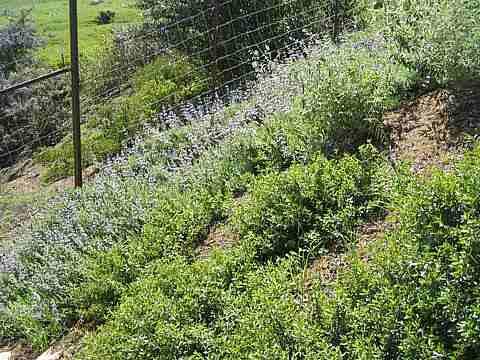
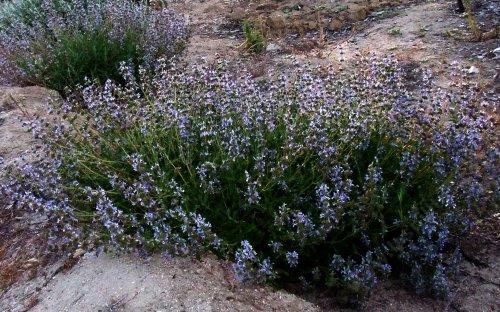
Salvia Mrs. Beard
Mrs. Beard is a dark green creeping or mounding sage that has blue flowers. It has done well in most Coastal California gardens in full sun. As you get closer to the Mexican border it needs more water and some afternoon shade. Although Dara's Choice came from the same species, Mrs. Beard is larger and can be used as a large groundcover, where Dara's Choice is useful as a small groundcover or in the pockets that are too small for Mrs. Beard.
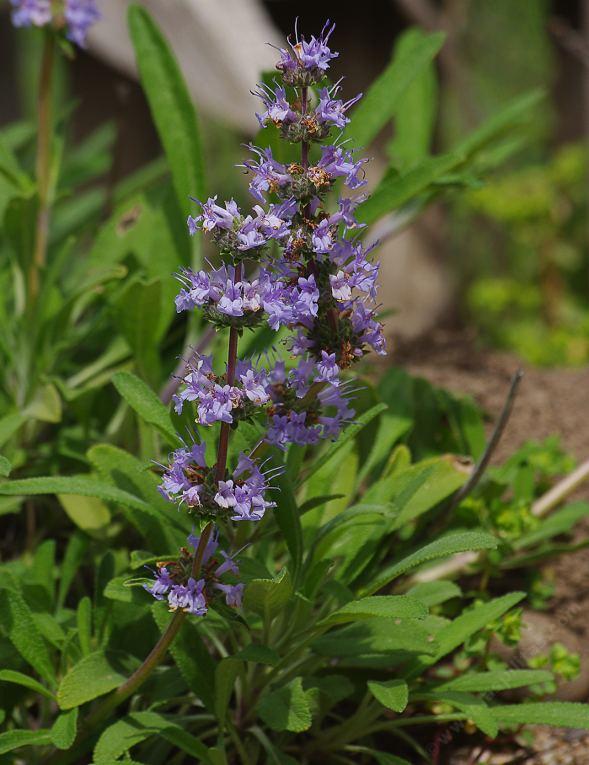
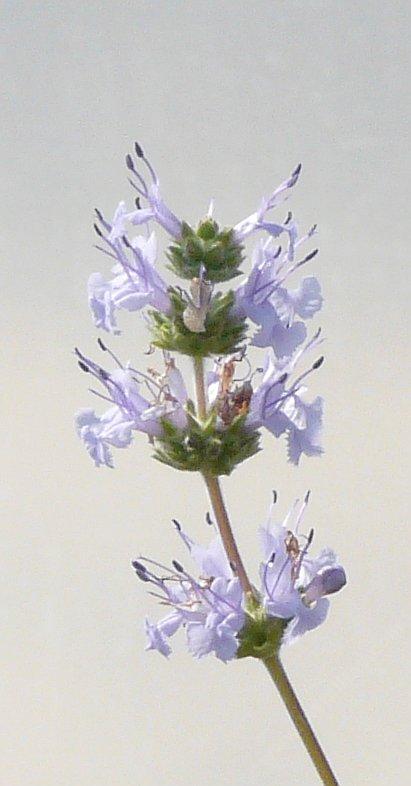
Salvia Vicki Romo
Vicki Romo was apparently a hybrid between Salvia clevelandii, Salvia apiana, maybe Salvia leucophylla and others. The wildlife seem to like the seeds and flowers. It's easy to grow and has large flowers.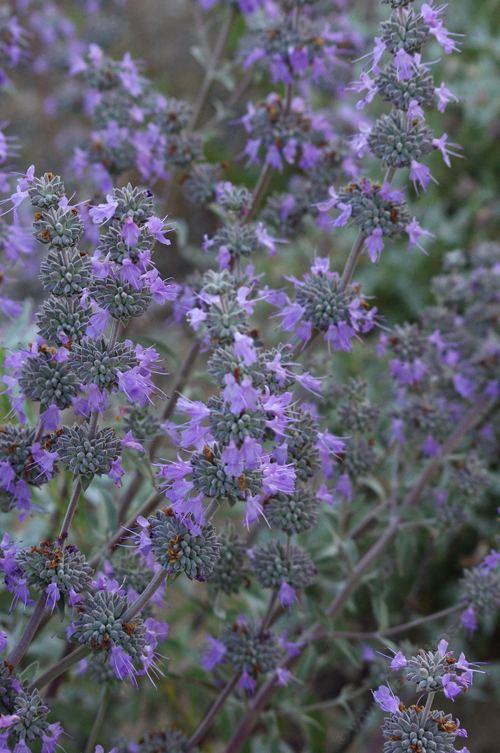

The other Sages native to California
(Other stinky things that are also called sages but are not.)