California Honeysuckles, Lonicera spp.
California honeysuckles are not aggressive vigorous vines like the kind you see completely engulfing chain link fences. They tend to be more like open shrubs that couldn't quite stand up on their own and needed to hold onto a few of their neighbors. You'll usually find most of them under a bush or growing up into the bush giving honeysuckle flowers to a manzanita or Ceanothus.
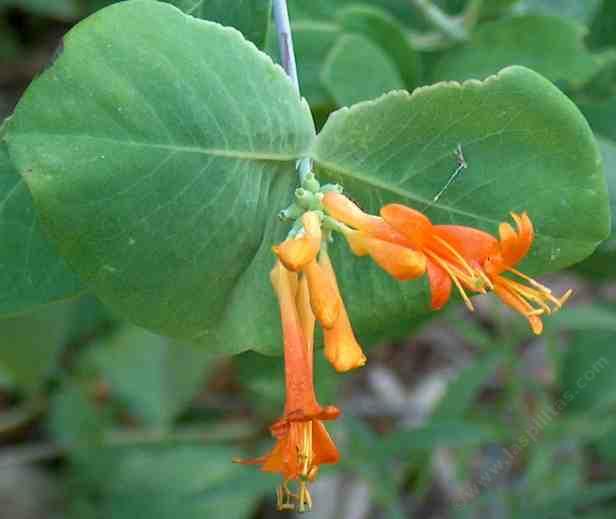
Lonicera ciliosa, Orange Honeysuckle.
This honeysuckle has been hard for us as it seems to want the be in Northern California.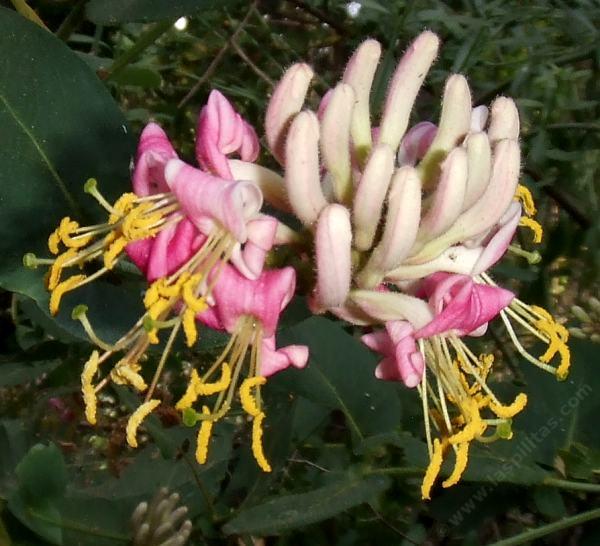
Lonicera hispidula, California Honeysuckle.
In Lonicera hispidula the upper leaf pairs are fused around the stem, the leaves are with obvious stipules, the corolla is glandular-hairy. Its pink flowers are used by hummingbirds. The red berries are eaten by birds. This drought tolerant, deciduous,climbing shrub does best in part shade.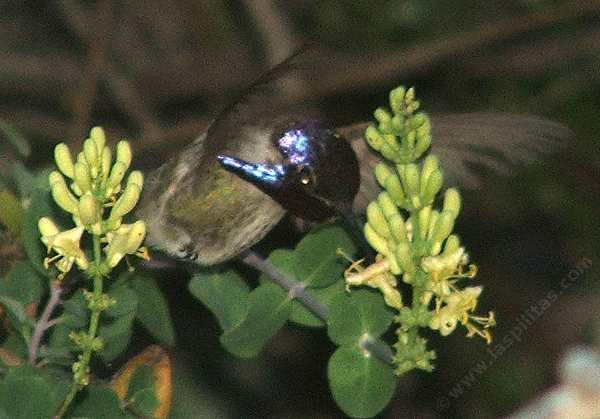
Lonicera interrupta, Chaparral Honeysuckle.
This tough drought tolerant honeysuckle grows in the hot dry Chaparral of the interior coast ranges. It is happy growing with Chamise, Pitcher sage , Redberry or Elderberrry usually on north facing slopes.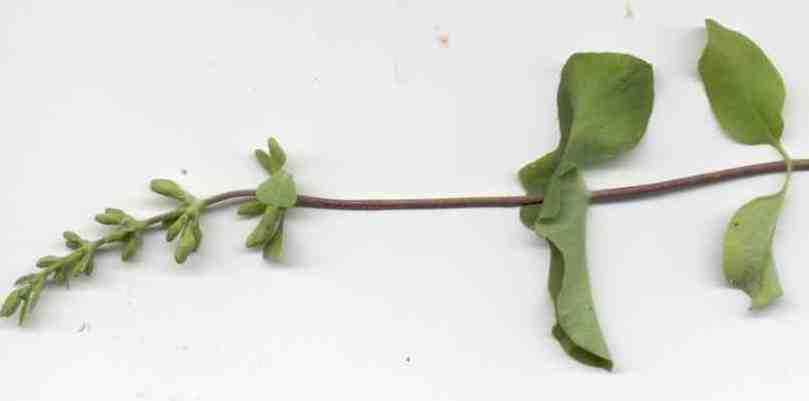
Here is a Sierra
form of Chaparral Honeysuckle, Lonicera interrupta. It has
fuzzy new growth, and old growth is nearly smooth with dull
green and smooth leaves.. Lonicera interrupta
is an easy id. Look for the connected top leaves and yellow flowers.
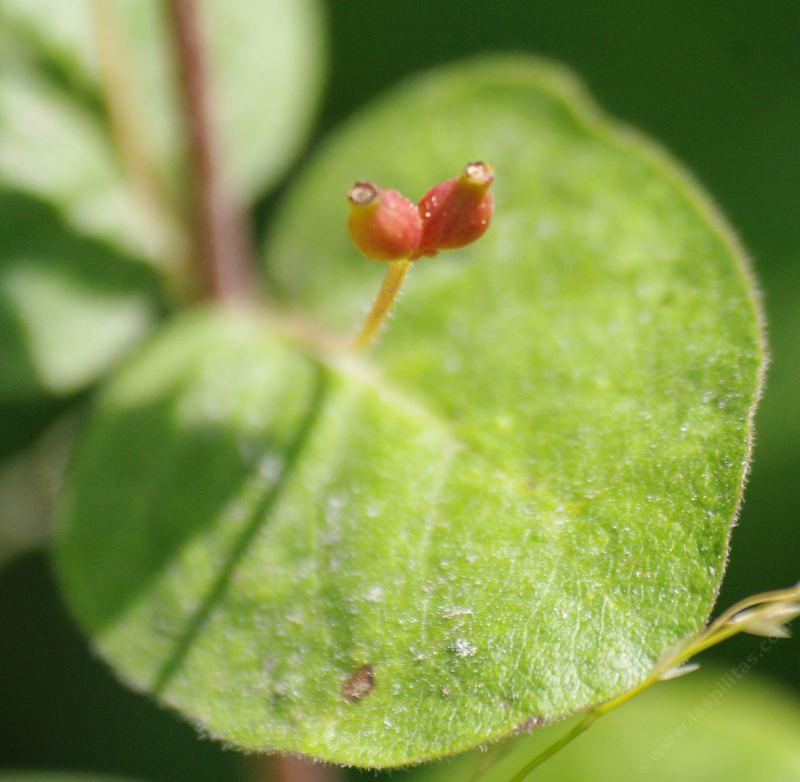
Lonicera involucrata, Bearberry Honeysuckle
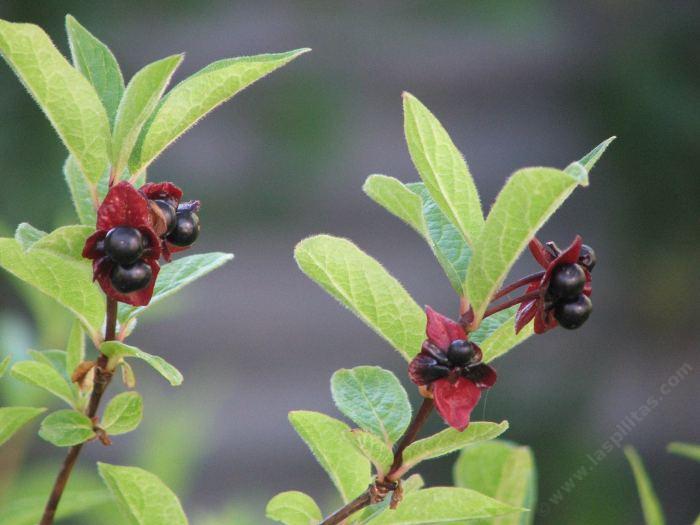
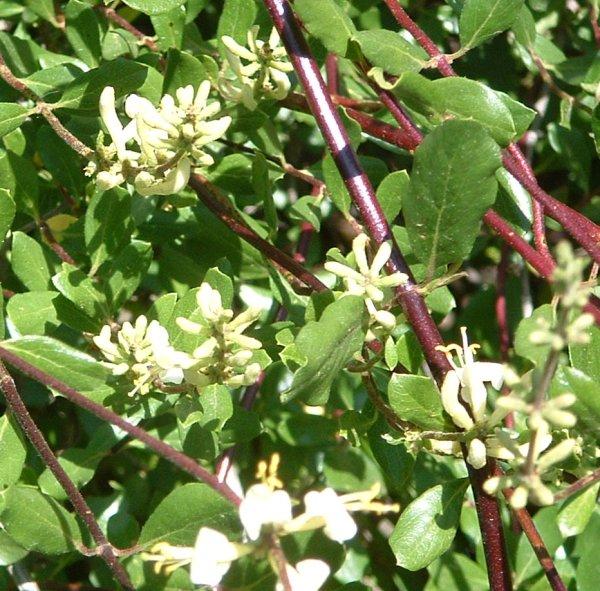
Lonicera subspicata denutata, Chaparral Honeysuckle
This is a nice ground cover with yellow flowers and attractive shiny foliage. Notice the underside of the leaf is dull or white.
Lonicera subspicata can be
very confusing as some of the L. denuata forms look VERY
similar. This form occurs around Santa Barbara. A number of the floras
have the key transposed and and L. denuata keys as L.
subspicata. We have no idea what it's
supposed to be like.
Lonicera subspicata denudata as it occurs in inner San Luis Obispo county. (This is new growth.)
Lonicera subspicata denudata as it occurs in inner San Luis Obispo county. (This is new growth.)

Lonicera subspicata Johnstonii, Southern Honysuckle.
In the underside of the leaf is kinda yellowish. A common occurring hybrid between the species Lonicera hispidula and Lonicera denudata. Sometimes called Lonicera Johnstonii. This one has yellow/pink flowers.Lonicera hispidula, California honeysuckle