California Native Oaks and Mycorrhiza
The Growth and Ecology of California Native Oak Trees
Celeste Wilson- Las Pilitas Nursery- May 13, 1995, Atascadero Oak Conference. (This page was created from notes for a seminar Celeste gave.)
Oaks in Chaparral, Oak Woodland, etc.
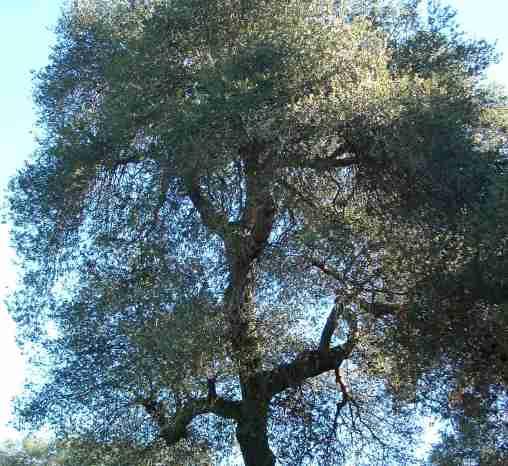
Most Oaks are considered stress-tolerants- that is, they live a very long time (500+ years), live in harsh environments, deal directly with the stresses, have thick bark in fire areas, have a strong relationship with mycorrhizal fungi, are drought tolerant, and crown sprout.
What is mycorrhiza?
Oak trees live in association with usually two kinds of fungi called mycorrhiza. These fungi live on or in their roots. The fungi also extend beyond the oak trees roots to collect nutrients and water for themselves and the oak trees as well as other plants hooked up to this mycorrhizal grid.
One kind of this mycorrhizal fungi is called Ectomycorrhiza, as these live on the outside of the oak root, and you can see them with the naked eye. They extract nutrients from the oak leaf litter, as they break it down, and share some of these nutrients with the oak tree. They live in the top four inches of soil under the canopy of the oak tree.
For someone who has never seen Ectomycorrhiza you might think it was dry rot, or the roots had knobs instead of root hairs.
The other kind is called Vescicular-Arbuscular Mycorrhiza, or VA mycorrhiza. This kind lives inside the oaks roots and are microscopic. They live in the soil zone below the ectomycorrhizal fungi, from four inches below the soil surface to 20 feet down into the ground.
What does the mycorrhizal fungi do?
Oaks need these fungi to live; that is, oaks are obligately mycorrhizal.
The association that oaks have with these types of mycorrhiza is called symbiotic. This is a relationship where each partner shares something it possesses with the other partner. In the case of the oak and the mycorrhizae (mycorrhizas): The mycorrhizal fungi provide nutrients and water to the oak. Mycorrhiza can be a thousand times more efficient than root hairs at extracting minerals and moisture. The fungi also protect the oak from diseases, that is, they are like the oak tree's immune system. The fungi produce chemicals that inhibit pathogenic bacteria, fungi and herbivores.
In return, the oak provides carbohydrates, food the fungi cannot make because they do not contain chlorophyll, Only green plants such as the oak contain chlorophyll, and can make food from the sun's energy. Oaks also bring up deep water that the fungus can't get to.
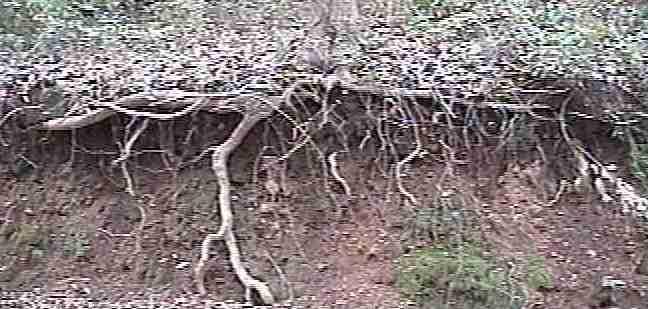
Another critical function of these fungi is erosion control. The tiny strands (hyphae) of the body of the fungus wrap around individual particles of sand or clay and, in addition produce a glue, that helps hold soil particles together, thereby controlling erosion. Sharon Rose's photo is a good illustration (see reference section, Rose, Sharon ).
These fungi form connections underground from oak tree to oak tree and to other plants in the community, thereby interconnecting most of the plants of the plant community. If one area of the forest has excess nutrition or moisture the fungi will attempt to balance the forest.
What happens if the mycorrhizal grid is disturbed?
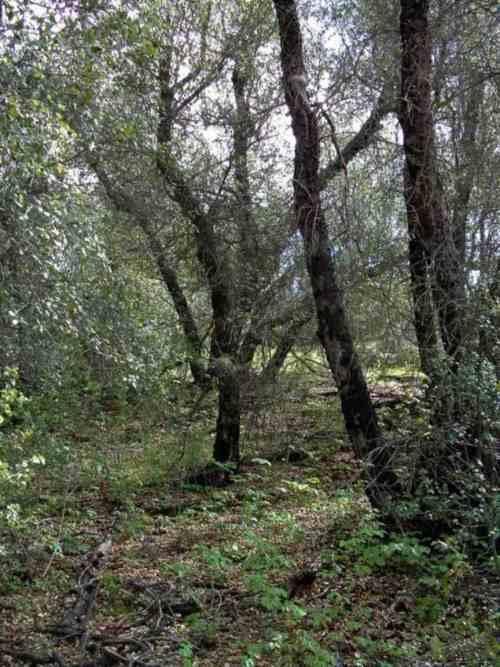
In California native ecosystems there are many more fungi in the soil than bacteria; the numbers are usually 10 fungi to 1 bacterium. This is a critical point because, if the native ecosystem is broken down, such as when a disturbance occurs, and there is a mass invasion of alien plants, the numbers change. In these situations, where alien plants are now the dominant species, and there are more bacteria than there are fungi. This phenomenon is called an ecological switch. It is as if all the numbers are automatically changed, just as if a light switch is turned on or off. The change in the ratio of fungi to bacteria demonstrates that the change in the ecosystem occurs from the microscopic level up to the level of the massive oak trees. This is very bad news for the oak tree because, remember, its immune system, its water, and its nutrients, depend upon the dominance and integrity of the fungi.
For example, think of a small section of oak woodland, a lovely hill covered with oaks and pines and their associated plants. Then imagine a soil disturbance, such as a caterpillar tractor climbing this hill, turning this way and that to avoid the trees. The result is gashes of bare soil, where the associated plants were torn up. When the associated plants were torn up and the bare soil was exposed, the threads (or hyphae) of the mycorrhizal fungi that are attached to the roots of those plants were also broken. These threads are the body of the fungus. Within this body nutrients and water are held. Guess what leaks out all over the ground and is now available for any enterprising weed to pick up? Yeah, nutrients and water. What do weeds dearly love? Lots of nutrients and water!
Limited soil disturbance does occur naturally such as rodent activity, but this is very minor if the habitat is undisturbed, and has a healthy plant community. ( When an area becomes disturbed and has an influx of alien species, usually lots of grasses certain rodent populations explode.)


How does ecological succession apply to mycorrhizal fungi?
As the oak tree grows, different species of fungi live with it. Also, more species live with it as it grows. On an old oak tree, there may be 250 species living in symbiosis with the oak. Also, as the season changes from winter to spring, for example, the dominant species of fungi living on the oak change. More water is tolerated when the oak tree is young because the species of fungi that live in association with the oak tolerate more water. Remember, though, this relationship between the oak and the fungi is bases on stress. This means the fungi will only live with the oak if the oak is under slight water or nutrient stress.
How does the plant community use mycorrhizal fungi?
Oak trees need their associated plants to do their best, they do not do well alone, just as people cannot function as well alone, but need their family and friends.
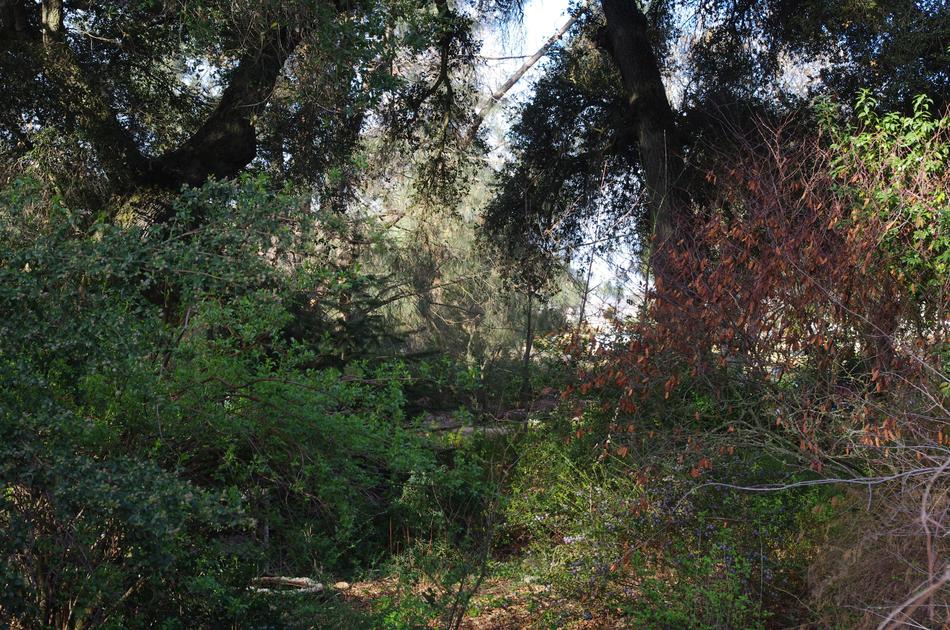
For example, the Coast Live Oak, and the other plants within its plant community (Manzanita, Ceanothus, Ribes, Redberry, Coffeeberrry) are hooked into the mycorrhizal grid and are supporting each other.
How does fire affect mycorrhiza?
Fire is a natural occurrence in Mediterranean ecosystems (every 90-250 years)
Oaks have ways of dealing with fire. After fires, many leaves on the tree as well as leaf litter on the ground is lost, and many shrubs are killed.
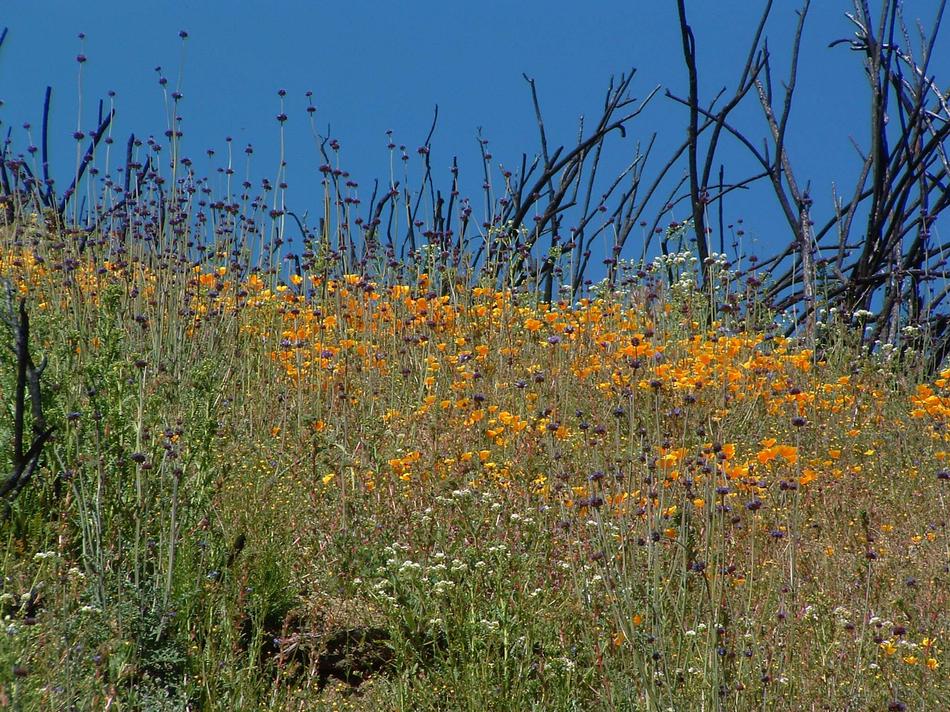
The mycorrhiza and the roots of many plants ( the crown sprouters), are still alive and are the nutrient sink and the jump-starter for the ecosystem. The dry soil insulates the seeds from the heat; after a fire, the fire-following species germinate and immediately connect to the mycorrhizal fungi. In so doing, the fungi now have a partner that can photosynthesize, and they share those carbohydrates with the crown- sprouting species so that the shrubs can grow back as quickly as possible.
After a fire, when any alien species (especially alien and native grasses) are dumped into the community, they grow faster than the fire- following species capturing the nutrients, and some even connect to the mycorrhizal fungi. The alien species take nutrients from the fungi, but DO NOT SHARE THEIR CARBON COMPOUNDS with the fungi specific to the later stages of succession and so blocks succession of the community and the site becomes a weed-infested, remnant of its former self. Also, the seeded grass replaces the litter layer the oaks need for their nutrition and immune system.
The grass does not return food back to the fungi, effectively starving it, and hence to the oaks and ecosystem

How can non native plants, especially grasses, take over?
The ecosystem is very vulnerable after a fire. There are no aboveground parts, such as the vegetation, to photosynthesize and produce carbohydrates. Under normal conditions, a plant community inhibits growth of non-community plants. Also, there is no leaf litter to retain moisture, support ectomycorrhiza, and inhibit weeds. There is a also substantial increase in nutrients, ash from the burnt plants.
Also, the grass is usually an aggressive species and can grow faster, with superior competitive ability, than the fire-following species
This increases soil erosion, because the mycorrhiza hold the soil particles together, and if they are effectively starved out in this large area where the fire-followers would grow, they die. The soil particles are not held in place, the soil integrity is lost, and washes or blows away. Also, many species of 8ft. tall shrubs (average height) with multi-layered root systems 1/2 inch to 20 ft. in depth, are replaced by 1 ft. tall grasses (average height) with 1 ft. To 2. ft. root systems. The root surface area (in combination with the fungi) is significantly reduced, to say the least!
How can non native plants, especially grasses, take over?
The ecosystem is very vulnerable after a fire. There are no aboveground parts, such as the vegetation, to photosynthesize and produce carbohydrates. Under normal conditions, a plant community inhibits growth of non-community plants. Also, there is no leaf litter to retain moisture, support ectomycorrhiza, and inhibit weeds. There is a also substantial increase in nutrients, ash from the burnt plants.
Also, the grass is usually an aggressive species and can grow faster, with superior competitive ability, than the fire-following species
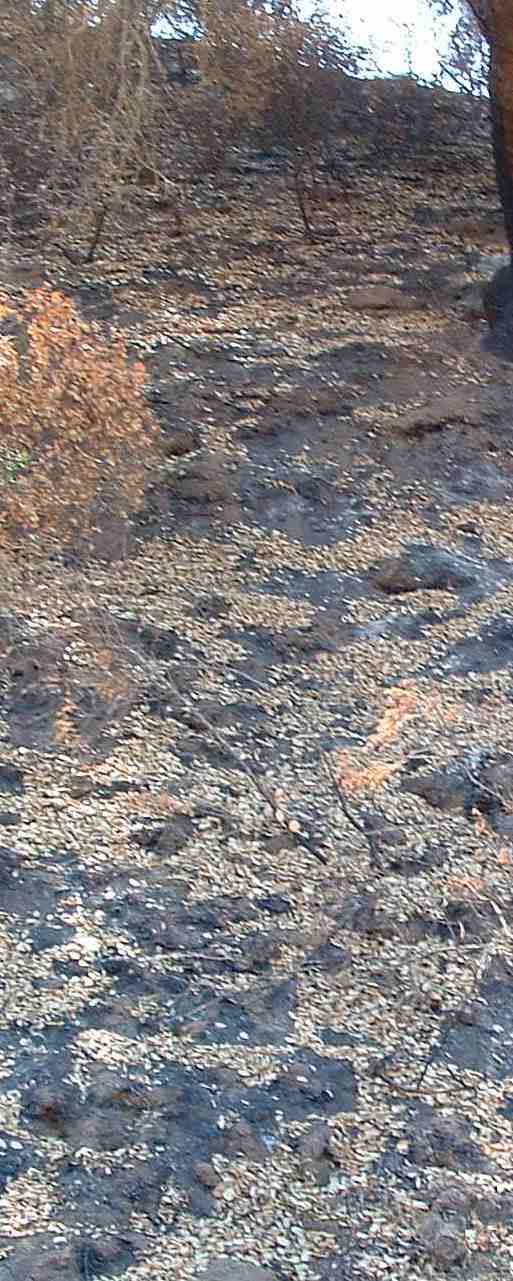
This increases soil erosion, because the mycorrhiza hold the soil particles together, and if they are effectively starved out in this large area where the fire-followers would grow, they die. The soil particles are not held in place, the soil integrity is lost, and washes or blows away. Also, many species of 8ft. tall shrubs (average height) with multi-layered root systems ½ inch to 20 ft. in depth, are replaced by 1 ft. tall grasses (average height) with 1 ft. To 2. ft. root systems. The root surface area (in combination with the fungi) is significantly reduced, to say the least!
How do you make the oak and fungus healthy?
1. Don't use mycorrhizal inoculum. The fungal spores are already in the soil. (They are very hard to destroy). Just do things to encourage their growth.
2. Absolutely no grass or weeds! They will replace the litter layer (fungi absorbs nutrients from this mulch layer, and it is a nutrient sink for the oaks via the fungi)
3. No water in the dry season under the drip line of the oak- the fungi will disconnect
4. No tilling or disturbance of the soil- this encourages weeds, encourages bacterial growth, breaks fungal connections, destroys the body of the fungi
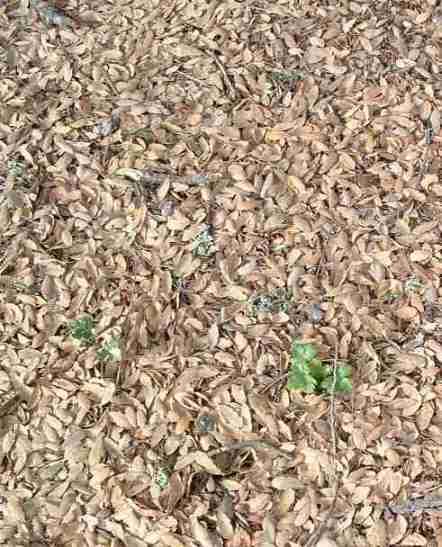
5. Don't remove leaves under the drip line of the oak tree. Again, this is the nutrient sink for the fungi. It also helps discourage weeds, retains moisture, and keeps the soil healthy (not compacted)
6. No fertilizer! The mycorrhiza will disconnect. It encourages the invasion of competitive, non-mutualistic alien species. The oak will also be more susceptible to diseases.
7. Try to plant associated plants. For example Coffeeberry, Currant/Gooseberry , Ceanothus, Manzanita, Honeysuckle, and Ninebark. As a community of plants together, they can better resist the invasion of competitive, non-mutualistic alien species.
8. No insecticides or fungicides- very detrimental to fungi
9. Certain herbicides have worked O.K. for us to inhibit grass and weeds. These are non-invasive methods that do not disturb the native ecosystem. Roundup has worked for us, it is neutral to the fungi directly and as little effect mature (non growing) natives because their defense is the fungi, not the formation of lignin, so actually aids the oak in getting rid of the grass and weeds.
Also, we utilize the preemergent herbicides Treflan and Surflan. Why? They have proven to be most effective, while not harming the native plants or the mycorrhiza. They exterminate about 90% of the weed seeds, they affect only the top ½ inch of soil, and they do not disturb the essential litter layer or the soil. In a habitat with annuals as dominants they would be detrimental for obvious reasons.
10. Tale of the tree surrounded by the planter two feet high- yes it is alive after twenty years, yes it was adversely affected. You couldn't call it a tree, more of a stump with branches sticking out. Its next door neighbor is 60 feet high with a four foot diameter trunk and the affected tree has a trunk as big and it is 15 feet tall and the form is that of a pollarded tree, vestigial and disfigured. Why did it decline? The tree roots and their associated fungi need air to breath. When several feet of soil are piled on top of the roots, the air supply to the roots is effectively blocked. The ectomycorrhiza that was at the surface with the leaf litter is now buried to deep to do its job.
There are other fungal friends associated with the oaks, some live in the leaves, some in stems, some in the trunk, like mycorrhiza (mycorrhizae)they share resources to protect the tree and themselves.
For more about mycorrhiza and roots see
Plant mycorrhizal California native plants.
Mycorrhiza, roots and California Native Plants, native landscaping
Classes on California native plants, mycorrhiza and the native ...