California Gardens with Deer Problems.
Deer resistant California native plants.
Plants for Low Level Deer Problems Deer resistant in most city gardens.
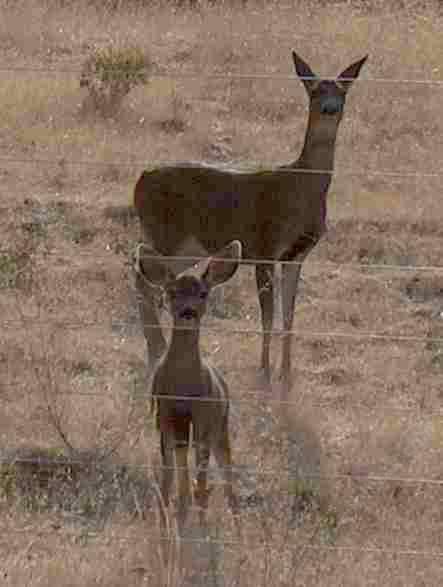
At this level you still have fruit trees and roses. A little damage is noticed every month or so, or once a year (during Deer Season) you have leaves missing. At this level move the plants the deer like up near the house and or fence them. The fence can be very minor and still be effective at this level. This is the level all the deer tricks work, i.e., soap, lion pee, human hair etc.. If you are at this level plan on moving to a higher level as the area develops and the deer get smart. This is only deer preschool. Wait till their teenagers!
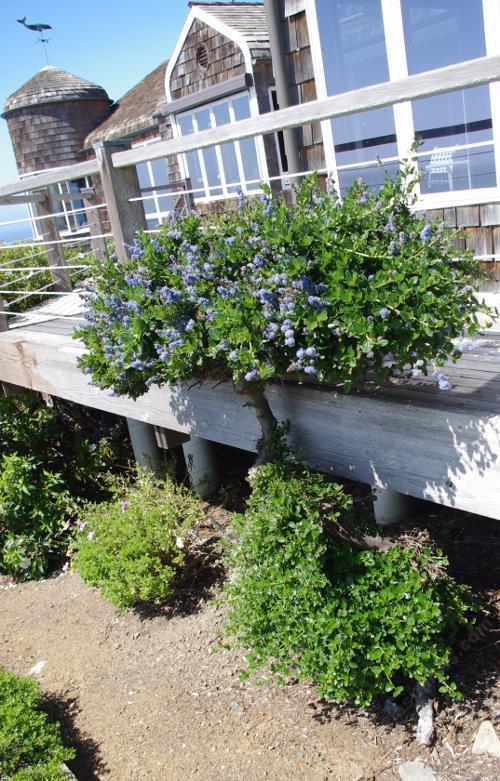
The Ceanothus in the back of this photo are the same as the sticks in front. They got snacked on by some hungry deer.
At this level the only plants we have that will be eaten are: ( don't plant these)
Ceanothus griseus, Carmel manzanita
Ceanothus thyrsiflorus, 'Snow flurry'
(Cage all plants the first fall if you are watering or fall planting.)Plants for Moderate Level Deer Problems
The fruit trees have no fruit or leaves below 4'. Roses have every leaf removed each summer-fall. Plants listed as 'Deer proof' hold up well but are nibbled on once or twice/year. If you water your plants, you will have more damage.
Do not plant these plants in a moderate
deer problem area. They are sometimes lissted as deer resistant.
Arctostaphylos from areas other than your own.
The following plants are OK to plant
Ceanothus, most types will be browsed. The
ones listed in the high deer section can be tried or:
Ceanothus
'Julia Phelps', Julia
Phelps grows 6 to 8 ft tall. It has tiny crinkly dark green
leaves and blue flowers. It will survive without water on inly 9
inches of rainfall.
Ceanothus 'Dark Star', Dark star is a showy Ceanothus that prefers coastal climates to interior areas. It has tiny leaves and round flower clusters. Dark star grows 6 ft tall and eight ft wide.
Ceanothus verrucosus, Wart-stemmed lilac grow 3 to 6 ft tall. It as small dark green leaves and white flowers. It is drought tolerant. Wart-stemmed lilac tolerates deer and will grow in sand. It is hardy to at least -4 deg F and grows in full sun. Good deer resistance.
Ceanothus gloriosus, This low growing Ceanothus grows 1 to 2 ft tall. It is native to the coast of northern California yet it tolerates the dry arid climates of the interior. It likes a little shade in the interior and full sun along the coast. It likes sandy soil but will also tolerate clay. Deer don't eat it much.
Ceanothus crassifolius, This Ceanothus makes a nice small tree or open shrub up to 12 ft tall. It is a very tough plant. It grows in full sun in the high temperatures of southern California. It is also cold tolerant and drought tolerant. It likes clay. Deer don't like it much.
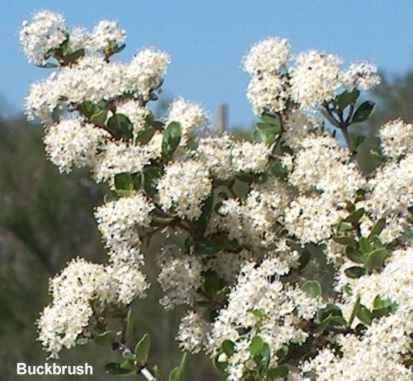
Ceanothus cuneatus, Buckbrush is native around our Santa Margarita nursery. It is very drought tolerant, growing in full sun, in our 115 degree summers. It has blue or white flowers and tiny shiny dark green leaves. It is very cold tolerant. It will grow in sand or clay. Deer don't like it much to eat but they like to hide in it to sleep. It grows 3 to 6 ft tall.
Ceanothus tomentosus olivaceus Ramona lilac likes full sun and can tolerate dry conditions. It likes well-drained soil. It has very small leaves packed tightly together on the stems. It grows 6 to 9 ft tall. Ramona lilac has white flowers. Good deer resistance if not watered.
Fremontia
has to be caged until it is tall and woody. No deer resistance
up to about six foot high.
Lyonothamnus floribundus, Catalina Ironwood cage until it is tall and woody.
Pines will have their new growth eaten if Bambi can reach it. Cage the small pines.
Planting in the moderate level is easier in the spring. Fall planted plants need to be caged the first fall.
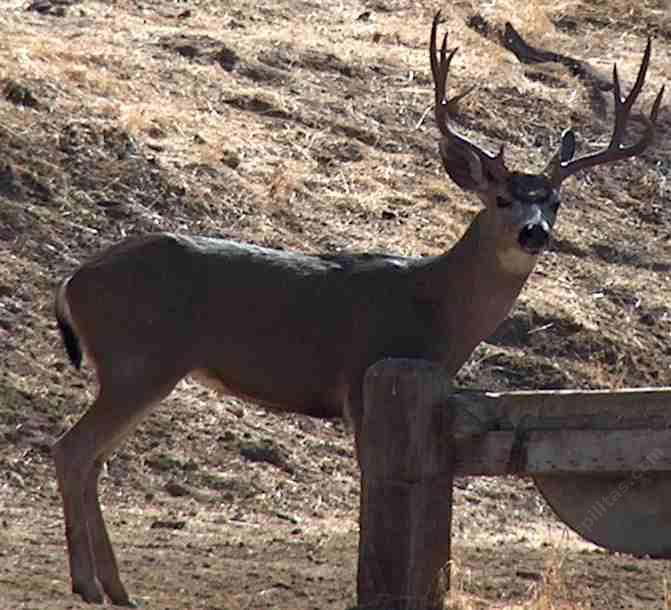
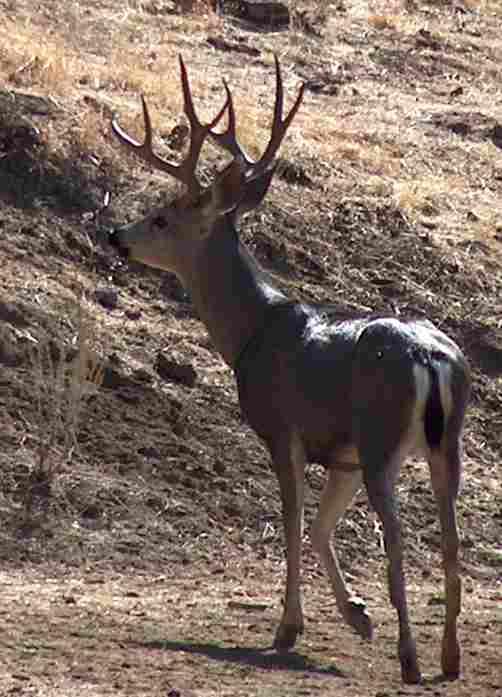
Plants For a High Level Deer problem. Usually high deer resistance.
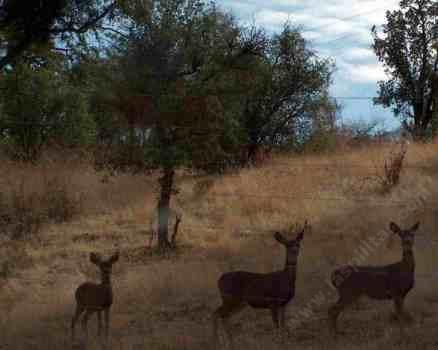
At this level they're living with you. When you look out during the day you see them sleeping and they're in the yard all night checking out the plant material. At this level we've had oleanders and buckeyes eaten. Redwoods and other conifers have been pushed out of the ground by the bucks cleaning their antlers. All the plants on the other deer lists are gone in a night.
In the nursery we got to this level for a month at the end of a 7 year drought. We found the only way we could keep the deer off of the plants was a 7 foot fence, combined with a motion detector. We got so we recognized the different deer that were 'regulars' on the nursery site. The healthy 'regulars' that had lived in the area their whole lives never gave us much problems. Deer are fairly smart and will learn fast which side of the fence doesn't have a crazy person in his underwear running around screeching at them.
We have experienced some problems with deer that had been forced out of their habitat. Most deer do not range further than a mile from where they were born. When the drought removed their water source they became disoriented and desperate. When deer get this desperate you are going to have problems.
Do not expect bars of soap or hair to protect your plants. Your yard may be stripped. All the other wives tales do not work either.We found that in our situation we had to put in a fence they couldn't easily climb, or crawl under and a motion detector that was connected with an intercom so I was awakened when a deer went to eat the plants. Before I did these two, I had to sleep in the pots.
The deer fence doesn't have to be a fort, simple is often better. If you have a slope you can get a by with a much lower fence. We have one section that is next to a 45% slope that has 3 foot of orchard fence (3 X 4 inch weave) with two strands of barbed wire above it making a 4' fence. They have never jumped it. They have jumped our 7' fence only once that I know of and that was a large buck. (It took him several tries.) They love to crawl under things like gates. We've had them crawl under a gate with a 5" gap.
In this situation we've had some plants completely removed. One buck ate 400 Fremontodendrons in one night. They apparently hate Baccharis because they would come through and pull out 100+ each night and spit the plants out next to the pots. Didn't eat them, just spit them out.
First thing to do is stop watering as fast a possible. Watering doesn't allow the plant to form protective resins (and a few other things) and will make a normally stinky leaved plant, like elderberry, odorless and edible (to the deer).
In these sites we advise the customer to try a few of these plants to see if they pass the 'test'.
Acacia greggii, Cat claw Acacia A well armed shrub-tree that has yellow flowers. They eat new growth only.
Amorpha
californica, Indigo Bush A deciduous shrub that slowly
grows to 4-5'. Deep purple flowers. Native on the property. The
deer have never touched.
Baccharis pilularis 'Pigeon Point', Dwarf Coyote Brush If you cover it for the first year with chicken wire so the deer can not pull the plants up. Plant gallons 8 foot apart and you should have a flat ground cover (really flat if you have deer) in about 2-3 years.
Ceanothus
'Blue Jeans', Holly leaf mountain lilac has been deer
proof on all but one site to date. It grows to 3-4 foot tall and
4 foot wide. It has bright blue flowers on dark green foliage. If
heavily watered or in rich soils deer resistance is lowered.
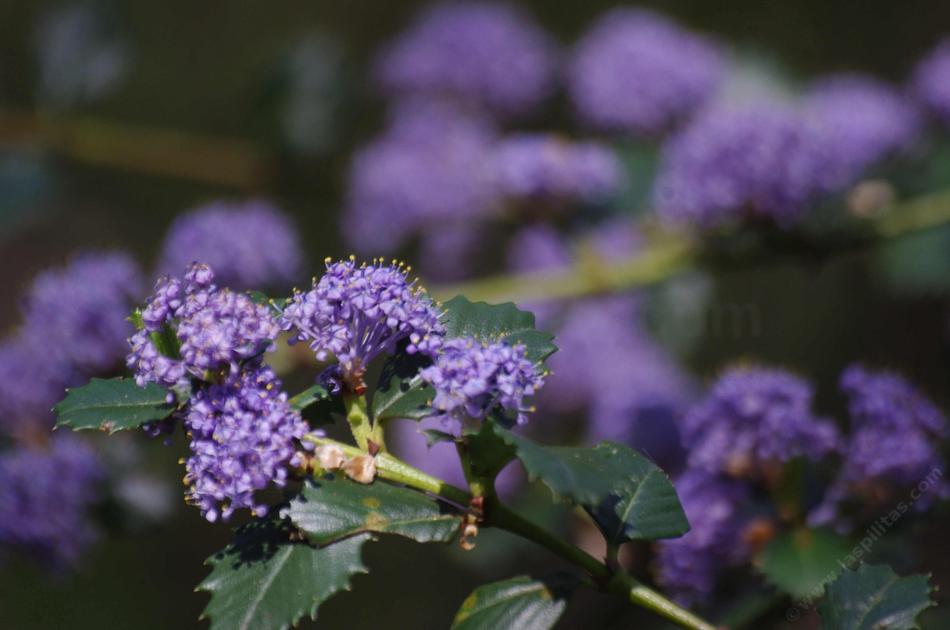
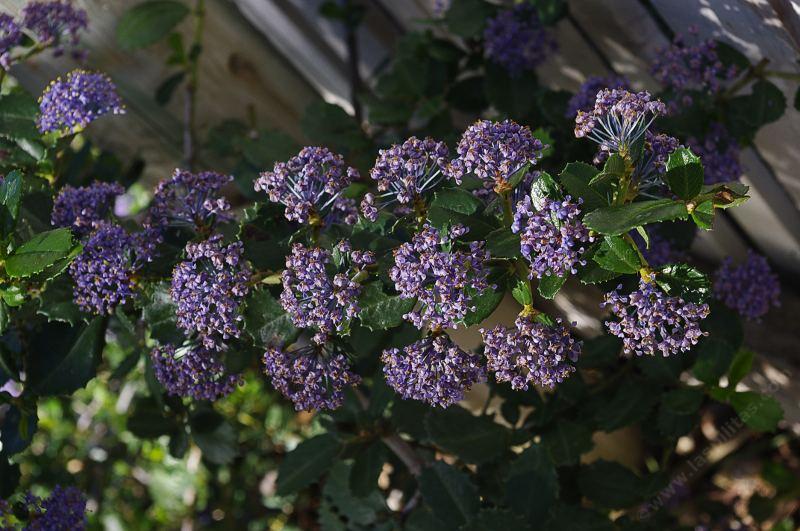
Ceanothus 'Mills Glory', Holly Leaved California Mountain Lilac has been deer proof on all sites. It has dark green foliage and blue flowers on a 3' tall and 6' wide.
Ceanothus rigidus, 'Snowball' has been deer proof on all sites. It has white flowers on a green holly-leaved 3' tall shrub that grows to 6' across.Cupressus species, Cypress. The deer don't seem to eat this at all. However they do like to scratch their antlers on them. Drive 3 T-posts next to these after they get 4-5' tall for full deer resistance.
Diplacus species, Monkey flowers The monkey flowers have not been eaten to date.Very deer resistance.
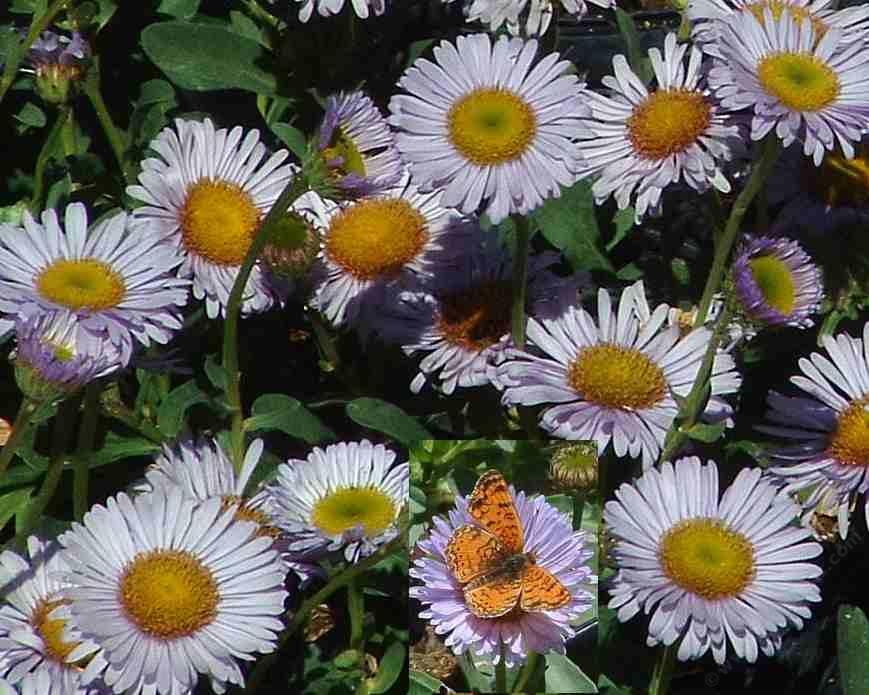
Erigeron glaucus, Seaside daisy. 'Wayne Roderick' seems to be deer proof on most sites. Other forms have varied from never being touched (Cape Sebastian) to never having more than a bump on the stem.
Ferns. The native ferns seem to be safe.
Iris species. They have not eaten these plants on sites with as many as 14 deer bedding on the site. They have eaten the non-native ones. Unknown if safe on sites where they are not native. They do not bother them in the nursery either.
Monardella species, Butterfly Mint. A little perennial with pink or purple flowers. Scented like a mint.
Satureja
douglasii, Yerba Buena. This one will be deer proof if
you let it become summer dormant. It makes a fragrant, low
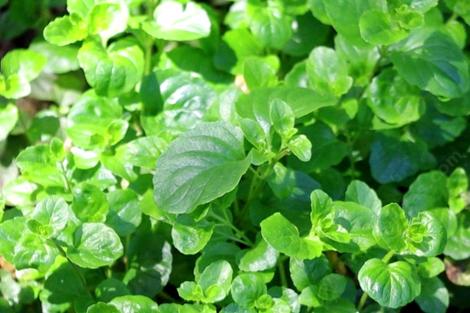
growing ground cover.
Sequoia sempervirens, Coast Redwood. Same as cypress
Sequoiadendron giganteum, Giant-Sequoia. Same as cypress