Planting under California oak trees .
There are many plants that grow naturally under oaks in
California. Some genera are common in most of California and are
commonly associated with oaks.
|
|

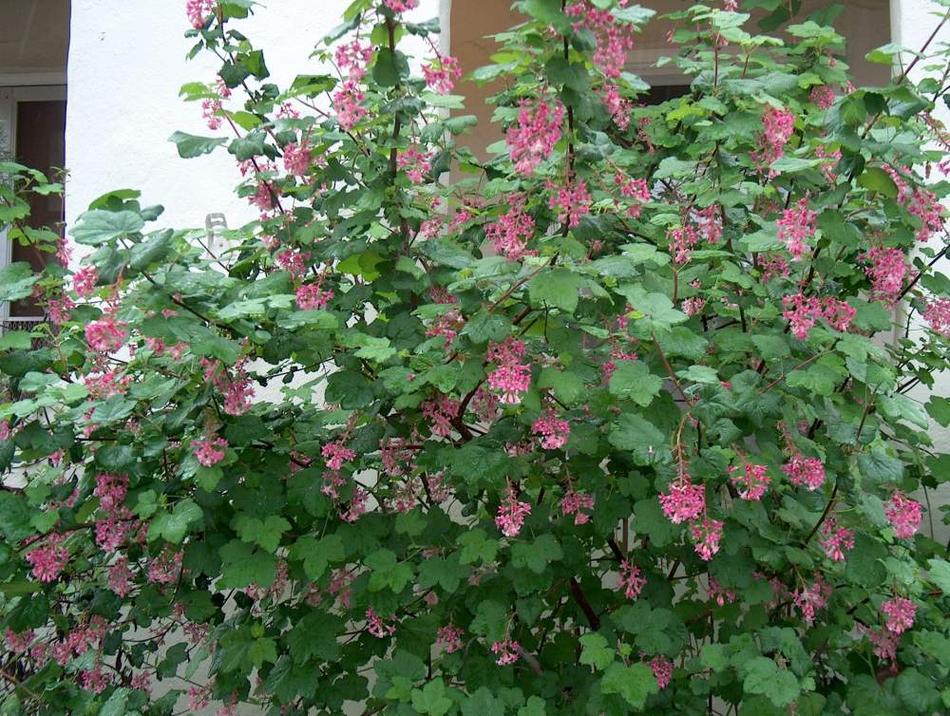
Ribes,
the currants and gooseberries commonly grow in oak
forests/woodlands. On the north slopes the currants grow under the
edges of the trees, gooseberries grow in the openings. On the south
slopes the gooseberries grow up under the drip line of the trees and
currants are in the deep shade. People wonder where the native birds
went. Ribes provide
flowers for nectar, nesting sites and berries for
food. Does your yard have those?
|
Rhamnus,
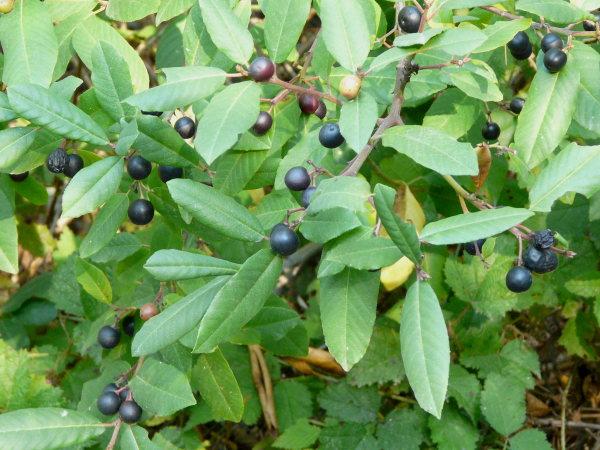
coffeeberry and redberry.
The Rhamnus
genera grow in association with oaks. We've had a number of
people that want to plant 'that little oak with red berries'. They grow
with the oaks and kinda look like an oak. The root systems are similar
to oaks and commonly share resources with oaks. That is good.
|
|
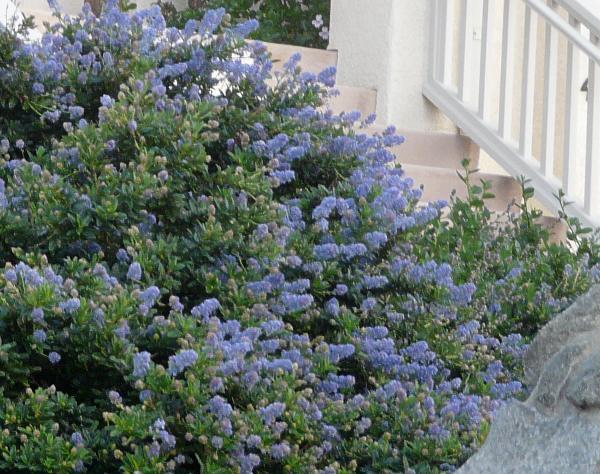
Ceanothus,
the California mountain lilacs usually do not grow in the
deep shade of oaks, but love the edges, half day sun, or under
deciduous oaks. Using Ceanothus
or Arctostaphylos,
you can leave the
heavy mulch under the trees alone and plant the drip line(edge of tree
canopy) to make the oak look landscaped.
|
|

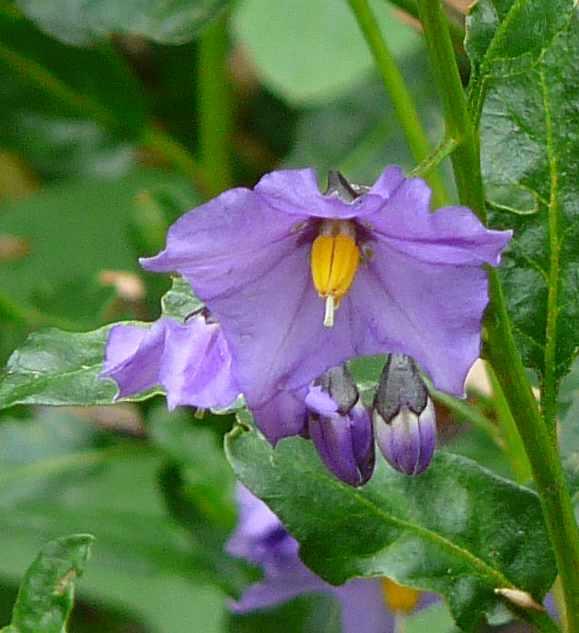
Solanum,
nightshades. The nightshades are common under the oaks in
most of the coastal regions of California. Great bird plant that has
decent looking blue flowers in summer. Plant Vinca major for the
rats, Solanum
for the birds.
|
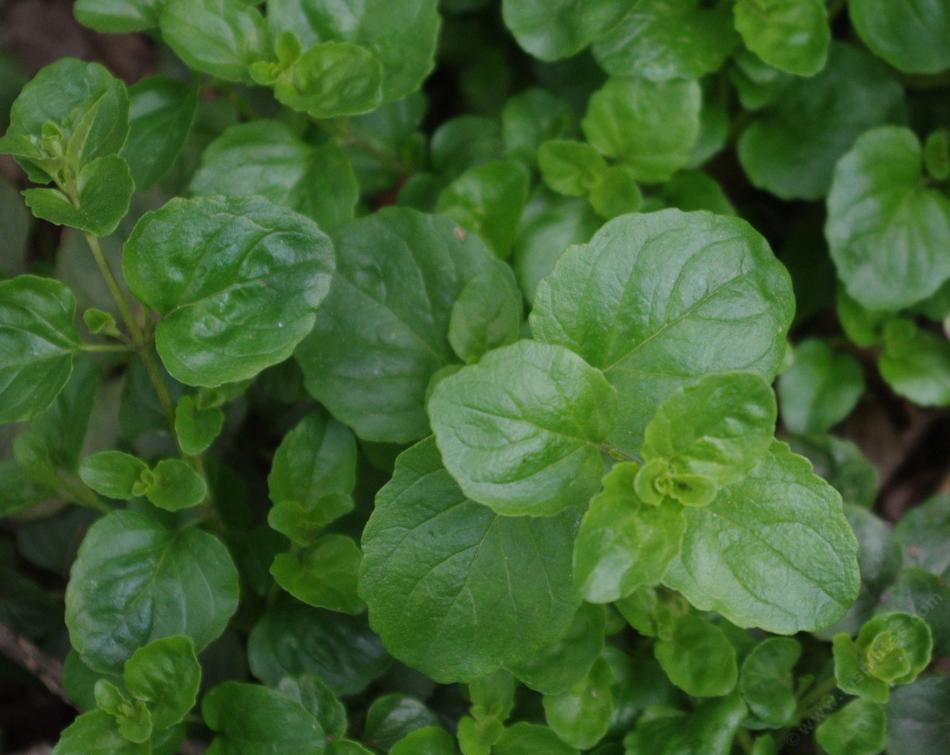
Yerba Buena,
Satureja
douglasii grows in the leaf litter of Coast
Live
oaks, Canyon Live oaks and even Blue Oaks. Excellent along serene
walkways and under benches as it's flat and it smells real good.

Satureja
chandleri is a shrubbier form(1-2 feet) of Yerba Buena that
grows under oaks in Southern California. A snoot will find this beaut
is cute and smells mighty fine, huggy and makes a very clean mess of
green.
Sad, ain't it? Huggy, clean, mess of green and you
don't have one?
|
|
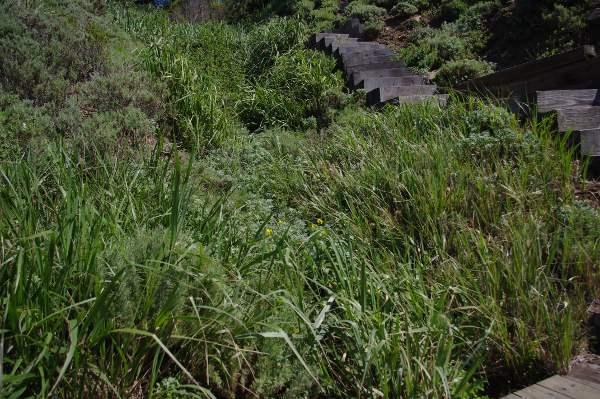
Elymus
condensatus, giant rye is one of the few grasses
that grows
under oaks. Although Giant Rye will grow in full sun, particularly with
regular water, it will grow well in full shade with no extra water in
most of California. For those of you that seem to want a grassy prairie
and don't know a buffalo from an, oh I guess I can't type that.

|
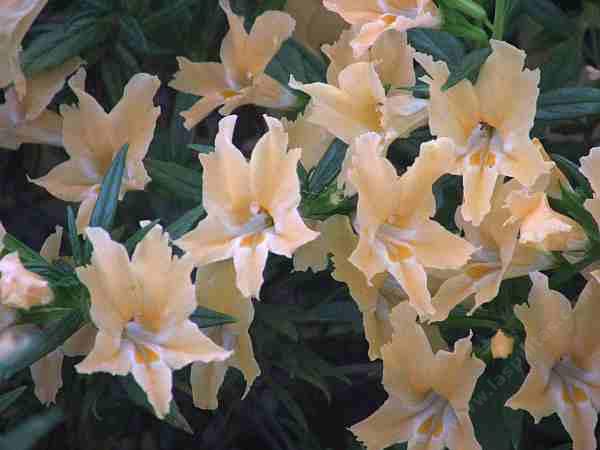
Diplacus
, the shrubby monkey flowers love the edges and half day sun
under oaks. Full shade is a bit too much for monkey flowers, but full
sun is commonly too much. Those little spots of sun under the oaks
where the halo of sun beams come together in the afternoon is where
you plant these. Put a garden bench near that spot with Yerba Buena
under it and the monkey flowers/ hummingbird sage as the feast to look
upon.

|
|
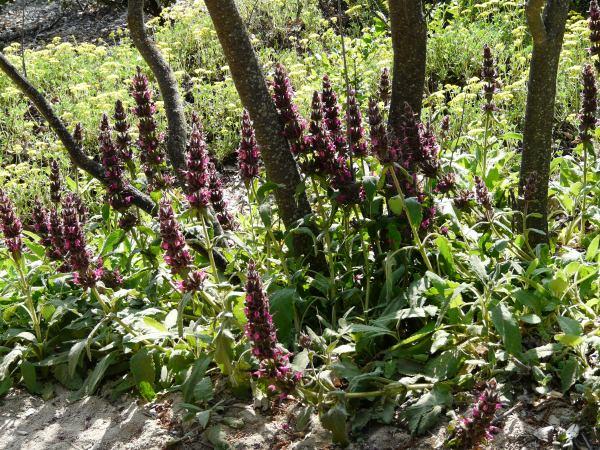
Saliva
spathacea. Hummingbird sage
grows great under the oaks. In
the wild Hummingbird sage grows in full shade and into full sun. I've
only seen a few spots where the weeds haven't overwhelmed the sage and
stunted the tree. In one spot one plant had filled an area of 50X50
feet with the foliage just above the leaf litter making a carpet of
green with pink/magenta flowers that the hummingbirds love.
The question is, is this thing really a sage?
|
Heuchera
maxima and Heuchera micrantha.
The larger alum roots grow well under oak trees.
They form a great interface between a wet spot and the trees. Full
shade to part shade, Heuchera
doesn't like full sun and tolerates the
oaks very well.
|
|
Monardella
villosa and some of the Coyote Mints grow under
or at the
edge of oak trees in much of California. Big hat perennial ladies,
butterflies and hummingbirds like these. Nice flowers and they smell
nice.

|
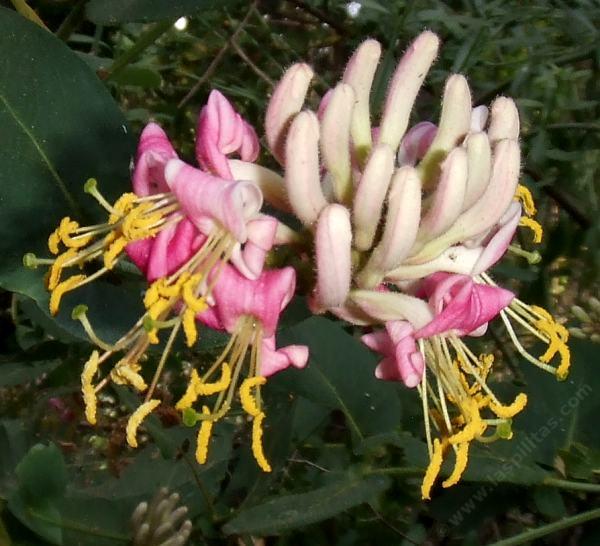
Lonicera
hispidula and Lonicera
denudata Let's see, honeysuckles are generally evergreen,
have pretty flowers, need little care, are usually not eaten by deer,
have berries for the birds and are decent to look at.

|
|
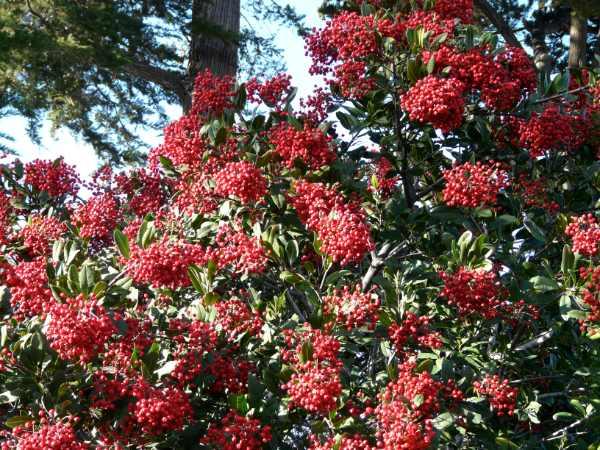
Toyon, Heteromeles arbutifolia,
grows under oaks in most of California. Near the immediate coast Toyons
move into the sun but in areas like Los Angeles or Riverside, Toyons
are mixed with the oaks and commonly grow even at the trunks.
|
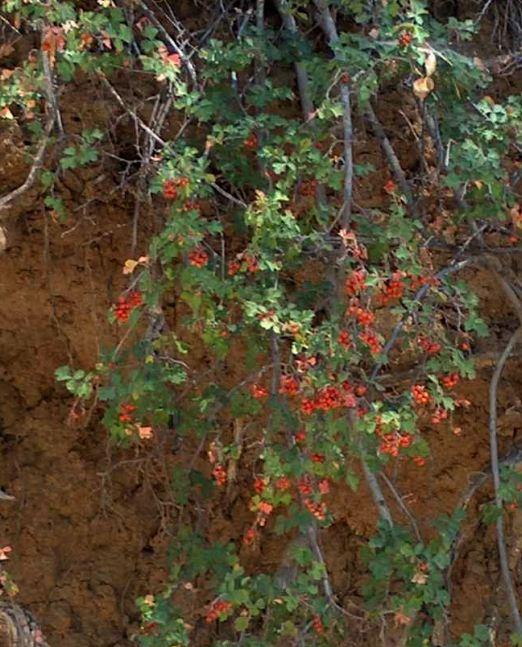
Rhus trilobata,
Squaw Bush grows under oaks in the interior coastal valleys. A
deciduous sub-shrub that has great fall color and berries for the
birds. Funny, the people who HATE deciduous plants are often the ones
looking for 'fall color'.
|
|
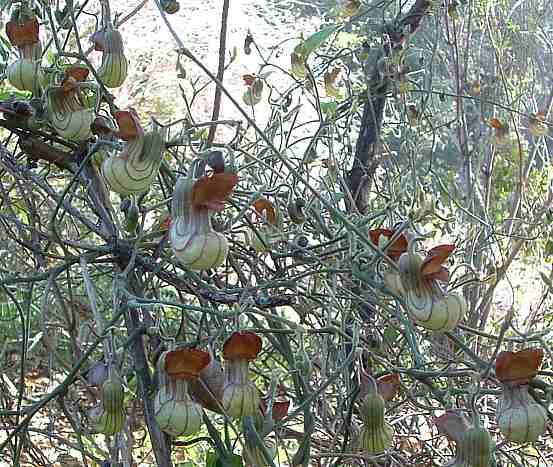
Lepechinia
fragrans and Lepechinia
calycina both do well under oaks with little care. Pitcher
plants can grow in full shade into full sun. Picture a six foot high
shrub with digitalis-like flowers.
|
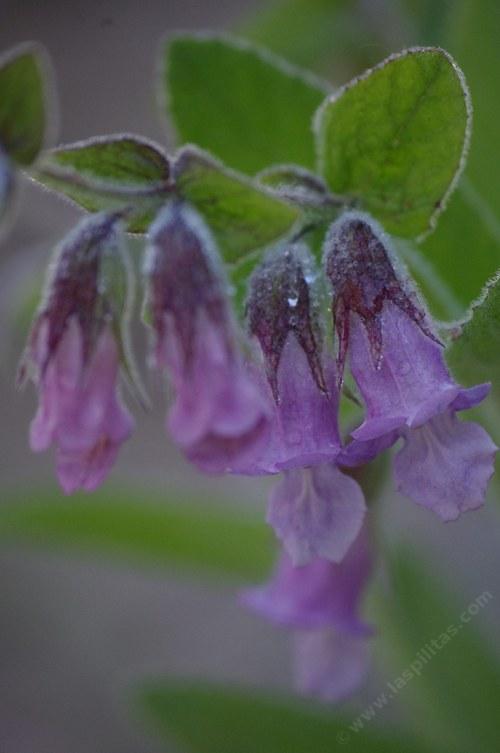
Keckiella
cordifolia and Keckiella
antirrhinoides, grows great under coast live oaks, Keckiella
breviflora grows great under the deciduous oaks , but has
also done ok here under our coast live oaks. This is a deciduous
Penstemon, dead stickus in winter, pretty flowers in summer.
Interesting photo, style looks 3d, I thought it
was a scratch on my monitor.
|
|
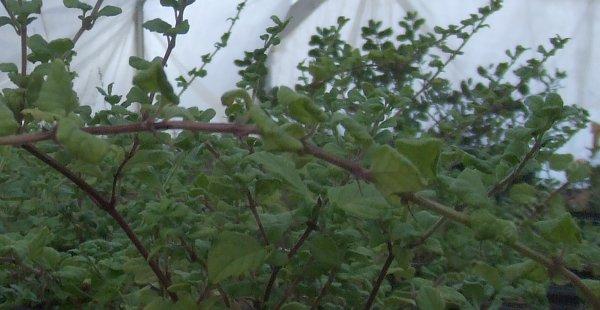
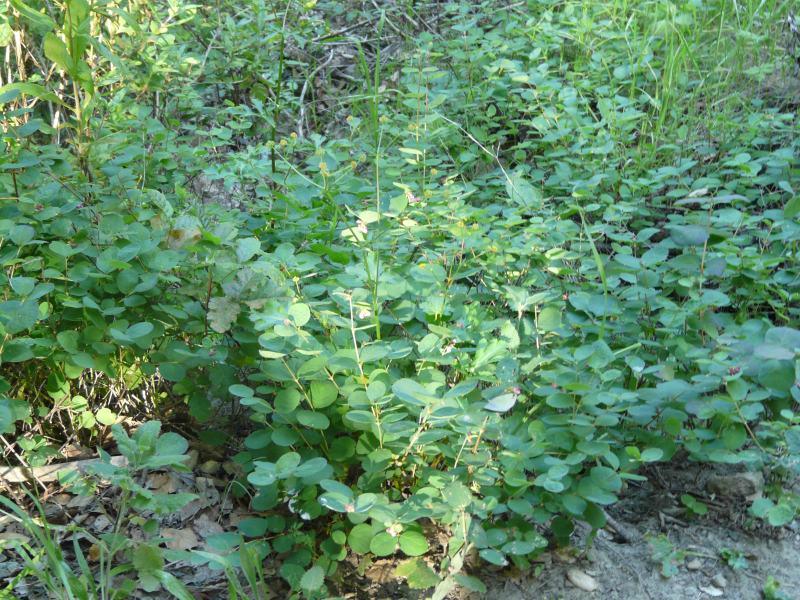
Amelanchier spp.,
the Service Berries can be very interesting as a contrast to the oaks.
In many of the coastal woods Service berry can become a mini-tree under
the high shade of oaks. Sometimes you'll have the full 100 foot oak,
then the 10 foot service berry 'tree' and under it either Satureja
douglasii or Symphoricarpos
or Lonicera.
Sometimes there's even a Ribes
between the lower plants and the Amelanchier.
|
Symphoricarpos
albus and
Symphoricarpos
mollis both
are snowberries and both grow well under oaks.
Thrashers, Thrushes, and other native birds use the berries as survival
food in winter. The berries taste like Ivory soap, but I'm not a bird,
maybe it tastes different to them.
|
Good things you should do
|
Bad or unhelpful
things to do.
(Oaks usually do not
die in years but decades. Diseases and funny anomalies occur
first.
Your tree is the only
one in the neighborhood with tent caterpillars or powdery mildew. Your
tree lost its leaves even though it's an evergreen tree. Weird things
that you can't find, figure out or the 'experts' can't help you with
are commonly caused by one or more of these things in the column below.)
|
|
Plant associated plants.
|
DO not plant junk that has never grown near an oak
tree and needs a ton of water and fertilizer. Why would you expect a
plant that grows in full sun along a river in Brazil to grow under your
oak in California dry shade.
|
|
Leave the oak leaves.
|
DO NOT remove the oak leaves from under
the oaks. Bare ground and weeds gives the tree aids.
|
|
Remove the weeds by killing them with herbicides and then removing the debris. Sometimes you can mulch them out, but that usually doesn't work, sorry.
|
|
Do not leave the weeds, do not pull the weeds, do
not dig up the weeds. |
|
Think like a tree. Long term, no sudden changes,
no tilling, disking, poop, or water. Hang a hammock and put
yourself in it. .
|
Short term stuff will kill the tree long term.
Pansies and petunias are a cruel joke under an oak. (Native violets do
grow under deciduous oaks.)
BUT, if someone else put a lawn under an oak and
the oak
hasn't died for the last twenty years you cannot just turn the water
off. The tree has to regrow it's root system and imune system. That may
take 20 years of slowly turning the water off, rebuilding the mulch and
planting companion plants under it.
|
|
Prune out the dead stuff and trim the branches up
off of the ground.
|
Do not prune the trees hard or in some weird
manner like
pollarding. Forcing new growth draws from the trees resources and often
triggers a cascading failure in the system. Don't paint the wounds.
Don't cut the limbs tight against the trunk. If at all possible don't
cut into live wood at all. Clean your tools between trees.
|
|
You can wash the foliage off occasionally on dry,
dusty years.
|
Do not put a lawn under the tree or you'll have
either a sick
lawn or sick tree. Oak trees in the west do not know what to do with
summer rain. A heavy summer rainfall can kill a few oaks in the wild, a
sprinkler under your old oak tree can kill it. There are no absolutes,
you might be able to water for years and get away with it, or your oak
dies the first time you water during the summer. It's kind of like
chance of rain, but it's chance of death.
|