Real and supposed diseases of native plants
Disease, insect, or growth related problems?
The bad news is, you can get a Phd in Plant Pathology and still have no idea what the problem is. The good news is it's usually, not always, but usually, something horticultural that you can change that's causing the problem. First, check that you are
not overwatering, or fertilizing your plants. Also, check that
you
aren't planting the
wrong plant in the wrong plant community; for example, desert plant in
redwood forest,
redwood forest plant in desert, sun lover in shade, high-
air-
flow plant
(coastal bluff, ridge line) in a closed area (enclosed patio), or water
lover in dry spot. An upland, south- facing slope plant from Jamul
planted in a Santa Monica or San Francisco garden may be covered with
mildew, if it doesn't die of root rot. In the reverse situation, the
plant will
vaporize.
The naturally occurring non-plant members of a habitat,
such as, but not limited to, insects, fungi and bacteria,
play an important role in our California ecosystems. They evolved with
California native plants, some apparently giving, as in the case of the
nitrogen-fixing bacteria; some apparently taking, as in the case of the
manzanita leaf-gall aphid. If the takers were a serious problem, all
our plants in the wild would not exist. Spraying with insecticides and
fungicides is a quick fix and in the long term makes the problem much
worse. If you can live with some pests such as aphids, you will attract
more insect-eating birds, have a healthier garden for doing so
and
in turn have less aphids on your plants. If your pests are
out of
control
this is usually a sign of bad horticulture (eg. over/under
watering, fertilizing, incorrect soil or incorrect location (a
plant set out way beyond its normal range and
under severe stress) Remember, in native ecosystems populations of all
living things are usually in balance. For example, herbivores
(rabbits) are
controlled by predators
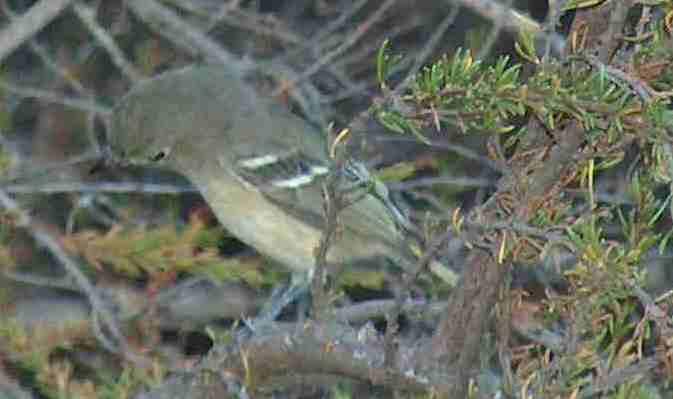
(coyotes), insects (aphids) by birds ( Bushtits, Kinglets, etc,). Fungi and bacteria
are a little more complicated, usually being controlled by the plant
itself or by other bacteria or fungi.
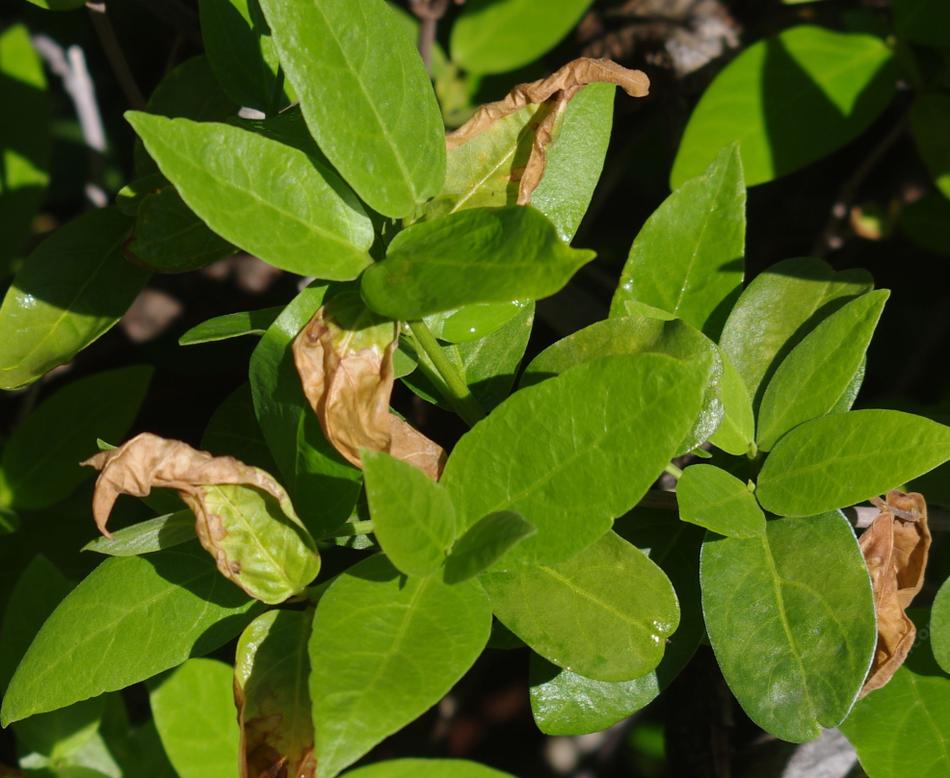

Other Phytophthoras, bacteria, virus, or mallicures may have no cure other than finding plants that are resistant. There is almost always a native plant that can do what you want, and the limiting factor for many of the plant pathogens is water. Put in a native plant and do not water and the problem can be solved. Simplistic? YES. I'm not a pathologist, and more than likely you are also not one. A real pathologist is not going to show up in your yard....and if you could entice one with a few hundred dollars he'd still have to do the following stuff.
Sooo, the best solution to deal with a yard of dying plants is to change what you are doing and what you are growing.
First read about the plants that are dying, are they sun lovers in shade? sand lovers in clay? desert plants in Seattle? Seattle plants in Barstow? If that part is ok, did they need air flow and there is none? Are you watering with drip irrigation? That is commonly a real problem. That and soil amending cause most of the 'pathogen' problems we see. High fertility can sometimes screw up the plant so it has no immune systems and the plants get weird 'diseases' that do not exist anywhere else.If you read about the plants for more than a couple of hours and nothing appears wrong but the plants died, you might want to get a soil analysis and see if you have high boron, salt, or something else.
If the soil report comes back ok, then go get a shovel and start digging. Dig up a number of the dead plants and look at the roots. Are the coiled into a little ball and not into the soil. That is commonly drip irrigation and watering 10 minutes every day. Not the plants fault. A salty ring around each plant is another symptom of a drip death. If the roots look ok, and it wasn't watered on drip, dig a little deeper, is there at least three ft. of soil there? Is there hard pan at a foot? Is there three inches of sand on a shelf of clay? Is there a foot of clay on beach sand? Do you strike water at a foot?
None of those? Is a Walnut or Pepper tree out there? Eucalyptus hanging over the yard? Those and some other plants put down chemicals to limit other plants and have greedy roots. Establishing a garden under them is very difficult.
Weed mats do a number on drought tolerant plants. Weird diseases appear that you can't figure out, until you remove the weed mat and the 'disease' go away.
Good horticulture gets rid of most of the diseases.
No sprays needed. The few times in the past we did spray the garden plants (when we first started dealing with natives and didn't know any better), we ended up killing a lot of good stuff and the plants still looked sick. Native plants are for the most part unhybridized. They still have their natural protective abilities if you treat them right. Over watering them removes the plant's protections. Water for survival, not fast growth, and after a year or so the plant will give you faster growth.
Application of fertilizers, insecticides, fungicides and bactericides can also remove the native plant's natural immunity. It is funny that you can buy fertilizer with insecticide in it. Why do you need the insecticide?
Sometimes I get REALLY cynical and think the garden trade is just trying to sell to suckers plants that will die so they can sell more plants. So they sell soil amendments, drip irrigation, weed mat, plants that need a ton of water to California home owners that live in a desert. Then they sell snail, insect and gopher killers to control the stuff that eats the plants, and sprays to control the resulting pathogens from the perversion. It's a billion dollar business that seems to make some people happy.
Mulch is important.
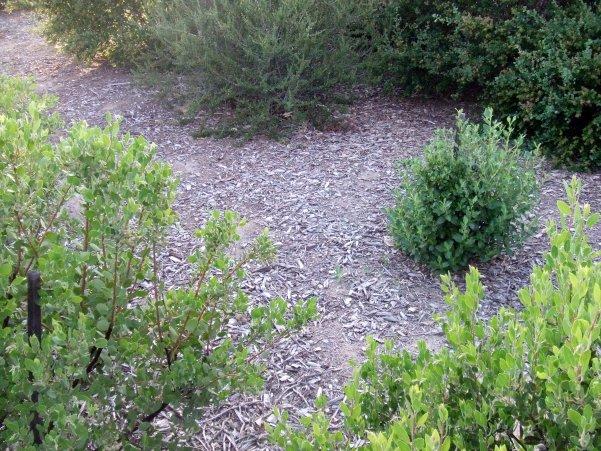
Mulch helps maintain moderate growth rate, protects the plant roots, reduces evaporation, moderates soil temperature, and provides habitat for the predators of the bad bugs.Rock mulch for desert plants, tree mulch for forest plants, rock and tree mulch for chaparral plants.
Drip irrigation contributes to diseases on native plants.
Drip
irrigation causes all sorts of root problems and related pathogen
problems. If the plant is not growing correctly, try turning off the
drip or converting to spot sprays. Drip waterlogs the soils where it
waters and builds up salt in the soil. Most native plants need areated
soil and have trouble with high salts.
Basins cause problems ranging from root rot to tip burn.
Plant the long term climax plants (usually the the trees that grow for a long time, but creosote also comes to mind)) leaving room for them to reach their full size without growing over each other or other plants. Die back occurs when sun lovers are in too much shade, so think ahead.
Native
plants and drought tolerant plants in
general lose their disease resistance when they are watered more than
the minimum, particularly during the summer (after they grow their
roots the first summer).
The plants have to be under slight stress to keep their associated
fungi, bacteria and other companions happy. Water or fertilize too much
and the plant will exclude its companions and pathogens will take their
place, overnight.
Clark et.
Al. ; Clay 1989, 1990; Petrine et. al.; Petrini & Fisher;
Preszler and Price; Rollenger and Langenheim
Mycorrhiza
Prune?
Prune a native plant into a poodle dog, and you usually have a dead poodle. Native plants like minimal (lazy man) pruning in late summer or fall. If you prune the lower branches off as in the picture to the right and left, then the trunk is not protected by the foliage, and is susceptible to sunburn (right), borers, and sapsuckers/woodpeckers (left).
Prune up the foliage and create those foo-foo shapes people seem to think are natural, and the stems burn off, get infected with borers, or get pecked to death. Instead, plant one of the manzanitas (Arctostaphylos spp.) like Ian's Bush, Dr. Hurd, Mama Bear, Louis Edmunds or Austin Griffiths, or Ceanothus cultivars like LT Blue that possess a naturally open form if you want that look. No plant mutilation necessary!
Frost
damage to plants is sometimes incorrectly
identified as disease damage.

Summer Deciduous Plants
A lot of customers get excited when they experience summer deciduous plants for the first time. Many native perennials shut down in summer, and come to life in late fall. This is normal and desirable. The flower show is better and less diseases occur when the monkey flowers, sages and other perennials are allowed to shutdown. Plant some evergreens (Manzanitas, Oaks, Toyon, Coffeeberry, and Ceanothus) with them so the whole flower bed doesn't shut down at once (ugly).
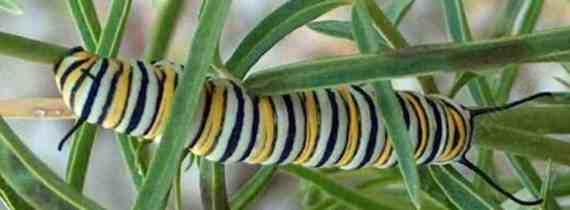
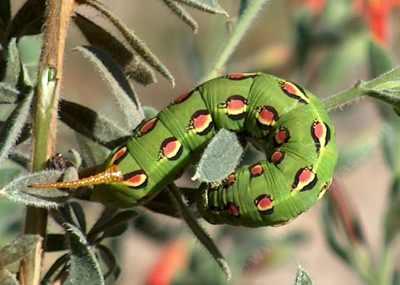
Monkey flower, Milkweed, Ceanothus, and others are larvae plants for many of the native butterflies. It is NORMAL and desirable to have caterpillars on them. Those are baby butterflies.
Narrow Leaf milkweed gets a golden aphid that the smaller birds eat. Almost every year it gets it. No biggy, it is part of the live cycle of the plant.
Oak trees will commonly get oak moth caterpillar. You do not need to spray the tree. The tree probably uses the caterpillar to covert the leaves into fertilizer and mulch on bad years.
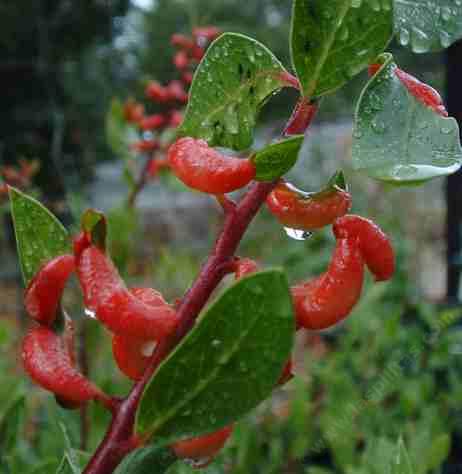
Leaf gall on manzanitas.
This is a little insect that lives in the leafs. This usually is an occasional problem and the plant will drop these leaves in early winter. No biggy. Funny, some customers love the gall, and try to buy the plants that have it, other people are appalled the there is a BUG IN THE LEAF!

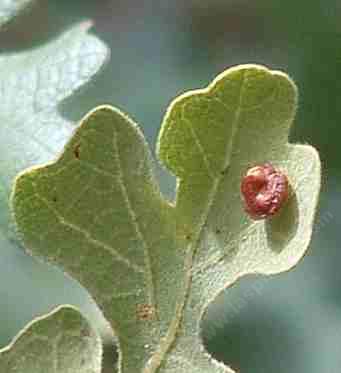
Oak Galls
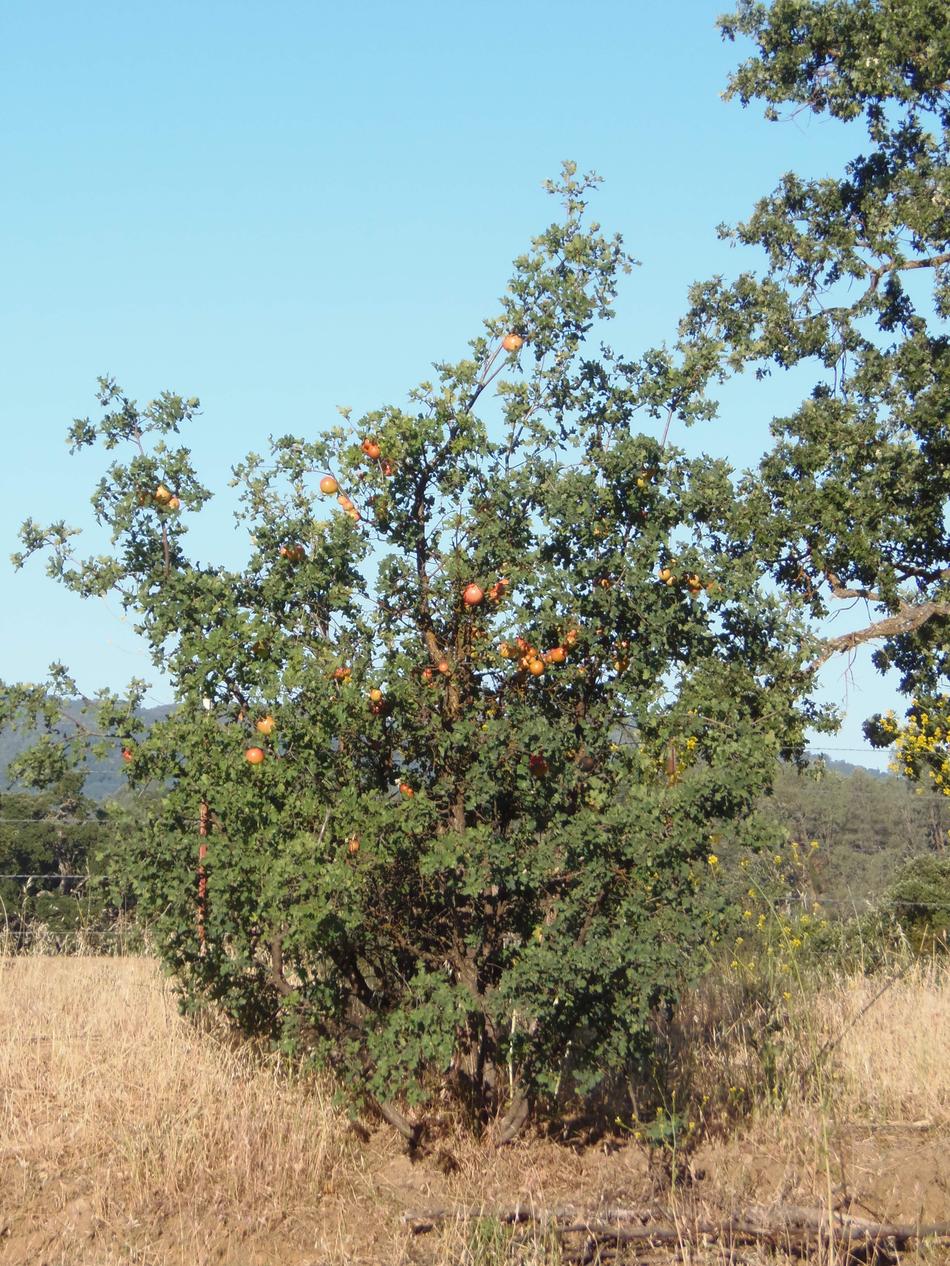
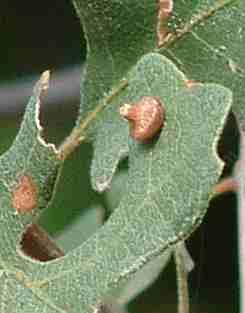
Also, called Oak Apples. There are hundreds of different kinds of oak galls. The galls are formed by the oak tree, usually in response to an insect.. Inside the gall, the young insects develop out of the rain and sun and protected from predators. Cool, huh! These oak galls are naturally found on oaks in the wild, and usually do not have a negative effect on the health of the tree. (Translation: no big deal)
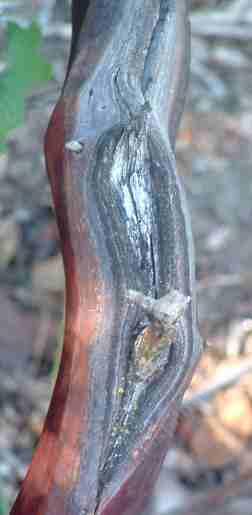
Stem die back.
On manzanitas it is either sunburn (they pruned the stems up too high), poor air flow or too much overhead watering (planted next to a lawn in a closed in yard).
Ceanothus stem die back occurs on some of the real coastal plants, particularly the low ones, when they are planted in the interior heat. The sun fries off the bark.
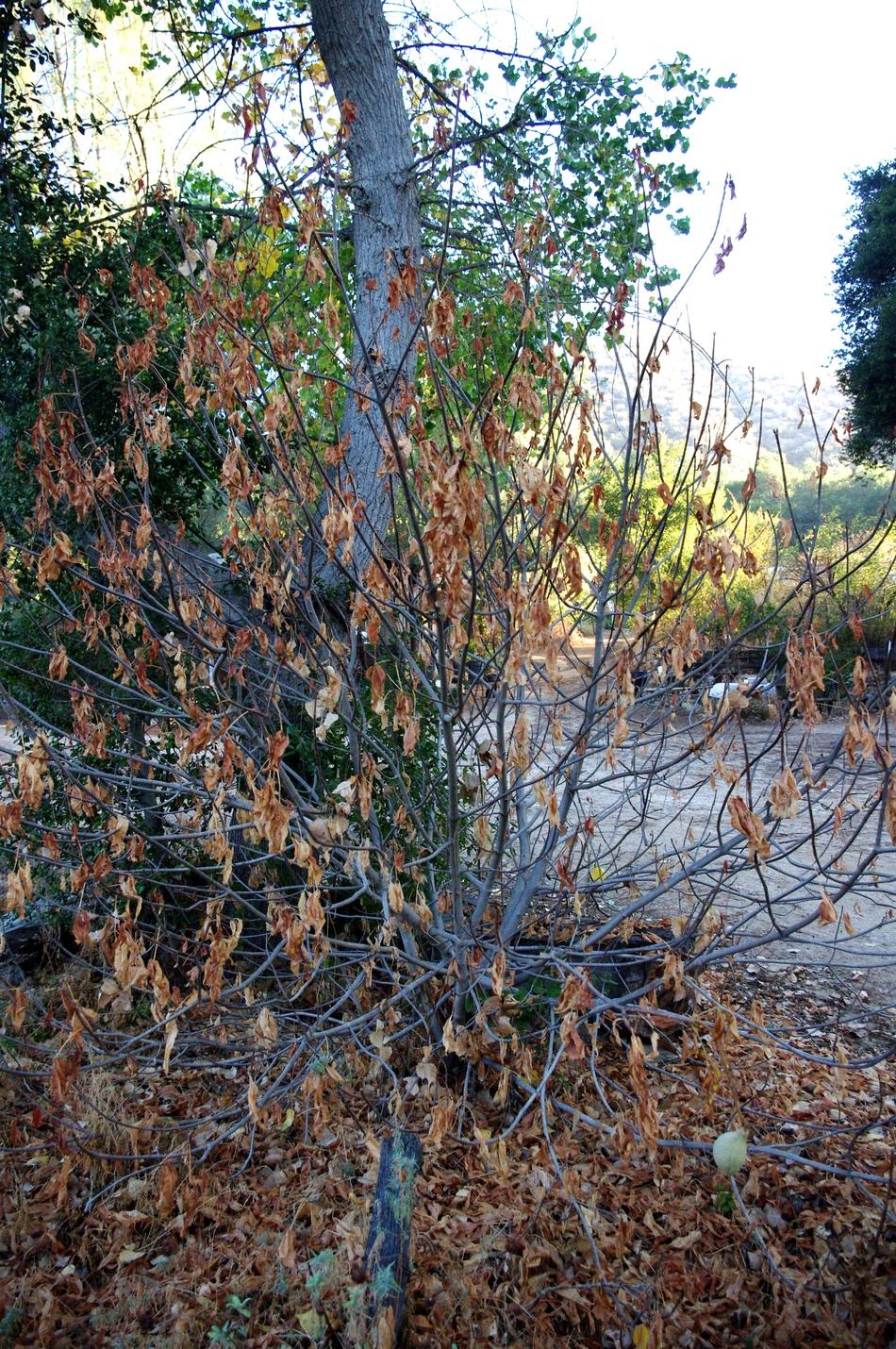
Sycamore Anthracnose
This disease is a fascinating natural phenomenon. The leaves of the sycamore tree emerge in the spring to then turn brown and wither and fall off. Supposedly the fungus that causes sycamore anthracnose is an obligate parasite, which means that the fungus needs a living host; if the fungus kills its host, it will also die. Since this fungus has evolved with the sycamore tree over millions of years, what happens is as follows: on drier years the tree is hardly affected and makes good growth and the fungus causes no or minimal damage and on wet years the fungus makes good growth and the tree can be defoliated, and make very little growth. (Translation: no big deal on some years, a big deal on other years, but trees will rarely die)
Buckeye Dieback
Die back of Aesculus californica: This is not dieback, it is a natural condition, called semi-dormancy. On the east coast, it is very noticeable that the leaves of the trees turn color and fall off the trees. The trees are not dead or dying, they are undergoing a “slowdown” period, a period in which they can avoid the harsh conditions of winter. In California, our harsh conditions occur in the summer. So, around late summer, the buckeye leaves turn brown and yellow, and many fall off, and the buckeye undergoes a period of semi-dormancy, and is semi-deciduous. (Translation: no big deal)
Plant Wilts/Dies Practically Overnight or Root Rot/Wilt
This problem is a root rot/wilt that occurs later in the season, around late summer, early fall. This disease occurs on plants 2 years or older. This disease occurs within one to several days or so following a heavy watering of the plant, by the gardener, done because the plant looked “stressed for water/wilty/thirsty/etc.” Every time, the disease occurs the same time of year, under the same conditions, and on plants two years of age or older. The organisms that cause this disease, grow lustily under warm (summer-fall), moist (your irrigation) conditions. (Translation: a big bad deal) To prevent this disease on upland plants: 1) give full-blown irrigation (water weekly, if soil is dry two inches down, with microspray emitters or by hand or by sprinkler), in the summer the first year only. 2) keep the mulch 2"-4" thick 3) Place a large (6" by 6" by 6" approximately) rock on the ground adjacent to and on the west side of each plant. Especially for Fremontodendron, plant on the east side of a building, a boulder pile, a thick rock wall, a mass of lower vegetation; in other words, something with enough mass to keep the soil cool! 4) Water indirectly, at the drip line or farther away.
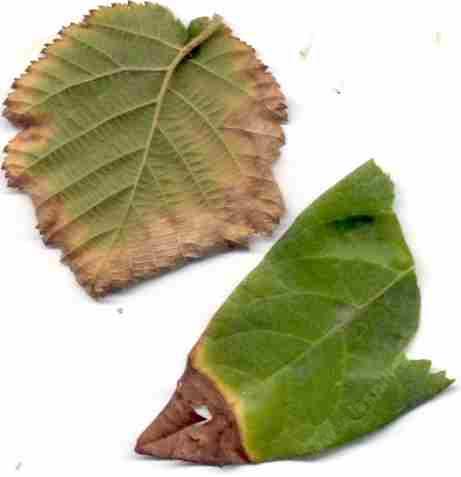
Leaf Burn
Leaf Burn occurs for many reasons. The most common problems include drip irrigation(don't), planting plants from plant communities that are not like yours(Sierra plants in Bakersfield), salt spray from the ocean(can occur miles inland if the breeze is direct from ocean) and the high salt soils of some of the inland valleys. You can't really treat the soils to solve the problems, you'll need to rethink what to plant if you happen to live in one of these spots.
Mistletoes
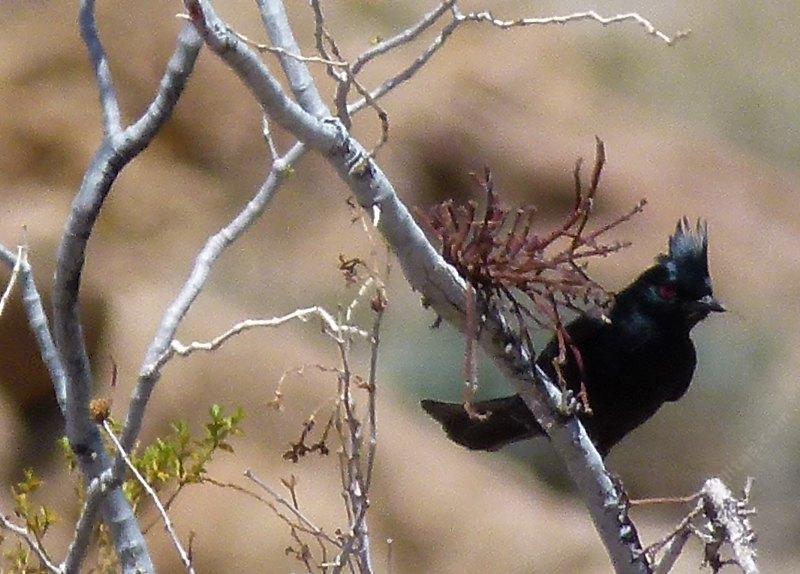
Mistletoe is a epiphyte that uses the tree as a substrate like a normal plant would use soil. It is hemiparasitic attaching itself to the xylem of its host but photosynthesizing (making it's own food). Because they are not able to absorb their nutrients and minerals from the soil the have to use whatever is absorbed by their host. This limits their size, as they can easily become nutrient deficient. They do not have true roots and are unable to be selective in what they absorb. It is common for people to think of mistletoe as a pest or as being harmful to the tree however most studies have found this to be unsubstantiated. In fact many studies have found the mistletoe to be very important to plants as well as animals. Mistletoe may act as a dumping ground for excess minerals that their host plant can not absorb. There are four species of the genus Phorodendron and three of the Arceuthobium genus. The Arceuthobium genus is found on conifers that is Pines, Firs, Spruce, Hemlock. Phorodendron is found on a wider variety of trees and shrubs including Juniper, Mesquite, Acacia, and Oaks.
Snails
Snails are not found on the strongly mycorrhizal plants (95% of California native plants). The highly mycorrhizal (VAM) plants are eaten only if the plant has lost, or disconnected from the mycorrhiza. The snails live on the weedy plant species that are poorly mycorrhizal or non-mycorrhizal. Native snails live on the dropped leaves in the litter, not on the plants. Coastal towns are knee deep in European snails that are living on the 'color' plants (basically weeds) people set out in their gardens, and additionally overwater and fertilize.There are good things that people are afraid of (freak out) or misdiagnose.
Swellings/Nodules
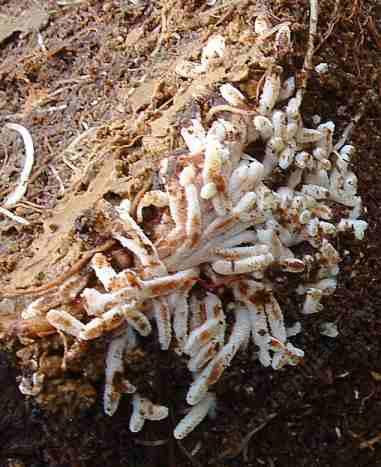
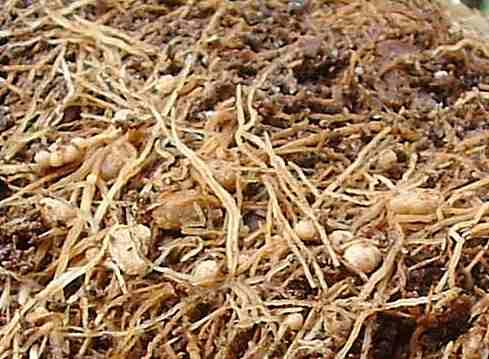
Swellings/Nodules on roots of Ceanothus, Alder, (nitrogen-fixing bacteria Frankia) and Lupine (nitrogen-fixing bacteria Rhizobium)- Some people are getting very excited when they see these on our plants, so we thought we should let everyone know what they are and what they do, to clear up much speculation and misunderstanding!! These bacteria (Rhizobium and Frankia )were discovered many years ago. The root swellings are actually a combination of these symbiotic, nitrogen-fixing bacteria and the cells of the root that proliferate in response to the bacterial infection.
This is a good thing! The bacteria receive food from the plant in the form of carbohydrates (sugars) and so convert nitrogen from the air (N2 ), which plants cannot use, into ammonium ions (NH4+). These ions are then converted by other types of bacteria living in the soil to nitrite ions, then to nitrate ions (NO3-) which plants can use to make proteins, etc. The relationship between the plant and the bacteria is a close relationship where each party gains something, called mutualism. These nodules, or swellings, on the roots of some of our plants, are like little nitrogen factories, a natural form of fertilizer, made by the bacteria with the help of the plants, together, no charge! So much easier, cheaper, and more natural than going out and buying a bag of fertilizer and spreading it around the garden. You receive the reward and don’t have to do any of the work!! (Translation: a great deal!)
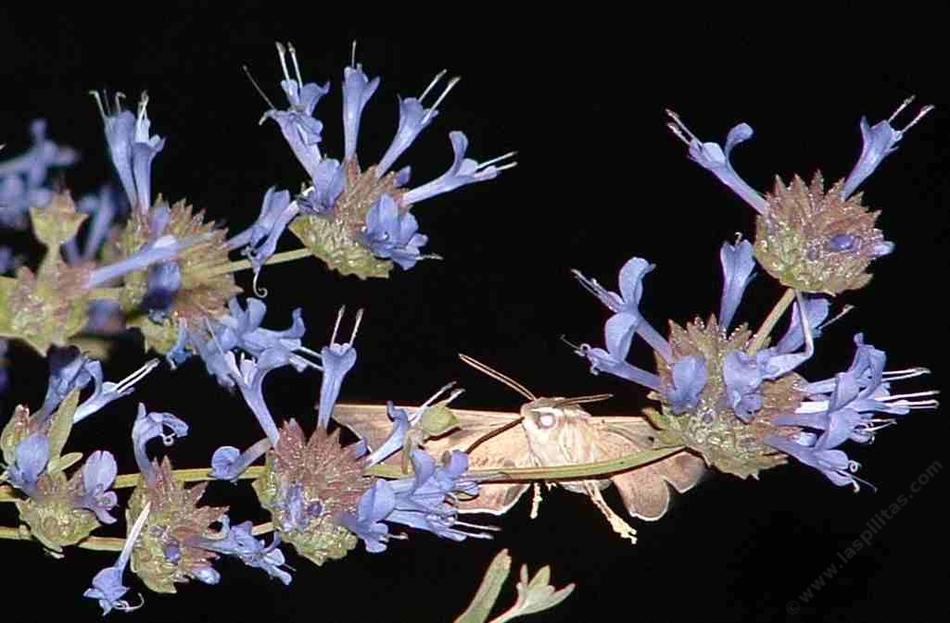
If you want a veggie garden that's fine, limit it to what you can maintain and do the rest of the yard in natives, the bugs will have predators.