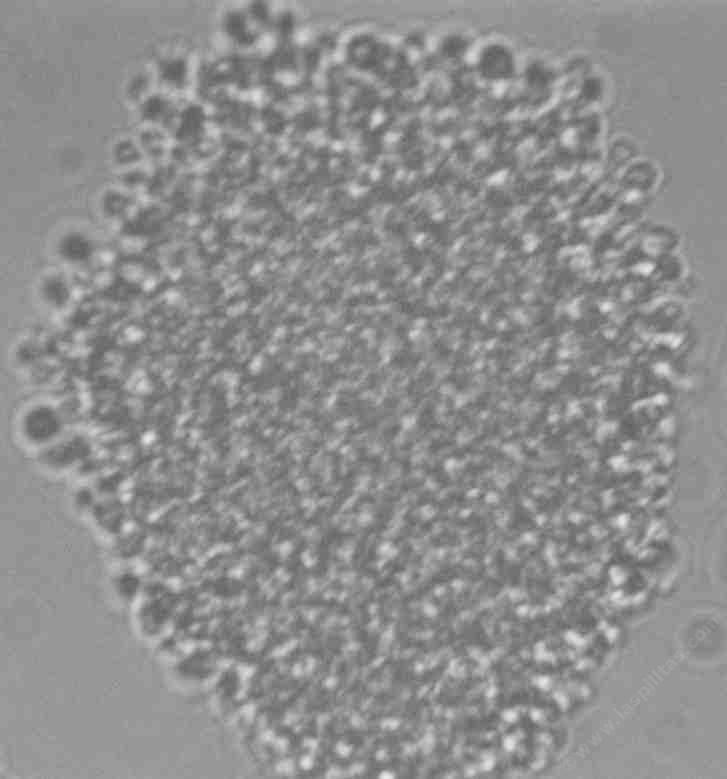
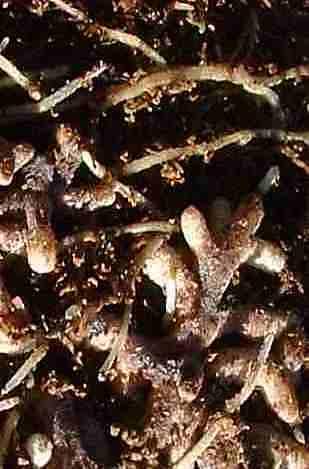
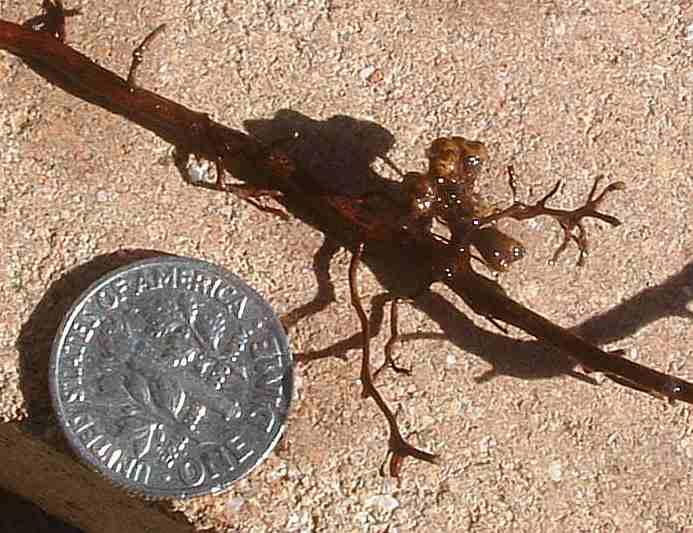
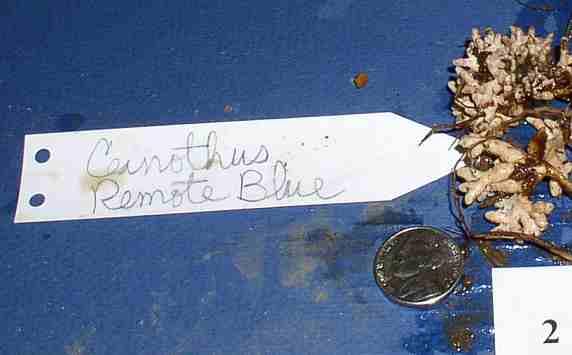
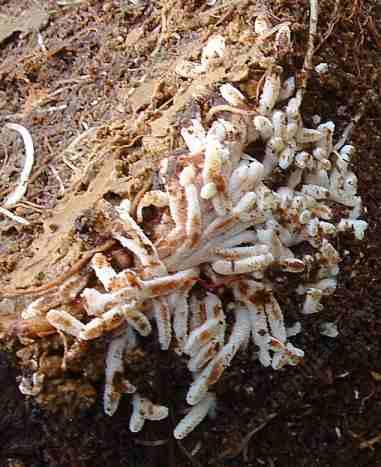
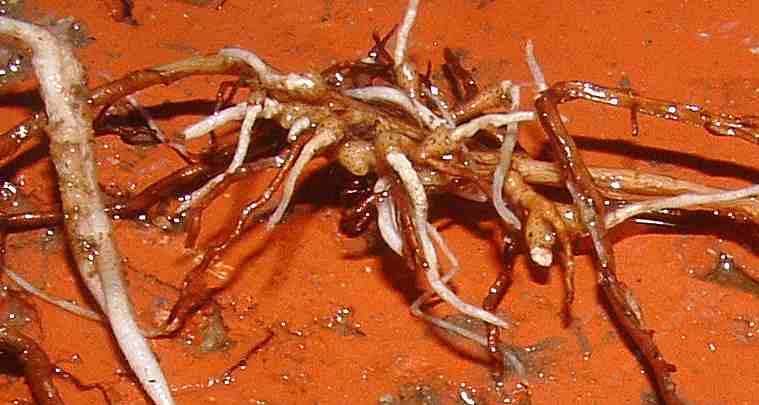
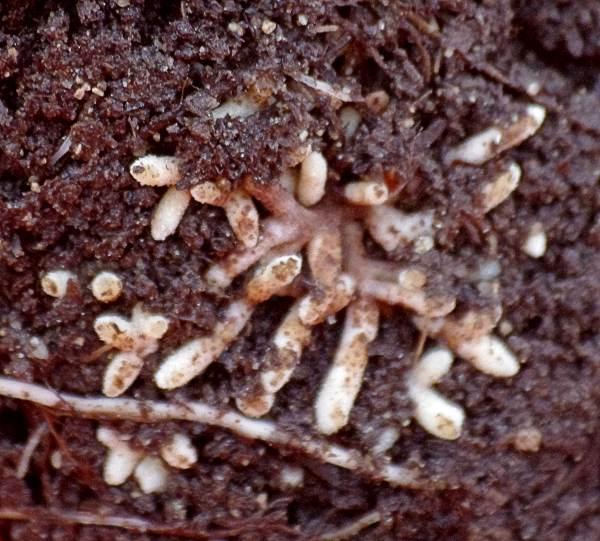
Frankia is an actinomycete bacteria that commonly occurs on Ceanothus and many other native species.
Many secondary pioneer species are associated with Frankia. In California these include; Datisca glomerata, Ceanothus, Alnus, Cercocarpus, Myrica, Purshia, Cowania, Chamaebatia, and Sheperdia species. Frankia fixes nitrogen from the air and produces secondary chemicals that feed friendly, associated free-living bacteria and fungi. The plant-mycorrhiza-frankia (tripartite) relationship often becomes a multi-layered community of associated free-living and plant-related organisms that protect and support each other. The relationships are complex with only the most obvious presently recognized. The different associated organisms are responsible for root hormones, pathogen control, nematode control, root exploration, plant community resource sharing, mineral mining, water retention and many more. The plants become increasingly unstable as these organisms are replaced with non-supportive or parasitic pathogens or weedy organisms, including weedy plants. These problems can be very difficult to diagnose as everything is interrelated, and human intervention can often make the problem worse.
Ceanothus get branded as short-lived because the mycorrhiza-frankia and associates are not properly allowed to develop and grow. Ceanothus can live for a hundred or more years in the wild, and commonly for twenty to fifty years in a garden, if the appropriate Ceanothi are planted and left alone. Watering and fertilizing the plants more than required fools the plant into thinking that they do not need friends and can do all things themselves. The plants, if they do not die that day from pathogens, grow fast and robust, then die of pathogens.