Notes From Native Landscaping Classes
Landscaping with California Native Plants
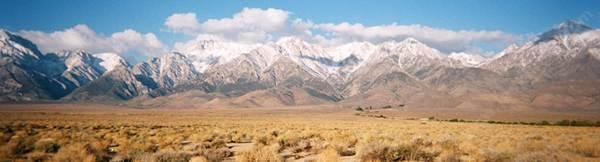
Landscaping with California Native Plants
Notes from a California Polytechnic State University, San Luis Obispo- Extended Education ClassInstructor: Celeste Wilson
Field Trip- Observe native landscapes around San Luis Obispo, and one example of native plants in their native habitat
Field Trip- Plant section of garden at Cal Poly, San Luis Obispo, observe plants in their native habitat (Poly Canyon), and observe native landscapes at Cal Poly
Introduction- What is a native plant?
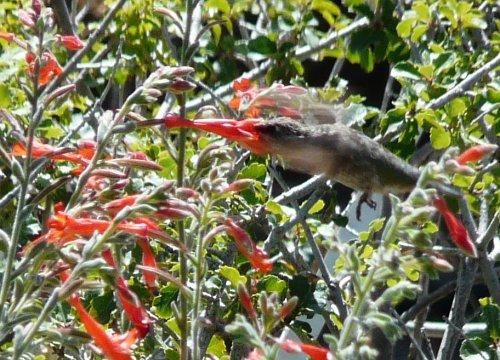
A Native plant- a plant that occurs without benefit of man, grows here naturally, BEFORE THE EUROPEANS.
Naturalized-not occurring naturally, not native to an area, but growing and reproducing without man's help (NOT a NATIVE plant). Many new plants are brought into California every year. In the area of origin, these plants had checks to control their growth and population (such as parasites, pests, diseases, herbivores). In California many if not all of those checks are gone. So, a plant that formed a minor part of the landscape in, for example, Europe, comes to California and spreads like wildfire, becoming a large part of the landscape, turning what looked like a pristine parkland into a weedy mess.
Examples of naturalized plants- yellow star thistle (Centaurea solstitialis, C. melitensis) or Brooms (Spartium, Cytisus or Genista). Nothing eats them, or uses them, they reproduce like mad and they burn really well.
This brings us to the Franciscans, who, in 1602 brought hay along with their cattle to California. It is believed that much of the grassy areas on the coast (for instance, Between San Luis Obispo and Morro Bay), are the result of the germination and spread of the seeds in this hay. After they burned the "brush", they immediately put cattle on the land, and then spread the hay in the summer to fall months when the feed dried up on the land. (The adobe blocks of all but one of the missions were full of weeds.) These grassy areas are made up mostly of annual grasses from Europe.
A turnaround example- The California poppy (Eschscholzia californica) is becoming a weed back East and The Matilija Poppy (Romneya Coulteri) is very aggressive and weedy in England. History of Discovery and Cultivation of California Native Plants In 1790, a doctor, Archibald Menzies, with the Vancouver Expedition, discovered coast redwood (Sequoia sempervirens), California Bay (Umbellularia californica), Douglas Fir (Pseudotsuga menziesii), and Madrone (Arbutus menziesii). He sent material back to Europe, but many were lost due to storms, time, unfriendly captains, (threw material overboard), small ships. Many plants were named after him- Madrone, Canyon Gooseberry (Ribes menziesii) , Piggy Back plant (Tolmiea menziesii) are some of the plants.
Most Remembered- David Douglas- introduced many California natives into England made horticultural world sit up and notice California plants- Douglas Iris, California poppy, Oregon Grape, and of course Douglas fir (even though the scientific name went to Menzies, Douglas got the common name because he spread the seeds).
The first Sierra explorer, a German gardener, Theodore Hartweg, worked for Royal Horticultural Society of England, collected 85 new species, sent back Zauschneria californica (Epilobium canum). But RHS was unhappy he didn't procure seeds of Abies bracteata, Bristlecone Fir, the rarest fir tree in the world, guess why? In 1841, severe drought and cold, worse than our 100 year cold in 1990, Santa Barbara had 0 inches of rain that year. The immature cones on the trees were frozen solid on the coast in the Big Sur area! Blizzards in Bakersfield?
In the late 1800's Pacific coast and California plants were the rage in Europe and many were in cultivation here and in Europe.
Botanic Gardens and books
Santa Barbara Botanic Garden, Santa Barbara,
California Rancho Santa Ana Botanic Garden- Claremont, California
Books on California Native Plants- Favorites, good knowledge base and/or good pictures.
California Native Trees and Shrubs for Landscape Use in Southern. California- Lee Lenz & John Dourley
Landscape Plants for Western Regions- Bob Perry

Commercial Uses of California native plants.
Toyon- Christmas Berry (Heteromeles arbutifolia)
Jojoba- (Simmondsia chinensis)oil from seed used as beeswax & whale oil substitute, fruit is nut-like and edible
Most valuable use- landscaping
Landscaping uses- Fragrant Oenothera caespitosa- Evening Primrose- small perennial, large, white flowers, fragrant
Monardella species.- Coyote Mint- leaves w/ strong, minty fragrance, small perennial, flowers attract butterflies
Philadelphus lewisii- CA Mock Orange- medium-sized flowers, w/ sweet, sweet fragrance, like eastern mock orange, grows like lilac
Calycanthus occidentalis- Spice Bush- Deciduous shrubs, near creeks, maroon flowers with wine-like fragrance
Salvias, make a native Sage Garden!
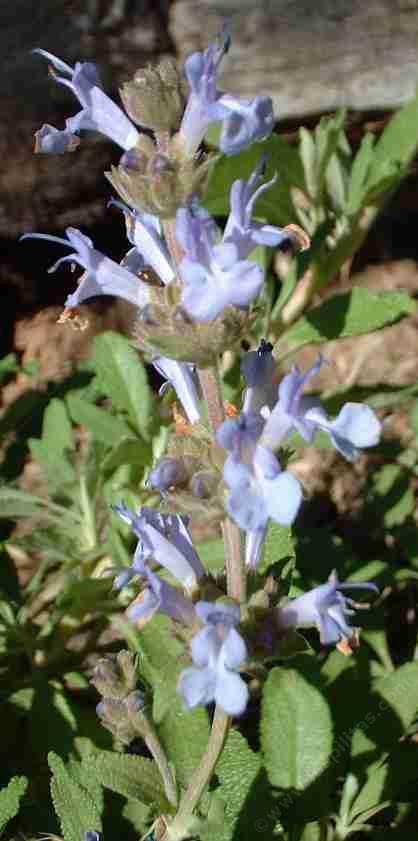
Salvia Clevelandii- Cleveland's Sage- musk like fragrance to the leaves, very popular, showy blue-lavender flowers
Solanum species- perennial to subshrub, sweet, fragrant purple flowers, berries poisonous, fragrance is emitted mostly at dusk
Ceanothus and Desert Mallow can make a handsome pair in a Native Garden.
Landscaping Uses- Edible native plants
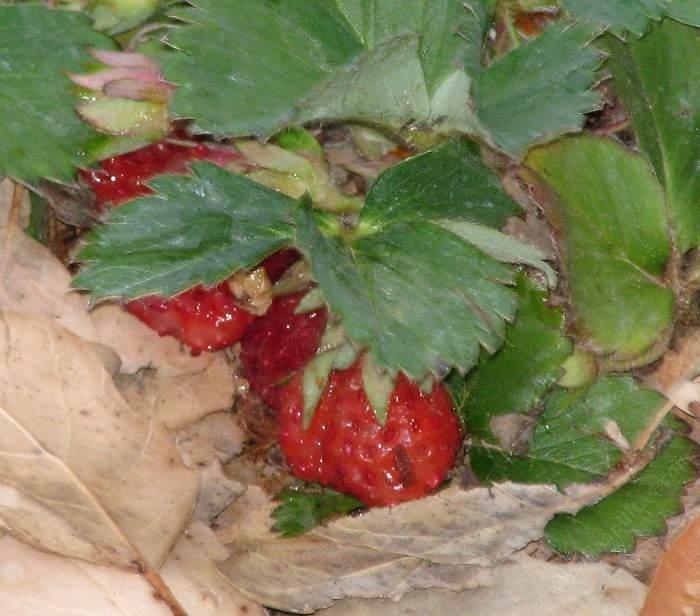
Fragaria californica (vesca)- California Wood Strawberry- perennial, small, very fragrant and tasty berries, shady spots along coast mountains, or moist , shady inland
Rosa species-Wild California Rose- edible flowers and hips and fragrant, rose flowers used in cakes, cookies, jellies, and hips used in tea, jam, soup, several species, californica, woodsii, gymnocarpa, etc.
Montia species- Miner's Lettuce- leaves (bracts) edible, fresh or cooked, good!
Satureja douglasii-Yerba Buena- leaves fragrant and used in tea, small trailing perennial, shady spots along coast, moist shady spots inland
Salvia Columbariae- chia- an annual sage, seeds edible and contain much food value, sunny dry spots
Sambucus mexicana- Elderberry- shrub to small tree, leaves and stems poisonous, berries edible cooked, used in jam, jelly and pies, flowers can be fried in batter, grows along intermittent creeks and creeks in California, brings good luck to a garden.
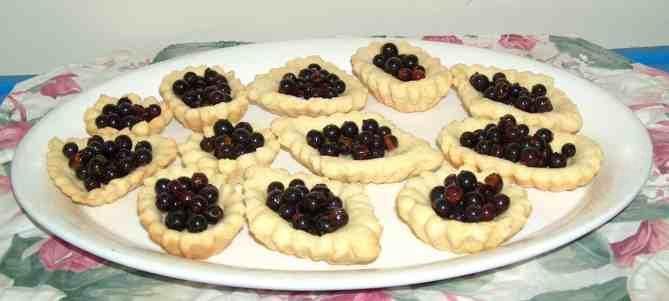
Ribes aureum- Golden Currant- berries yummy, sweet but small, can also be cooked in pies and tarts. Currant- Apple tart very good, grows above intermittent creeks, near oaks, very showy with yellow flowers (sepals the showiest) in the spring, deciduous shrub
California Manzanitas are GREAT!
Landscaping Uses- Most Popular native plants.
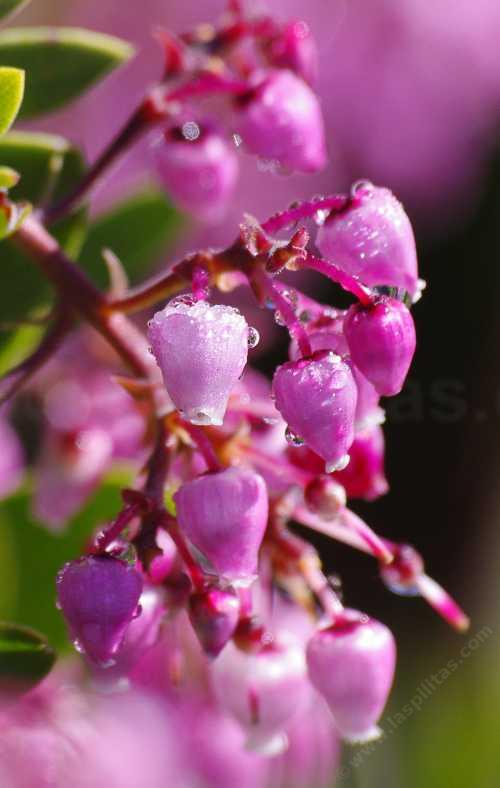
Arctostaphylos species- Manzanita- many species from flat ground covers to trees evergreen, very useful in low maintenance landscapes, fit the species to the site, water once, mulch, and voila! Examples- Dr.Hurd, Howard McMinn, Sunset, Carmel Sur
Ceanothus species- California Lilac - many species from flat ground covers to trees- very popular for spring color, evergreen, longer-lived if plant fits the site, and not overwatered Examples-Tassajara Blue, Joyce Coulter, Concha, Julia Phelps
Carpenteria californica, Bush Anemone- large, white fragrant flowers, evergreen shrub, ten most popular,
Fremontodendron californicum- Flannel bush- showy, yellow flowers (sepals), large shrub to small tree, stunning with Ceanothus, best with indirect water,
Romney Coulteri- Matilija Poppy- Queen of the CA wildflowers- very large, white flowers on a grey-green leaved shrub, once established, flourishes, careful in transplanting
Heteromeles arbutifolia-Toyon-Christmas Berry- evergreen shrub to small tree, red berries at Xmas time, good background plant, grows best in grouping of associated plants , Hollywood got its name from this plant
Ribes species- Currants and Gooseberries- grow in woodland and brush, mostly shady, showy flowers, some in large clusters, pink, white, yellow, red, some with fragrant leaves and flowers, useful under and near oaks
Trichostema lanatum- Woolly blue curls- evergreen shrub, lovely fuzzy blue-lavender flowers, showy in summer, sunny, dry spots, popular in San Francisco flower market
Zauschneria
(
Epilobium)
species-
California Fuchsia- spreading perennial,
unusual in that flowers emerge in late summer to fall, when not many
other flowers are out, hummingbirds rely on these for nectar, beautiful
tubular red, pink, white, flowers
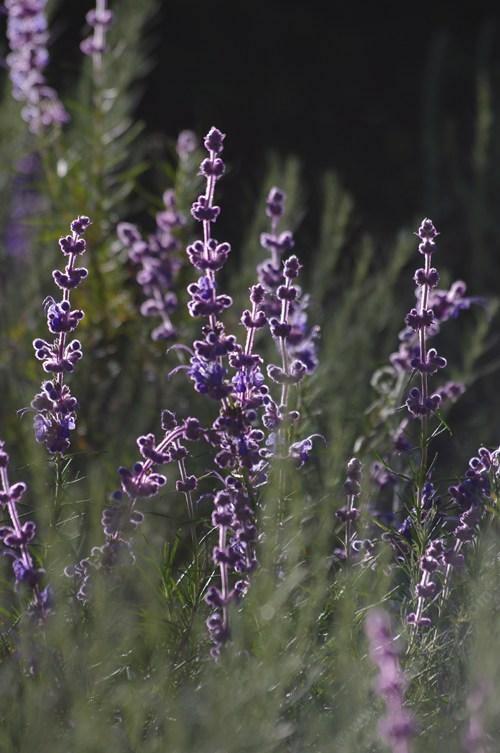
Salvia species- Sage- many
species from flat ground covers to shrubs, useful in dry, sunny areas,
showy flowers in late spring to summer
Examples- Salvia apiana, Salvia spathacea, Salvia leucophylla, Salvia Clevelandii, Salvia sonomensis, or Salvia mellifera
Growth and Ecology of California native plants
How to use California native plants intelligently in the landscape
You need to know:
1. Where does the native plant live in the wild ( sunny, shady, clay, sand, serpentine, wet, dry) and rainfall per year in their area of origin.
3. Strategies the native plants use to survive and grow
Most California natives are different. Why?
California plants do not grow naturally with garden flowers, they grow with members of their own community.
If unhybridized, native plants are not used to large amounts of water and fertilizer ( if not water plants).
Many of the native shrubs and trees are long-lived and live in association with underground partners, whereas most garden flowers do not associate much. (Loud, rude, crude and dishonest, wouldn't you associate with them?)
Hybridized CA natives- have lost some of their nativeness, hybridizing impairs their strategies for survival. The plants are showier, larger and more vigorous, and more tolerant of garden conditions, but do NOT live as long as unhybridized plants.
Hybrid California native plants are usually less tolerant of drought and deer!
California natives of coastal origin- many are planted inland, especially the low ground cover types, in these situations they do not live as long and are more susceptible to pests & diseases and herbivores (deer). (Sunset has 45 climate zones for the US, 24 for California, one city block in California may represent a plant community transition as great as two states in the mid-west.)
What you plant will be a compromise as almost all of California has been modified by man.
Coastal California - clay soil(San Luis Obispo, Goleta, Long Beach, Otay, parts of San Francisco)-Arctostaphylos Carmel Sur, Arctostaphylos hookeri , Ceanothus Hearstiorum, Joyce Coulter
Coastal(Cambria)- Arctostaphylos hookeri francisciana, Arctostaphylos obispoensis , in pines.
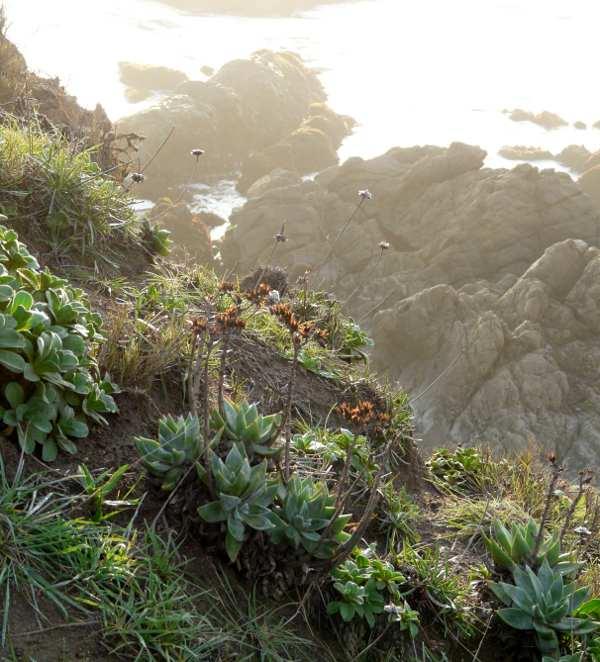
on cliff, Erigeron glaucus, Ceanothus maritimus
Beach sand coastal (Los Osos)- Arctostaphylos morroensis, Lupinus chamissonis , Ceanothus ramulosus
Nipomo- sandy soil-Ceanothus gloriosus, Ceanothus impressus nipomoensis, Arctostaphylos purissima
Atascadero, Paso Robles-clay to sandstone, hardpan- Ceanothus cuneatus, Ceanothus sorediatus, Ceanothus leucodermis, Arctostaphylos glauca, pilosula
First- look at plants around your area there are 4 general types of plant groupings in CA
Desert, conifer forest, woodland-scrub, riparian
In our county- Lompoc, Cambria- conifer forest
Carrizo Plain- desert (shadscale scrub)
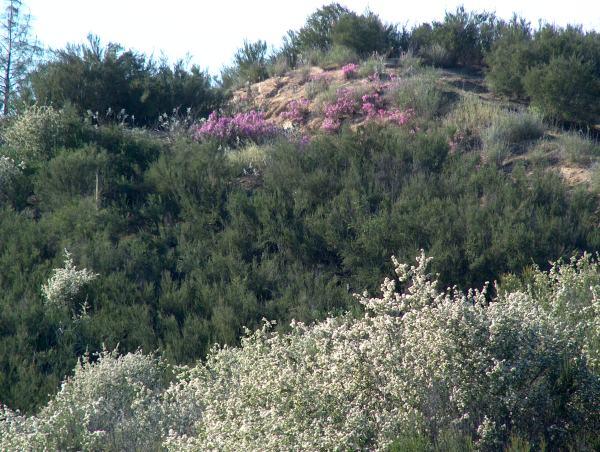
Cambria- desert- coastal bluffs (coastal prairie) everywhere else- woodland/scrubor riparian- constant water
SLO, within this community you decide-sun, shade, clay, sand , serpentine ( high Mg, low calcium, high metals)
NOTE: In an area of no trees, just grasses, find out history, may be very shallow soils or some imbalance, high boron, or high sodium.
Examples- SLO first part of Orcutt road, Rhigetti road,high boron grassland (There are similar soils around Davis)
Cambria -high sodium- coastal prairie
Plant Groupings- Examples
Woodland-, coast live oak, hummingbird sage, coffeeberry, Ribes
SLO Scrub-Salvia mellifera, Arctostaphylos crustacea, Eriogonum parvifolium, Diplacus aurantiacus
Los Osos Coastal Scrub -Lupinus arboreus, Arctostaphylos morroensis, & plants in SLO scrub except Arc. crustacea
Chaparral-( east of Cuesta Grade) Salvia mellifera, Penstemon centranthifolius, heterophyllus, Eriogonum fasciculatum, Trichostema lanatum, Diplacus longiflorus, Arcto. glauca, Ceanothus cuneatus, leucodermis
Cambria coastal prairie- Erigeron glaucus, Haplopappus sp., Eriogonum parvifolium, Stachys pycnantha, Achillea species,Eriophyllum stachaedifolium
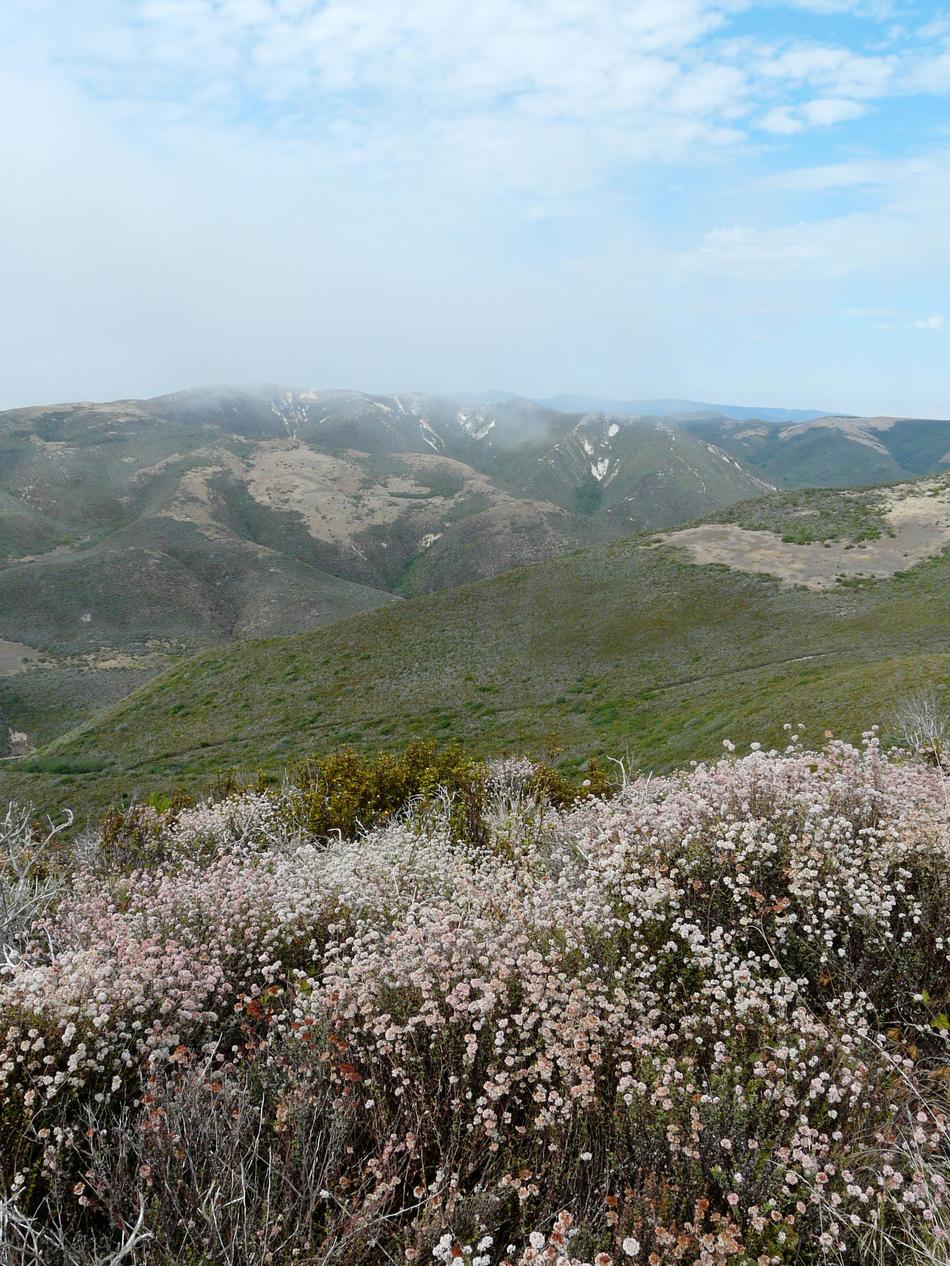
Plant strategies- plants can be grouped according to their lifestyles and needs, just like people- city and country people.
Ecologists have grouped plants into 3 major general groups, according to their lifestyle
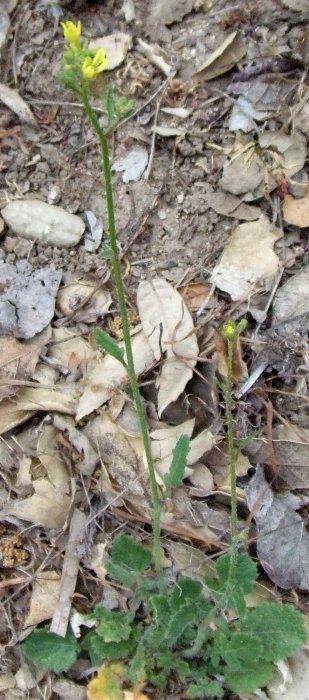
RUDERALS- mostly garden flowers, highly hybridized
-do best in regular garden conditions, what does this mean? It means regular water and regular applications of fertilizer
-short life span, produce flowers and seeds ASAP
-not very drought tolerant
-susceptible to predators- life's energy not spent in protection, just reproduction
-need regular water and high nutrition
-reseed well on disturbed soil
-produce tons of seeds
-grow best in amended soil
-mulch inhibits their growth
-not oriented to a plant community
-doesn't take stress very well-goes to seed and dies much more quickly
-mostly bacteria found in these soils
-Examples broccoli, cabbage, mustard,sweet alyssum, petunia, kale, stock, yellow star thistle
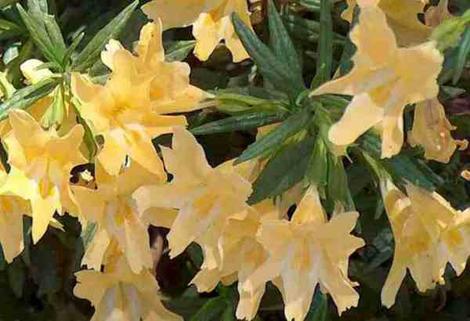
Circumventors this group has intermediate needs, many western natives are included
-to avoid stress- they go dormant, or die to the ground, in cold winters, hot, dry summers
-grow and reproduce during periods of high moisture and nutrition- usually spring -summer
-are oriented to a plant community
-Examples- Ribes, Diplacus, Acer macrophyllum, Mariposa Lily
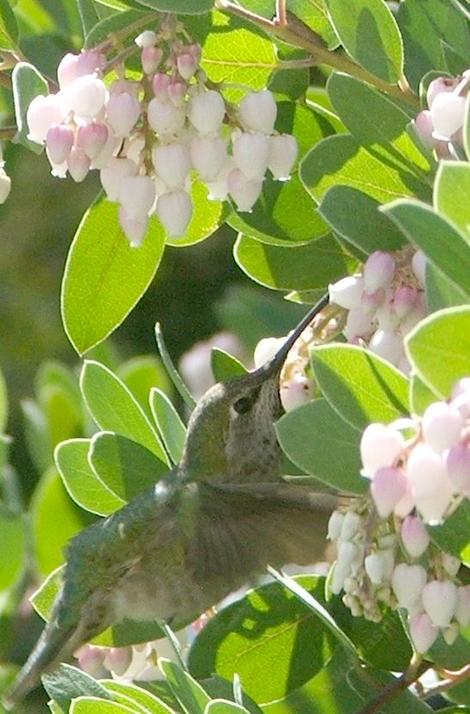
Stress-Tolerant- these plants deal directly with environmental stresses
How? Adapt to the stress--this takes many years of evolution
-these plants are highly adapted to their sites and are not easily adapted to regular garden conditions.
-What are the stresses? Poor soil, harsh conditions, cold, dry, low rainfall, low sunlight
-they are long-lived--reproduce by crown sprouting, suckering-- produce seed every so often
-have thick bark in fire areas (oak)
-highly oriented to their plant community-share water and nutrients--mostly fungi are found in the soil
-their roots obtain nutrition from the mulch layer, mulch is necessary to their growth
-Examples- blueberry, Cistus, most manzanitas, evergreen oak, eucalyptus, cork oak, Leptospermum
Question: How do I put the plants together in a native landscape?
1. Lawn, bird bath, dripping faucet, or leaky pond is riparian area and the ruderals should be put next to this area.
2. Then circumventors should be put out from the ruderals, farther from the riparian area.
3. The stress-tolerants should be put the farthest away from the ruderals.
Mycorrhizal Associations on native plants
Many native plants are different because they live in associations with a fungus that lives on their roots and many landscape plants do not have this association.
This fungus, called mycorrhiza, lives in a shared relationship with the plant and other soil associates.
The fungus is considered a plant, but it has no chlorophyll so can not produce food.
Mycorrhizae increase the root surface area of the plant so that many more nutrients can be taken in than if it wasn't there.
Mycorrhizae actually help to break down organic material, to release nutrients to the plant.
The root may have multiple mycorrhizal associations that release chemicals to inhibit other organisms and pathogens.
The fungus can be connected over many miles underground and moves water and nutrients from plant to plant within the native plant community.
In return for this help, the plant gives it food ( carbon compounds).
These associations are what allowed plants to move onto land.
The fossil record shows that mycorrhiza appeared at about the same time as plants appeared on land.
NOTE: This relationship is based upon stress, if you give the plant regular water and regular fertilizer, there is then no need for the fungus, and it almost immediately drops off.
Some plants cannot live without this relationship, others(mostly weeds) can take or leave it.
There are several types of these fungi, but we will talk about 2 types in this class

Ectomycorrhiza- these live on the outside of the roots, and can be seen with the naked eye.
Ectomycorrhiza are found on most stress-tolerants, evergreen oaks, manzanitas.
Vesicular-arbuscular- these are found inside the root VAM cannot be seen without a microscope. They are found on grasses, sages,buckwheats, ceanothus, and many landscape plants. They are found where there is low organic matter in the soil, as deserts,
Mycorrhiza is what holds the plant community together. It is the foundation of the plant community. That is why, when you till and disturb the soil, you are breaking up this interconnected web of fungi and roots and seriously disrupting the health of the plant community. 99% of all gardens do not have this fungus present. Why would they?
Water and nutrition is plentiful, it is not needed. But if there is, for example, a coast live oak, in a garden, its life is significantly shortened, it is more buggy and disease-ridden, by these conditions. Under these conditions, it is like giving the oak AIDS.
The tree needs this fungus to survive and has adapted to life with it present.
To relate this to a person, we have organisms in our digestive tract that help us to digest our food, and in return they receive some of that food
We also have cells that attack foreign organisms in our body, such as strep bacteria.
When the strep bacteria become dominant, our white blood cells actually attack them, because they recognize them as foreign, not naturally part of our body in those numbers.
Common Questions about native landscaping.**
1. Why are many landscape plants easier to grow than natives, and, if I let my yard go, no natives emerge, but many landscape plants and weedy non-natives will start seeding in?
In a healthy native plant community plants that are recognized as not belonging to that community are rejected, chemicals are released to inhibit their growth, no water or nutrients are shared with them. If there is no community, which ecologists now think of as an organism, like a person is an organism, then the whole system is broken down and the non-natives can germinate and grow much more easily.
Remember, many landscape plants are here because they are easy to grow, need regular water, need regular nutrition, are very vigorous, and they have no controls on their growth and reproduction as in their area of origin. Also, now we come to the point that natives do not grow best in garden conditions, so why would they germinate and grow if the conditions are not to their liking?
Drip irrigation kills most California natives. NO drip in a native landscape!" How should we water with drip?
Drip creates the ecology of a pond. Do not water any drought tolerant plant with drip.
Ok, what do we water with?
Do I amend the soil?
No.
My soil is awful. What should I fertilize with?
Nothing. Make sure you design in the plant that likes your type of soil.
What kind of mulch should I use?
See the mulch page. Desert plants like rock, most other natives like a rock next to them with shredded redwood, oak, pine, or cedar in a 4 ft. diameter circle around them.
I've been told natives are hard; you're saying easy, who should I believe?