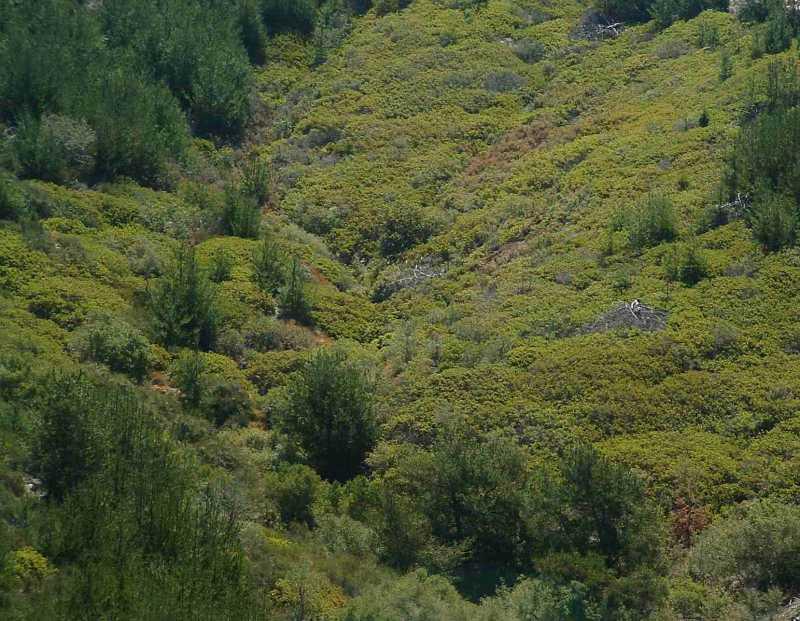
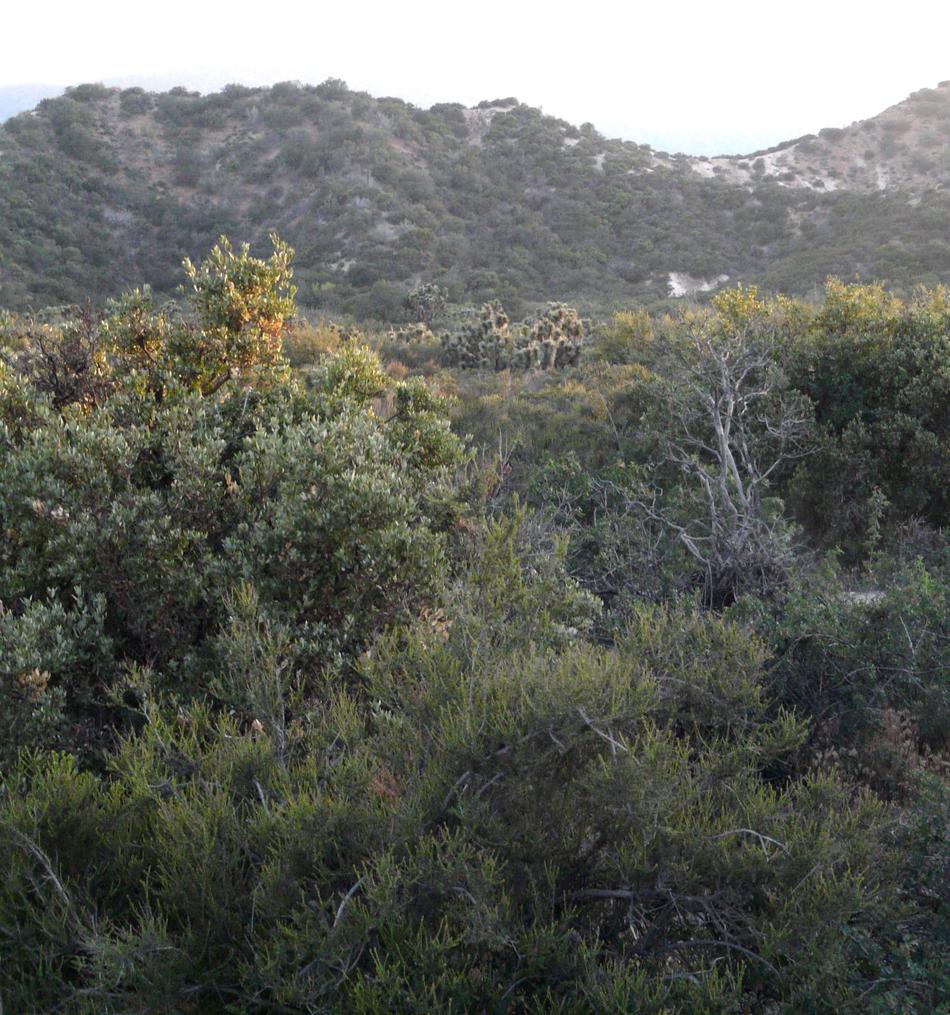
California Chaparral
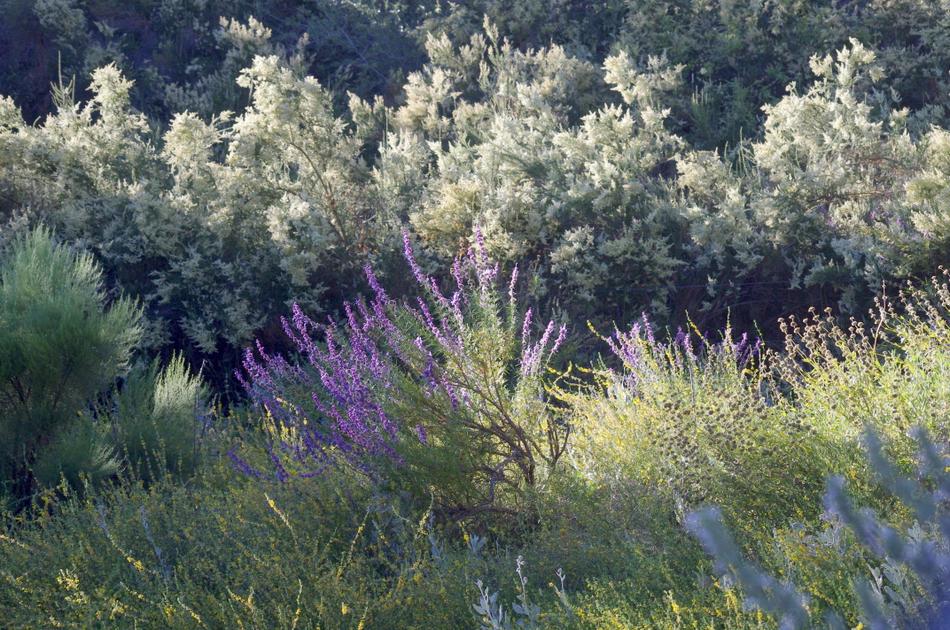
Chaparral is a very diverse plant community that can survive almost on winter blowing fog/clouds in Anza, California, or be adjacent to our very wet Redwood Forest. see also Habitats
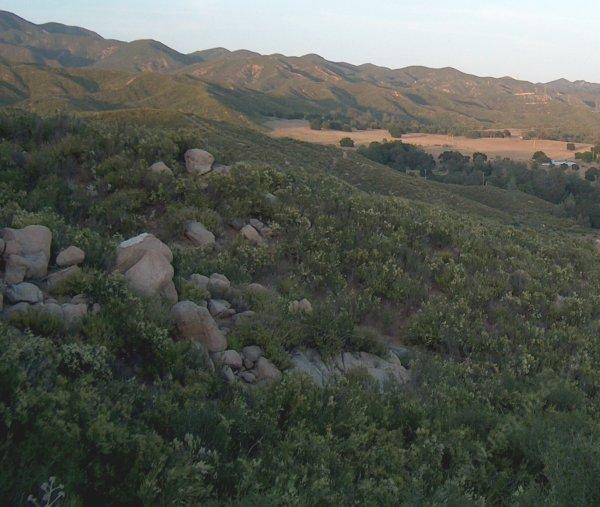
Chaparral exists in many areas of the coast ranges and on the western slopes of the Sierra Nevada mountains. It is also found on the western and eastern slopes of the southern California mountains. It is 'hard' brush that doesn't rely as much on summer fog drip that the 'soft' Coastal Sage Scrub does, and it is adapted to heat and drought. If you know where the fog belt is for an area, the rainfall, the soil type, and what the summer temperatures are, it is pretty easy to guesstimate where Chaparral should be. Precipitation of 30-90 cm, less and you'll have either Shadscale Scrub, Joshua Tree Woodland, (in hotter areas) or Pinyon-Juniper Woodland (in colder areas). Higher amounts of rainfall make for Mixed Evergreen Forest or Yellow Pine Forest, and coastal fog and cooler summer days means Coastal Sage Scrub (soft brush). If Chaparral isn't where it should be, it was probably cleared. The more accessible areas have been cleared by the mile. Fortunately, Chaparral still occurs in large areas that were hard to reach by tractor.
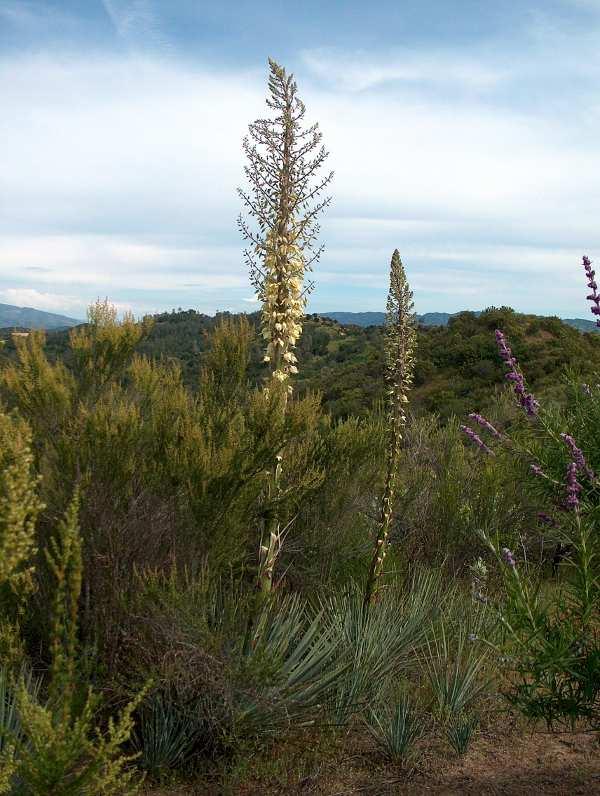
The Chaparral (brushland) is usually a successional plant community that gradually moves to oak and pine forest, if the soil depth supports it, even if the amount of rain falling from the sky does not change. Pretty cool, huh? Over time, just the presence of the Chaparral can change the pH one unit, can effectively double the precipitation, and can produce a litter layer (mulch layer of leaves) in which the pines and oaks can germinate. That is, if it doesn't burn for many decades or a few centuries. Chaparral is also loosely called brushland, or brush.
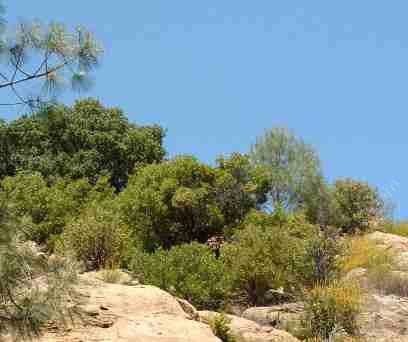
The only consistent pattern is: Chaparral usually does not occur on good soil. BUT, it is more than likely that the early settlers removed all the chaparral as nasty brush from ALL the flatter richer soils so the only places Chaparral is left is on the slopes and poorer soils. So, for now, Chaparral exists on rocky, shallow soils overlaying a subsoil that is clay or rock that commonly holds moisture.
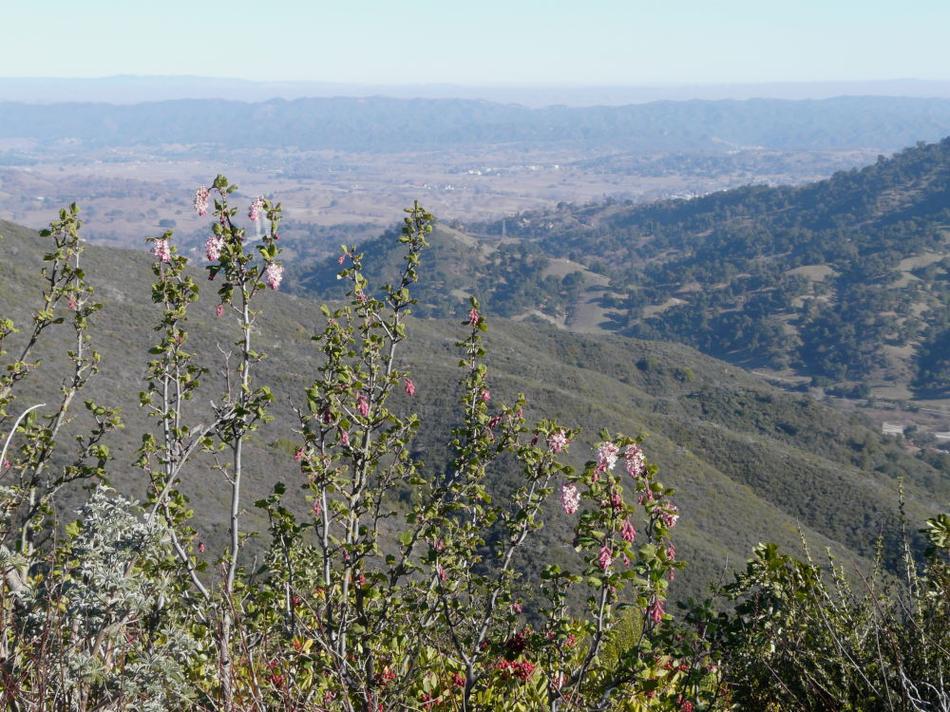
The soil depth variable.
These three close plant communities transition: from Grass/forb land (the shallowest soil), to Chaparral (intermediate in soil depth) to Oak Woodland or Southern Oak Woodland(the deepest soil, deep enough to support trees, usually over 4 feet in depth).
What are characteristics of chaparral shrubs?
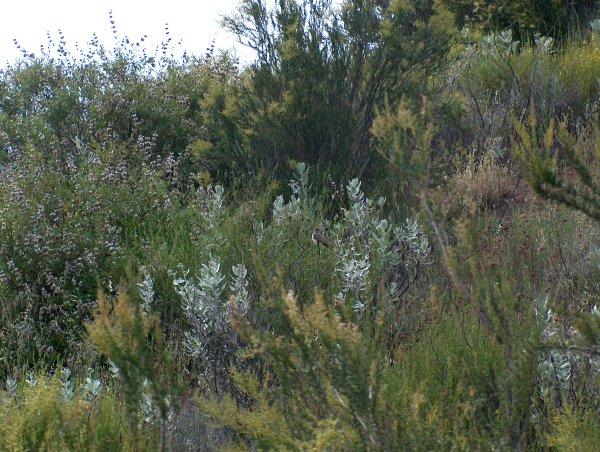
Sclerophyllous (hard-leaved) plants commonly form the foundation of this plant community. They have small, hard leaves, that roll up, under, or fall off during the normal summer drought. Then there are the many evergreen bushes with extensive root systems that hold on to their leaves for dear life. These are very efficient plants that defy the sophisticated soil moisture machines. No humidity, no measurable soil moisture, but green plants. These plants consistently draw more moisture from the ground than comes down in rain. There is no measurable runoff in a chaparral plant community. Oh, you get creeks because of springs and other slow releases, but not runoff directly from the hillside.(Patric, James. 1974)
What elevation is chaparral found in?
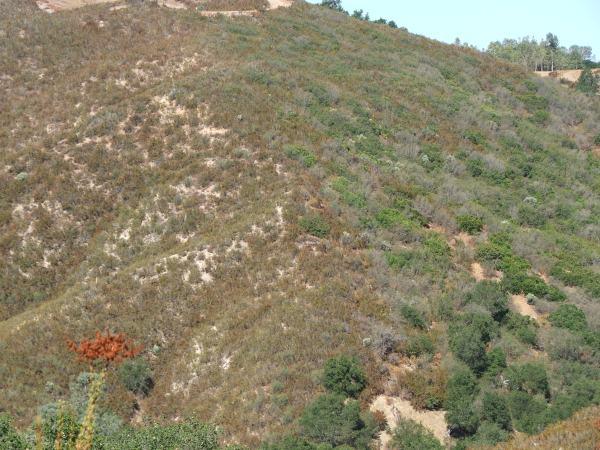
Chaparral usually isn't in the real lowlands. In places like Malibu it starts out at about 500 ft. up slope, with Coastal Sage Scrub only living in a narrow band right next to the water. On the other hand, Coastal Sage Scrub runs up to about 4000 foot in Julian, California, and some areas around Riverside and Highland. In some areas like Julian, Chaparral exists in a narrow strip, between Coastal Sage Scrub and Yellow Pine Forest. So elevation is probably not a great predictor for Chaparral.
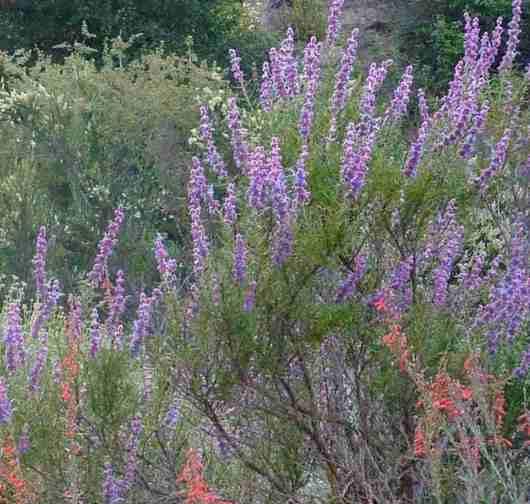
The aspect of a hillside can make a great difference in the makeup of the chaparral. North facing slopes are a lot moister and can support Toyon (Heterromoles arbutifolia), Manzanita (Arctostaphylos spp.), Scrub oak (Quercus spp.), Pitcher sage (Lepechinia spp.), Climbing Penstemon (Kekiella cordifolia, K. antirrhinoides), and Poison oak (Toxicodendron diversilobum). The dry arid south facing slope is dominated by Chamise (Adenostoma spp.), Black sage (Salvia melifera), Yucca (Yucca spp.), Woolly blue curls (Trichostema lanatum) and Bush poppy, (Dendromecon rigida).
Delineating characteristics of this plant community
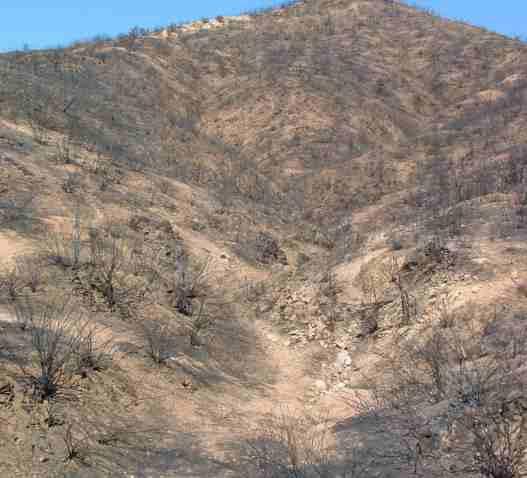
1. Fire is a major factor in the dynamics of this Chaparral
plant community, and plants are adapted to fire, ie. crown-sprouting
shrubs, and annual fire- followers.
WEEDS AND HUMAN CARELESSNESS HAVE CHANGED the FIRE
FREQUENCY!!!
Normal fire frequency should be about
100-400 years, depending
on the Chaparral type and location. Most native plants need decades to
reproduce. The presence of weeds, and human
carelessness has increased the fire frequency to as little as six
months. Many of the native plants that live in Chaparral require years
to develop the right conditions for their seeds to germinate. Weed
seeds can germinate and set seed in as little as a few months. Once
certain cascading events are set into motion, namely frequent fires, in
addition to the presence of weeds, in a Chaparral plant community, you
have a recipe for plant community degradation and destruction. Suppress
fire in the Chaparral plant community for as long as you possibly can
and remove the weeds, and you might keep the Chaparral plant community
intact and your home fire safe.
2. This plant community is highly adapted to very long dry
spells, but unlike desert plant communities, areas of Chaparral can
have very wet winters, also. 30-40 inches of rainfall in two months is
common and no rain for 1-2 years has also been documented. The average
rainfall is more like 15 inches (38 centimeters) and the normal diurnal
temperatures are 25 F(-4C)-60F(15C) in winter, 55(13C)-95F(35C) in
summer. Most Californians get excited when their winter temperatures
drop below 20F(-12C) or summer temperatures above 105F(40C).
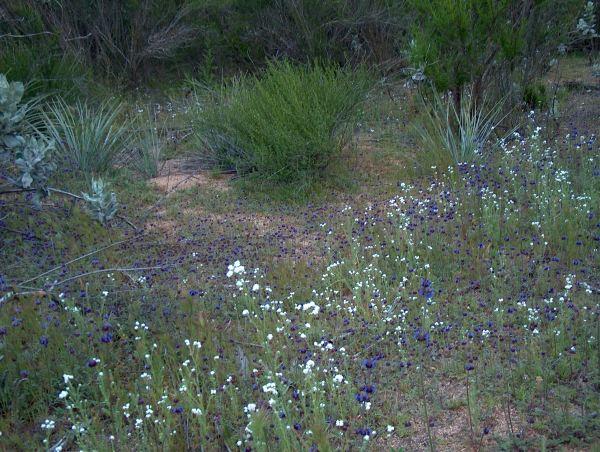
The plants are created by the 8-12 months of yearly drought. BUT, the chaparral plants moderated the climate by slowly releasing moisture back into the air and streams. As the chaparral has been replaced by weeds and man's activities this vegetation buffer has been degraded and the fires, landslides, flash floods, and soil erosion have all increased while foggy mornings and overall soil moisture has decreased.
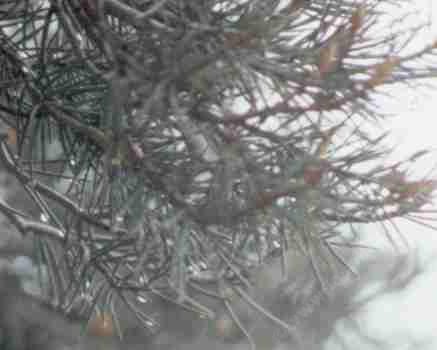
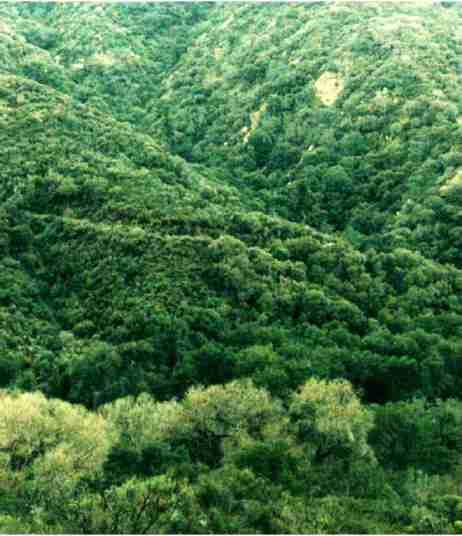
One of the many points the “tecchies” out there miss, that has been pointed out repeatedly by the old naturalists, is that the Chaparral plant community 'creates' moisture. There is almost no runoff from chaparral sites, and the soil only becomes dry on 'real' drought years. Most of the time soil moisture ranges from moist (not wet) to slightly dry. This is a great growing bed for the oaks, pines and trees of higher rainfall areas. The higher the brush gets, the more blowing fog or clouds are caught, and the more fog is created from this catch and release.
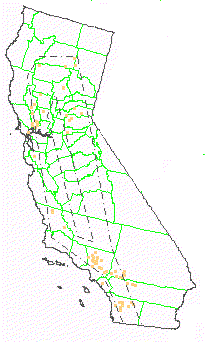
California cities that occur in Chaparral.
Chaparral is far from uniform so it is not possible to 'connect the dots'. I've drawn out the areas that could be in the range of the Chaparral plant community.
There's been a push by fire departments and insurance companies to remove Chaparral in urban interface areas. Here are some points to ponder.
Firemen don't usually die in brush fires, they die in grass
fires. Weedy fields burn faster than you can drive, never mind run. By
the time you figure out a grassy area is burning, it is over. It's like
standing in the middle of a tunnel with a high speed train coming.
Remove the alien, annual grasses and weeds; manage the native brush.
To repeat (ad nauseum!), there is almost no erosion in clean
Chaparral; there are large mud slides in areas of Chaparral that have
been converted to grass. In the large lysimeter study that was done at
San Dimas, California, the conclusion was: removing brush would lead to
enormous erosion problems. But fire insurance commonly doesn't cover
mud slides....
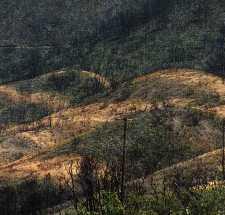
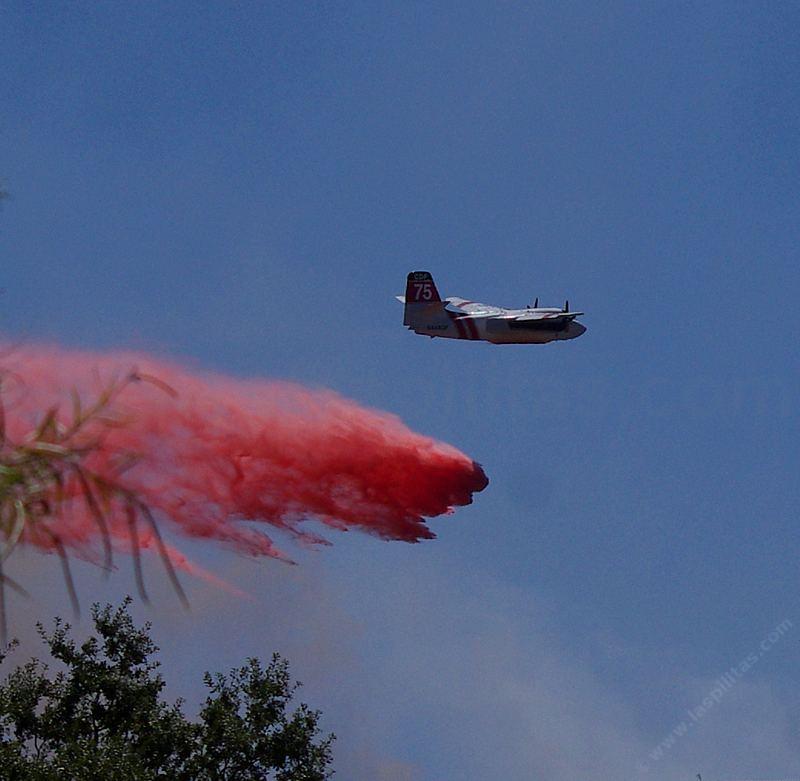
Fire departments can easily put out grass fires. Tankers knock them down; tractors put them out. Brush fires are much bigger, scarier and require days of work. They also are slower. In clean Chaparral (without the presence of, you guessed it, alien annual grasses) you usually have time to leave. Mix some grass and weeds into Chaparral and you have something that will start burning more easily, and burn fast and very hot.
A properly managed Chaparral slope is very hard to burn (I've spent hours try back firing it when I was a fireman trying to light backfires); erosion is very low and and the Chaparral can survive in extreme drought. Leave no dead limbs or debris other than really big stuuf or very small twigs and leaves. Thin the solid, dense stands of shrubs to about 50% to 30% of the original numbers, depending on your site conditions. Leave all of the Toyon (Heteromeles arbutifolia) and remove most (not all) of the Chamise (Adenostoma fasciculatum) or Red Shanks (Adenostoma sparsifolium). If you clear too much you'll get erosions and replacement with nasty weeds and grasses.
Most brush fires occur at the end of a drought when everyone is on rationing and can't water their plants. The 'firesafe' non-natives turn into dead twigs that burn very well, thank you. You live in California, not England or Virginia.

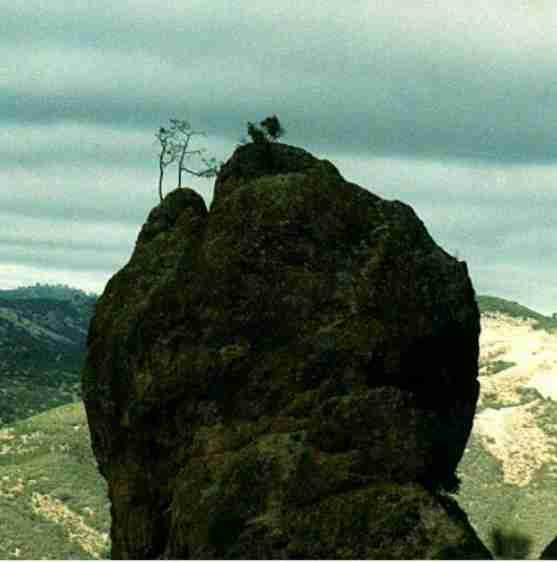
Serpentinite soils
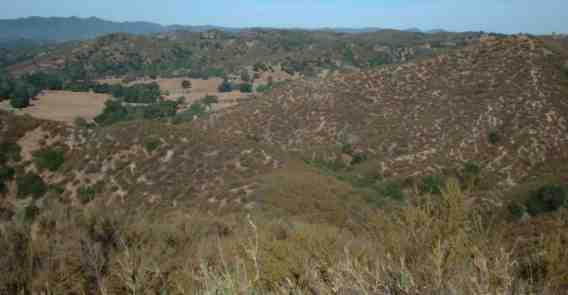
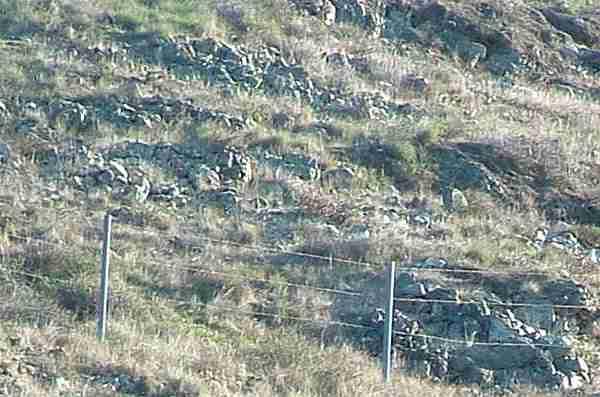
This picture of a serpentine grassland in the central coast ranges of California, adjacent to Chaparral, demonstrates the effect of this soil type on vegetation. In some areas there exists nearly straight serpentinite soils. Where the conditions would normally dictate Chaparral you end up with a serpentine grassland. We do not separate this as a plant community because the serpentine plant community is usually the plant community that is supposed to be there, minus the plants that cannot tolerate serpentine . On real 'raw' serpentine areas this will be nearly all low, herbaceous seasonal forbs, grasses and bulbs that also occur in the adjacent Chaparral plant community. The serpentine soil supports an extreme form of the Chaparral plant community.Plants
A list of California native plants that grow in the Chaparral plant community.
What to do if you are in a fire area.
A list of California native plants that tolerant of deer and fire ...