California Pinyon-Juniper Woodland
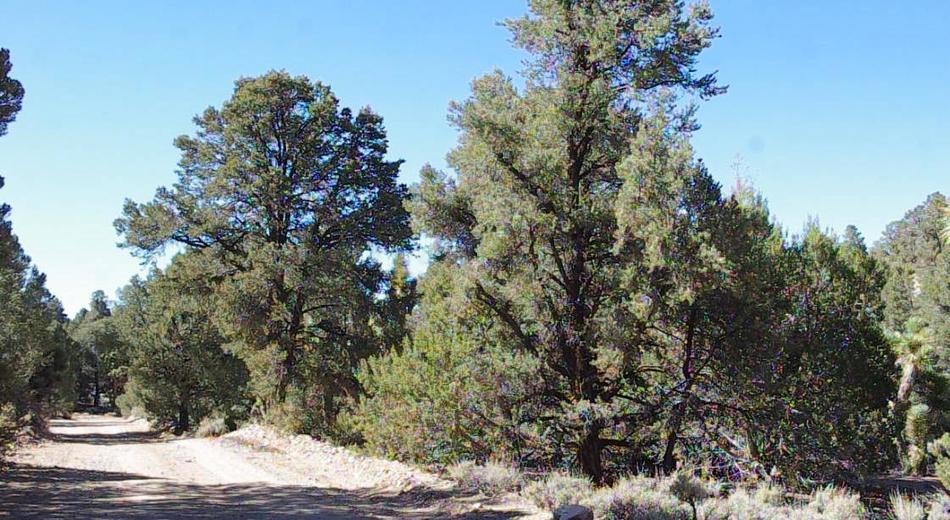
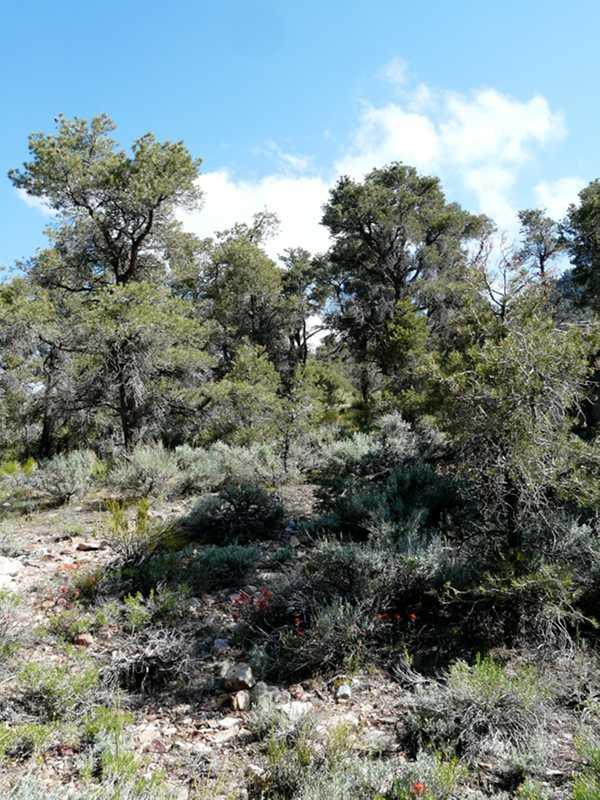
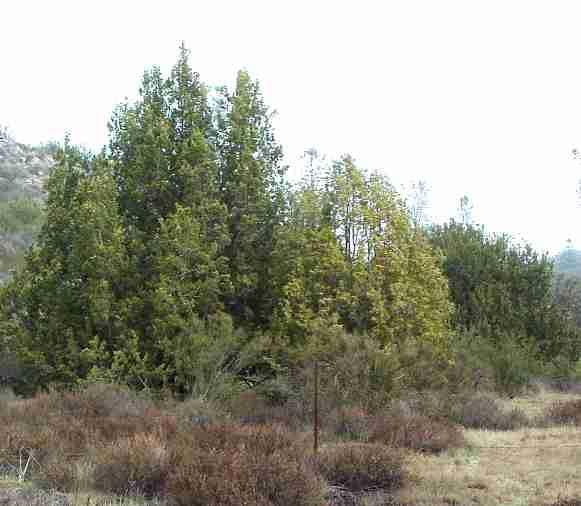
Pinyon Juniper Woodland ranged from the inner coast ranges (like Creston) to vast areas along the east side of the Sierra Nevada mountains (Onyx to Tom's Place). Elevations ranged from 1000 ft. in Creston, to 5000 ft. in the Walker Pass area (standing at 4000 ft. and looking up), climbing to 9000 ft. on some of the parts of the Alabama Hills west of Lone Pine. The Pinyon-Juniper Woodland is warmer and with a longer growing season than the Northern Juniper Woodland. These areas possess a wonderful climate for about a month in spring and fall (when the plants grow), while the rest of the year it can be wonderful at any time, or awful at any time. Temperature swings are dramatic: 90 degrees for a week, followed by snow, snow followed by 80 degree temperatures, and frost almost any time. You can't grow peaches, nectarines or most other fruit trees in this climate because the temperature swings force flowers while there are still hard frosts. (There are a lot of abandoned orchards in these areas where city folk bought the land, cleared the 'brush', planted the orchards, only to watch the trees freeze.)
It is a GREAT place to live if you live with the climate, plants and animals, instead of trying to 'tame' them. Plant plants that easily live in the community. Establish plants on which the wildlife can live, without eating them to death; plants like hardy Penstemons (Penstemon eatonii and Penstemon palmeri) and Sages (Salvia dorrii and Salvia pachyphylla), Junipers, (Juniperus californica, Juniperus occidentalis ssp. australis, and Juniperus osteosperma) Pinyon pines (Pinus monophylla and Pinus edulis and Pinus quadrifolia), and Buckwheats (Eriogonum umbellatum and Eriogonum wrightii). It's like staying inside when the weather is bad, and coming out when it's nice. Simple, and life is more pleasant.
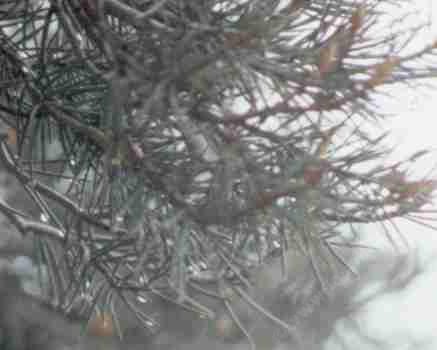
The soils are usually fast -draining and range from loamy-clay to almost gravel. This plant community commonly will have dry soil all year. Every spring wildflowers show up between the trees and bushes. A night rain shower makes the soil moist for a few hours and that's enough to trigger wildflower germination. By noon, the soil is back to its dry state. This plant community can be cold, 0 F with 20 mile/hour winds, and in summer 120 F with, guess what? Twenty mile/hour winds. The winds in spring are a common occurrence in these areas. Pinyon Pine trees rely on fog drip or blowing clouds to capture extra moisture.
This plant community is fun. All
sorts of animals live here from Road runners to Pinyon jays, and
Bears to Badgers. There are wildflowers to knock your socks off
in spring, and pine nuts to eat in fall.
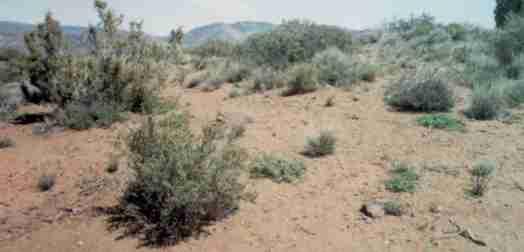
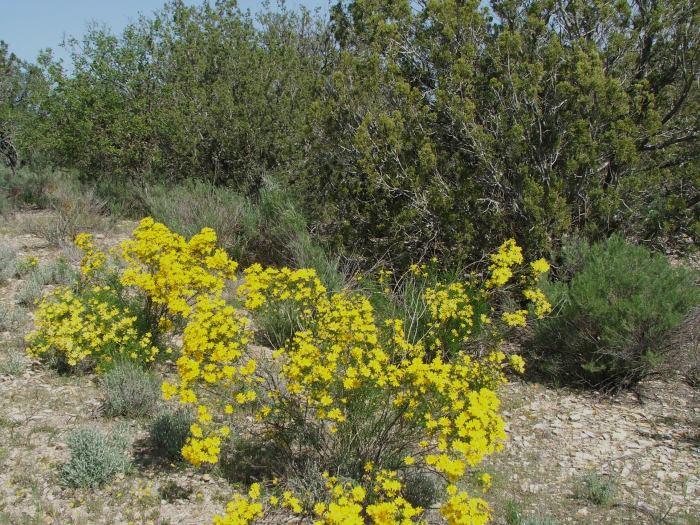
Chia (Salvia columbariae), Pincushion
Flower (Chaenactis sp.), in foreground; Wright's
Buckwheat (Eriogonum wrightii) in the middle, and California
Juniper (Juniperus californica), in the background.
Sometimes
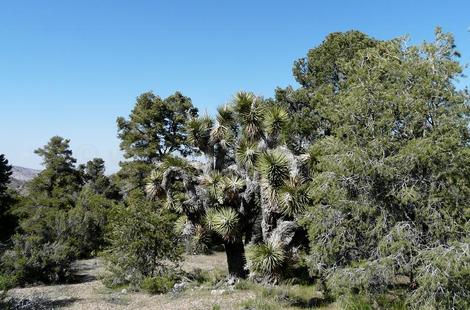
Pinyon pine trees and junipers are together in a woodland, but
generally the particular spot will have one or the other. The
pines are usually on the knolls, peaks, and areas that will catch
the moisture from blowing clouds. Junipers are in the drier
spots. Neither will be in the shady wet spots; these wet spots
are the very diverse riparian areas, or, at higher elevations,
the meadows.
If you live in this plant community, control the weedy grasses, as this community is very fragile and weeds can replace all of it in as little as a few years.
Sometimes you can have the Juniper only; the Pinyon pine trees may have died out years ago, or never existed there and the Gray Pine (Pinus sabinana) exists in the Pinyon niche where Central Oak Woodland merges with the junipers.
Plants
A list of California native plants that grow in the Pinyon-Juniper Woodland plant community.