see also
The California Shadscale Plant Community
Annual precipitation:
2-7 inches
Common Animals:
Kangaroo Rats, Coyotes, Tule Elk, Pronghorn, Roadrunner
Common Plants:
Saltbush (Atriplex spp.), Buckwheat (Eriogonum spp.), annual wildflowers, Winter Fat (Eurotia (Krascheninnikovia) lanata), Hop-Sage (Grayia spinosa), Needlegrass (Stipa (Nassella) spp.)
Soil and climate notes:
Soil is highly alkaline to alkaline (pH 7.2-9), poor drainage (because of the sodium, up to 10,000 ppm and calcium, up to 10,000 ppm) This community is under siege by Bromus species. When Bromus (small weedy foxtail type grasses) invades the site is much more fire prone. 5000-10000 acre fires burn in an area that used to never see fire. Fire favors more Bromus.
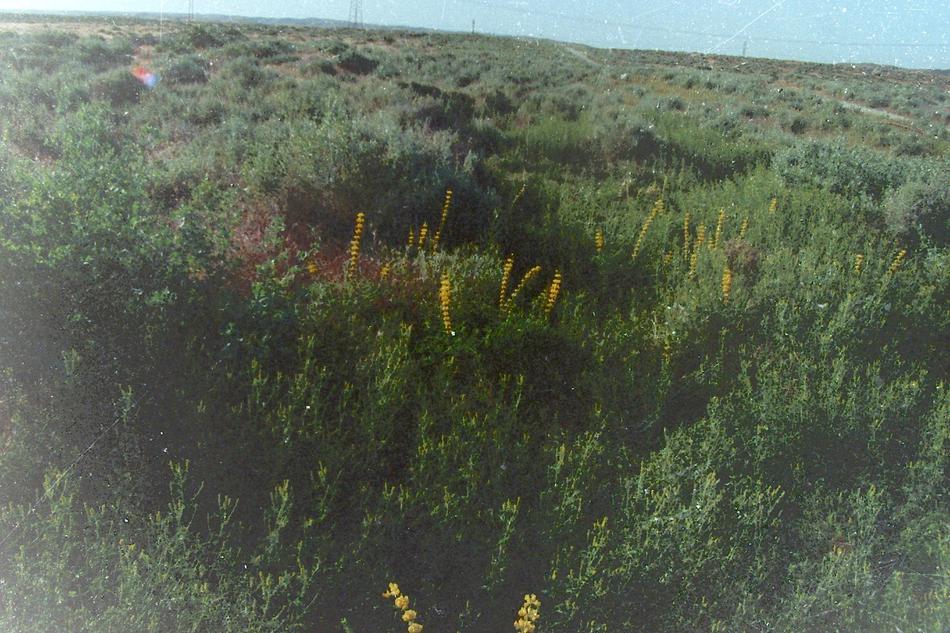
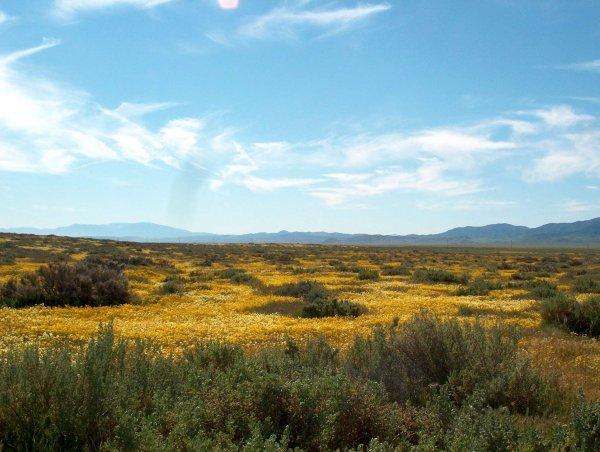
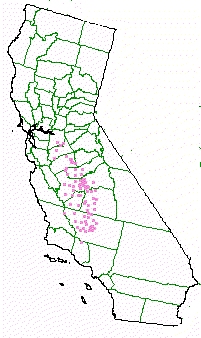
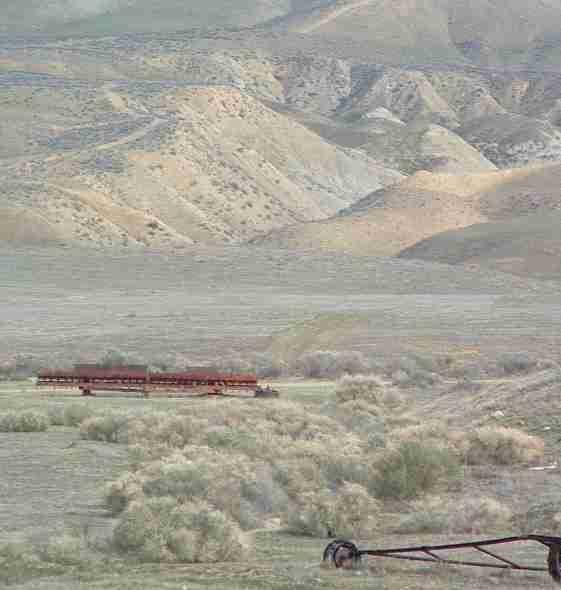
The shadscale scrub plant community historically ran along the west side of the San Joaquin Valley down to Maricopa and across to the north side of Cuyama. In the deserts of California many of the areas are too dry for Big Basin sagebrush (Artemisia tridentata) and too cold or alkaline for creosote bush (Larrea tridentata) and you get sagebrush scrub without the sagebrush, just flavors of shadscale (Atriplex spp.). This plant community exists in many areas of the “badlands” of the southwestern deserts. If your city has shadscale (Atriplex spp.) around it your soil is alkaline. Areas like Boron, and Barstow are a patchwork of creosote bush scrub and shadscale scrub plant communities. Only your soil pH will know, about 7.8 and above is shadscale scrub, 7 and below is creosote bush scrub, and in the middle some of each.I've included an extinct plant community that used to be southeast of Bakersfield. "Acre after acre of Opuntia treleasei may be seen out of Bakersfield only fifteen miles out on the old Tehachapi road. In flower in late spring it is a sight worth traveling a hundred miles to see. The flowers are an orchid or pink color, large, with many petals, and are numerous on the plants that cover the ground almost solidly” (E.M. Baxter, in California Cactus, 1935). Pictures show miles of cactus and wildflowers. The plant community would be very similar to the shadscale scrub in structure but the dominant evergreen (or evergray) plants are cactus (Opuntia spp.) instead of shadscale (Atriplex spp.). Baxter's picture in 1935 is significant because it shows alien, annual grasses present (brought in by grazing animals) and may be one of the last pictures of the plant community before it was destroyed (probably by a combination of burning and grazing).
In the Carrizo Plains most of the Shadscale Scrub plant community was replaced in the late 1800's with barley and wheat.Carrizo Plains is inhabited by plants of the Shadscale Scrub plant community, with Pinyon Juniper Woodland (the Pinyon Pine trees are gone, either were never there or were removed) on the west edge of the plains, the Alkali Sink plants growing along the flat plain adjacent to and slightly above the high-water mark of Soda Lake and the the Inland Saltmarsh plants growing along the actual lake edges. bv
The Shadscale Scrub plant community is being converted into farming or converted into a weedy stubble of a pasture by the spread of Brome Grass (Bromus spp.) and other weedy grasses. In areas like Avenal, Lost Hills, Mckittrick and Taft the whole plant community is being overrun by Brome Grass. This small foxtail -type grass is spread by grazing and man's activities. The normal Shadscale Scrub plant community is not very adapted to fire. Fires cannot normally spread in this plant community because there are no flashy fuels to carry the fire and the Atriplex spp. (Shadscale) burns poorly (the leaves are full of salty water) . Add alien, annual grasses and the Shadscale Scrub plant community will burn, as in the picture above of a recently burned Shadscale Scrub, near Buttonwillow, California. The whole plant community is usually replaced after the first fire, by annual alien grasses and broad-leafed weeds. What is left in many places is a one- inch- high annual grassland that supports almost nothing, as in this picture below from north of Coalinga, California.
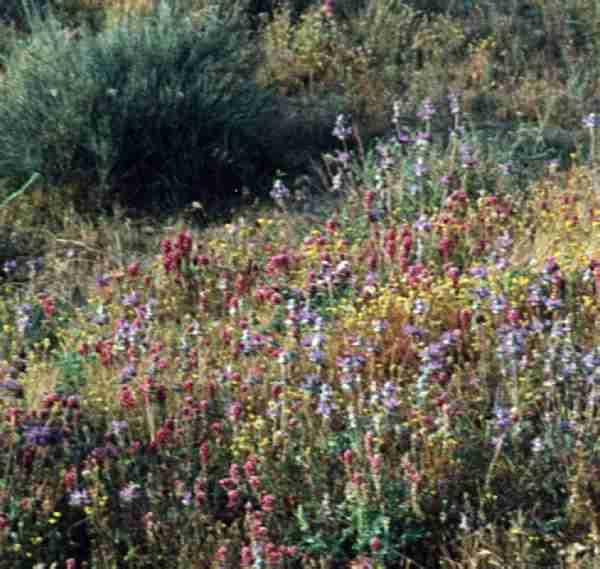
Ecologists (or people that call themselves that) wander in from other areas and think this annualized grassland should be there. Nope. This plant community used to be Shadscale Scrub, that is, Shadscale bushes (Atriplex spp.) mixed with annual and perennial wildflowers, annual and perennial buckwheats (AND a little, itty, bitty bit, mostly less than 1% but in a few places approaching 10%, of native perennial grass!)
Plants
A list of California native plants that grow in the Shadscale Scrub plant community.