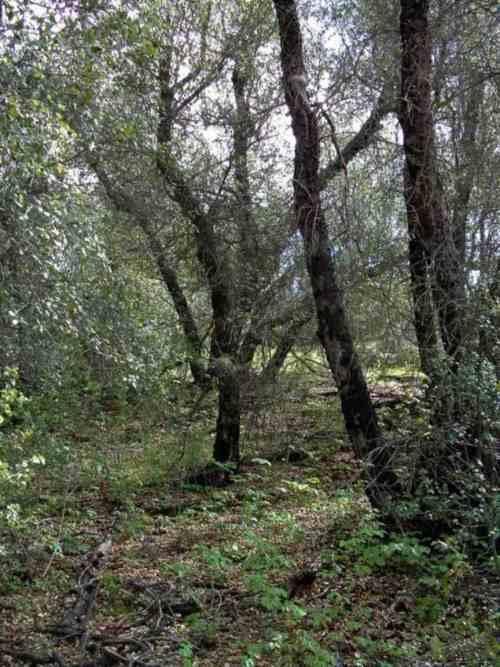
Introduction to California's Ecosystem
When revegetating a native site or your garden don't forget ecological factors
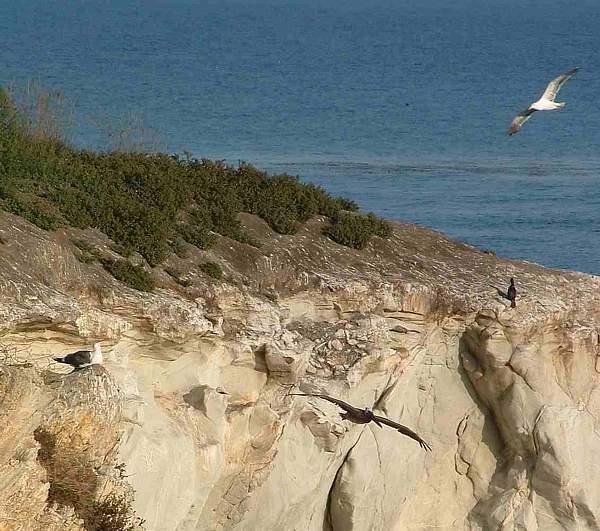
We have probably given more information than you need for most projects, but we are trying to answer questions that range from how to revegetate a mountain bog at 10,000 ft. to what to plant on the side of a coastal bluff overhanging the ocean that can't be watered. We've found that the majority of our successes and failures can be traced to understanding the site. Eventually, many of the plants in a plant community are all interconnected. This interconnection also provides a network underground that will allow 'Mother Plants' already on the site to help support your newly set-out plants. If your planting is compatible with the site (matches the plant community, sun/shade, soil, rainfall, etc.), you can plant anywhere (see next sentence) with no water after the first few waterings, with a 90%+ survival rate. The parameters become very exacting as you work with sites that are covered with weeds and you have no water on site. You will make a number of mistakes, but once you get it right you look brilliant. The result can be a beautiful, healthy, vital landscape that actually improves the overall environment and local habitat.
Landscaping without water
(We
have evolved to limited water landscapes over a 35+ -year
period. We have been California Landscape Contractors (#345678) for
decades, and the last few years of landscape installations were
implemented with little (first month or summer) or no water, depending
on when planted.
The importance of partners
Mycorrhizae (meaning
fungus-roots) protect the plant roots from diseases, nematodes, and
greatly increase the the plant's ability to extract water and nutrients
out of the soil. California native plants have evolved to be strongly
mycorrhizal. "For all practical purposes, under natural conditions,
mycorrhizal infection is necessary if trees [and shrubs] are to survive
and grow satisfactorily."(Marx) There are
bacteria, and micro-fauna that also help the native plants. The
significance of our water use and ecology practices are beyond native
plants and should be incorporated in all xeriscape ordinances.
Basically, gardeners of all kinds need to know enough about gardening
to not kill or harm the native system. (See the good and bad below.)
Water use increases with availability and ease of use, but
native systems do not tolerate excesses well.
Now that the 'free' water of the 1950's and 1960's is gone we need to learn how to work with what we have. We need to abandon the plants that like lots of water and fertilizer (we call these ruderals, you call them color) and go back to good horticulture, (great gardening) using native plants and other drought tolerant plants (stress tolerants). (See the easy section.) Most gardeners would be amazed at the amount of plant material this includes. Orchards were dry farmed on 7”-20" of rainfall per year with less problems 50 years ago. Why do we need 50" of water to do the same thing now? Gardeners did gardening with no automatic sprinklers years ago with wonderful results. Why do lawns need to be watered daily now?
Where in the world is there soil
amended with manure, tilled all up and watered daily?
Don't lose the big picture
The "social complex of organisms", Gaia,
needs to be
considered as you design each site. Consider the plant communities
first (and their climate limitations), the placement of the plants on
the site (placement depending upon plant life strategies, from
stress-tolerant to ruderal), their soil preferences and mycorrhizal
associations second, the 'health' of the soil next (is the "social
complex" of the community of microorganisms being helped or damaged by
what you are doing?), and sun or shade. Lastly, does the animal
community support your
actions (i.e., not eat your plants)?
The closer the project follows the appropriate ecology of the site, the less input is needed. That is, less watering, fertilizing, spraying, and maintenance is needed. The more thought you put in up front, the less physical work (and cost) you'll do later.
Make sure you are pushing the right dominoes
In any ecosystem there are ecological switches that exist that spin the ecosystem with a cascading effect into succession or collapse. Natural plant community succession moves the plant community towards a fungal-based system (succession). Catastrophic plant community collapse is a fungal-based system going to a bacterial-based system quickly (Drake, Case). Native animals, plants and soil organisms work to keep the system stable and moving through succession. For most plants other than winter vegetables and 'color' annuals (these plants are called ruderals,) you need to use community switches (Wilson & Agnew, Grime).
Negative Effects: (no-noes)
Clear-Cutting
Compacted or
Waterlogged Soil
Drip irrigation,
or any system that floods the plant(s), unless of course you're working
with a lake or pond.
Disturbance
(tilling, plowing, etc.) -Most
traditional gardening practices. Veggies are a different system.
Fertilizing (veggies again)
Fungicides (Usually something is way off if you 'need' them)
Fumigants
Improper
Grazing Practices
Green manure
Insecticides(occasionally needed to restore balance, such as Argentine
ants or some other pox)
Nematicides
'Regular'
water (above the minimum needed to establish), where in the
world does it rain daily for 10 minutes?
Sewage
Sludge (don't poop on my plants)
Soil amendments (where does amending occur in a native system? a
squirrel hole? gopher? why plant there?)
Weeds (or most other
alien species added)
Positive Effects:
If the site is native,(weed free) protect it.
Proper
mulch for your plant and ecosystem
Weed control! If you can figure out how to knock out the weeds without
damaging the natives, do it. That is very hard.
Planting by habitat
or plant community groupings.
Much of the world now suffers
forest decline, mostly in
stands that have been intensively harvested and often "scientifically"
managed for two or more rotations. No one can yet identify cause and
effect of this decline, but it seems increasingly clear that air
pollution is but one factor. Perhaps we biologists need to play the
role of Jeremiah more forcefully, denouncing the sin of technological
pride which leads to neglect of scientific methods and sound ecological
principles. Perhaps researchers who rarely stray from the laboratory
bench need to listen more carefully to field ecologists. The
responsibility is ours. We dare not shirk it."(Trappe,
1988)
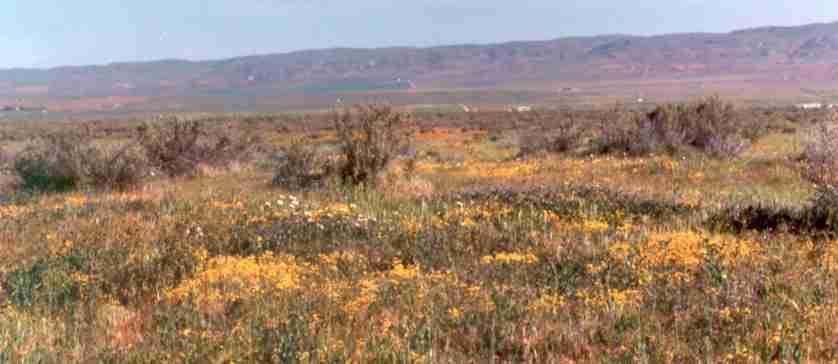
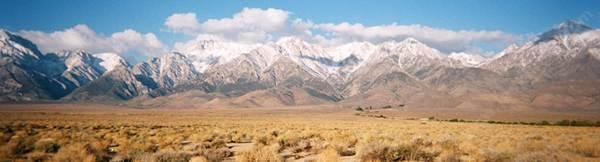
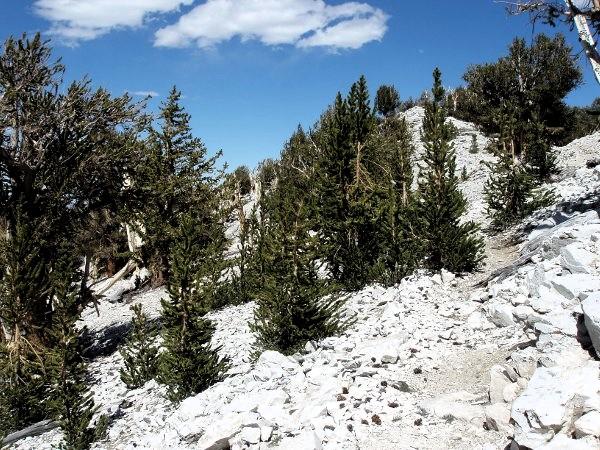
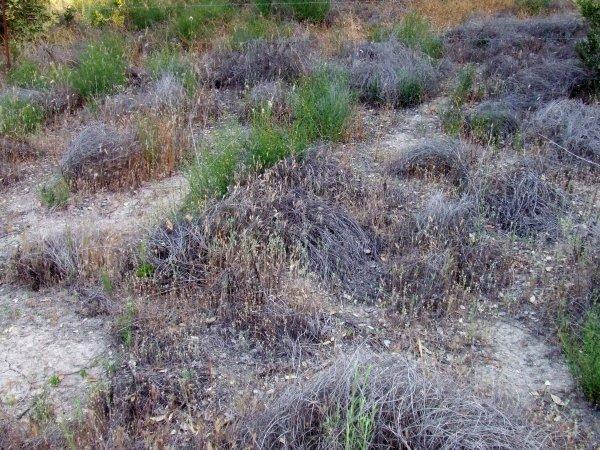
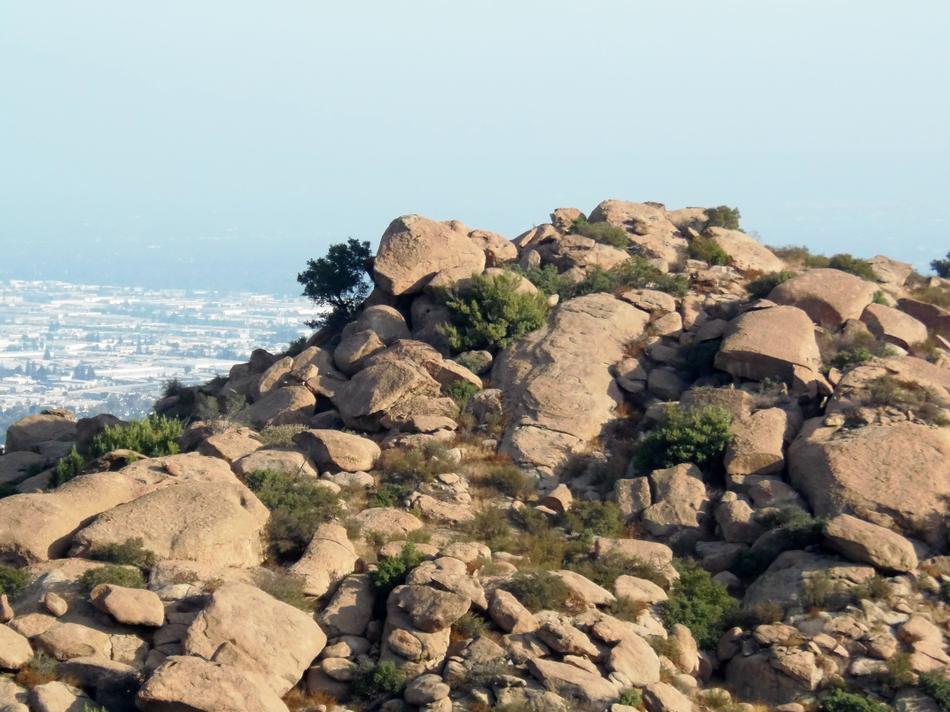
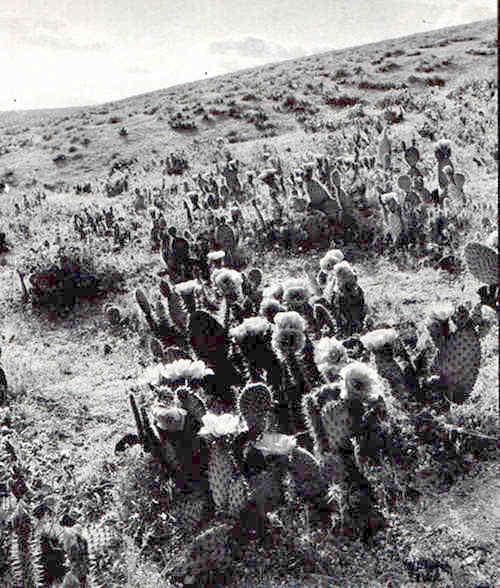
California is very diverse
Our other website, www.mynativeplants.com, is an attempt to help you select a plant that will work in your ecosystem, yard, garden, slope, whatever. Just planting a California native is not really enough, Barstow is a lot different than San Francisco.If you want to try to figure it out yourself look up your plant community here, then look up the plants that occur in your community and try to design a planting based on those plants. Put the plants that need sun together , the shade lovers in the shade, the ones that live near water in the wetter spots, etc. If you have sandy soil, look for the sand lovers.