California, Fire and Plants
Cooperation versus Competition
California native ecosystems and the way they work (cooperation) are very different from the way the plants in a common garden grow (competition). Most of the horticultural perennials and annuals people raise in the garden are at best weakly dependent on underground ecosystems and each other. Why should they be? We water and fertilize them; we see immediate results, in faster growth, more flowers, longer flowering time, etc. Also, many garden plants have been hybridized and improved, etc. so that they hardly resemble their relatives in the wild. Many of these garden flowers are what are called ruderals (many, out of their native habitat, are the weeds of the world ). Ruderal plants need a mineral and moisture-rich environment to flourish. Ruderal plants rely on a strategy of getting theirs first through competition, flowering quickly, and quickly producing many, many seeds to out- reproduce their competition. They do not cooperate with other plants in the vicinity by sharing water and nutrition. They quickly capture the available water and nutrition in an area, and are on their way! Ruderal plant life cycles are based upon year- to -year strategies, with little or no long-term strategies (that is, ruderal plants are mostly annuals, or short-lived perennials or biennials). In contrast to most gardens, the native ecosystem is a well-ordered, long-term system. (In California we also have annuals, and if they are taken to other areas, they can become weeds, such as the California poppy, in areas of the eastern U.S., but in their natural habitat they are more dependent upon the plant community, and do not exhibit ruderal plant tendencies.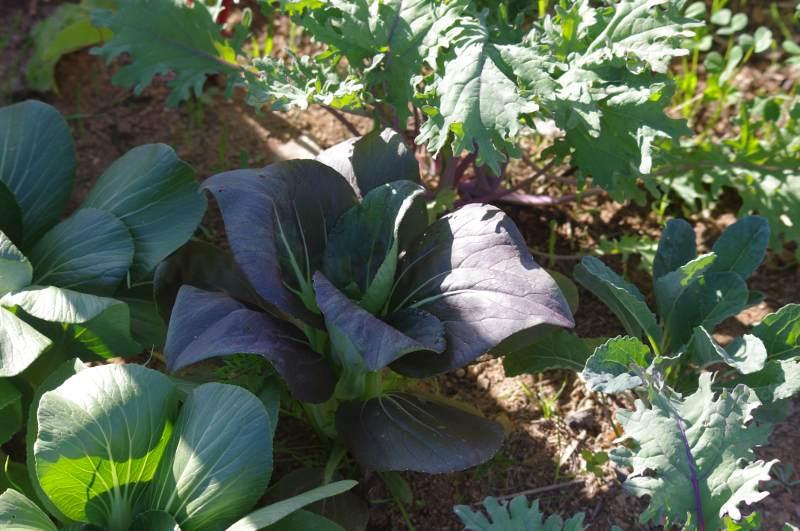
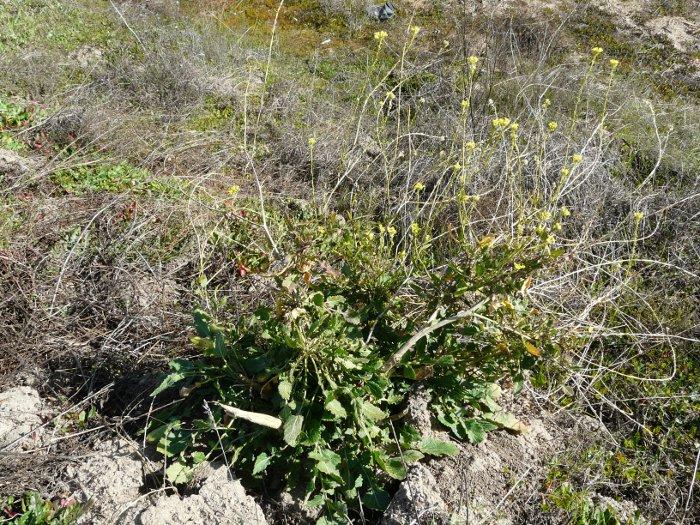
Vegetables and mustards are ruderals.
Drought? Not comparatively.
In tree ring studies of the last four hundred years, the 1900's have had a surplus of rainfall. California has not seen a period of extended drought for the last one hundred years. The worst drought in California was between 60-80 years long. There were also many of 20-22 year duration. The wettest ten-year period was 1975-1984. The driest period for California as a whole was around 1625. The driest year in the last 400 years, for Santa Barbara, was ½ inches of rainfall in 1841. As no rain was actually reported this was probably all fog. The studies have been implemented in cycles as they relate to humans, not in plant community cycles. The periods of time under which the studies were undertaken are simply too short to be valid. Under our seasonal drought stresses the California native plant communities have shifted from competition to cooperation. (A variation of this exists in any stable pristine ecosystem in the world.) In other words, the plants grow much more slowly, and react to stresses much more slowly, and everything that happens, happens more slowly. For example, if you inherit a very large, old oak tree, and you plant a lawn under it (this would be considered a stress to an oak tree because most oak trees in California usually do not receive summer rainfall), the oak tree will die, but it may take decades.With the state's 12-70 year drought periods the seeds of the native annuals and short-lived perennials have to remain viable for years (they do; after a fire, we've seen the best show of California poppies on a chaparral site that had not burned for 70 years). Our longer- lived native plants need to build a seed bank over a period of years in order to have sufficient numbers to regenerate during the 2-7 years that have normal or above normal rainfall.
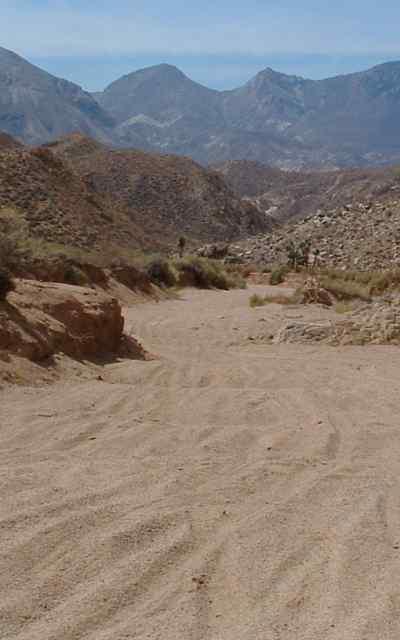
Mulch and weeds don't mix
Most of the chaparral plant species need a mulch or litter layer (except for the grasslands and desert) that will gradually form as the plants reach their maturity. This mulch and litter layer needs to make soil contact; standing annual, introduced grasses or other weeds will block the formation of the litter layer. These weeds need to be removed and kept out, because they will prevent succession of the plant community and help to cause the death of the long-lived shrubs and trees.Most California native plants grow and reproduce under a short-term and long-term community-oriented cycle. In California's environment the whole has to support the individual and the individual the whole for all to survive (a.k.a. mutualism).
Native plants of the valley grassland, coastal prairie and most other California plant communities survive because the ecosystem is a protective, closed biomass system (all the biomass in the system is conserved and recycled) based on plant community, mycorrhizal community, climate and soil types. The primary mechanism for the moisture and nutrient transfer in these systems is based on mycorrhizal associations. In our grassland, desert, and oak woodland communities, the natural cycles occur in one season, without a classic climax species. The traditional idea of a climax species doesn't pertain to these communities because these communities are not based on competition, but instead, on cooperation. What does this mean? You just talked about succession, now you say no???
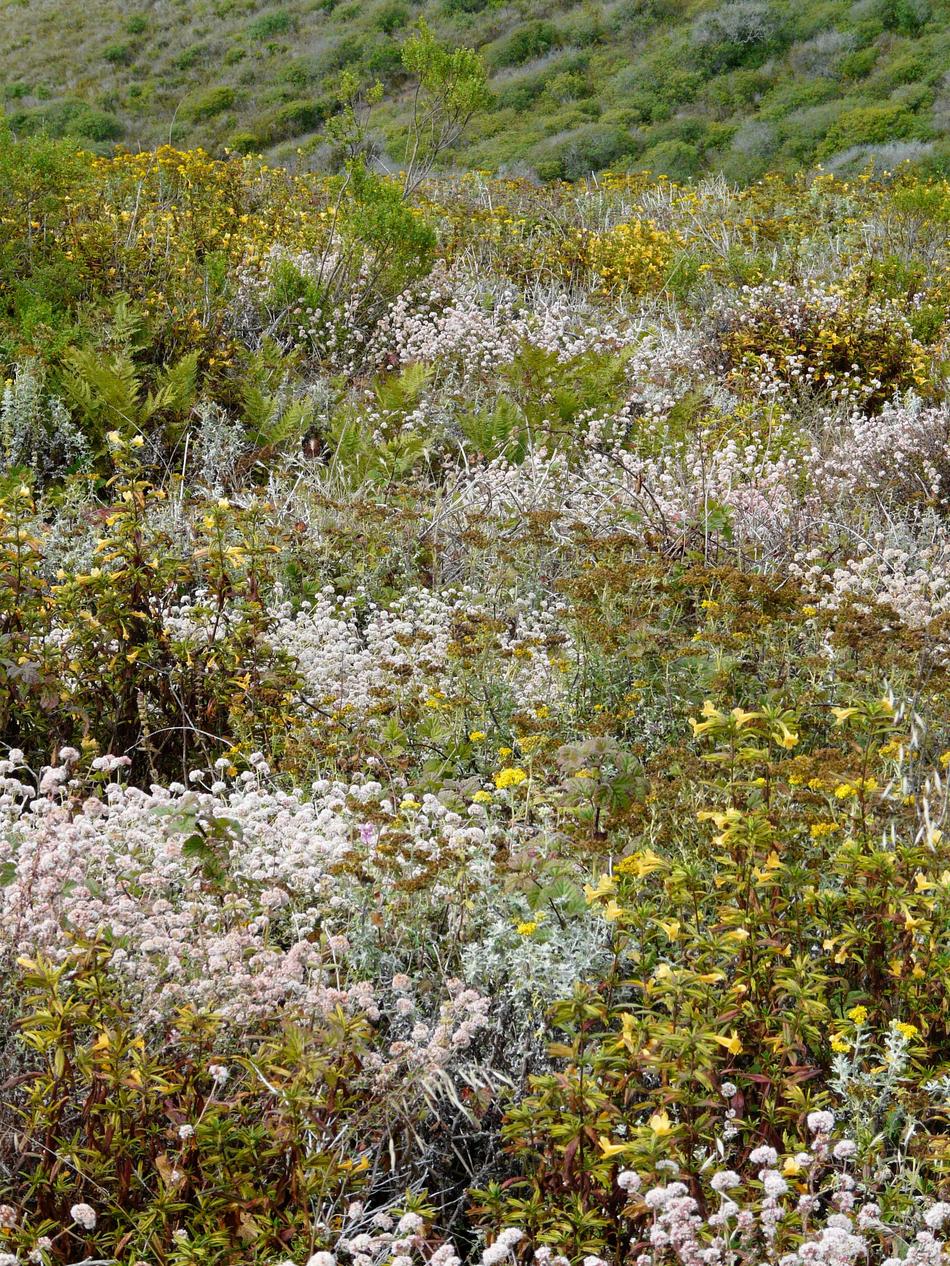
Succession a dual complementary cycle
California native plant communities have a dual complementary cycle. The plants and their fungal companions have formed a symbiosis that is startling in its simplicity. It appears that a yearly cycle is combined with a long term (90-250 years) cycle.The yearly cycle and the contributions of wildflowers
In the grasslands, desert, etc. wildflowers come up in the periods of adequate moisture and are inoculated at germination, by a combination of spores and direct root inoculum provided by the shrubs and perennials on site. They are provided extra nutrition from this mycorrhizal association during their short life. If we have one of those funny midwinter droughts they are helped with deeper water from the 'mother plants' on site. In our short growing season, limited as it is to moisture, the 100 times more surface area and 10,000 times more surface length of mycorrhizal roots in relation to non-mycorrhizal roots is a significant advantage. Moreover, mycorrhizal roots are quicker on the uptake of water after a rain shower (3 days versus 14 days). Also,the rainfall that does reach the ground is captured, in the below ground ecosystem, held within the bodies of the microorganisms, and plant roots, and soil, and there is little or no runoff, erosion or leaching of nutrients from the soil. Effective rainfall is substantially increased. It is very possible that the lush wildflower meadow described by John Muir did exist and can again, but we have to establish back as much of the whole plant community as possible. In the drier, interior areas of California the annual wildflower's significance to the plant community has been ignored. It now appears that wildflowers are essential to the functioning of the plant community and cannot be replaced by alien annuals. As our native wildflowers decline and die at the end of their short season of life, their nutrition, moisture and some of their biomass is transferred to the other mycorrhizal hosts on the fungal 'grid'(Read, 1991). Annually, energy is cycled from the wildflowers in the spring to the perennials, shrubs and trees in the summer, and then back to the wildflowers, the next spring. That is why, when we walked into an area lush with wildflowers in the spring, these same areas were bare patches of soil in the summer, with widely-spaced perennials and shrubs. This 'bare' period is when the perennials and shrubs of the plant community carry the energy of the system through to the next spring wildflower show. The shrubs and trees are provided with much energy in this late spring-early summer period. This is one reason why so many of our shrubs, in plant communities where native wildflower shows still exist, flower in midsummer. The senescence of the wildflowers greatly increases the water potential of the mineral soils in early summer. In some communities the annual wildflowers rotate through all year, charging and drawing from the underground 'grid'.The long term cycle and the roles of drought and fire
The long-term cycles of California's desert, grasslands, woodlands, chaparral and other plant communities are built around a period of extended drought with extensive browsing the last few years depleting the above ground biomass. The biomass is put at ground level where the soil organisms can assimilate it and the nutrients can be recycled back into the ecosystem. Then when the rains come again the reproductive cycle has enough energy in the system to reproduce on mineral soil. The decreased herbivore activity (as their numbers were reduced by the drought period through stress and starvation) allows the new plants to emerge and establish themselves. The heavy feeding on the few remaining plants during the drought period would greatly reduce the fuel loading for fires and make the fires more mosaic in pattern, allowing 'mother' plants to survive. It would also allow the oak woodland to burn with no harm to the trees. It appears necessary for the browsing to be light the few years after the drought period ends for the plant-fungal community to form enough seeds and spores to reproduce, along with enough energy in the local biosystem to carry the community over the next drought period. Many of our native plant species need a fire at the end of this extended drought to meet the dormancy strategies of the long-term community, along with many of the rare annuals and fire-following perennials. Fire reduces or drives back herbivores so the tender delicious seedlings can mature without being eaten. (One of the many reasons why small 'controlled burns' do not help native systems, but do help weeds invade further!)Increased Fire frequency
In most habitats fires do not occur in every drought cycle, but may skip through many before the long-term drought, fire, and wet cycle is met. The long- term cycle was met naturally (before white man's influences) every 90-250 years in dryland plant communities. (Mensing on data before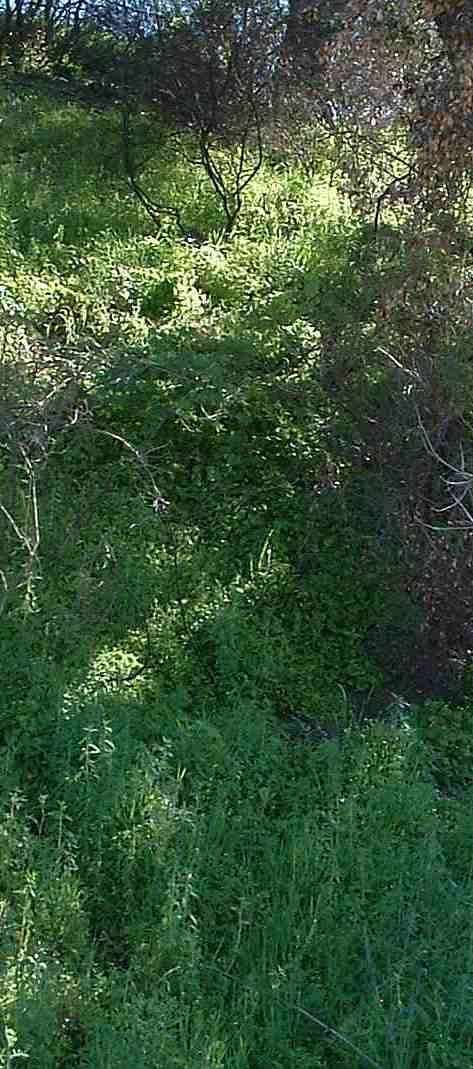

1700)(three to six
drought cycles before a fire.) In wetter areas the long-term cycle may
extend to 250-400 years. We're also concerned that a number of 'good'
bacteria and fungi that cycle through in the natural succession have
disappeared under this non-supportive cover. (If a fire only occurs
every 130 years naturally, how many of these interrupted cycles can our
rare flora tolerate?) (Box et.al.; Hanes;
Horton & Kraebel; Humphrey and Mehrhoff; Keeley et. al.; Morrison
& Swanson; Zedler, et. al.)
As an example, our site in central California (containing
chaparral, oak woodland, riparian and grassland (a very tiny area is
covered by the perennial grasses) plant communities) has burned three
times in the last 33 years. The first fire was in 1979 (human- caused)
The following spring there was a great annual wildflower show in all
the plant communities on the site. The plant community made a decent
recovery; few weeds were present and the last fire before 1979 had been
70 years earlier.
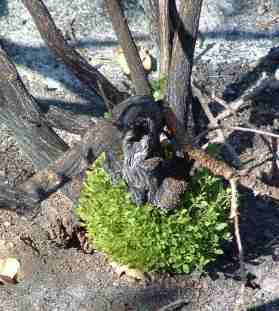
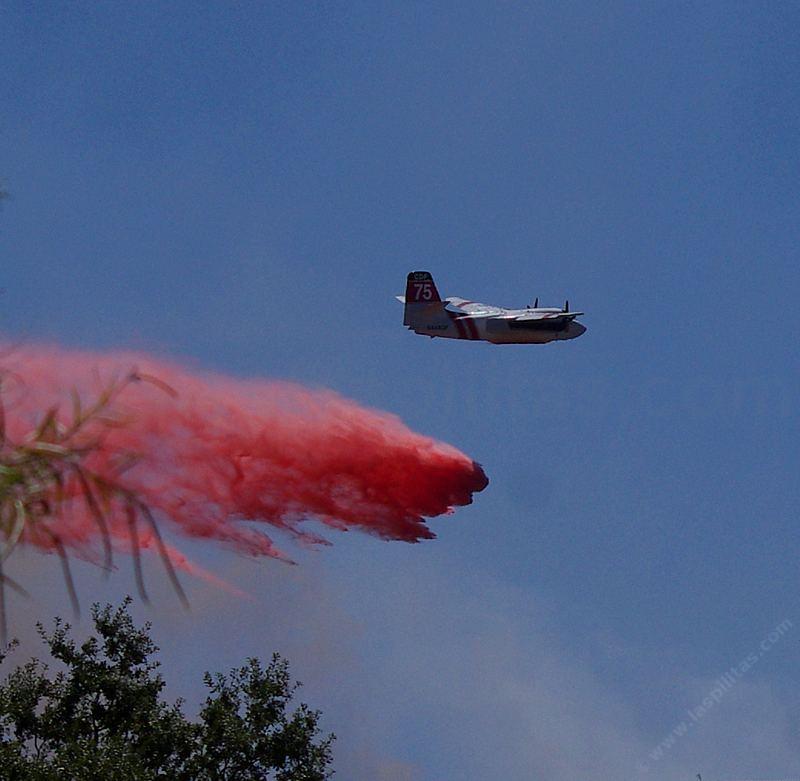
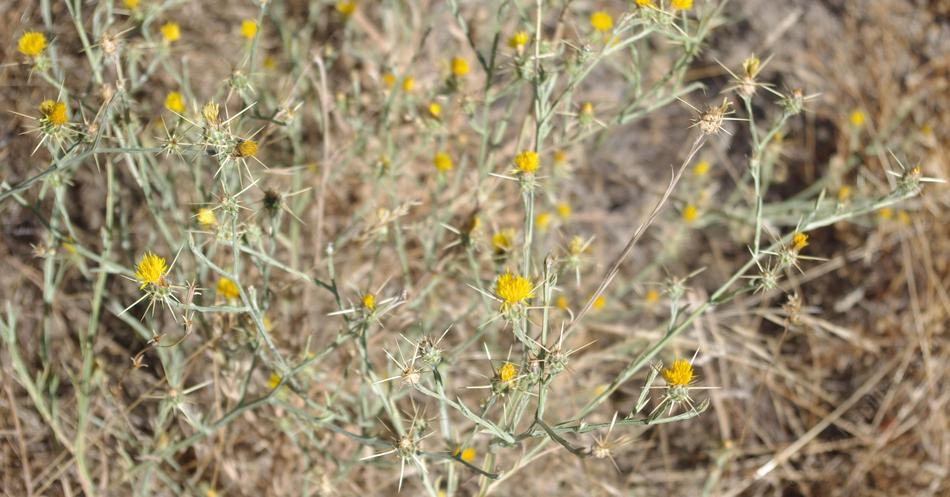
We had another fire in 1985 (human-caused). The bushes and trees had not had time to regenerate well since 1979 and the rainfall was low that year but we fully expected to see some of the annual fire-following wildflowers. Instead, the California Department of Forestry decided to broadcast grass seed on the site, including the house and grounds. The grass germinated(and weeds that were in with the grass) but only 1-5% of the native annual wildflowers appeared. A small percentage of the perennials appeared, and most of those died. None of the larger native shrub species that rely on seeding as their only means of reproduction appeared. The fire following shrubs that germinated after the 1979 fire had not reached maturity and produced seeds yet. These species were completely wiped out. The only larger shrubs and tree species left in all communities were the crown sprouters. The only oaks were the ones that germinated right after the 1979 fire and the older mature ones. Some of these were only 18 inches high at the time of the second fire but still crown sprouted back. Following the grass seeding episode, we have found a number of species of alien ruderals (non-native weeds) that could not have had an entry source other than the rye grass seeding. The worst of these are the Yellow Star thistle, (Centauria solstitialis and C. melitensis) mustard (Brassica geniculata), filaree (Erodium spp.), and ripgut(Bromus rigidus). Las Pilitas road had few of these before the seeding, (one small patch that was controlled by SLO Co. in the 1970's) and now it is spotted throughout where the airplanes dumped the first part of their loads in 100 foot wide swathes. I think this spotting was because the smaller ruderal seeds settled to the bottom of the hoppers as the plane flew our way. Within 3 yrs. you couldn't walk through the oak woodland or grassland comfortably because of the thick stands of star thistle(Centauria sp.) and ripgut.( bromus After 8 years we still have 'lines' in the vegetation where the plane dropped the 'ryegrass'; weeds on one side, and natives are still on the other.
We had another fire in 1985 (human-caused). The bushes and trees had not had time to regenerate well since 1979 and the rainfall was low that year but we fully expected to see some of the annual fire-following wildflowers. Instead, the California Department of Forestry decided to broadcast grass seed on the site, including the house and grounds. The grass germinated(and weeds that were in with the grass) but only 1-5% of the native annual wildflowers appeared. A small percentage of the perennials appeared, and most of those died. None of the larger native shrub species that rely on seeding as their only means of reproduction appeared. The fire following shrubs that germinated after the 1979 fire had not reached maturity and produced seeds yet. These species were completely wiped out. The only larger shrubs and tree species left in all communities were the crown sprouters. The only oaks were the ones that germinated right after the 1979 fire and the older mature ones. Some of these were only 18 inches high at the time of the second fire but still crown sprouted back. Following the grass seeding episode, we have found a number of species of alien ruderals (non-native weeds) that could not have had an entry source other than the rye grass seeding. The worst of these are the Yellow Star thistle, (Centauria solstitialis and C. melitensis) mustard (Brassica geniculata), filaree (Erodium spp.), and ripgut(Bromus rigidus). Las Pilitas road had few of these before the seeding, (one small patch that was controlled by SLO Co. in the 1970's) and now it is spotted throughout where the airplanes dumped the first part of their loads in 100 foot wide swathes. I think this spotting was because the smaller ruderal seeds settled to the bottom of the hoppers as the plane flew our way. Within 3 yrs. you couldn't walk through the oak woodland or grassland comfortably because of the thick stands of star thistle(Centauria sp.) and ripgut.( bromus After 8 years we still have 'lines' in the vegetation where the plane dropped the 'ryegrass'; weeds on one side, and natives are still on the other.
Where has the science gone?
The understanding of mycorrhizosphere relationships has been where the basic sciences were in the dark ages. Leeches, anyone? Even now many of the sciences are too specialized and fail to see the big picture. From good research coming out now, science is putting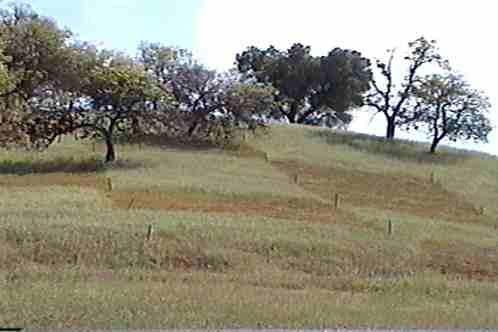
the mycorrhizal
associations at the same level as plant associations and blurring the
distinctions of what we see above ground and below ground. In most
cases people have been treating and reacting to the above ground effect
of these biological interactions and not recognizing the ecological
significance of the underground microorganism community.
Alien Invasion
It is very important to note that before and after the 1979 fire there were no alien plant species in the chaparral; the grassland and foothill woodland plant communities only had wild oats (Avena fatua).The other important note is that when the annual, fire-following wildflowers died down for the summer, they left little litter. Clean bare ground is normal and healthy. (The same situation occurs in other relatively undisturbed plant communities; wildflowers waist deep in early spring with no weeds, in summer, no litter or dead matter taller than 1”, with bare patches in between, on the same site.) This leaves no fuel! Compare this with the introduced species like yellow star thistle (Centauria sp) or rip gut (Bromus diandrus). The fibrous stems stay erect and flammable long after the plant is dead.
Notes on California's ecology
We have spent the last 17 years trying to develop strategies to overcome the introduced weeds on this site (and others). We have had to reevaluate our 40 years of experience in California native plants and the theories we learned in college. Below is the information we have learned to date about 'restoring' a 'grass'-seeded site and why it is necessary to at least try to partially restore the site.After 17 years the star thistle is in decline(waiting for the next fire, that its debris favors) but the Bromus (grass) and Erodium that CDF (CAL fire) seeded has spread to the non-seeded areas carrying another fire into a formerly clean area and killing more oaks and pines.
1. Much of the data on the ecology of California has been fatally (for the ecology) flawed by misinterpretation or misunderstanding the parameters of our ecosystems.
a. Any fire data based on midwinter or spring burns is invalid. Wet soil kills the underground biomass. (Dunn, et. al.) Many of the herbivores are in hibernation in the winter and are left alive in large numbers to eat the new growth as it emerges.
b. Any herbivore study based on small-scale data is invalid. Our wildfires normally cover thousands of acres, pushing the herbivores long distances away from the seedlings or crown sprouts.
c. Any excess nitrogen will force a decline of the mycorrhizal community. (Arnolds). So why do the researchers insist of fertilizing native plant communities? California does not have highly fertile soils in any plant community (other than Riparian) unless the community is destroyed or burned because the community structure limits the nutrition of the site. That is, if you test a site with fertilizer you kill or greatly suppress the mycorrhizal associations on the site, completely changing the ecology of the site.
2. Any study that looks at only one variable without including the variations caused by other variables is not valid. (D. J. Read; Read, et.al.; Coleman, et. al.)
3. Broad-based studies are much more valid and give better data. For example, Medina and Silva have an excellent graph of the effects of the underground biomass (mycorrhizas are the main component) and above ground biomass (plants) after a fire in the Venezuela savanna. It shows the mycorrhiza supporting the plants after a fire and then the plants recharging the mycorrhiza as the plants recover and grow through their seasons. The more variables included the more valid the study. Mycorrhizas are left out of most studies. They change dramatically the results if they are included. (D. J. Read, Pankow, et.al.)
4. Any study that looks at short-frequency fires as a normal occurrence is fatally flawed. (Zedler, et.al.)
5. Any study that looks at our California ecosystem as a ruderal-based system is fatally flawed. (Grime; Grime et. al.; Perry, et. al., Pankow, et.al.)
6. Any study that looks at a California ecosystem in months instead of decades has major limitations and may be fatally flawed.
7. If the information does not seem valid, question the source. Ask for references and experiences. (Bad researchers quoting other bad researchers! If you do not recognize any of the references or magazines there may be a reason. If all the quotes are from range management, fire, and trade type journals maybe it is not sound ecology you are hearing. Journals called the likes of Billy Bob's Wildland Revival or University Agriculture and published by a chemical company may be suspect.)