These are mostly annuals. If you are interested in perennial flowers that grow wild in California, you can see pictures, get information, or buy them from our California plants pages.
Good ecology can make a field of difference! Weeds not only compete directly with native wildflowers, but also change the soil ecology making the environment inhospitable to the wildflowers. Most California Wildflowers like undisturbed soil and definitely no weeds.
For information on how to plant wildflowers see our wildflower page.
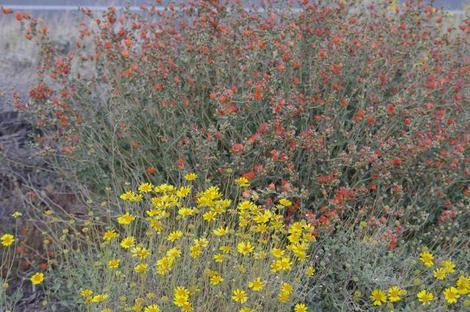
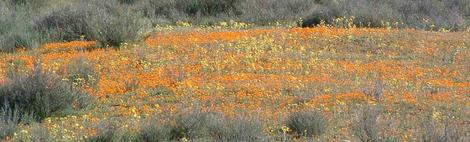
After this wildflower show lots of pink, yellow, and white slender Buckwheats, Eriogonum spp, and butterfly mint, Monardella sp. decorate this pasture giving the butterflies a lovely feast. Later in the summer the grand looks like a sand creak bed with only a few remnants of the flowers that were there earlier in the season. This pasture was previously a weedy mess. It was sprayed with herbicides. And the following spring this came up in place of the weeds!
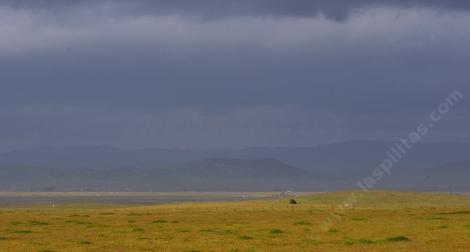
This is really boring.
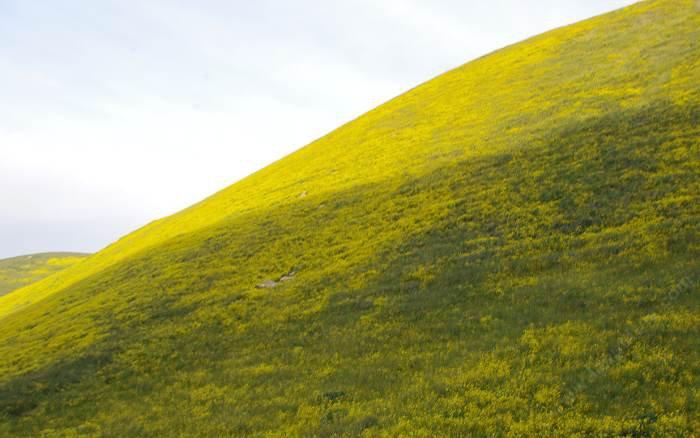
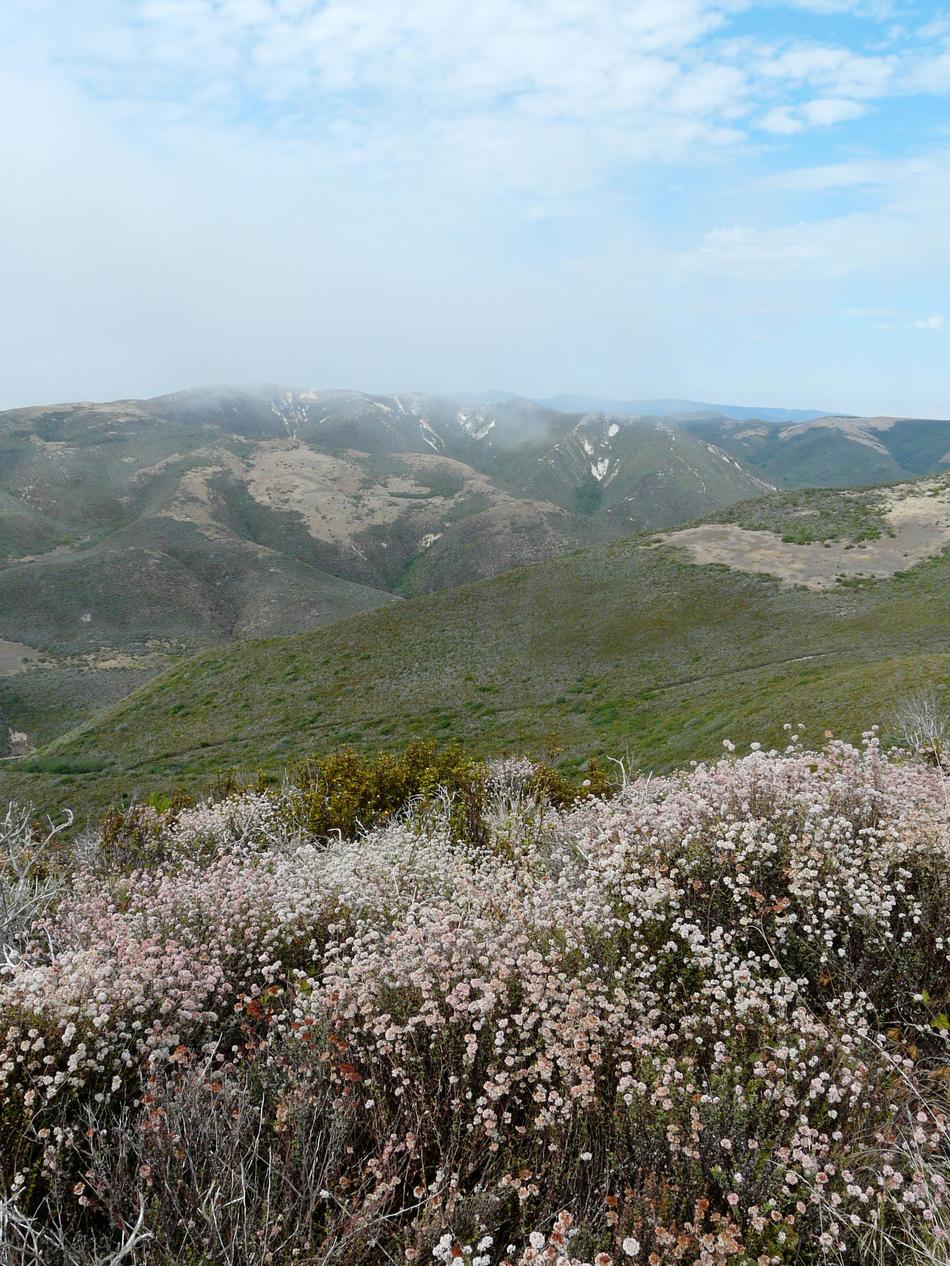
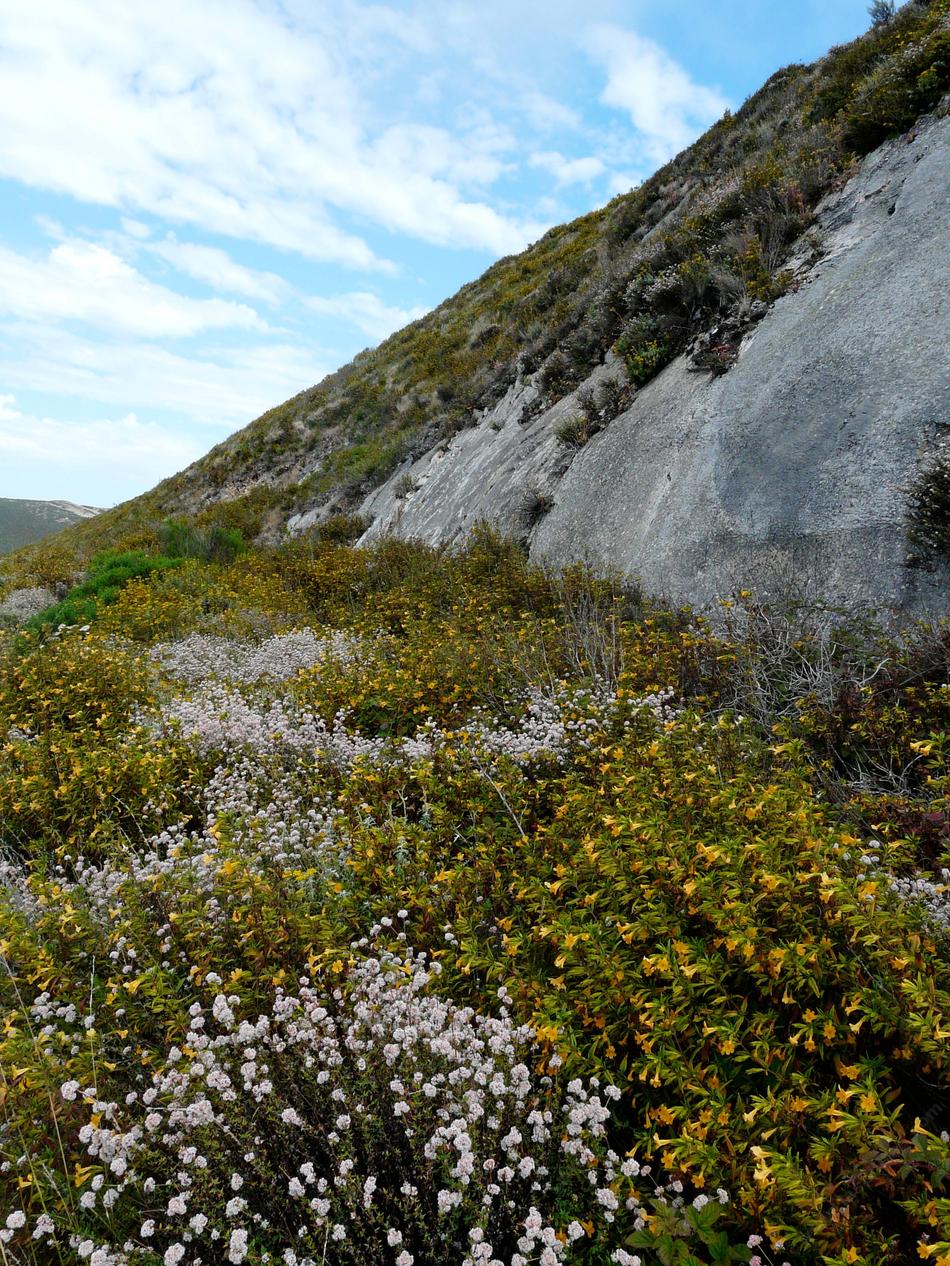


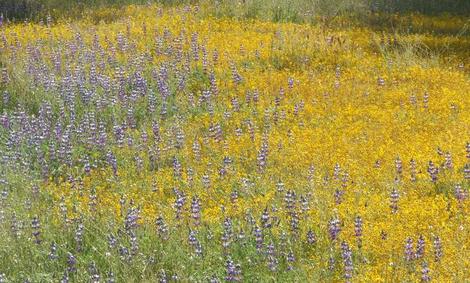
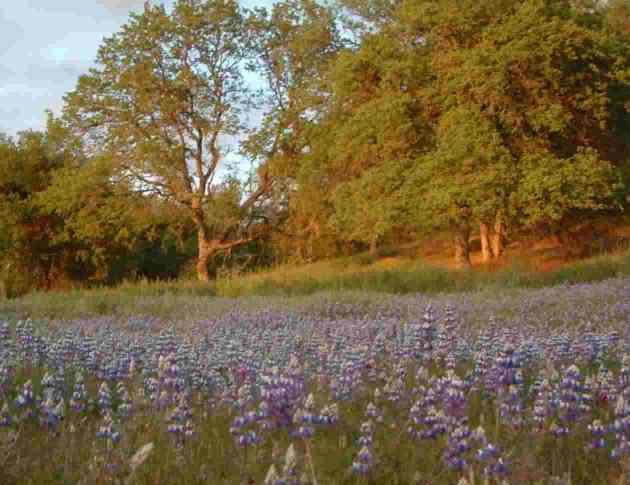
Lupines, like this Sky Lupine, Lupinus nanus, fix atmospheric nitrogen making it accessible to other plants that might latter grow in this field. Unfortunately they can also give a boost to weeds. So, catch the weeds before they develop a huge seed bank. Lupines usually alternate seasons with other wildflowers, like California Poppies, that need higher fertility.
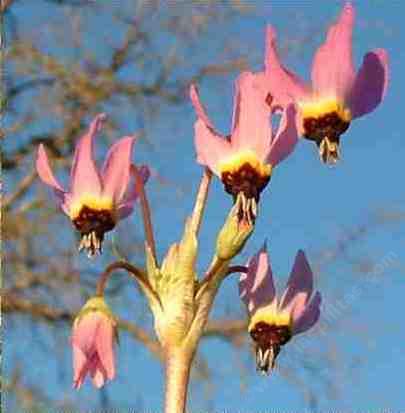
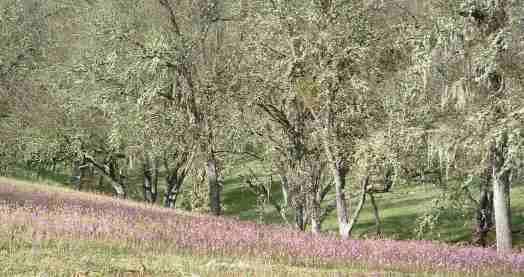
Shooting stars, Dodecatheon clevelandii, are exotic looking pinkish purple California wildflowers. They prefer clay soil and some sun. Their dark green waxy leaves grow flat on the ground with usually only a single flower stalk terminating in a hand full of elegant refluxed flowers.
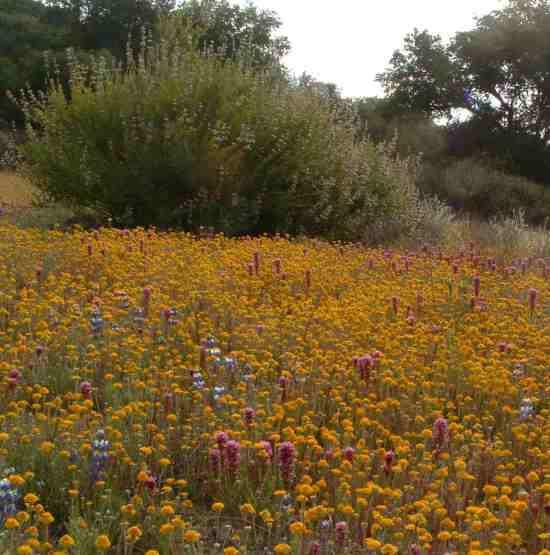
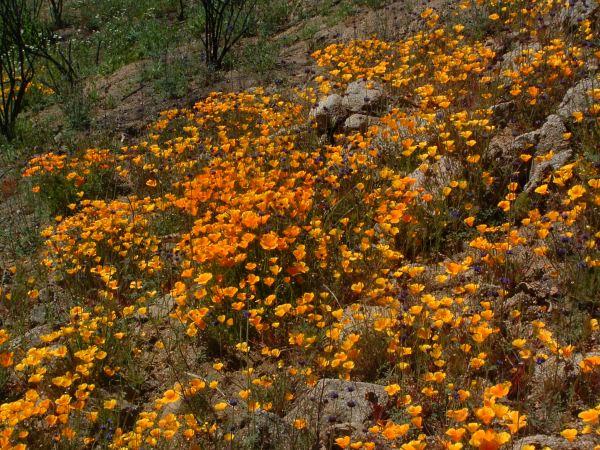
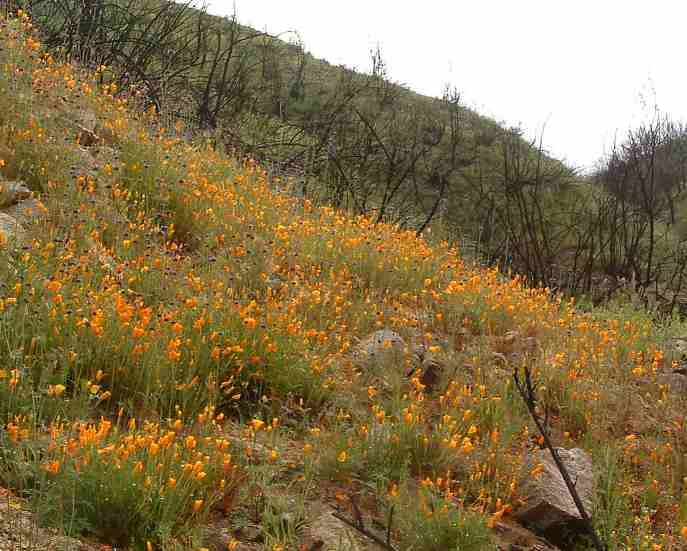
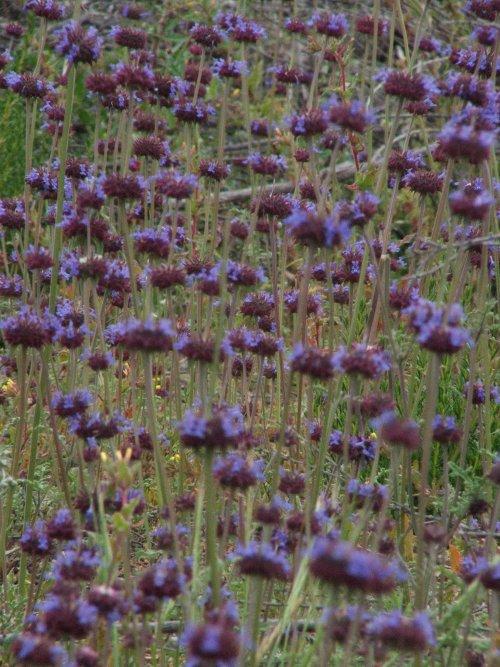
In a healthy chaparral plant community wildflowers will emerge in abundance after a fire. These wildflowers help prevent erosion and transform the stark black landscape. California poppies, Eschscholzia californica, grow lush with the higher fertility levels following a wildfire. Blue Chia Salvia columbariae, the annual sage found in the chaparral, is scattered throughout this mass of poppies. Charred branches of Chamise, Adenostoma fasciculatum, are the skeletal remains of what was once dense brush. New bushy green foliage will emerge from the base of these dead sticks as these plants are crown sprouters and are quite adapted to the flammable hill sides of California.
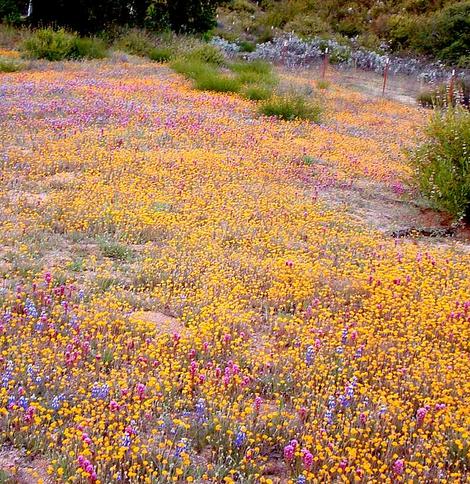
Here a mixture of California native wildflowers thrive in a clean spot in the chaparral. In the fall this spot will be bare dirt with no sign of the spring show and not a blade of grass or sign of any other weed. Gilia sp are the little purple flower, Owls clover, Orthocarpus densiflorus, are the magenta tufted flowers. There is also a little yellow lotus and a little lupine as well as a few other odd things. These areas of bare decomposed granite are often a haven for small annual California wildflowers. Filaree, Erodium sp., and grass species, mostly Bromus spp, are a huge threat to these areas. Once these tenacious European, species (weeds) are introduced the delicate native annuals have no chance to compete. These wildflowers also produce very little fuel whereas. However, these grass invaders are very flammable and helps bridge these natural fire brakes of bare soil between the chaparral as well as making an excellent source of kindling for any arsonist or accidentally flung cigarette.
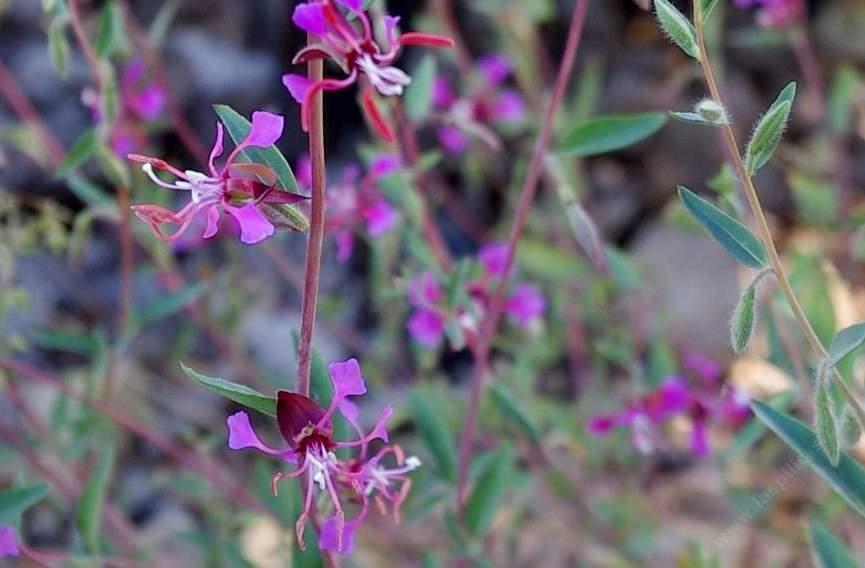
Many species of Clarkia, Fair-well-to-spring, are found throughout California. Some are found on dry south facing slopes others prefer the moist shade of north facing slope.

Clarkia
unguiculata, Elegant Clarkia resembles an orchid with
its' refluxed petals. It has large stigma and stamens. These
flowers, as their name states, mark the end of spring.
For information on how to plant wildflowers see our wildflower page.