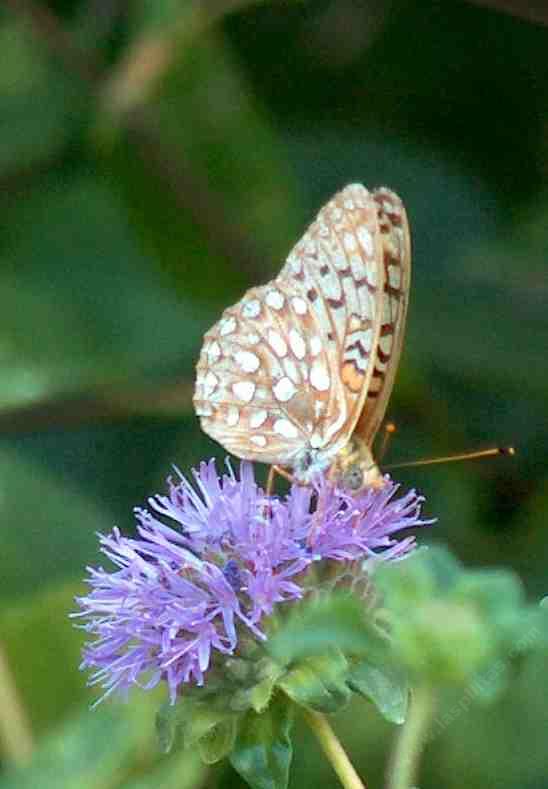
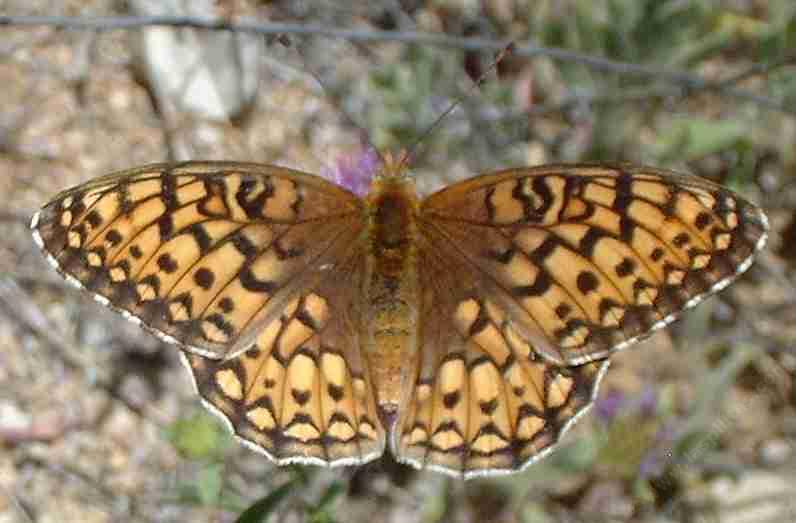
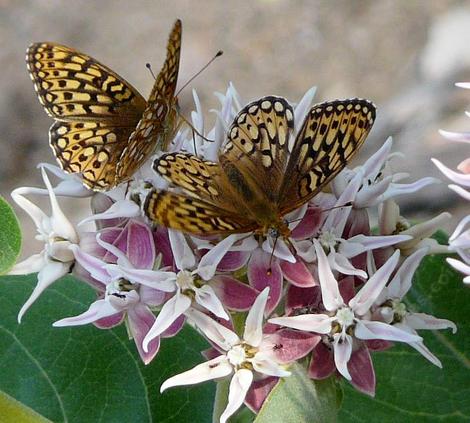
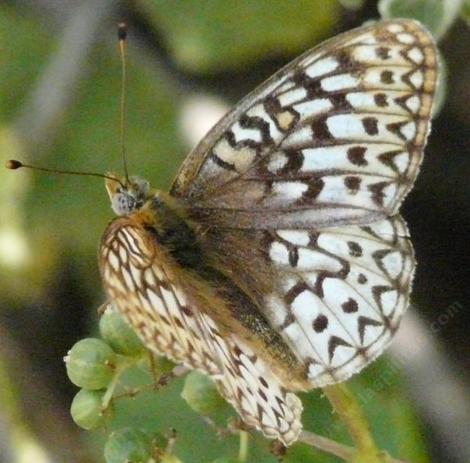
Callippe Fritillary Butterfly, Speyeria callippe
Nectar
sources used by the adult Callippe Fritillary Butterfly
The adult Callippe Fritillary Butterfly is
very fond of Monardella
flowers, as are most butterflies. There are
many perennial species that are very popular to butterflies that
are native to California. One of the most attractive is
Monardella
antonina. This one is a small fragrant herb with
multitudes of purple flowers. Monardellas are a hit with
hummingbirds as well as butterflies.
The adult Callippe Fritillary Butterfly likes Sages, Salvia Species. Check out Salvia 'Pozo Blue'. This sage is great for many native gardens in California. It is very drought tolerant and covered in light blue flowers in spring. It has an excellent fragrance.
Larval food plant of the Callippe Fritillary Butterfly
The Callippe Fritillary Butterfly larva feeds on wild Violets, Viola pedunculata. The larva are nocturnal and usually are not seen during the day. There are many native violets in California ranging in color from Purple to white. However this violet, Viola pedunculata, is yellow. It is found in open oak woodlands usually under Blue oaks, Quercus douglasii. They seem to prefer clay soil, as does the Blue oak, although they can be seen in decomposed granite as well.
If you are trying to id this one, take many pictures of many if possible as it is vary variable. Look at many books as the pictures often do not match with the one you happen to have.
Return to California Butterfly main page
Go
to Butterfly Plants Page
Go
to Wildlife Page
Las
Pilitas Nursery