California Wildflowers
Wildflower seed origins.
Where are the 'wildflowers' native? 'Wildflowers' that are native to New England will have a great deal of trouble in southern California. Prairie wildflowers will fail miserably in the forest of the Sierra Nevada mountains in California. California poppy has become a weed in parts of the eastern U.S. Attempt to plant back what was originally there. For most of the populated areas of California, poppies and lupines work well.Wildflower seed purity
Many of the nasty weeds of the world are packaged as 'wildflowers'. Plants like Sweet Alyssum, Baby's Breath, Bachelors Buttons, and many more. Good native seed only, NO FILLER'S. Wildflower seed sells for about 10 times as much as the fillers; buy less native wildflowers, and do not pay for the weeds they use as fillers. Ignore the people that say, "Well, it's native somewhere in the world, isn't it?"How much seed to order.
A packet or two of different wildflowers will often work better than pounds of seed. Birds love wildflowers, will line up to observe them and eat until every seed is gone. If planting in the wilds, be real philosophical about the seed, the birds, other wildlife, and be prepared to share (a lot). In town or in areas where there is no cover for the birds and the wildflower seed is planted late there is usually a great wildflower show.1.Many annual wildflowers normally do not germinate until late winter; knowing that; plant after the non-native grasses germinate and are up. Kill the weeds and the non-native grasses after all have germinated, preferably with a weed killer, and plant the bare ground (after the weeds have disappeared). Watch for the bunch grasses or other natives; do not spray them if they are green. If the weeds do not completely disappear after spraying mow as low as you can go with a vacuum mower. The weed litter is very effective at limiting or killing the wildflowers, native litter such as oak leaves is ok. (You need not use mulch (it is not really good for management reasons) on wildflowers.)
2. Rake the wildflower seeds in lightly. This is more to confuse the birds than to bury the seed. Try not to disturb the soil to much this will encourage weeds.
3. Water weekly if it doesn't rain (until the wildflowers are up and forming buds). If it rains that week do not worry about watering.
4. After the wildflowers have set seed (if you do not want to buy new ones) mow them off. Do not use a vacuum mower on the wildflowers, only on the weeds. You want the seeds to stay around.


Sometimes planting a few gallon California poppies is better than pounds of seed.



How to plant a prairie
For the planting of perennial grasses use wildflowers first. Knowing the germination of wildflowers versus weeds, control the weeds over a two-season program and then plant the grass over the wildflowers in plug form or as hand-broadcasted seed. The wildflowers generally do not come up until early spring, March, and have set seed by May. The cool -season weeds come up as soon as the ground is wet in fall (November usually). Spray a herbicide to control the broad-leaved weeds on the site. The problem with the native grasses is they cycle too close to the warm season weeds. Cover the native bunch grasses with pots and spray the area with a herbicide to kill the warm-season weeds and spray grass killer (keeping the bunch grasses covered) to kill the annual grasses which will usually be as much of a problem as the broad-leaved weeds. (The bunch grasses green-up after the soil gets warm and moist in spring. Use a grass-only herbicide if native grasses are NOT present. Look at the herbicides as antibiotics for a site that is infested with weeds (disease).
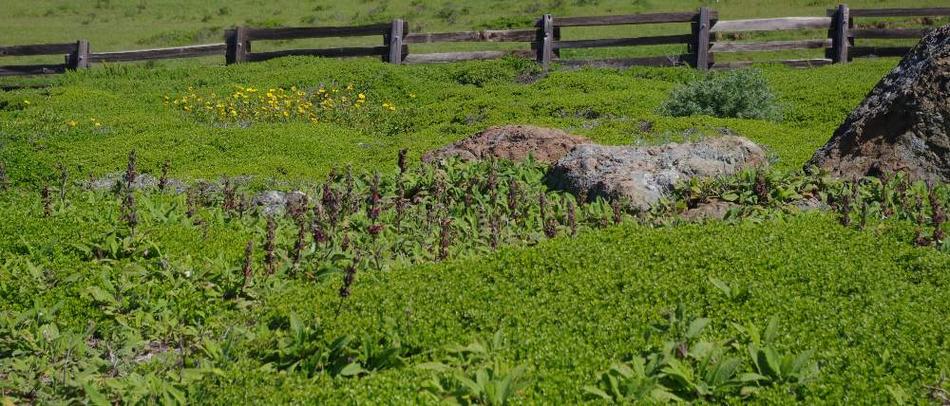
If you do not want to deal with the weeds or do not care, plant the pioneer wildflowers for your area with about 5% bunch grass seed in it. Remember that bunch grasses are climax species, not pioneers. Bunch grasses do not establish a site, they provide long term cover. Pioneer wildflowers will disappear in some plant communities (for example, chaparral) after a few years. They've done their jobs and disappear until they are needed again. (The exceptions are Grasslands, the Oak Savannas of the Oak Woodlands, Shadscale scrub, some desert systems, and Coastal Prairie where the grasses and wildflowers live together supporting each other.) That is why in most plant communities you have to replant the wildflowers every few years. Bunch grasses live for years. They can live for 150 years+. Bunch grasses need their companion wildflowers or native shrubs for long-term survival. Work for the long- term not short -term. It probably took years to mess the site up, so expect to spend some time fixing it.
Sometimes the delay of planting for a season or two until weeds are under control is prudent.
It would be lovely if planting wildflowers or grasses would be all that is needed to restore a site to its native state. An ecosystem cannot be easily restored if weeds are present in large numbers. Killing the weeds alone, though, without planting a plant community back doesn't survive but a year. Manage all the variables on site, favoring the native plants and wildflowers, while killing the weeds, to make a stable beautiful site. This will take time (years), so have patience.


To fix these environmental messes, start back at the beginning. Build a good foundation and, in turn, build a nice ecosystem, i.e., meadow, field of flowers, etc. (meaning, 'Get rid of the weeds first!')
In dry, open, sunny areas in the central coast ranges of California, the habitat is populated by very delicate, annual wildflowers and vulnerable to invasion by alien plant species, or WEEDS. It is very difficult to remove the alien plants without hurting the native plants. The alien plants are also annuals, and out compete the native plants very well, one reason being there are no controls (diseases and pests) on them as there would be in an area in which they evolved. Digging or hoeing out the alien plants, leaves a perfect, fluffed-up seed bed for the alien plants seed, breaks up the underground network of microorganisms, and allows nutrients and water to escape, and, so, highly encourages the growth of the alien plants over the growth of the native plants. Yes, even the annual native wildflowers are associated with underground microorganisms!! Once the alien plants have invaded the area in a major way and are throughout the site, the difficulty of removing them is almost impossible. You can kill the annual weedy, alien grasses with herbicide specific to grasses. This then leaves the broad-leaved weeds which you can spot spray with herbicide, or, if the area is small, early in the season, you can trim off below the crown and remove to the dump. If the area is large, you may have to try other options; see the Weed Control page.