Back
Contents
of Advanced Section
Forward
Weed Control
Weeds are like an ecosystem infection, and herbicides the antibiotic.
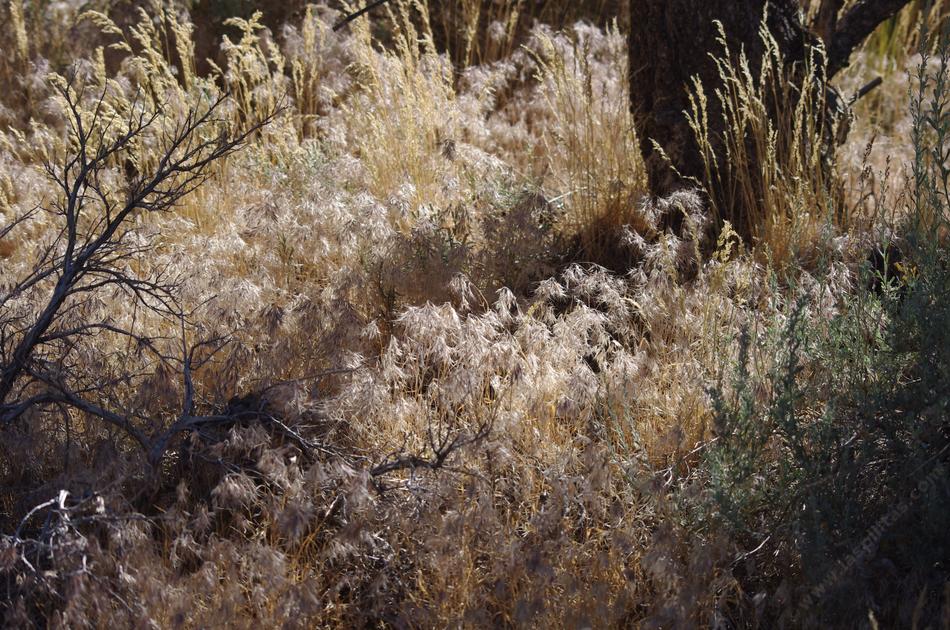
You can tell how long someone has been trying to restore native sites by whether or not they use herbicides. Some people have never had to deal with hundreds or thousands of acres of pampas grass (Cortaderia jubata), veldt grass (Ehrharta calycina) or Brome (Bromus spp.). You can't control weeds in a weedy hillside by talking about environmental sensitivity and using volunteers. You'll be out there by yourself within a week or so. The weeds (We call them the “Borg”) will win. Look at herbicides as a possible antibiotic for an ecosystem. If the ecosystem has a staph(weed) infection, a small infection is tolerated; a large infection needs antibiotics (herbicides). Some parts of California look like a rest home in a leper colony for Aids victims; the ecosystem has one native plant left, and no one wants to use chemicals. When it comes to weeds, everything is lesser of evils, treat the ecosystem with the most specific antibiotic (herbicide), bandage (mowing), surgical removal (grazing), skin grafting (native planting) you can. A grass- killer for weedy grasses, a star thistle- killer for star thistle (Centaurea spp.), some pre-emergent herbicides for early weeds; all have their place in the war against weeds. If you want to save the world, protect the clean native sites from mismanagement and any, any, introduction of alien species. If the 'infection' is small, KILL it!
Note: A very important reminder: know the plants you are trying to remove. If you do not know the plants, find someone that does, or you may be killing the exact species you are trying to save!
Herbicides can really help a plant community, or kill it.
Trappe et. al., lists a lot of different sprays and their effects on mycorrhizae; most herbicides are not toxic to the soil microorganisms. The most commonly used spray in restoration is probably Round-up. Round-up (glyphosate) works by limiting enolpyruvylshikimate phosphate synthase (EPSP), an enzyme in the shikimic pathway (Levesque & Rahe). The shikimic pathway produces precursors for lignin (Lehninger), anthocyanins, flavonoids, and isoflavonoids. Lignin is produced by the roots of plants to protect them from pathogenic invaders (Allen, et. al., 1992). Our experience has been that some plants that are more community-dependent will tolerate some low doses of Round-up. We know now that mycorrhizal plants do not need to generate as much lignin to combat invaders because the associated microorganisms protect the roots. Other studies showed low doses of Diphenamid (Enide), Napropimide (Devrinol), Oryzalin (Surflan), and MCPA did not have negative effects on native plants. Just think before you spray. We have heard of lots of problems with people spraying Roundup and killing the weeds and the native plants because they did not spray very carefully, because they had no experience with spraying, or sprayed on a windy day, etc. We've generally had no problem with pre-emergent herbicides, but major problems with insecticides, fungicides and soil sterilants. Pre-emergent herbicides can do wondrous things to a declining ecosystem. Spraying herbicides is one good method of removing the weeds from a native plant habitat.
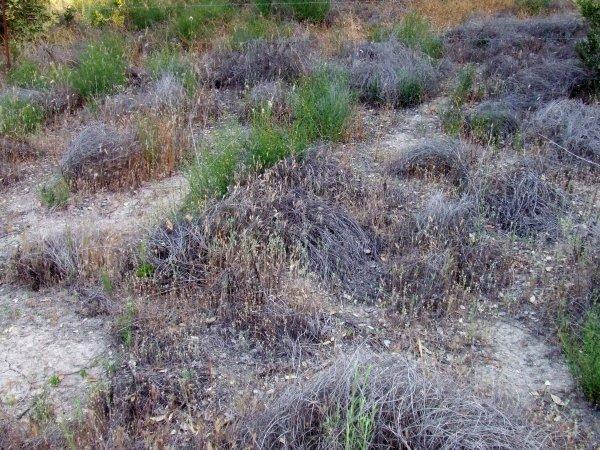

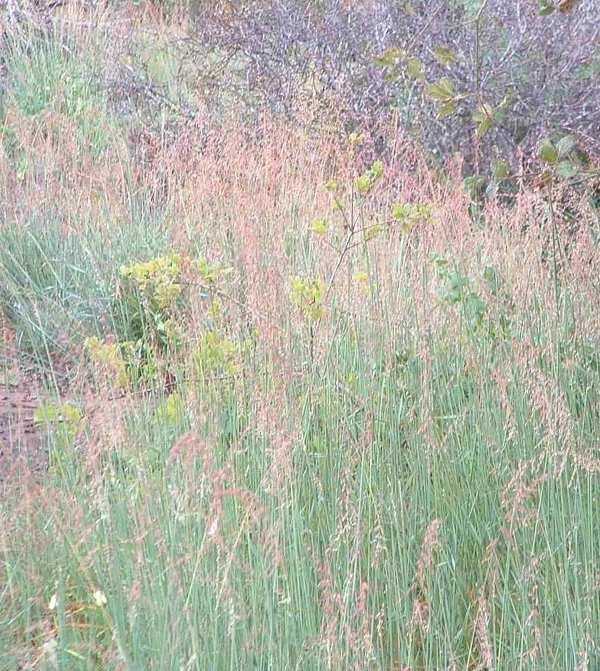
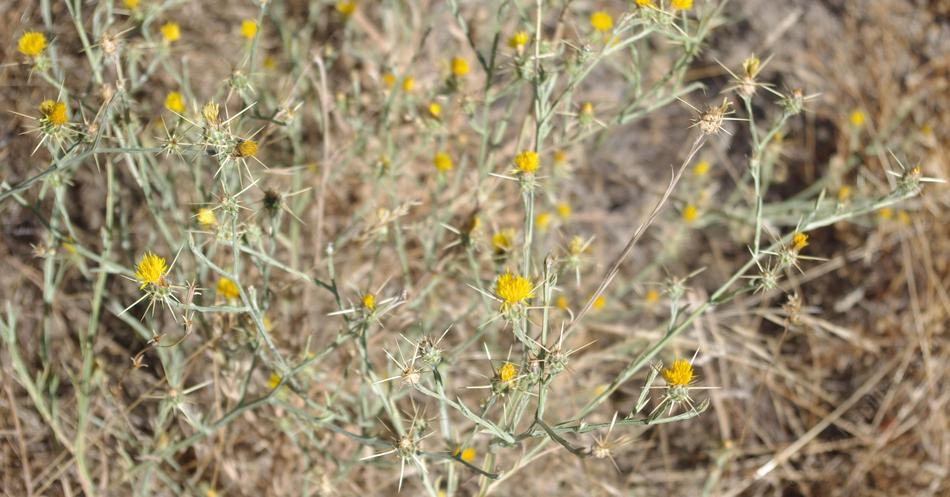
Some of the problems of targeting weeds with herbicide sprays.
Presently, in the shade, under the canopy of
oaks, pines and manzanitas, using post-emergent grass killer, is
preferable, because it only targets grass. In the central coast
area annual grasses are major weeds, but native grasses usually
make up a tiny portion of the area of a plant community, so you
can target them quickly with colored flags or cover them with
pots, and so avoid spraying them. If annual broad-leaf weeds
are present under the canopy of oaks, pines and manzanitas, then
spraying preemergent herbicides like surflan or treflan has been
helpful; spraying the shady areas under the trees, during
the first rain and no later. Why? The weeds germinate very early,
so the preemergent herbicide affects them when they germinate and
many (not all) of the annual shade-loving, spring wildflowers
germinate later, when the preemergent herbicides' effective period
is over. Also, many of the annual, shade tolerant, native plants
seem to be resistant to the preemergent herbicides. Once the mulch
under the trees builds up and associated understory plants fill in
the area, you will be able to pretty much stop spraying; just spot
spraying, or careful weeding by hand, small areas once in a while,
every few years or so, may be all that is needed.
Herbicides are
really easy to screw up, but doing
nothing commonly is worse.
In contrast, in large, sunny areas, in central and southern California, with granite-based soils, where filaree has not conducted a major invasion, and there are just a few scattered filaree plants, spraying small wildflower patches with grass killer (the worst weedy grass is Foxtail Chess (Bromus madritensis ssp. rubens,)has given good results. Then spot spraying the broadleaf weeds such as filaree (Erodium spp.)removes them from the habitat. One squirt for each little plant.... Or, spraying very early, (right after the first rain) with postemergent herbicides like Roundup, can target the early germinating filaree. The problem is that lupine emerges at about the same time, though a little later, so early, early, very early is the key here. Again, if you are not 100% sure of what you are spraying, do not spray! Because of the nature of this habitat, spraying until the grass and weed seed source is far removed from the habitat will help to keep weeds to a low level; even then, animals will carry the seeds into the area, so you will have to constantly be on the lookout for weeds). Voila! Yeah! Wildflowers!! This seems ridiculous; spraying the area to kill the weeds, which far outnumber the native plants, instead of just letting nature take its course. But if you preserve native plants, in so doing, you will save our wildlife. If the oak and pine trees are gone, then much of the wildlife associated with them will be gone. If the annual and perennial wildflowers are gone, then the wildlife associated with them is gone. If you look at it in terms of humankind, then there may be some compound that will be of use to people, and so worth saving. That is enough of a reason for this seemingly ridiculous spraying regime! Note: do not dig or hoe out the alien plants, as this causes soil disturbance, which encourages weeds!! One of the reasons we and our customers have seen success with the careful use of specific herbicides is that they do not cause soil disturbance. Pulling the weeds by hand is another alternative, though try to pull the weeds when they are young, and you will cause the least soil disturbance possible.
In dry, open, sunny areas in the central coast ranges of California, the habitat is very delicate, and vulnerable to invasion by alien plant species, or WEEDS. It is very difficult to remove the alien plants without hurting the native plants. Many of the worst invading alien plants have similar flowering periods, similar water needs, and live under similar conditions. Seems pretty straightforward, huh? Well, it is not. This habitat is fragile and constantly changing and is populated by annual plants, which are considered ruderal plants in any other part of the world. Also, you could call them pioneer plants, in a sense. The alien plants are also annuals, ruderal plants, and out compete the native plants very well, as there are no controls on them as there would be in an area in which they evolved. Digging or hoeing out the alien plants, leaves a perfect, fluffed-up seed bed for the alien plants seed, breaks up the underground network of microorganisms, and allows nutrients and water to escape, and, so, highly encourages the growth of the alien plants over the growth of the native plants. Yes, even the annual native wildflowers are associated with underground microorganisms!! Once the alien plants have invaded the area in a major way and are throughout the site, the difficulty of removing them is almost impossible. One of the almost insurmountable problems with invasive weeds, is replacement. If you spray, to kill grass, for example, then you go and look, and star thistle has taken its place. Here, spraying grass-killer early in the season has worked the best, because the native plants then emerge as more dominant as most germinate earlier than the yellow star thistle. If you spray grass killer later, then later emerging weeds such as yellow star thistle become dominant.We will give further updates as we experiment on this particular habitat, using specific herbicides, and/or other cultural or biological controls.
In open, sunny areas, some people in the central coast area have had luck with mowing at specific times, and mowing at specific heights. Some of the sun-loving weeds, such as star thistle (Centaurea solstitialis) do not tolerate shade very well. This characteristic has been used to advantage, by mowing as high (just cut off the flower heads) and as late as possible, maybe a couple times a season, but before the plant sets seed (usually when the flowers are starting to open). Also, mowing keeps the fire danger down and can be used to control weeds in large, flat areas that are difficult to weed by hand.
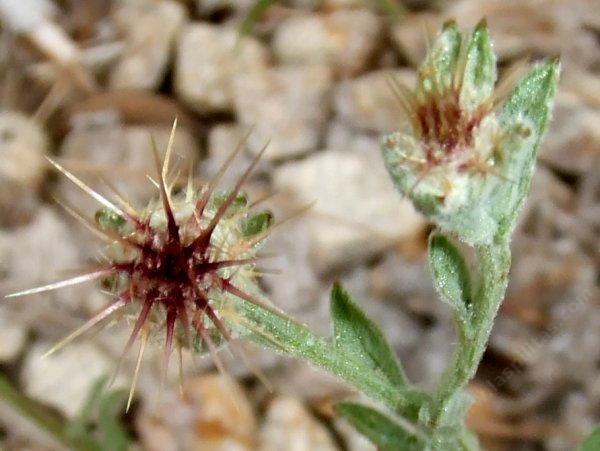
Grazing has problems.
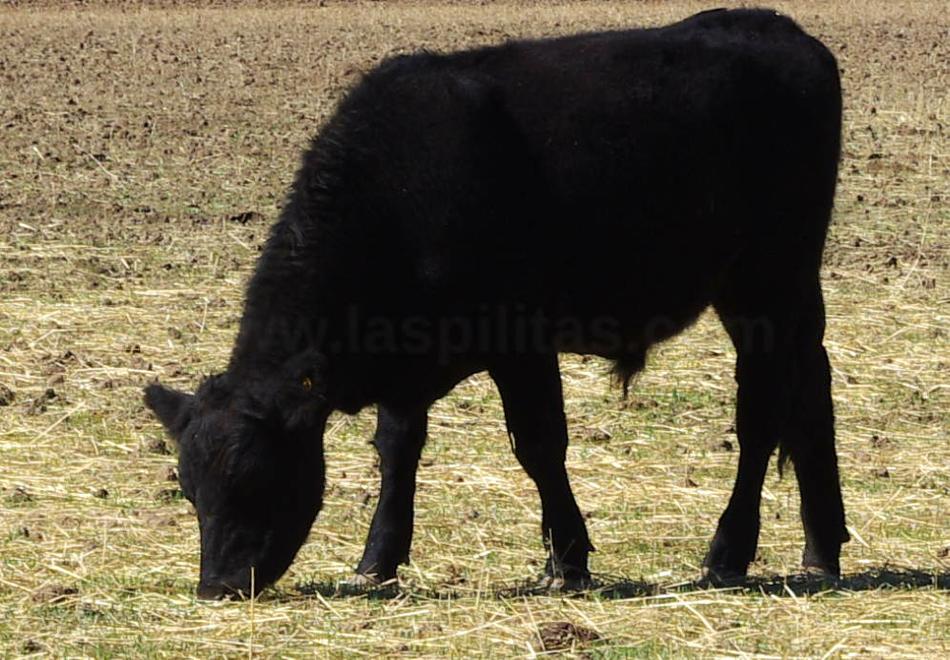
If you have a large area, that you cannot control with sprays and the area is flat and sunny, grazing is another tool you can find useful (though horses do ravage the Needle Grass (Nassella spp.) and the Venus Thistle (Cirsium occidentale var. venustum), but they love the filaree (Erodium spp.). Many areas that we have seen grazed, though, in terms of native plants, are highly disturbed and look poorly, with a lower diversity of native plants and introduction of certain ruderal weeds (Carduus pycnocephalus comes to mind). If the animals are removed, the weeds return with a vengeance, because the soil disturbance caused by the animals tromping around, makes a perfect seed bed for the weeds, the manure encourages weeds and no animals are there to eat the weeds. The cycle of grazing is this: animals-soil disturbance-weeds-animals, etc. The animals from Europe and Asia (cattle and horses) did not evolve here, and are too large and overpowering for this delicate ecosystem with the Mediterranean climate. Before the invasion of weeds, California's vegetation did not support large herds of massive grazing mammals such as cattle and horses. Central and southern California's vegetation did support herds of smaller hoofed mammals that grazed in the spring and browsed in the summer and fall and winter. The grasses and the wildflowers were grazed in the spring and the shrubs were browsed the remainder of the year. But: if the weeds are already established in the area, and you have a large area to manage, the grazing animals can be very helpful in keeping the weeds trimmed so that a fire danger is lessened and you will have some wildflowers. Long term, though, you will have degradation of the site.
In your area you will have some of the same and some different invasive weeds and, if you carefully learn the biology of the plants, you will learn how to manage your area, learn the best method for killing the weeds with minimal effect on the native plants. Before you spray anything, however, know the plants in your area, their life cycle, when they germinate, the conditions under which they grow (sun or shade, for example), whether they are annual or perennial, etc., so you do not inadvertently kill a plant you are trying to save! Like a patient with fever and pneumonia after an antibiotic treatment, a few correctly applied treatments with specific herbicides, under specific conditions, and the results have been astounding! If you still are worried about herbicides there are alternative ways to remove/control weeds such as mowing, grazing, or pulling by hand.
The lesser of evils is still evil. Do not infect the ecosystem with weeds!
Note: we have heard of farmers that have sprayed herbicides WAY ABOVE the recommended dose on hundreds of acres for many years and now the water table is contaminated. The moral is: the ecosystem can break down these compounds into simpler, natural compounds, up to a point; go beyond that point, and that is when you are doing damage to the ecosystem. For a few years, applied only at the RECOMMENDED DOSE, herbicides are useful and helpful, in the war against weeds. If you overdose the area with herbicides and and apply them indiscriminately, they are a problem, like anything else.
Nutshell:
1. Do a survey of the area first; is there shade or sun, trees or annuals?, etc.
2. Identify which plants to save and which plants to remove.
3. Target specific weeds, in your management plan.
4. Remove the weeds with no soil disturbance if possible.
Mowing- best for sunny, flat areas (not under trees)
Grazing- best for already disturbed and invaded (by weeds), large, flat areas
Specific Herbicides- best results have occurred where there were small areas of infection, where there was still a partial plant community present (for example, under oaks and pines.)
Removing weeds by hand below the crown with pruning shears (on older weeds), or pulling carefully by hand (for those of you with small areas, and/or lots of determination and time).