Las Pilitas Nursery: Planting Guide for California Native Plants.
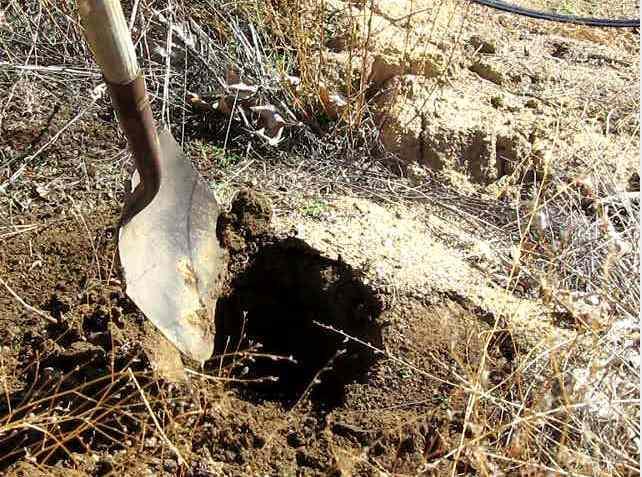
Dig a hole about the
size of the root ball. Unless you're planting
a pot on a balcony, plant native plants in dirt.
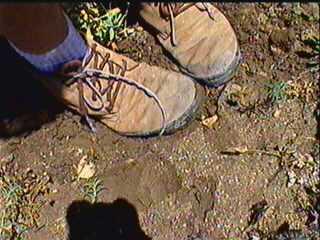
Plant at ground level.
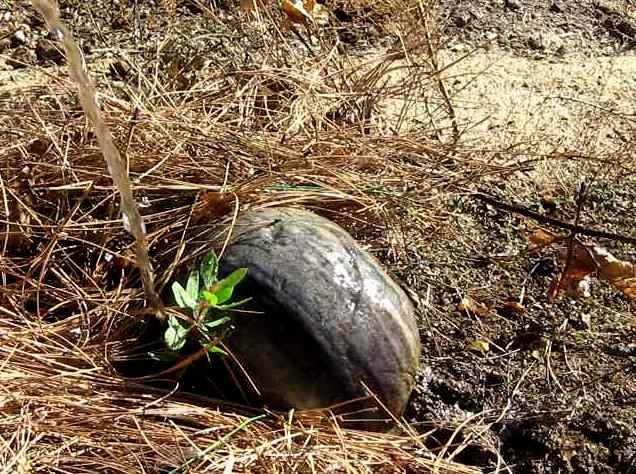
Mulch, rock and water a LOT for at least the first year. Plant native plants with the appropriate
mulch.
- Dig a hole of a size into which the plant will fit, not larger than.
- Carefully remove the plastic bag or plastic pot from around the plant and recycle bag/pot.
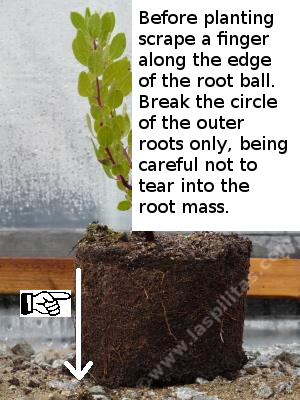
- Disturb the root ball as little as possible, but gently run a finger along edge so roots are not coiling.
- Carefully place the plant into the hole, slightly higher (1-2 mm) than the surrounding soil. DO NOT ADD AMENDMENTS, just plant in your dirt. DO NOT ADD FERTILIZER. Backfill the hole with your dirt, and only your dirt, NO AMENDMENTS.
- The First Watering: Water lavishly (lots and lots, like 30 gallons. If it rains, five inches right after you plant, skip.) We water an area for 8-12 hours with a sprinkler if we plant in spring/summer/fall. Water the plant, and the ground around the plant in a circle one foot past the drip line. Dig into this area after you watered, did the moisture make it to at least 18 inches deep? (Do not dig up plant, just check the soil moisture.)
- How to
Water (After the First Watering): DO NOT
USE DRIP IRRIGATION. Use microspray
emitters or low volume sprinklers instead, so that the plant will be
irrigated in a pattern more similar to rainfall. Do not water against
the crown (the main stem of the plant at the soil surface) of the
plant. Water should fall in the area of the drip line of the plant
and beyond. Do not blast the plant's stem for ten minutes and call it
a day. Again, check that the water made it down at least 18 inches; 24
inches + would be better. Let the top inch or so dry out between
waterings. Check at least a few times until you get the feel for the
water and soil.
The first year, check the soil, down about an inch or two, once a week; if it is dry, water it to 18 inches deep; if it is moist, don't water it. The second and succeeding year-water, if needed, during the months of November through April, and try to abstain from watering in the summer (excepting desert plants, which receive summer rain showers, and sprinkling for coastal plants that normally receive fog drip/summer rain showers ). In really dry years like 2013, add extra water once a week either between plants or a overhead sprinkler like a summer shower. You may have to do this for much of the year if the rainfall is below normal.
Depending on the origin of the plant, you may need to water extra or not. If the plant originates from an area with equal amounts of rainfall and equal rainfall patterns, you don't need to water extra; if the plant originates from an area of higher rainfall or different rainfall patterns, you may need to water extra during the time the plant usually receives rainfall. Plant a redwood in Barstow, water it extra all year, plant a cactus in Eureka, don't water it.
DRIP IRRIGATION is ok for riparian plants, other native plants will die an early death if watered with drip. - For perennials and subshrubs, place a rock next to the plant, on the west or south side of it. Do not kill your back, a 12 inch rock is fine.
- Place mulch on top of the soil around the plant in a
four-foot-diameter circle.
Mulch Types: A. Desert plants- use rocks. B. Perennials and subshrubs-shredded redwood bark or shredded cedar bark.C. Long-lived trees and shrubs- mostly evergreen oak leaf mulch or shredded redwood bark or shredded cedar bark 2-4 inches deep.
If you can't plant your plants immediately, poke a few holes in the bottom of the bag, place in morning sun or part shade, water once or twice a week if needed. Relax, we've left them in the bags for months with no problems.
This guide is for California Native Plants from Las Pilitas Nursery. The guide can be found at .