Restoration of a quarry
in a California Chaparral ecosystem.
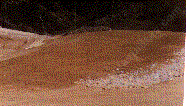
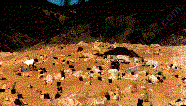
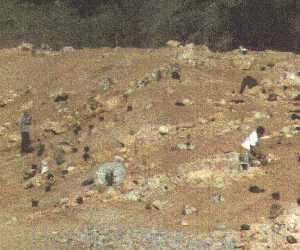
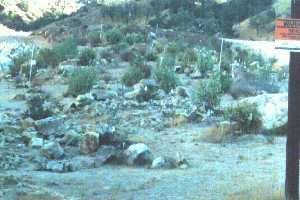
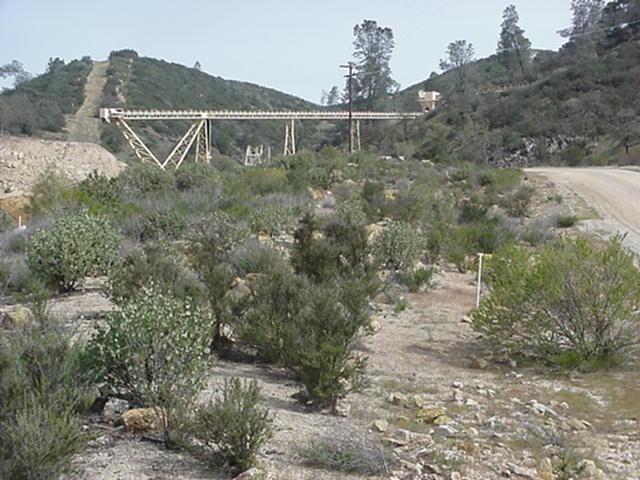
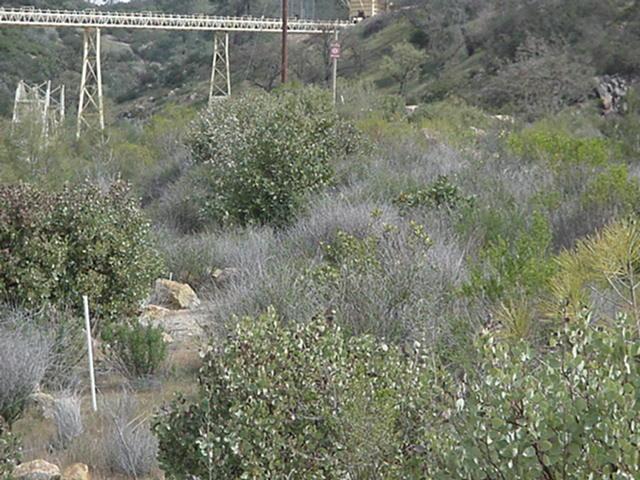
This was a mitigation we did in conjunction with California Polytechnic University. The task was to prove that the Union Asphalt Quarry could be restored to a Chaparral-Oak Woodland Site. We were given a pile of decomposed granite road base 100-200 ft. wide and about 700 ft. long to 'restore' into a native site. We covered the site with boulders, patches of shredded redwood mulch and planted the site with Quercus agrifolia, Quercus lobata, Quercus dumosa, Arctostaphylos glauca, Ceanothus cuneatus, Adenostoma fasciculatum, Diplacus(Mimulus) longiflorus, Salvia mellifera, etc.. The site was watered 2-3 times by a water truck by overhead spray,(like they were washing a road off.) The planting was 'washed' off for the first month, only. No water after first month, no maintenance. This is an interior climate and is commonly 100 deg. F. in summer. The last pictures are after 7 years. After 20 years there is recruitment of oaks and shrub Baccharis.