California Oaks II
Valley oak, Blue oak and Engelmann oak are the common oaks of the inner valleys in California.
|
Acorn matures in one season (at end of new stems) |
Acorn matures in two seasons (on older stems) |
||
|
I. Evergreen Quercus agrifolia, Q. x alvordiana, Q.dumosa, Q. durata, Q. sadleriana, Q. turbinella |
II. Deciduous Quercus garryana var. breweri, Q. douglasii, Q.engelmannii, Q. garryana, Q. lobata |
III.Evergreen Quercus chrysolepis, Q. parvula, Q. tomentella, Q. vaccinifolia, Q. wislizenii, Lithocarpus densiflorus (Tanbark Oak) |
IV Deciduous Q. kelloggii, Q. palmeri |
| Oak relationship chart | |||
II. California Oaks that bear acorns on each season's growth and are deciduous.

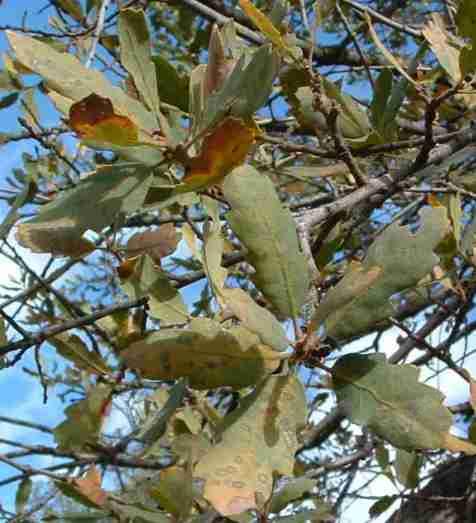
Where hybrids with Valley Oak (Quercus lobata) occur (Quercus douglasii X Q. lobata or Quercus x jolonensis) you can find some huge 'Blue Oaks' that are really stable (and fertile) hybrids. There are some of the giant hybrids in west Atascadero, around Jolon, and a whole valley of them east of Pozo.
You can also find hybrids with Oregon Oak (Quercus garryana) in Blue Oak's northern range. This hybrid has been called Q. x eplingii
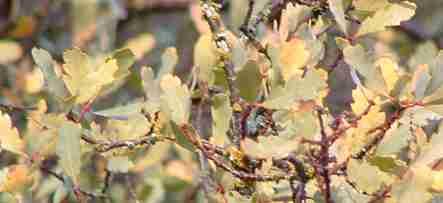
Blue
oaks (Quercus douglasii) hybridize with many of the
other oaks in California and often you're left guessing
which it is. Sometimes Blue Oaks (Quercus douglasii) and
Valley Oaks (Quercus lobata) get together and you get more
hybrids than 'real' trees. Sometimes Blue Oaks (Q.
douglasii) and scrub oaks (Quercus berberidifolia) make a
mess of little oaks that leave most of us confused and one
or two newbie botanists thinking up new species names.
I would be very happy if a group of botanists by consensus
combined almost all the oaks into one species, with the
subspecies, forms, varieties and hybrids listed under
them. THEN, if you were not sure which one you were
looking at you could 'go up the tree' one step.
We have hillsides where Coast Live Oak (Quercus agrifolia), Valley Oak (Quercus lobata), Tucker's Oak (Q. john-tuckeri) , Blue Oak (Q. douglasii), Nuttall's Scrub Oak (Q. dumosa) , hybrids (Q. dumosa X Q. lobata, Q. dumosa X Q. douglasii, Q. john-tuckeri X Q. douglasii, and sometimes what appear to be evergreen Blue Oaks all together in an area the size of a football field. The blend and morph into each other . Almost every tree leaves you scratching your head. They cannot all be different named species, not with all the “kids” around that do not fit.
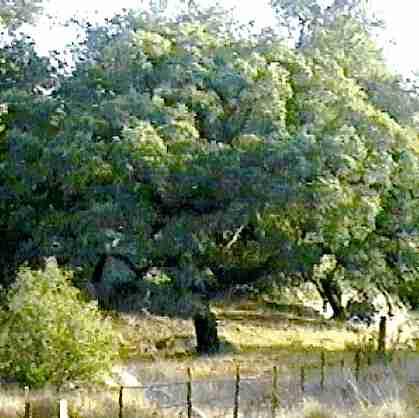
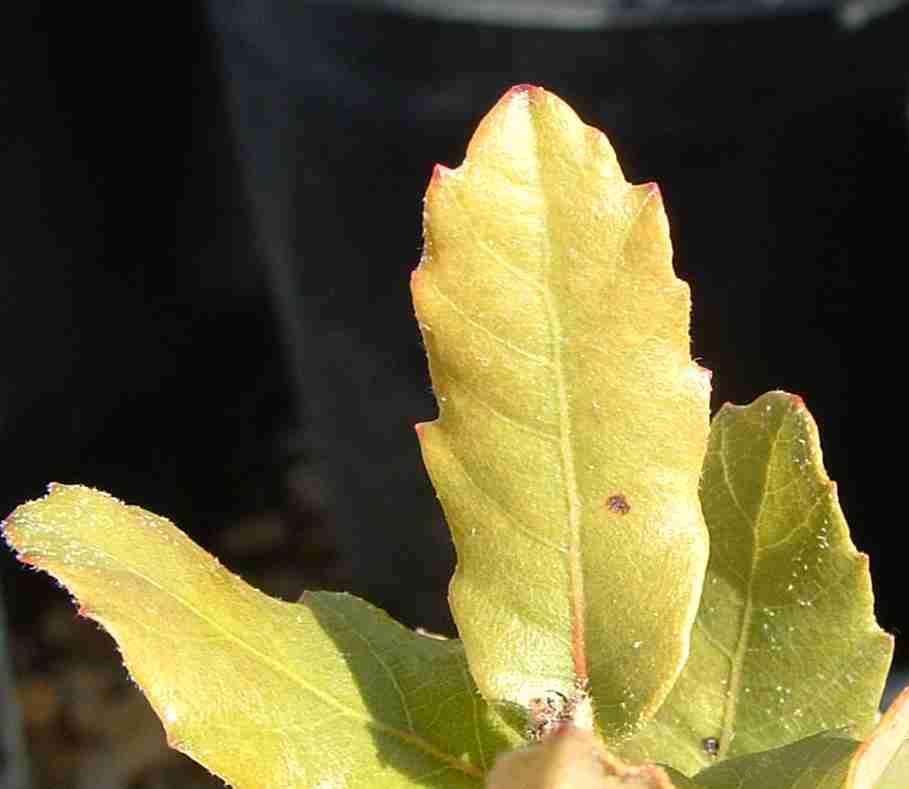
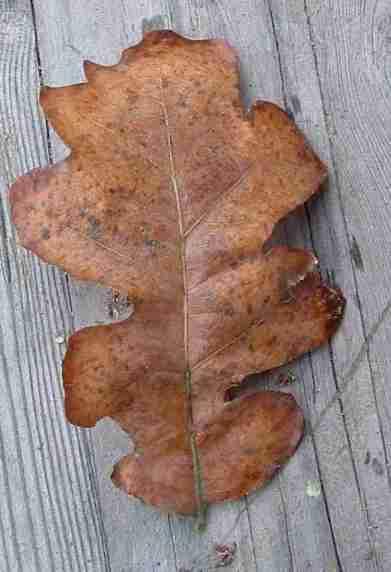
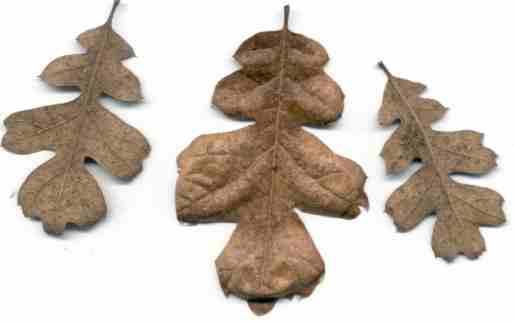
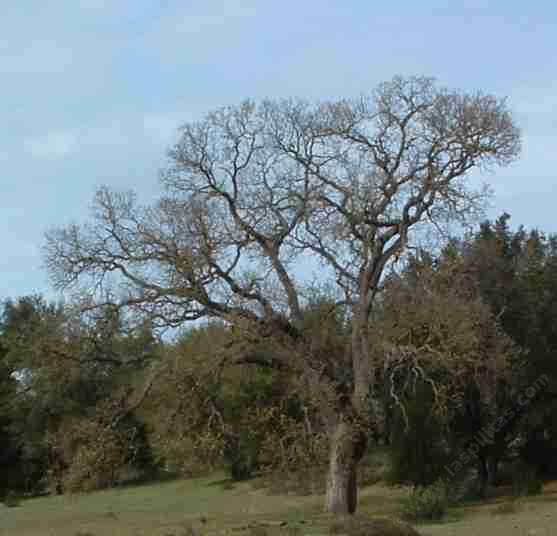
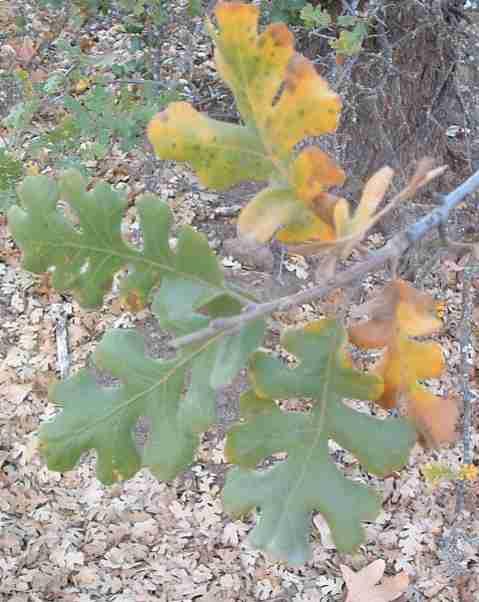
Quercus x kinselae and Quercus x macdonaldii are hybrids of Q. lobata and Q. dumosa
Then there's a hybrid of Q. lobata with Q. john-tuckerii (Quercus lobata var. insperata)
Q. x munzii (Q. lobata X Q. turbinella)
Q. x townei (Q. dumosa X Q. lobata)
Quercus lobata has also been known to hybridize with Q. garryana and Q. kellogii (see our Q. kelloggii)