California Soils and native plants.
Part A
California has a wide spectrum of soil types, with soil pH in our county (SLO) alone ranging from 4 to 8.5. The highest pH we've seen in California (and tried to find plants for) was 8.9 in Tulare.
If there is a lush crop of weeds (other than mustard) and you only want a small garden, don't worry about soil. Natural soil is probably good enough for most natives as long as plants from the general habitat/community are being planted back. The soil is not wrong or bad if conifers fail in the desert or desert species fail in the forest, the wrong plants are being used.
In replacement of an established landscape that was doing fine, do not worry about the soil. Landscape soil is probably good enough for most natives. Again, if you are in Barstow, Bakersfield or Taft, use desert species, if you're planting in a pine forest, don't plant desert species and complain about the soil. Plant by plant community.
In replacement of an established landscape, do worry too much about soil and soil pathogens. If the landscape died, what is the problem? What killed it? Have a soil analysis done, look at the watering practices, was drip irrigation used? (that will kill most gardens in about 5 years.) Was it a rental house planted with 'normal' garden plants that needed regular watering and never was watered? Was there a timer there set at 10 minutes every day? (That, by itself, could kill the plants and alter the soil.) If everything in the garden just died, figure out why, before the next batch of plants is condemned to death.
If the area has no bushes or trees and all that is there is grassy weeds, why? It may be the soil or water. In California houses and subdivisions are being put into areas that farmers couldn't farm because of poor soils, high boron, high sodium or rock.
If the soil report comes back with Boron higher than 1 ppm, pH higher than 8 or lower than 5, and Sodium is greater than 200 ppm, you'll have to do some planning to figure which plants can grow there. On many sites whatever is native there may be all that can grow there. Have a water analysis done also if a soil analysis comes back bad, and then seek help.
What is Soil pH?
pH is a measure of acidity in the soil (hydrogen ions). pH is logarithmic, a pH of 6 is ten times more acidic than the neutral 7, a pH 7.8 is about eight times more alkaline than a neutral pH of 7. The confusing part is differences within the range, such as between 6 and 7.8. The numbers are multiples, so take the ten and times eight, or pH of 6 has about 80 times as many hydrogen ions as pH of 7.8. Conversely, pH 7.8 has 80 times more OH- than pH 6. H+ and -OH make water (neutral), the balance of available units of each is pH.
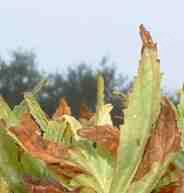

The alkaline soils are generally more fertile and the plants have not adapted good nutritional strategies, nor can they handle the higher levels of available iron and metals.

This is an acid tolerant plant in alkaline soil. Acidic plants can't handle the higher levels of calcium, sodium, magnesium, etc., in the soil. It's like people that are not milk (lactose) tolerant, on a milk diet.
Native plants like undisturbed soil. If you are planting natives avoid tilling, ripping, trenching or otherwise tearing deeply into the soil. If possible, cut your ditch so as to leave connecting areas between existing plants. The ditches for water, electricity, telephone, or sewer could be put together or parallel (if building codes allow it) so that the trees are not cut off by themselves from each other. (If the garden is in a new subdivision or other site with no viable native ecosystem you can ignore the previous paragraph.)
Make sure you have the appropriate plant material.
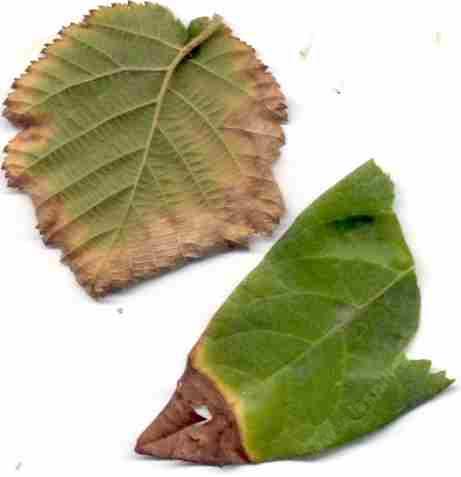
Plants are adapted to certain ranges, some acidic (firs, huckleberries), some alkaline (saltbush), if you plant an acid lover in an alkaline area the the leaves will have brown or black margins on them, before they drop off. The plants, generally, will lose their leaves within a few weeks, decline and die. Plant an alkaline lover in acidic soil they usually have yellow(chlorotic) leaves, then burnt leaf margins, then rot off and die.
Some plants care about their soil. Some do not. Ceanothus hearstiorum does well on clay but hates sand. In a Cambria garden in sand, only a few miles from where it was native, it failed. This Ceanothus has been successful in interior gardens as long as it is in good-draining clay or clay-loam. Most native plants do not care about soil as long as they are growing with their associated plants.
Part B - Soil Amendments
Soil amendments usually make the problem worse. The only amendment that can sometimes help is liquid lime-sulfur (Calcium polysulfates) or gypsum watered in on poorly draining sites or sites with a high sodium/low calcium balance. Gypsum only helps for a few years, the plants have to be close to the right plant community if the soils is 'bad'.
Don't try to improve your soil by adding mushroom compost. It is a little manure, straw and sand that is amended with adobe clay soil to make adobe bricks! Sand added to clay makes a nice patio as it approaches concrete in texture! If your soil is bad enough to think about amending you should be thinking about what plant material will work in it, not what amendment to add to it. In most cases the soil consistency isn't the problem but what it contains. Just because it is hard as a rock ( break the shovel handel off ?)doesn't mean you have bad soil.
Why do people move to the redwoods and try to replace the soil to plant tomatoes? Why do people move to Barstow and try to replace the soil to plant pine trees or blueberries? There is more soil under the stuff you are amending than you can amend. Dig a 3' deep by 2' wide and 5' long hole for a series of rose bushes to try and overcome the alkaline clay soil in the garden. Replace the soil, do it for each bush, and all the roses will still be yellow from lime within 6 months. If you work amendments only into the planting hole, you've made a sump hole in the winter (water drains into it from the surrounding areas. When you pull the dead plant out it will go 'sucky-slurpy'. Amended soil also forms a soil inversion layer that will drive you crazy.(The plants and their fungal helpers 'see' a amendment-soil line as a 'rock' or hardpan and cannot go through it.). Soil hardpan occurs in all soil types, some of which you'd never guess. In one place along the coast in pure beach sand the planting hole had been amended with a sewage- based product at planting time. A 5 gallon plant was set out in that hole that eventually died of drought. When pulled up, what roots it had, had coiled up against the shovel line where the soil had been amended. No, that's right, no roots had passed that soil line after 5 years. This same effect is one of the reasons a gallon-sized plant will consistently grow bigger than a 24" boxed plant after about 5-10 years if the two plants are planted at the same time.(Look at the plant size section.) Lawns, perennials, shrubs and even trees do the same thing vertically. They 'see' soil lines we would not think about. It is really weird to see a 30' tree blow over and only have a 12" deep root system.

Part C - Fertilizer
Do not use any fertilizer unless you have a minor problem, such as a minor deficiency, that is corrected long-term with one application or so. Also, sometimes lime-sulfur (calcium-polysulphates) can be useful to help mitigate high pH and sodium problems. Nitrogen, Phosphorus, and Potassium fertilizers have killed more native plants than they have helped. Fertilizers do not seem to hurt ruderal (weedy or vegetable) plants. Circumventor plants will survive the fertilizer but will not have a normal lifespan. They will grow big and fast but die fast. For natives, fertilizers are like steroids. (Stress tolerant plants usually will just die after being fertilized.) The Ceanothus species die in three years, when overwatered and fertilized. In the wild they will last 100-150 years plus. Fertilizer can only be used if a soil analysis has shown the soil has a deficiency of a minor element.
One fertilizer application is enough to kill a native plant. Do not fudge unless you know which plants will tolerate it and how much. "The plant died with 'just a little' fertilizer" is common with natives.
View your whole site as a living body. Fertilizer behaves as salt does. You may be putting it in one area but it is affecting the whole body. If you change the biological balance by adding fertilizer you will also favor weeds, snails, rats and bad bugs.
Part D - Landscape drainage
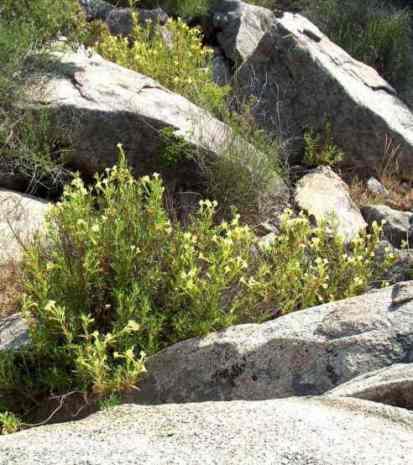
Most California native plants need good drainage. Fair to Good drainage means that if you dig a shovel sized hole and fill it with water it will drain in an hour or two. Some of our chaparral plants need excellent drainage. If you fill a shovel-sized hole the water should drain out in less than ten minutes (good-excellent drainage). If the garden does not have good drainage, and you want to plant stuff that likes good drainage, try using large raised beds or planting on a slope. If water stands for periods of time, abandon the drought tolerant plants and use seasonal riparian (river, meadow or creek) species.
Amending the soil to make better drainage is almost always a disaster. It just makes a mess. A combination of the correct plants and the right mulch are both much better at improving the soil.
When you walk on healthy soil in a native habitat you leave a footprint. The soil is light and fluffy. Even rocky terrain is light and fluffy between the rocks! Hopefully in your life time you'll restore a viable garden or ecosystem and remove a footprint!
Options?
Site specific planting can be cost effective if everything else dies.
If you have one of these bald problem areas, have a complete report done instead of a partial one. Sometimes there are problems that are not supposed to be in the area. (Your garden is special because the fill came from the nuclear power plant's holding pond.)
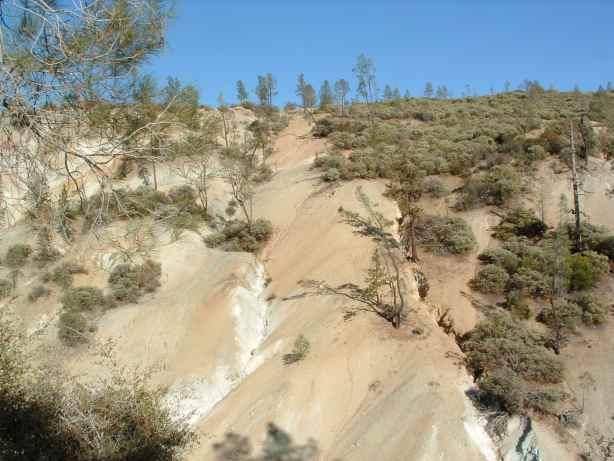
Look long and hard at soils with hard pan, with serpentine , with salt spray, with any white surface deposits(or any other color for that goes, one site had a rainbow) or with a mining operation going on nearby. It is amazing that people do not wonder about their soil with a mercury, borax, lead, salt, gypsum, or other mineral deposit on the site or next door.
If the site is bald, ask about the history of the site, it can be important!
Native plants have adapted to these soils and sites. Native plants have both mechanical means (sheathing) and chemical means (greater nutrition and depositing the chemical in the fungal parts and sloughing them off) to help tolerate high soil toxicities. This is best represented by mycorrhiza.