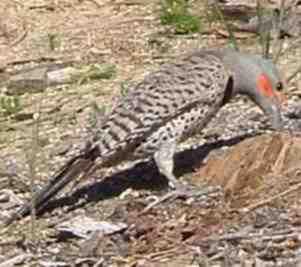
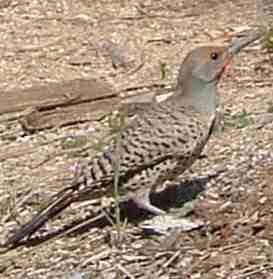
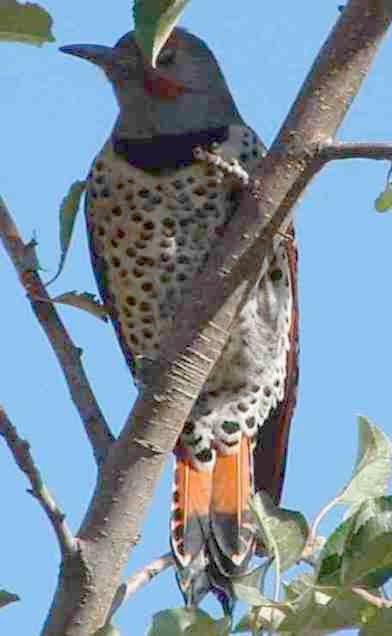
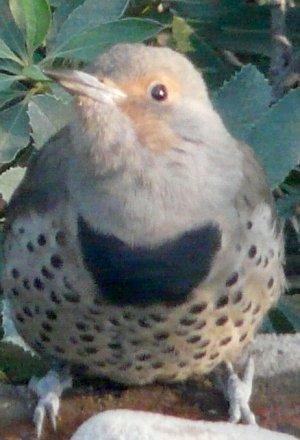
Northern Flicker, Colaptes auratus
Diet of the Northern Flicker
The Northern flicker uses its incredibly long tongue to grab ants. Ants represent a large portion of their diet. They also eat other insect as well as seeds, nuts, and small fruits. We had a northern flicker that lived around our place at the nursery. She would sit on the window ledges and eat the ants that were trying to infect the house. Woodpeckers can be quite helpful in reducing insect pest populations.
Range of the Northern Flicker
The Northern flicker is found throughout the continental United States. In winter they move out of the high Sierras to lower elevations and into the desert areas vacated during the summer. In the spring and summer the Northern flicker moves up into Canada and even into Alaska.
Niche Filled by the Northern Flicker
The Northern Flicker uses its incredibly long tongue to snap up ants. It excavates very large nest cavities that in latter seasons are used by larger cavity nesting birds.
How to attract the Northern flicker to your Garden
The Northern Flicker especially likes wooded areas. At the nursery they can be seen feeding on Oaks, Quercus agrifolia, Q. lobata, and Q. douglasii. They also like conifers of all kinds.
Woodpeckers require dead snags as well as dead branches. If you want to attract woodpeckers to your garden do not remove this dead wood.
Habitat/plant communities used by Northern Flicker
Migratory status of the Northern Flicker
Some Northern flickers move into desert areas in winter.
Reproduction of the Northern Flicker
The Northern flicker excavates its own nest cavity. In later years these cavities are used by larger secondary cavity nesters like the American Kestrel.