See also Habitats
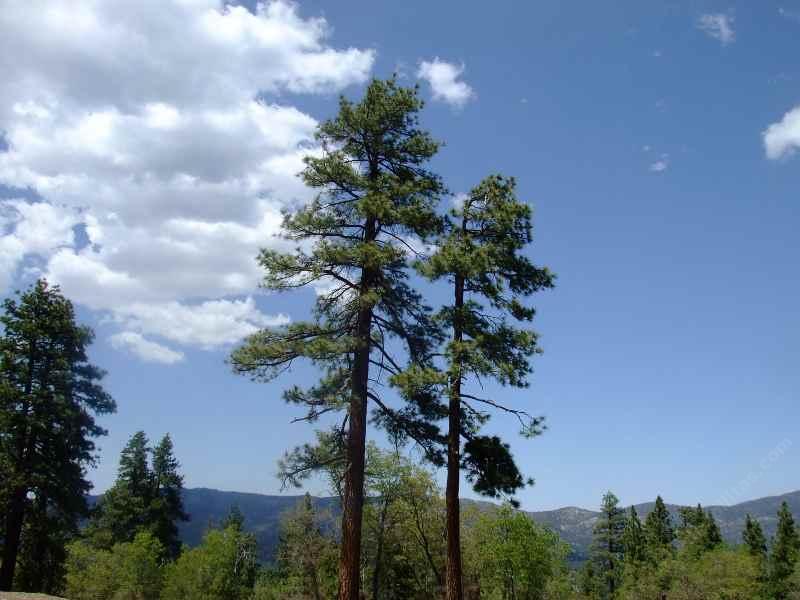
California Yellow Pine Forest
Annual precipitation
30-65 inches
Snow is common, and can be 12 or more feet deep. But the winter cold doesn't really get that bad. Summer highs are commonly in the low nineties, and winter lows are seldom below 20 F.
Common Animals
Just about everybody. The higher elevation species move down to the yellow pine forest in the winter, the lower elevation species move up in the summer.
Rubber Boa Charina bottae, Northern Alligator Lizard Gerrhonotus coerruleus, California Mountain Kingsnake Lampropeltis zonata, Western Skink Eumeces skiltonianus,
Steller's Jay Cyanocitta stelleri, Evening grosbeak Hesperiphona vespertina, Pine Siskin Carduelis pinus, Flammulated Owl Otus flammeolus, White-headed woodpecker Picoides albolarvatus, Pygmy Nuthatch Sitta pygmaea, Hermit thrush, Black-headed grosbeak Pheucticus melanocephalus, Western Tanager Piranga ludoviciana, Townsends thrush, Yellow-rumped Warbler Dendroica coronata, Green-tailed Towhee Pipilo chlorurus,
Golden-mantled ground squirrel Spermophilus lateralis, Yellow Pine chipmunk ,Tamias amoenus, Douglas's Squirrel Tamiasciurus douglasii, Deer Mouse Peromyscus maniculatus,
Common Plants
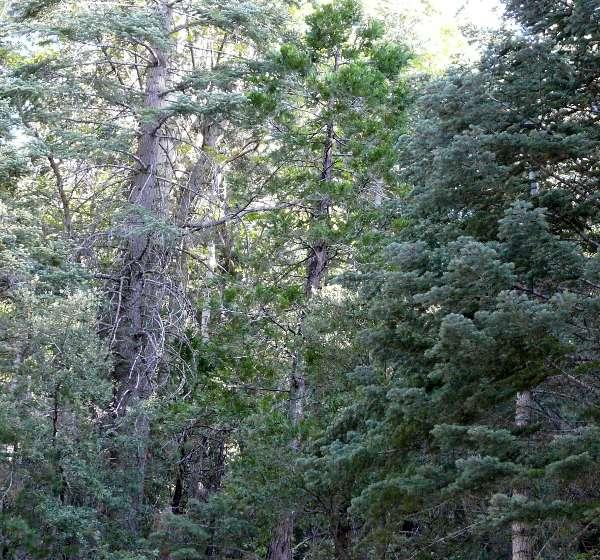
Yellow Pine Pinus ponderosa, Sugar Pine Pinus lambertiana, Jeffrey Pine Pinus jeffreyi Douglas Fir Pseudotsuga menziesii, Incense Cedar Libocedrus decurrens, Abies concolor, California Black Oak Quercus kelloggii, Canyon Goosberry Ribes nevadense, Sierra Gooseberry Ribes Roezlii, Thimbleberry Rubus parviflorus, Mountain Misery Chamaebatia foliolosa, Greenleaf Manzanita Arctostaphylos patula, Mariposa Manzanita Arctostaphylos mariposa, Deer Bush Ceanothus integerrimus
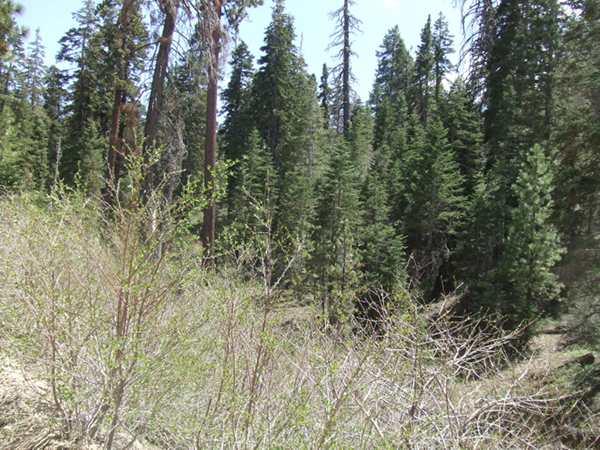
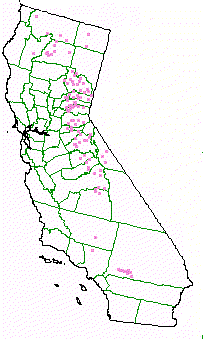
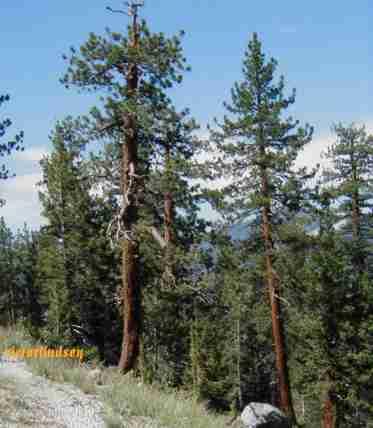
In much of California the Yellow Pine Forest usually has Jeffrey Pine (Pinus jeffreyi) or Ponderosa or Yellow Pine Pinus ponderosa, but can sometimes have other middle elevation pines like Coulter Pine Pinus coulteri. In the Sierra Nevada mountains and the north coast ranges this plant community is found at middle elevations, and into northern California it drops down to only around 1200 feet elevation.
In southern California the Yellow Pine Forest plant community is pretty much found at the higher elevations. The understory and associated plants are commonly different forms of Manzanita (Arctostaphylos spp.), currants and gooseberries (Ribes spp.), coffeeberries (Rhamnus spp.), Black Oak Quercus kelloggii, and shrubby oaks like Oregon Oak Quercus garryana var. breweri and Deer Oak Quercus sadleriana. Red Shanks Adenostoma sparsifolium or Chamise Adenostoma fasciculatum are commonly on the edges or in gaps.
The original Jepson manual had Jeffrey Pine as a variety of Ponderosa and it is often very hard to tell the two apart in the field. The keys separate the two by cone size and shape. Where they overlap (5000-6000 feet) the cones look the same, and they do hybridize with each other, in certain areas. At about 6000 ft. non-stressed Jefffrey Pines start showing up amongst the stressed Ponderosa Pines.
Soil and climate notes
The soils are commonly slightly acidic and can range from a red clay, to granite to sand on hard pan. In southern California many of the valleys that had a pine forest had soils of sand on hard pan. Pines can grow in alkaline soils, and even poor -draining soils, but they usually do not live long, except in their range. The common life span for pines is only about 7 years in places like Bakersfield, Barstow, or Shandon. At 5000-6000 ft. Jeffrey Pine and Ponderosa Pine can tolerate a pH up to 7.8.
The pines in the Yellow Pine Forest plant community need about 20-25 inches of winter/early spring rainfall/snow melt to regenerate and stay healthy. In lower rainfall areas, such as southern California, the pines can compensate somewhat in older stands with fog drip, but if a large -area fire, weed invasion or clearcut occurs, the trees cannot regenerate on their own, because there is just not enough rainfall. So, if your project is on a ridge line or valley facing the wind where there are commonly fogs or passing low clouds , and if you water the 'forest' for the first few years (not with drip), the pines will be happy, and the associated plants will live.
Plant communities are flavors, not lines in the sand. Many
people have described California's plant communities in many different
ways. A good analogy is the different names given to Rocky Road Ice
Cream, and the different formulations of flavors and ingredients that
the name has been applied to. If you're trying to repair, landscape in,
or duplicate the Yellow Pine Forest plant community, remember to try to
match the best you can, then don't worry about it. It will never be
perfect, because there are no perfect flavors and ingredients, but
hopefully everyone will recognize the 'flavor' and fragrance as Yellow
Pine Forest.
The Yellow Pine Forest plant community is like an elevation map, 4000-9,000 feet, with Jeffrey Pines higher and driest, and Ponderosa Pines over most of the range. Jepson in his 1925 book called this plant community the Transition Life Zone (from Merriam's studies in Arizona.).
This plant community has also been called the Jeffrey, or Ponderosa, or Yellow Pine belt because of the way it follows the elevations of the Sierra Nevada mountain range and other western mountains.
The southern California flavor of Yellow Pine Forest often looks like a woodland, with shrubs such as Big Basin Sagebrush Artemisia tridentata and wildflowers in between the trees.
Plants
A list of California native plants that grow in the Yellow Pine Forest plant community.