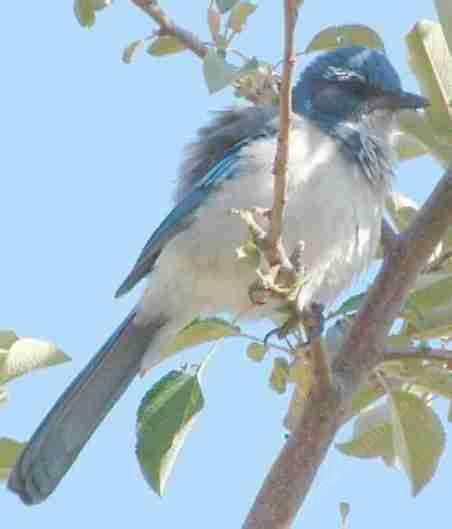
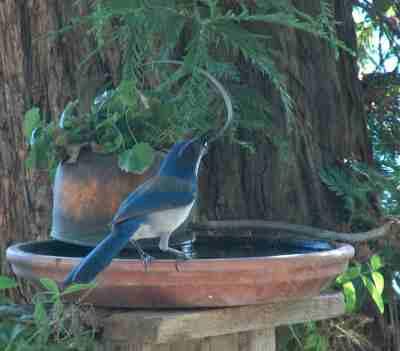
Western Scrub-Jay, Aphelocoma californica
Jays are feathery sentinels with an attitude.
They sound an alarm by shrieking loudly to announce your entry into their area of influence. Jays make a huge ruckus when something noteworthy is happening. One time we heard loud shrieking outside. We went to investigate and lots of scrub jays were all riled up in an oak tree. It turned out there was a gopher snake high in the oak tree eating nestlings. Another time a rattler was moving between bushes. Snake patrol!
The western scrub jay is an omnivorous bird eating most anything. Its most notorious food item consists of other bird eggs and baby birds. They also eat acorns, seeds, fruits and nuts. They like to store acorns in the soil, not a very long term storage site. Many of these acorns are forgotten and later germinate. They can be heard in the nursery pecking away furiously at an acorn. They like to perch on a log with it, using the log as a sort of cutting board, and then hammer away.
The western scrub jay is found in most of California except the southern desert, the lower central valley, and the higher elevations of the Sierra Nevada mountains.
How to attract the Western scrub-jay to your garden.
The Western Scrub Jay enjoys oaks and scrub land but they also like town life. A pretty sure bet for attracting the western scrub Jay to your garden is oaks, Quercus lobata, Q. agrifolia, Q. douglasii, etc. Their favorite foods are acorns and they also enjoy eating the insects attracted by an oak tree. For more information on oaks see our oak page. For all the scrub jay's bad manners, they are actually very good at distributing and planting acorns. Which is good for a forest, oak woodland, or even chaparral.
The Western Scrub-Jay likes brushy areas with nearby trees, especially oaks.
The Western Scrub jay is also very fond of Toyon berries. The Toyon, Heteromeles arbutifolia, is a lovely evergreen shrub with bright red berries. It is also called holly berry, for this reason. Many other birds also like it
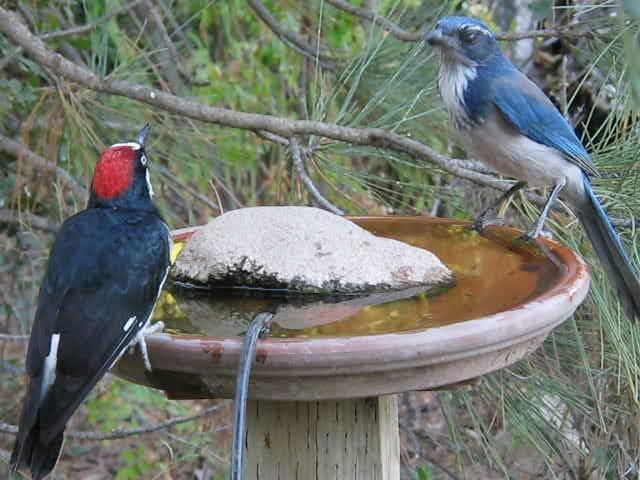
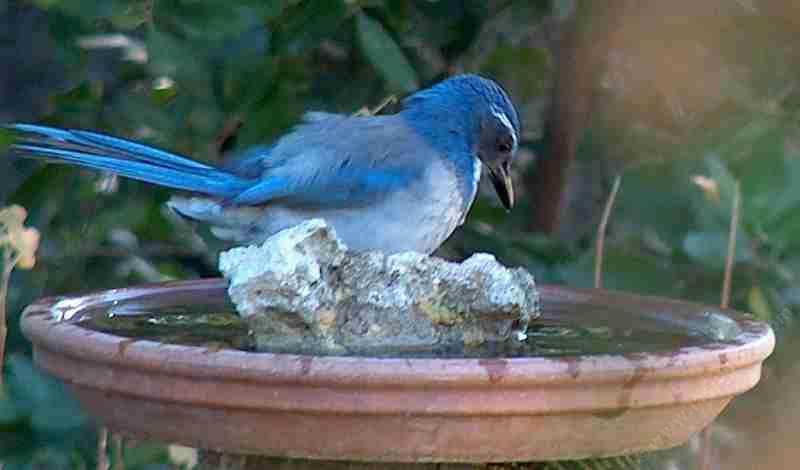
The Western Scrub Jay will also come to the bird bath. (Although they tend to scare the other birds away.)
The Western Scrub Jay doesn't migrate. However, they do move up hill after breeding.
The Western Scrub Jay nests in the dense foliage of a large bush or small tree, usually situated near water.
Learn more about California's flora from our front page.
Return to Bird page
Check out the butterflies