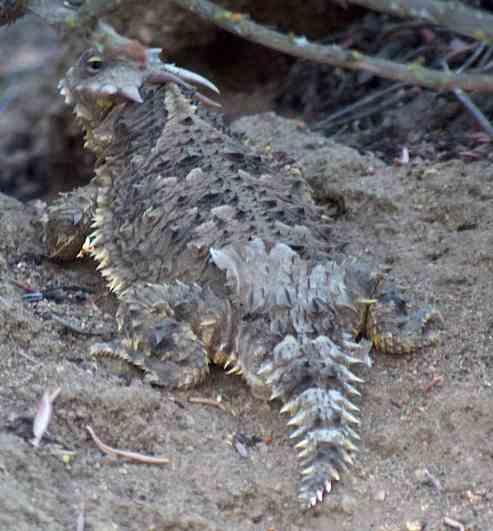
The Coast Horned lizard, Phrynosoma cornatum
Behavior of the Horned Lizards
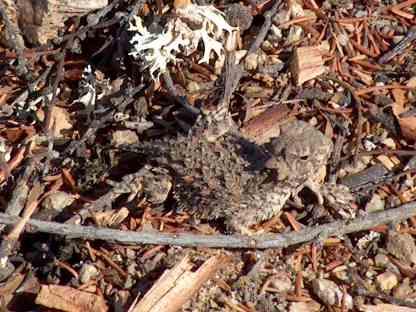
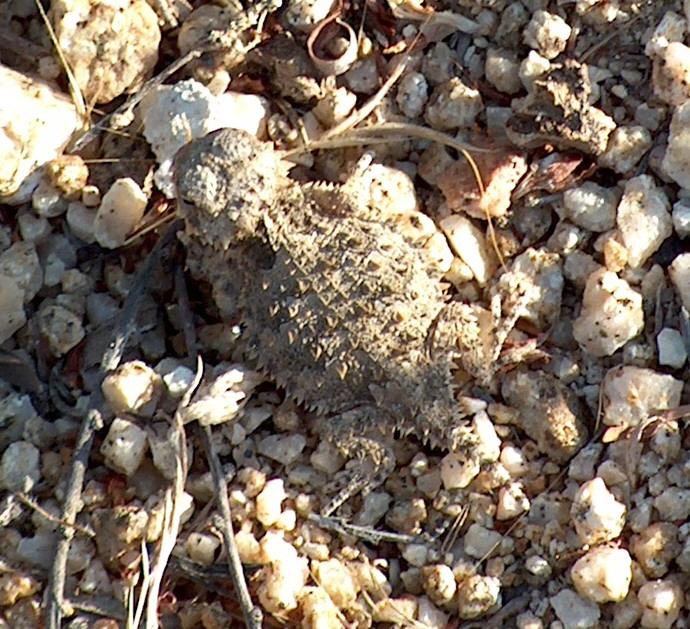
The Horned lizard escapes predation by staying still and blending into their back ground. They look just like decomposed granite! When a predator is too close they will run very fast and then abruptly stop and stand still. When they are threatened, they are able to squirt blood from their eyes (at most only a few feet, usually not even that). This has a tendency to distract predators especially squeamish humans.
The Horned lizard is an odd looking lizard. Its body is covered in horny scales the longest being around its head. It is often called a horned toad because of its squat toad like appearance. Of coarse, these guys can tolerate much hotter and drier environments than any Bufo boreas.
They are very hard to see as they blend into the soil so well. They are able to change color to match the surrounding environment (Cryptic coloration). They usually are only visible when they move (when you almost step on them).
When temperatures get too hot (the middle of the day) they will burrow into loose soil or sand to escape the heat. In the winter they will hibernate under rocks or logs or in someone else's abandoned hole.
Diet of the Horned Lizards
The horned lizard eats arthropods, including ants, beetles, and spiders. Ants seem to be their favorites. They usually are observed in close proximity to ant hills. Many non native ant species have moved into their habitats displacing or eradicating the native ant species that the Coast horned lizard feeds on.
Habitat requirements of the Horned Lizard
The horned lizard needs bare soil; they cannot tolerate weeds at all (Yellow Star Thistle, Bromus and other nasties). It is very hard for them to move around in this stuff, probably because of their width, and they need clean loose soil to lay their eggs and to hide in.
They like clean chaparral (uninfected with European weeds) with loose areas of soil. They also burrow in loose soil.
The coast horned lizard is presently listed as a Federal Special Concern species (FSC) and a California Special Concern species (DFG-CSC). So don't collect them! They are much happier outside than in a terrarium in your living room.