Central and Northern California Lilacs
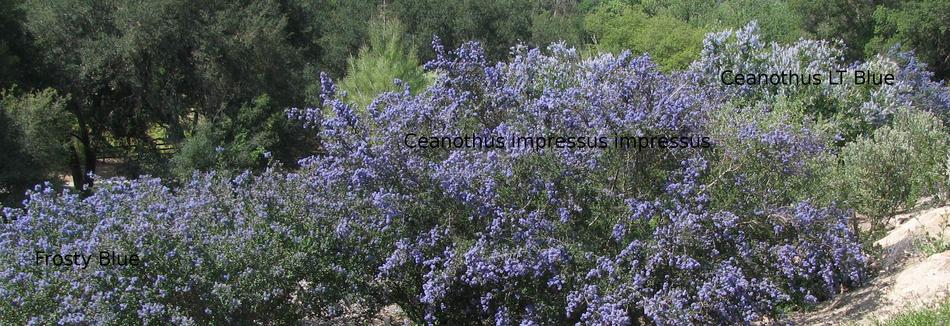
California Lilacs, or Ceanothus, are some of our most fragrant and colorful shrubs here in California. They are also evergreen and very drought tolerant. They make excellent hedges!
The myth of Ceanothus being short lived is primarily spread by incompetent gardeners that insist on drip irrigation, summer water and soil amendments. California native plants hate all three. Expect a 20-25 year life from your Ceanothus in most gardens.
Ceanothus are notorious for being loved by deer. However, this is not entirely true. Without water or fertilizer a Ceanothus looks much less appetizing to a deer. Some species are still viewed as candy in areas where deer populations are high. But many are OK in low or medium deer areas. If you have high deer problems stick with your local Ceanothus species and whatever you do, don't water after the first season.
Ceanothus cuneatus, Buckbrush
Buckbrush is native around our Santa Margarita nursery and most of Central and Northern California, even up into Oregon.. It is very drought tolerant, growing in full sun, in our 115 degree summers. It has blue or white flowers and tiny shiny dark green leaves. It is very cold tolerant. It will grow in sand or clay. Deer don't like it much to eat but they like to hide in it to sleep. It grows 3 to 6 ft tall.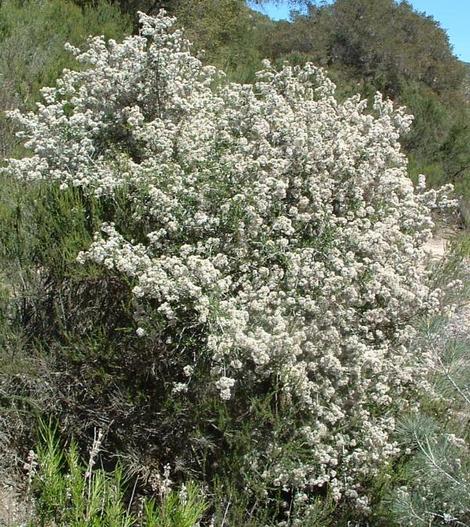
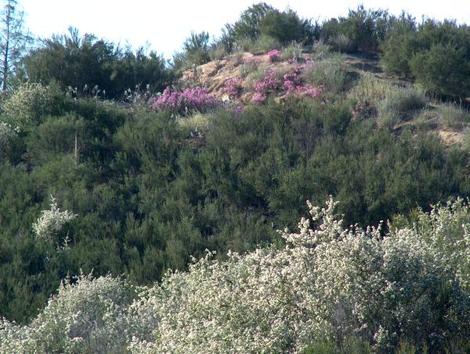
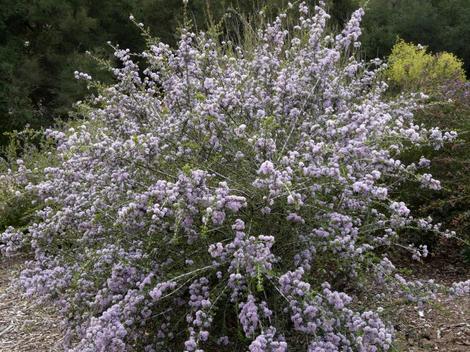
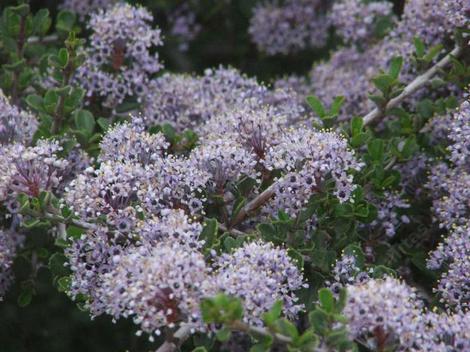
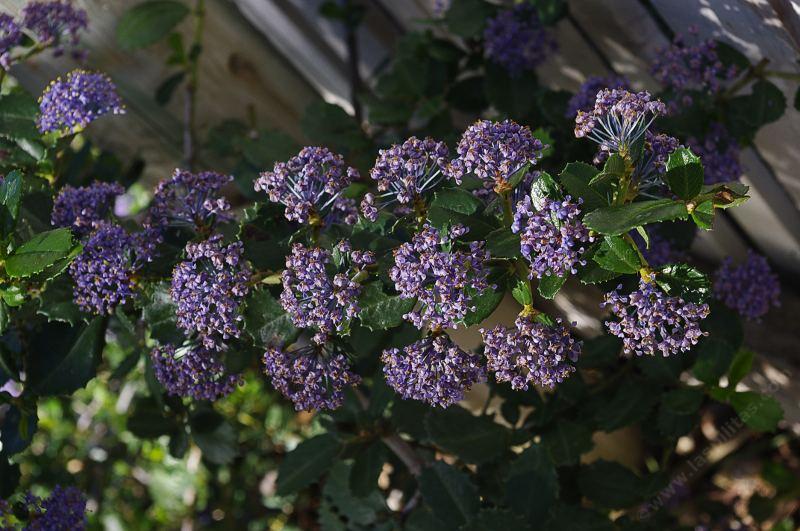
Ceanothus foliosus, Wavy Leaf Mountain lilac
Wavy leaf mountain Lilac has lots of small blue flowers and tiny bright green crinkly leaves. It will grow in clay or serpentine. Wavy leaf mountain Lilac likes shade in the interior and full sun along the coast. It grows about 4 ft tall .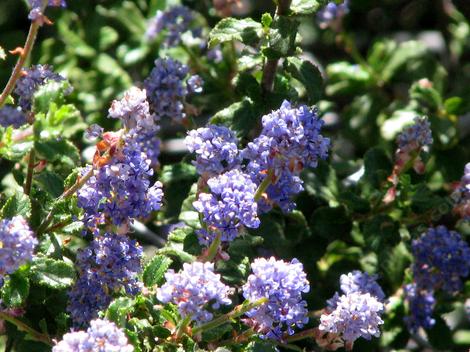
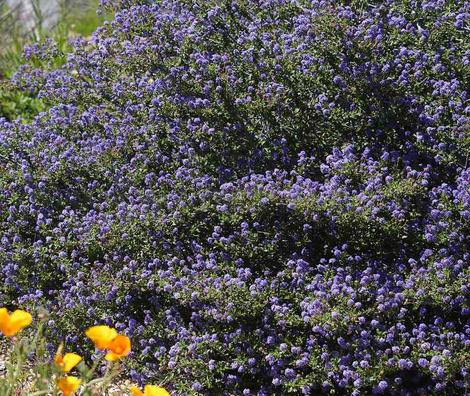
Ceanothus gloriosus, Hearts Desire Groundcover Mountain Lilac
This low growing Ceanothus grows 1 to 2 ft tall. It is native to the coast of northern California yet it tolerates the dry arid climates of the interior. It likes a little shade in the interior and full sun along the coast. It likes sandy soil but will also tolerate clay. Deer don't eat it much.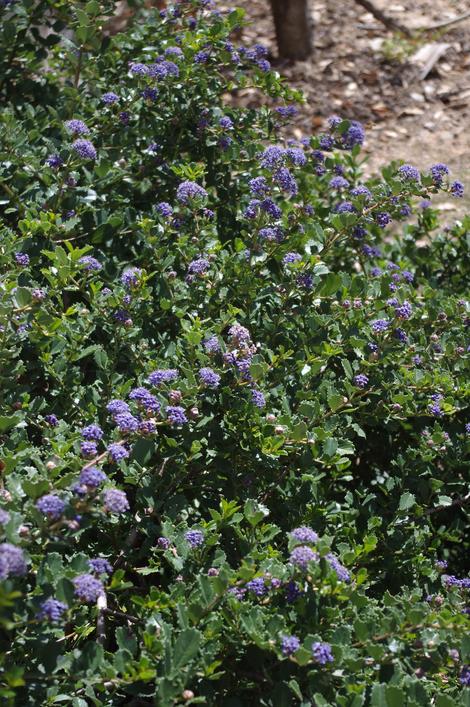
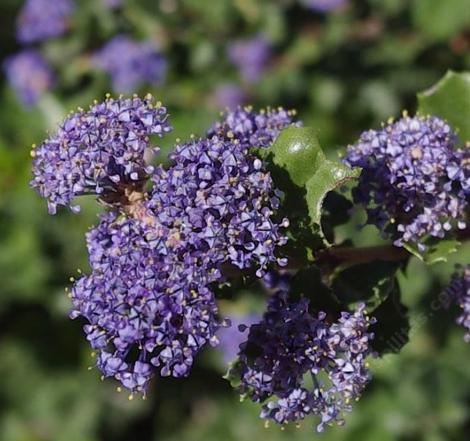
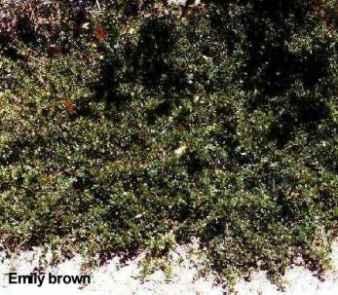
Ceanothus gloriosus exaltatus, Emily Brown
Emily brown is at home on the coast. If grown inland, it needs a little shade. It is fairly deer proof. It has dark blue flowers. It grows about a few ft tall. Emily brown will grow in sand or clay.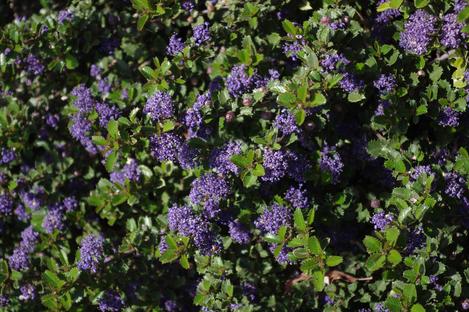
Ceanothus gloriosus porrectus, Mt. Vision Ceanothus
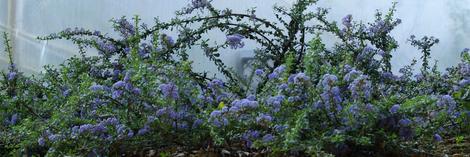
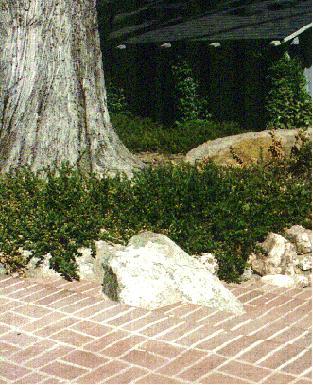
This beautiful Ceanothus grows 1 to 3 ft tall. It
likes sand and full sun along the coast. It needs a little shade
inland. Deer don't like it much. It has very neat holly leaves and
blue leaves. It is only found in Marin county.
Ceanothus griseus, Carmel Ceanothus
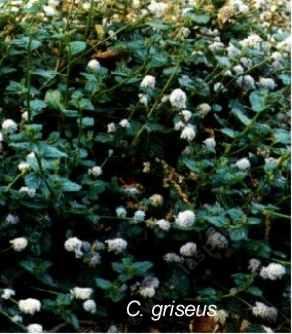
Carmel Ceanothus is a small tree or large shrub, growing 3 to 6 ft tall. It likes full sun. It will grow in sand or clay. It has light blue flowers.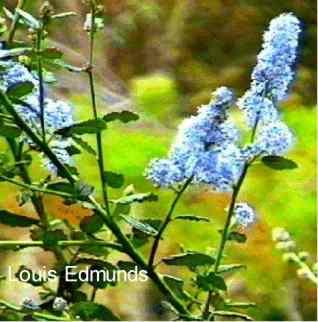
Ceanothus griseus, Louis Edmunds, Carmel Mountain Lilac
Louis Edmunds Carmel Mountain Lilac grows 3 to 6 ft tall. Deer love it. It likes temperatures above 20 deg F. It grows well along the coast. It does well in sand as well as clay, it has blue flowers. We've not grown this for quite awhile.Ceanothus griseus horizontalis, Yankee Point, Carmel Mountain Lilac
Yankee point makes a great fast growing groundcover. It has shiny leaves and blue flowers. It is not cold tolerant. It grows well under seaside conditions. It will grow well in sand or clay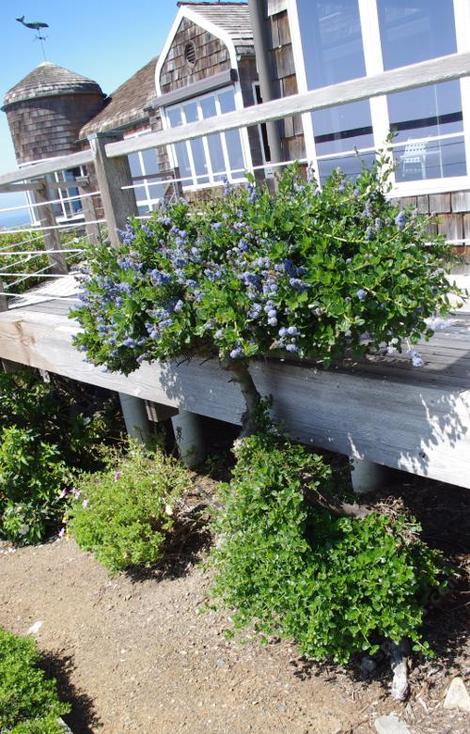
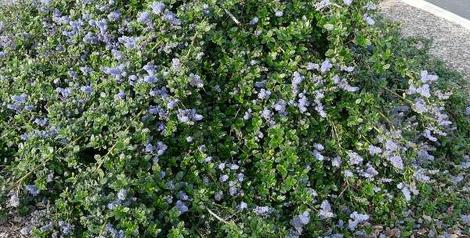
Ceanothus hearstiorum, Hearst Lilac
This is a very low growing Ceanothus only reaching 2 to 3 in inches tall. It does well along the coast. It is fairly drought tolerant. It will do OK in the interior of California with a little simulated fog drip and part shade. It has blue flowers. It likes clay soil.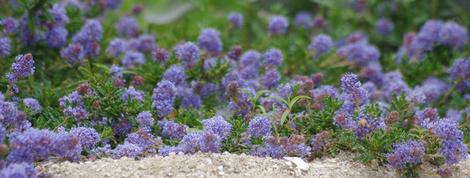
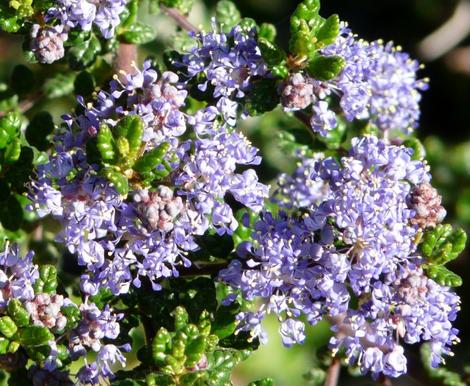
Ceanothus impressus impressus, Santa Barbara Mountain Lilac
grows 3 to 8 ft tall. It does well in sand, will tolerant clay loam. It has tiny crinkly leaves and blue flowers.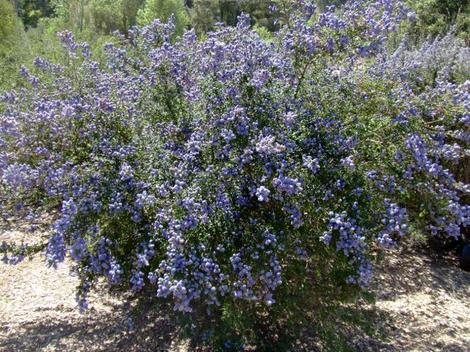
Ceanothus impressus nipomoensis, Arroyo Grande Lilac
Arroyo Grande Lilac grows 3 to 6 ft tall. It likes sandy soil. It likes a little shade in the interior and full sun along the coast. It has red-blue flowers.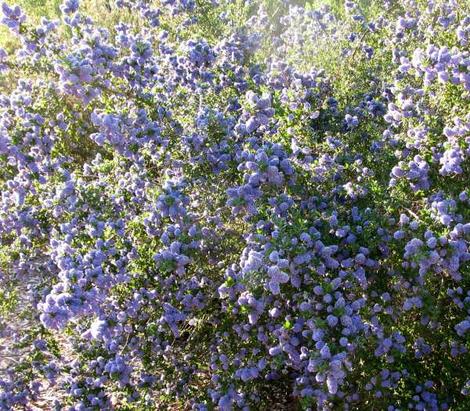
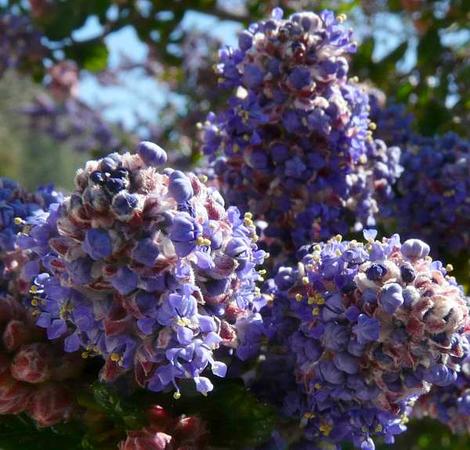
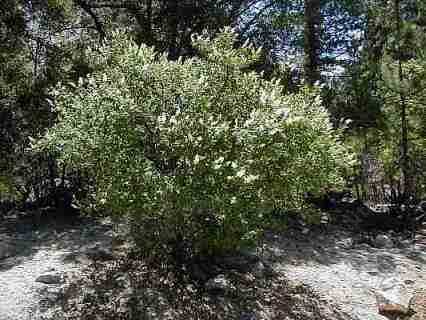
Ceanothus integerrimus, Deer Brush
Deer brush grows 3 to 6 ft tall. It likes full sun along the coast and part shade in the interior. It has white flowers. It likes clay or sand.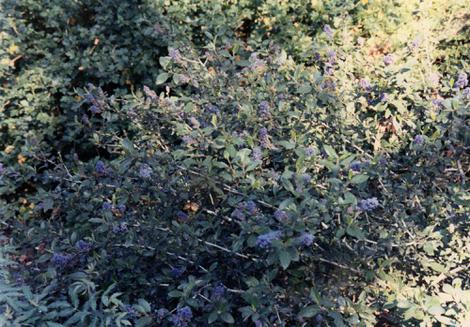
Ceanothus
maritimus,
Maritime
Lilac
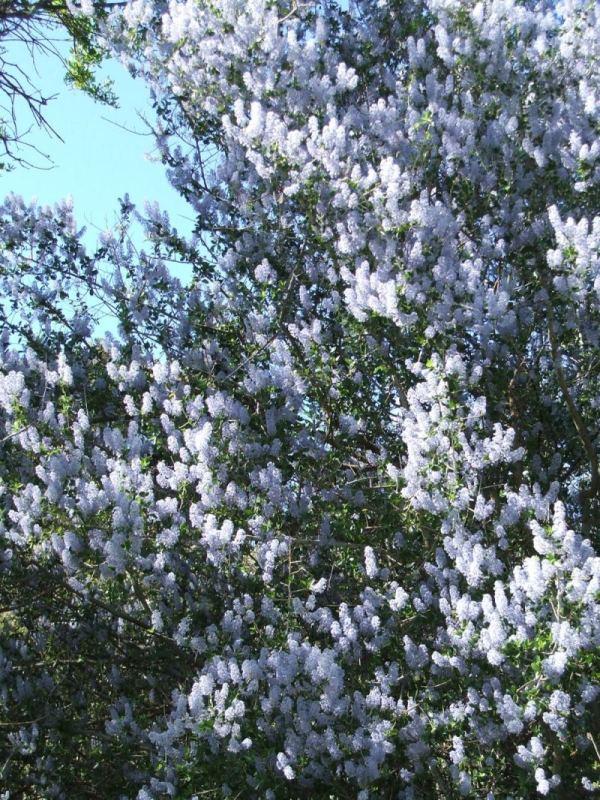
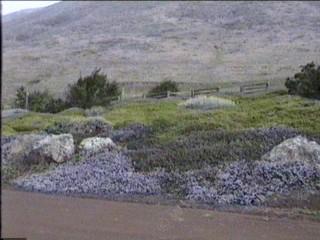
Maritime mountain lilac grows only few
inches tall. It is native along the bluffs and therefore is quite
at
home under seaside conditions. However it also requires the fog
drip
and mild climates of coastal areas. It has tiny little succulent
leaves
and blue flowers.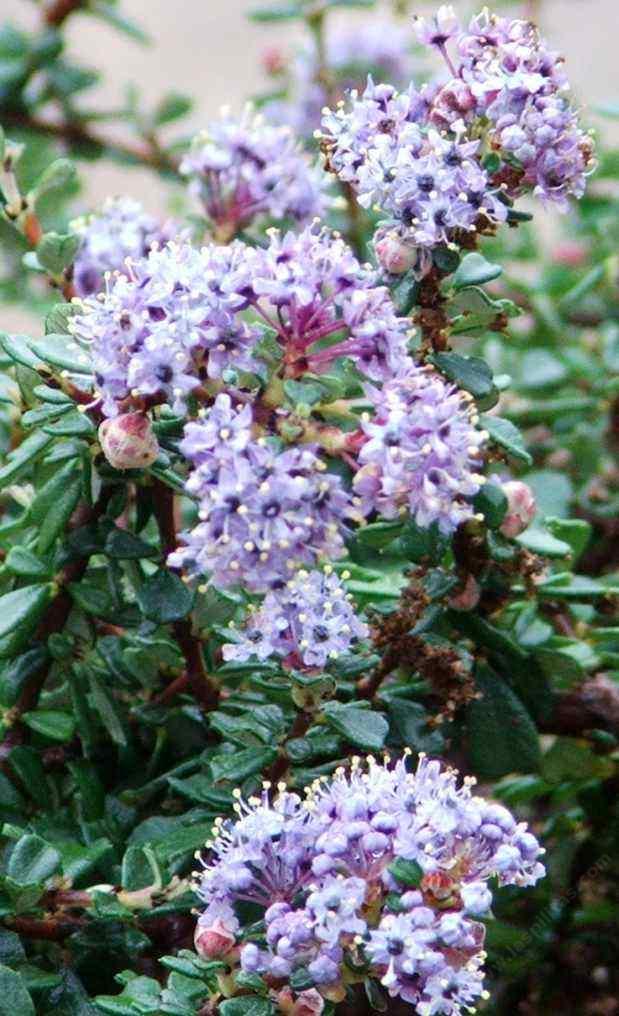
Ceanothus papillosus, Wart Stem Mountain Lilac
Wart-stem Ceanothus grows 3 to 9 ft tall. It likes clay and serpentine soils. It has blue flowers. It likes more moisture and con often be found near seasonal creaks.Ceanothus purpureus, Hollyleaf Ceanothus
Hollyleaf Ceanothus has blue flowers and holly leaves. It grows 3 to 6 ft tall and will grow in clay or serpentine. Deer don't like it much.
Ceanothus oliganthus oliganthus, Hairy-Leaf Ceanothus
Hairy-Leaf Ceanothus is a tall Ceanothus reaching 6 to18 ft tall. It is found along the coast of southern California. It likes sand and full sun.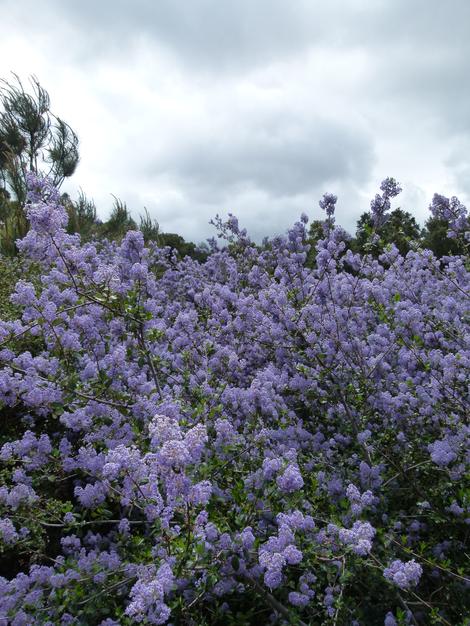
Ceanothus ramulosus fascicularis, Coastal Buckbrush
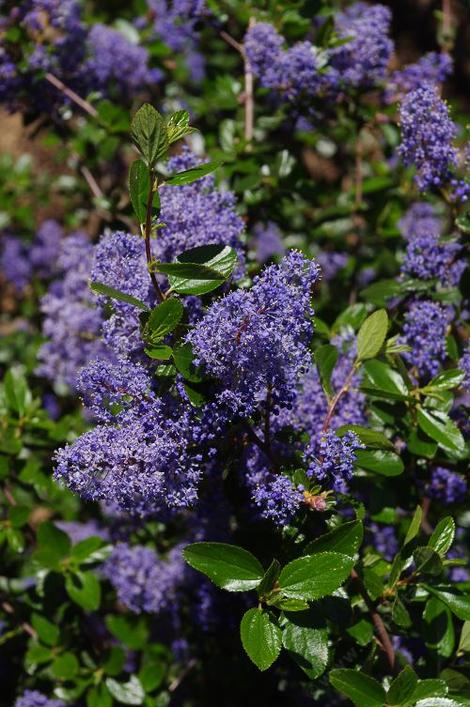
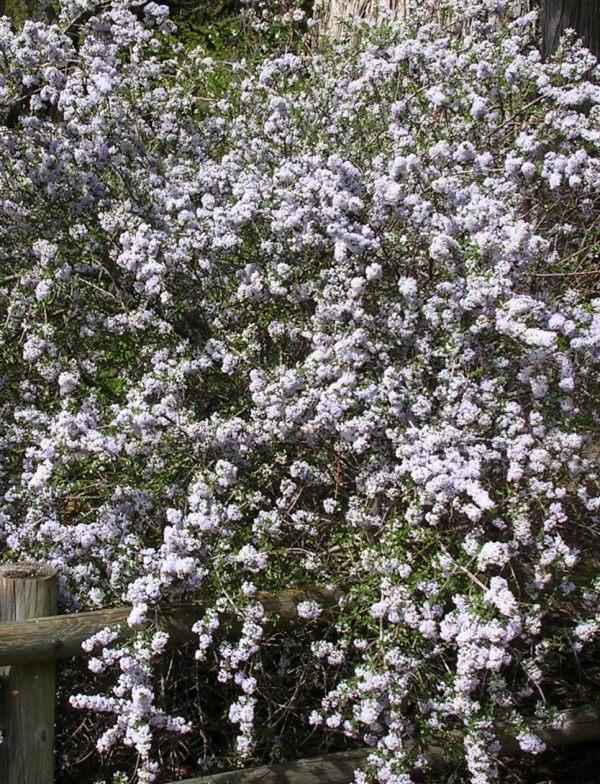
Coastal Buckbrush grows 3 to 9 ft tall. It likes full sun. in can tolerate salt spray and it likes sandy soil. Deer don't like it much if it is in its native range.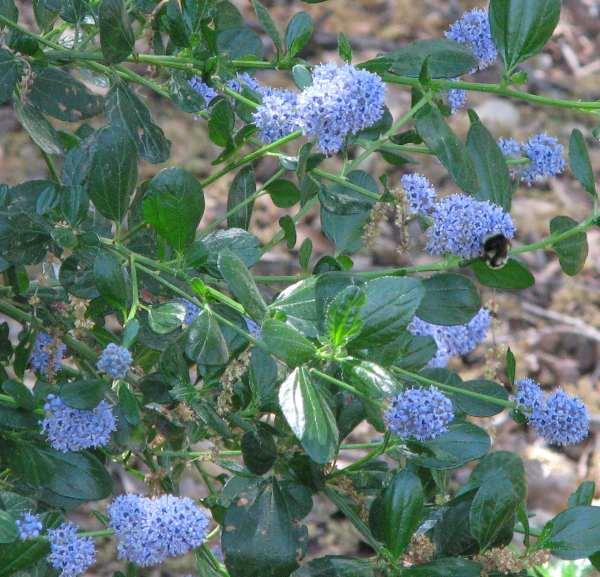
Ceanothus thyrsiflorus, Blue Blossom mountain lilac
It is happiest in northern California. However, its range does go into Central California as far south as Gaviota Pass. It likes part sun or full sun.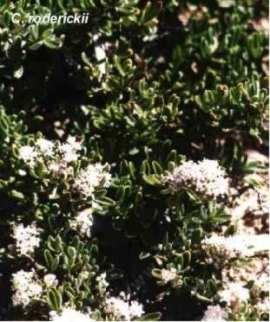
Ceanothus roderickii, Pine Hill Ceanothus
Pine Hill Ceanothus grows only a few inches tall. It has fat little leaves tightly packed together and white flowers. We grew it for years but it finally succumbed to our wonderful climate.
Southern California Mountain Lilacs
California Mountain Lilacs
To learn more about Ceanothus flowering time check out our table of the flowering times for Ceanothus.
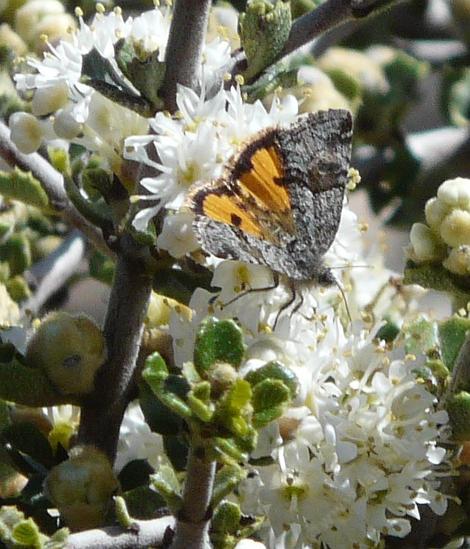
Ceanothus rigidus, Snowball
Snow ball is a low growing mountain Lilac reaching only 2 or 3 ft tall. It has white flowers and small holly leaves. Deer don't like it much.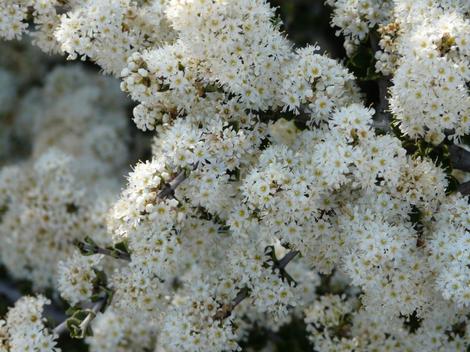
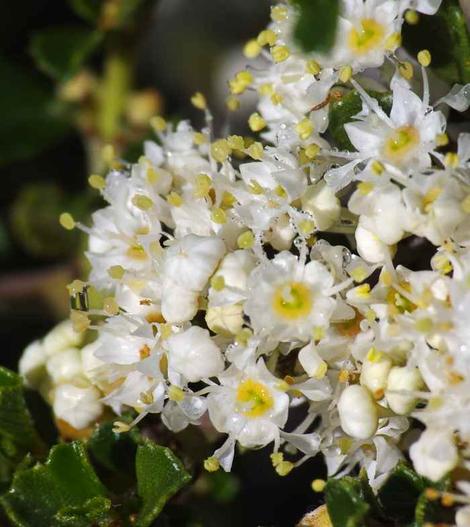
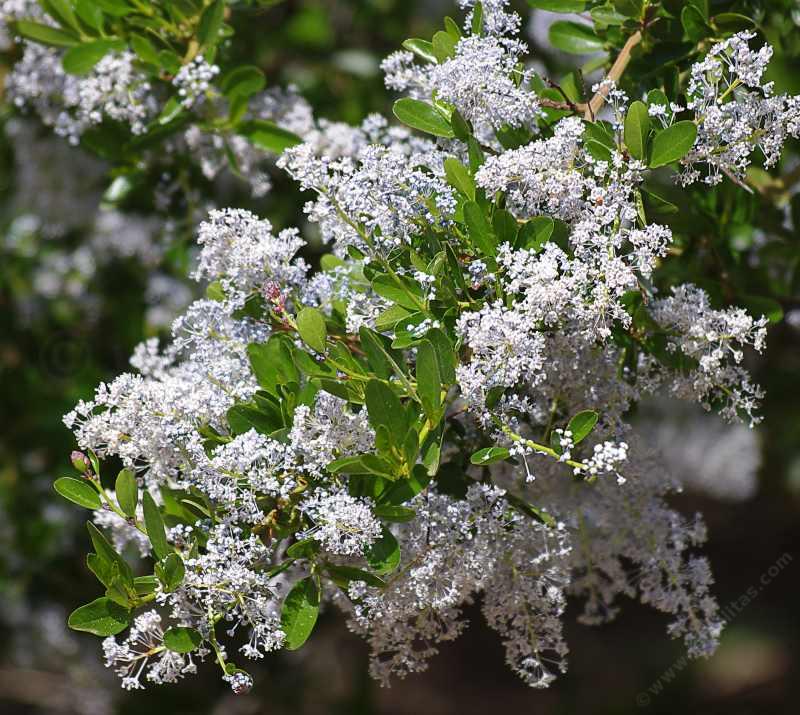
Ceanothus spinosus, Red-Heart Mountain Lilac
Red-Heart Mountain Lilac is found along the coast ranges from San Luis Obispo county south into southern California. It has light blue flowers and smooth shiny bright green leaves. It grows from 6 to 12 ft tall. It doesn't like garden condition.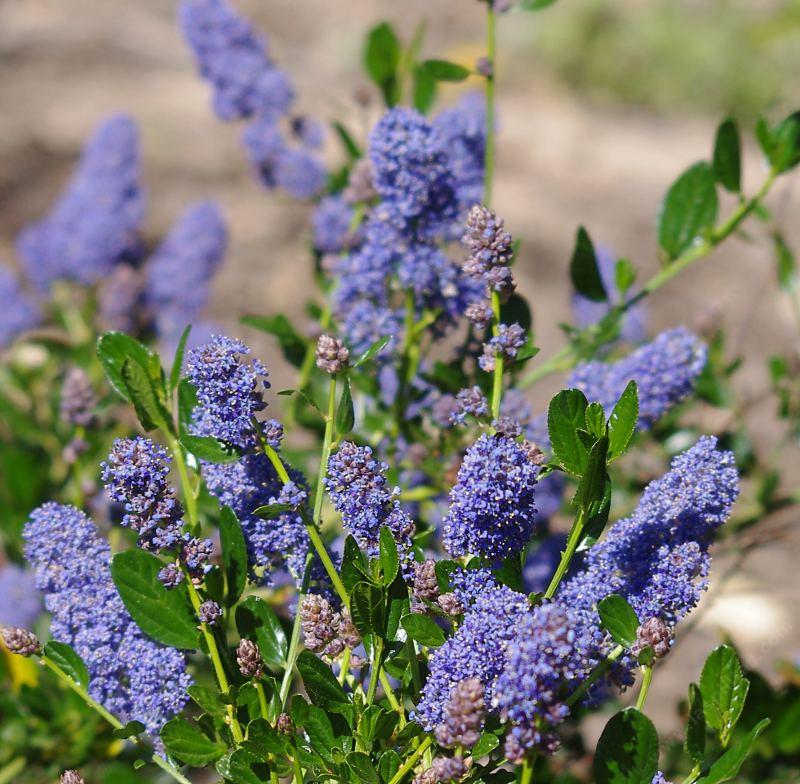
Ceanothus thyrsiflorus, Skylark Blue Mountain Lilac
Skylark has dark green shiny leaves and blue flowers. It grows from 3 to 6 ft tall. It will grow in clay and can tolerate deer browsing.Ceanothus thyrsiflorus repens, Low Blue Blossom
Low blue blossom grows only to 3 ft at the most and 3 to 9 ft wide. It makes an excellent ground cover. It grows well in sand or clay. It will grow in full sun along the coast and part shade inland. It has blue flowers.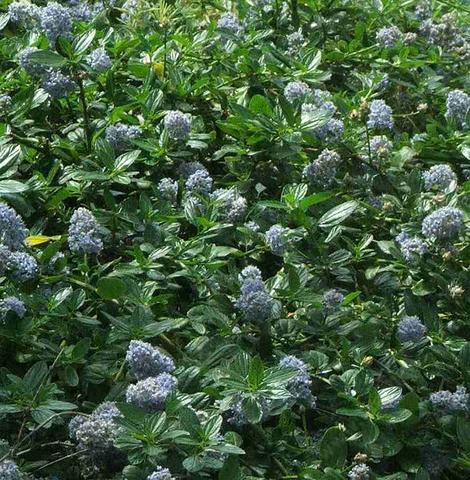
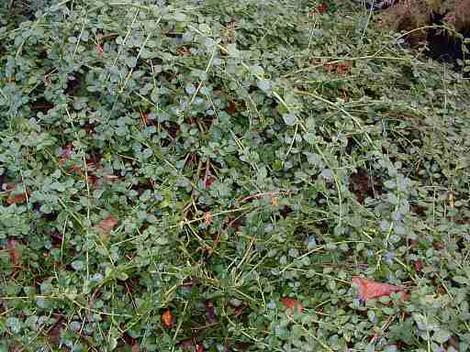

Ceanothus thyrsiflorus, Snow Flurry, White Flowered Mountain Lilac
Snow flurry grows 3 to 9 ft tall. It has huge white flower clusters and large juicy green leaves. It will grow in clay. It doesn't like cold temps. It would prefer temperatures above 20 deg F.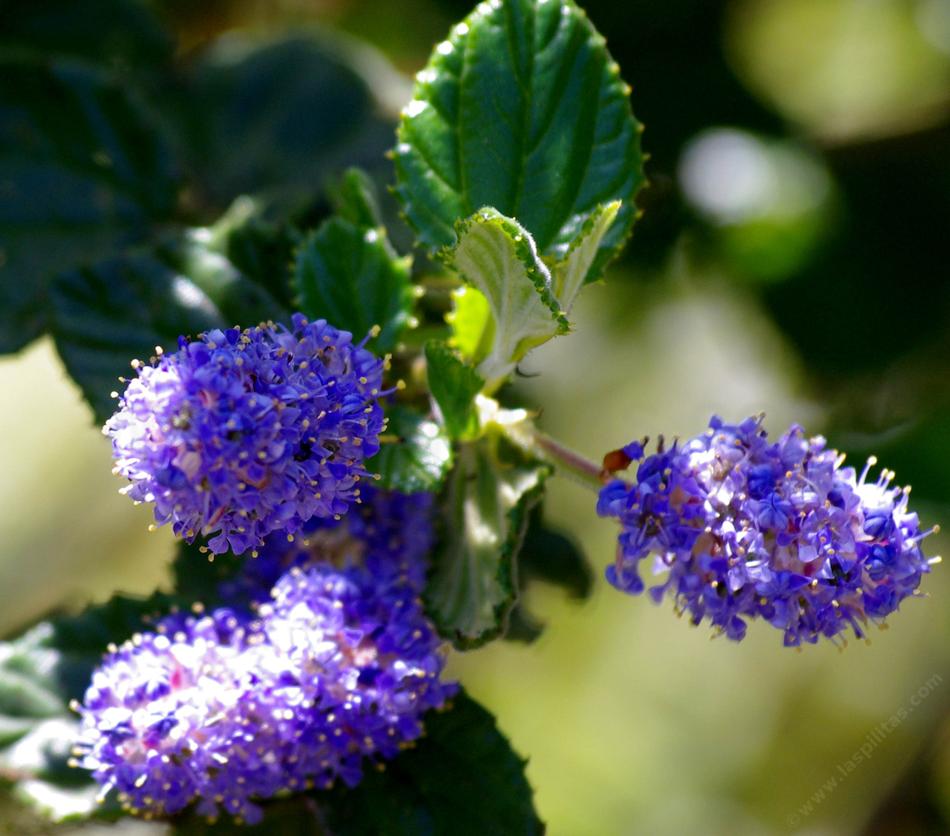
Ceanothus tomentosus, Woolly Leaf Mountain Lilac
Woolly Leaf Mountain Lilac grows 3 to 6 ft tall. It likes clay soil. It grows well in full sun along the coast and part shade inland. It is very drought tolerant.