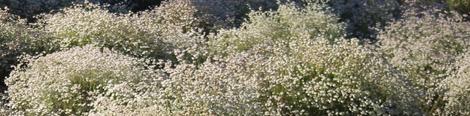
California Buckwheat
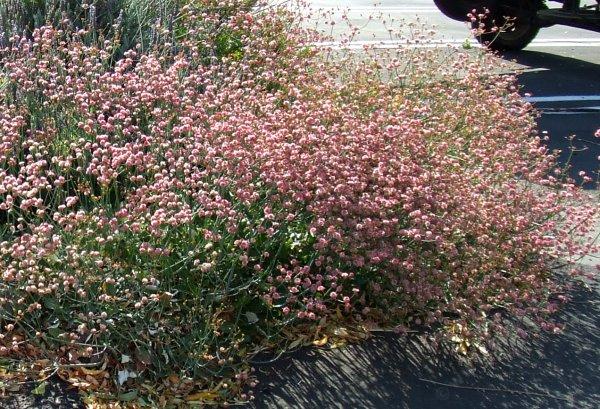
California Buckwheat plants.
Here are some of the native buckwheats, there are a number of other perennial buckwheats and a whole lot of annual buckwheats not included. Native Buckwheats work in a native garden as babies breath does in a floral arrangement. They are some of the most popular nectar sources for butterflies and great nectaries for many of the insect predators. Blue and hairstreak butterflies especially like buckwheats and many of these species suffer from dwindling habitat. Buckwheat flowers seem to last forever, turning a chocolate color in the fall. They are very drought tolerant and can tolerate many arid environments as well as coastal salt spray. (some coastal species).We commonly plant buckwheats with sages and Woolly Blue Curls. Also they work great with boulders, are stunning next to brickwork. They often create the look that people think they want when they plant grasses. Grasses generally look bad for most of the year. Buckwheats look good for most of the year and have a similar texture or wild look that grasses are planted for.
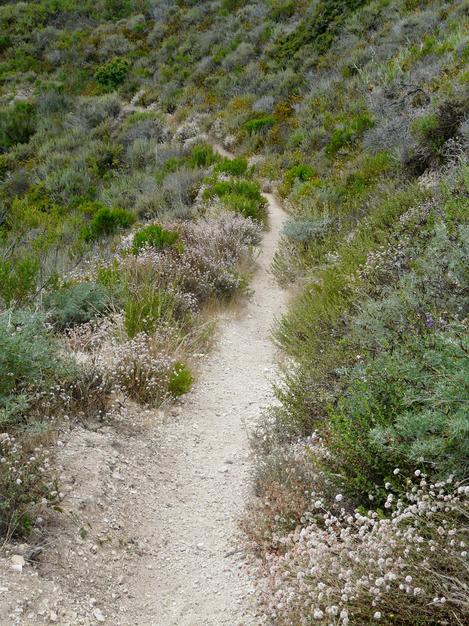
A walk through Coastal Buckwheat, Eriogonum
parvifolium, Cliff Buckwheat .
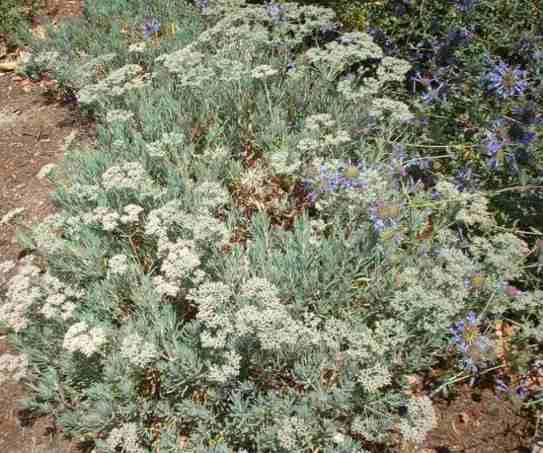
Eriogonum
arborescens, Santa Cruz Island
Buckwheat has little pink flower cluster that turn chocolate in winter.
It forms a tidy bush with erect foliage and sprawling branches. It can
tolerate seaside conditions as well as the hot and dry climate of the
interior. Santa Cruz island buckwheat is very drought tolerant. This plant is
very popular with hairstreak and blue butterflies.
A short video about Eriogonum
arborescens, Santa Cruz Island
Buckwheat
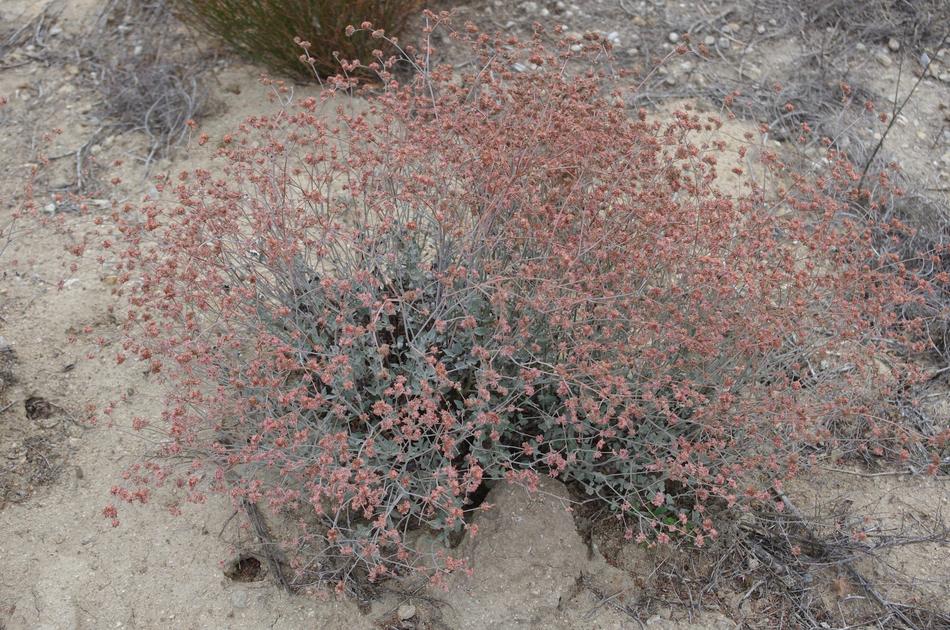
Eriogonum
cinereum, Ashly Leaf Buckwheat is a coastal buckwheat with gray foliage. It can tolerate seaside conditions.
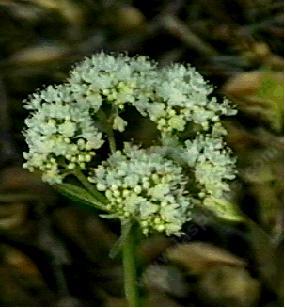
Eriogonum
compositum, Northern Buckwheat is a little perennial with green
foliage and butter yellow flowers.
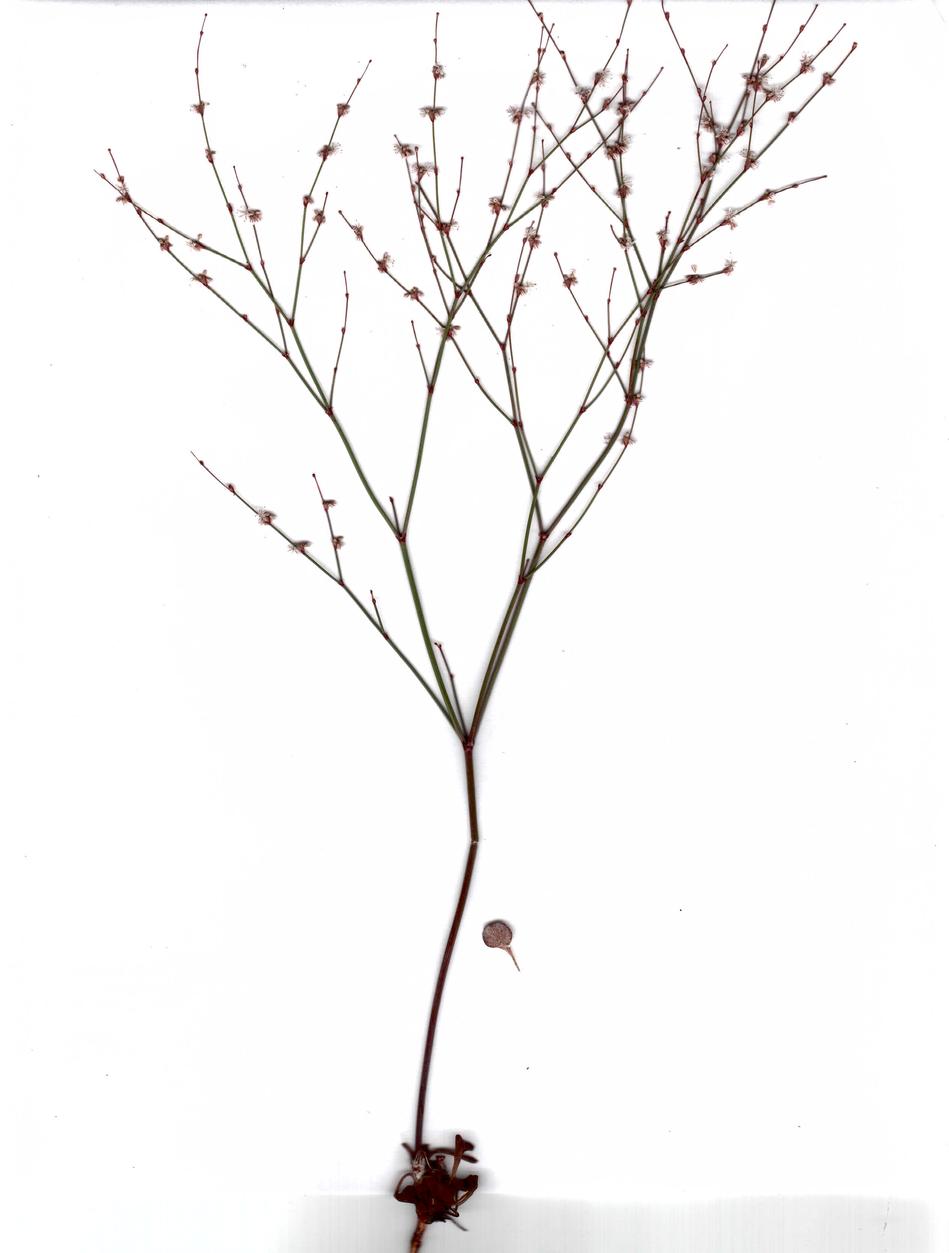
Eriogonum covilleanum, Coville's buckwheat is an annual buckwheat we collected on one of our Biological surveys in Paso Robles.
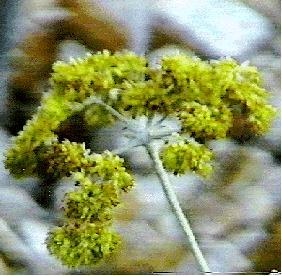
Eriogonum
crocatum, Saffron Buckwheat is a fuzzy gray perennial with
yellow flowers. Rather touchy.
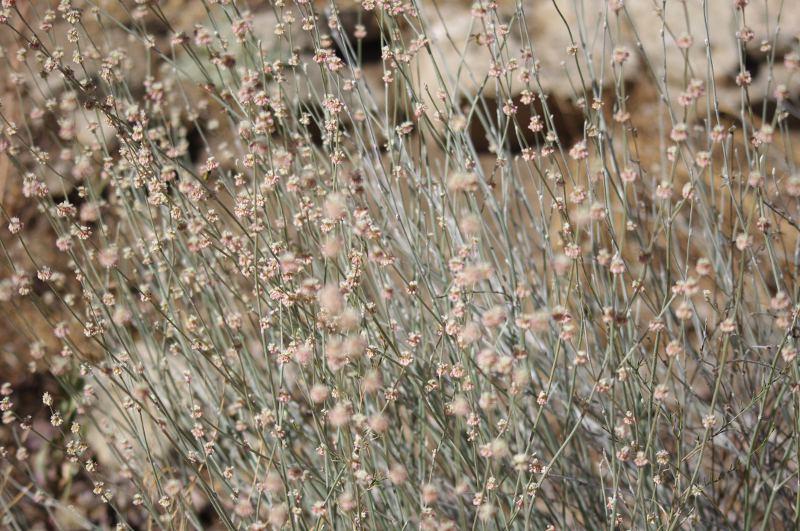
Eriogonum
elongatum, Longstem Buckwheat has long slender gray flower
stalks with small delicate pink flowers. It is very drought tolerant.
In mass they are like a shimmering sea of life.
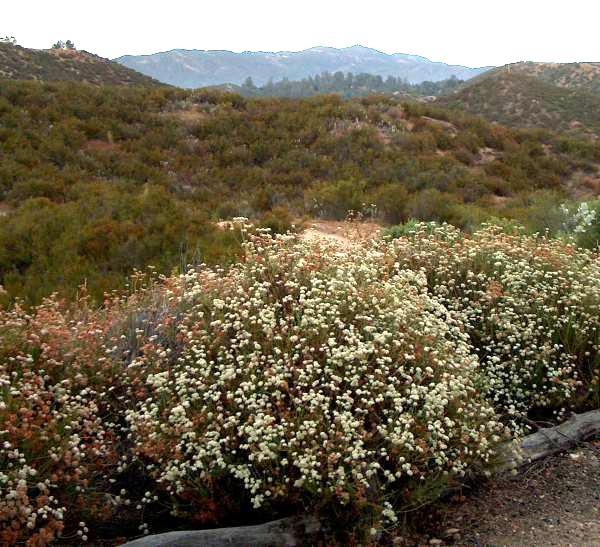
Eriogonum
fasciculatum foliolosum,
California Buckwheat
is very drought tolerant. The buds are pinkish
and turn white
when they open. They cluster in tight little balls on long stalks and
turn a chocolate brown in the fall. It has green foliage.
Coppers blues and hair streak butterflies use it for nectar.
Coppers blues and hair streak butterflies use it for nectar.
Eriogonum
fasciculatum foliolosum,
California Buckwheat grows in the chaparral in very dry hot
conditions where many
little animals and birds use it for cover.
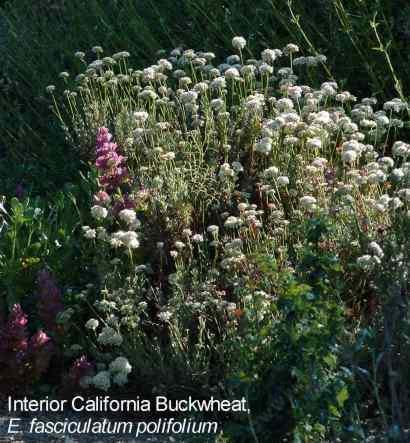
Eriogonum
fasciculatum polifolium, Interior California Buckwheat
is similar to regular California buckwheat but it is more drought
tolerant and has grayer foliage. In the photo here it is mixed with
Salvia pachyphylla and other desert species and is quite happy.
A short video of Eriogonum fasciculatum polifolium, Interior California Buckwheat.
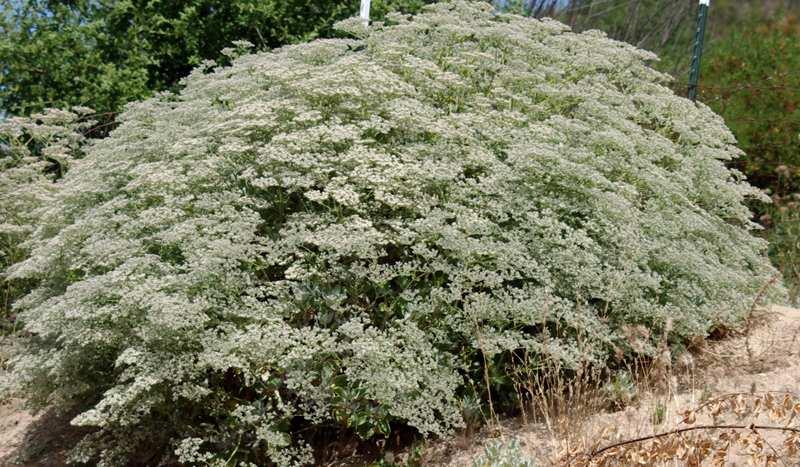
Eriogonum
giganteum, St. Catherine's Lace
is California's largest buckwheat, in flower at
least. It has huge
flower clusters often more than a foot wide. It has large gray foliage
and grows about three foot tall and three foot high. Although it is at
home in coastal conditions it also does fine in California's hot dry
interior valleys. It is very drought tolerant.
A small movie about Eriogonum giganteum, Giant Buckwheat
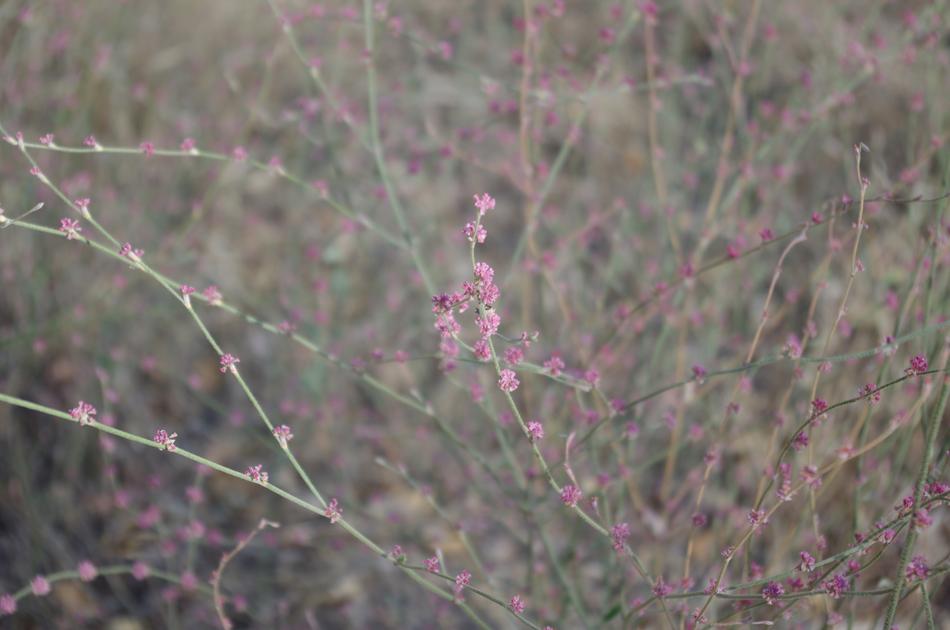
Eriogonum
gracile, Wild Buckwheat is a reddish delicate annual.
Eriogonum
grande rubescens, Red Buckwheat
is
found on the islands. It can tolerate coastal conditions. However, it
also does well in the interior of California only needing part shade to
survive the hot dry summers. It has nice round leaves and very pink
flowers. It looks great in a rock wall. It is smaller and more delicate
than many of the other buckwheat, only growing about a foot tall.

Eriogonum
heermannii, Heermanns Buckwheat is a 2-3 ft. buckwheat that
lives on serpentine based soils.
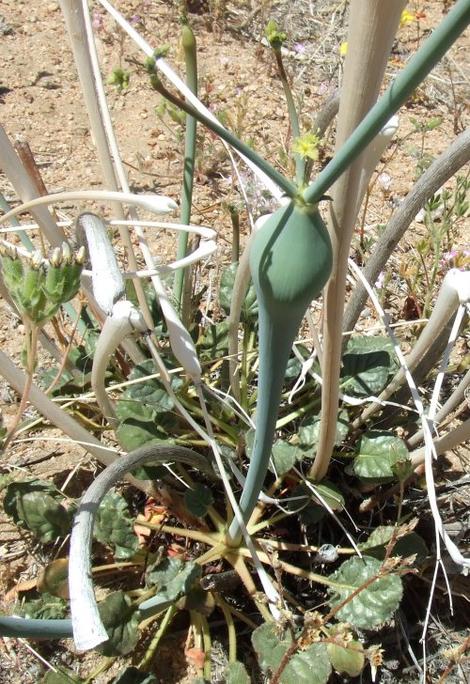
Eriogonum
inflatum, Desert Trumpet
is a rather weird plant from the desert. The part that you'll notice is
the stem, not the flower or leaves.
A short video about Eriogonum inflatum, Desert Trumpet.
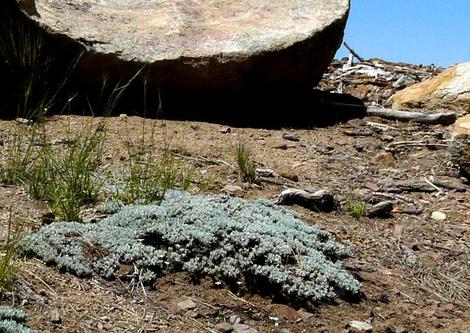
Eriogonum
kennedyi, Kennedy's buckwheat is a flat little perennial that
has delicate pick flowers. You'll find it high up in the mountains like
on top of Mt. Pinos.
A short video about Eriogonum kennedyi, Kennedy's buckwheat.
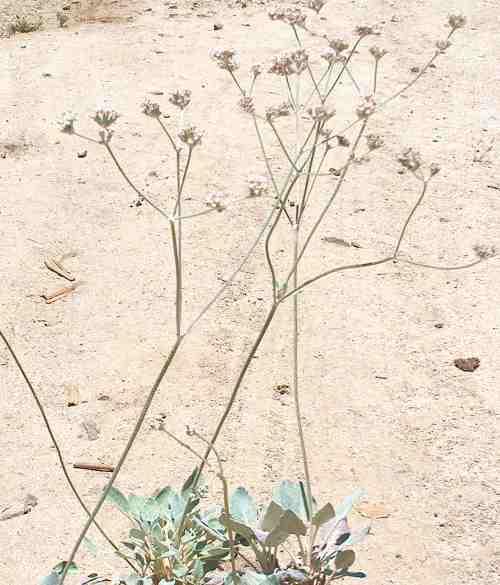
Eriogonum
latifolium, Coast Buckwheat
This
coastal buckwheat has tall open flower stalks and gray basal leaves. It
is similar to Eriogonum grande
rubescens but opener and grayer
with white flowers.
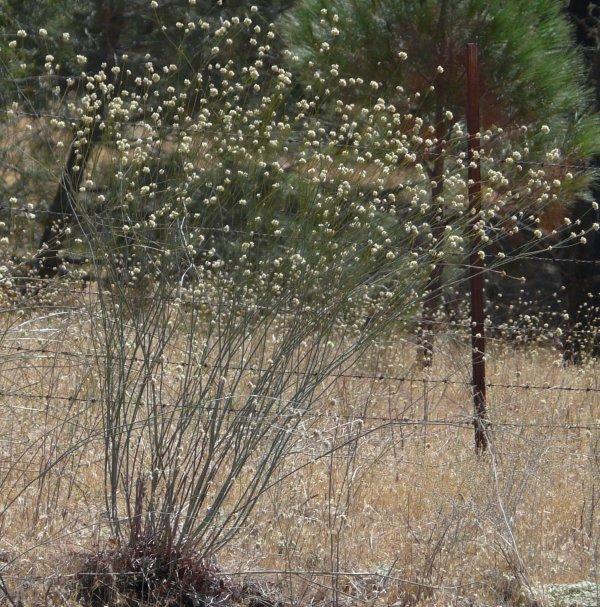
Eriogonium
nudum var. pubiflorum, Naked Buckwheat
can grow very large from a little plant base. Naked Buckwheat
can't compete with weeds, so you'll find it outside of the fence line
along road cuts throughout much of California.
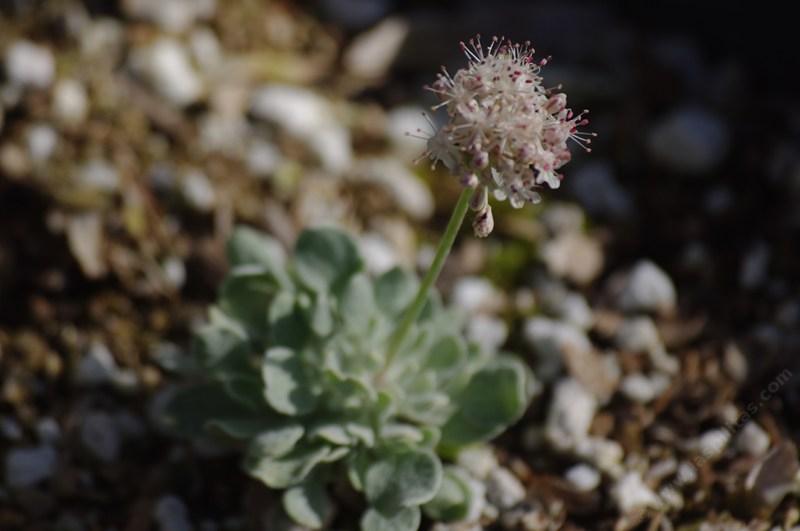
Eriogonum
ovalifolium, Cushion Buckwheat is mostly here to show the
diversity of buckwheats. It grows about 2 cm(inch) across and 1-2 cm
high, and it's a perennial.
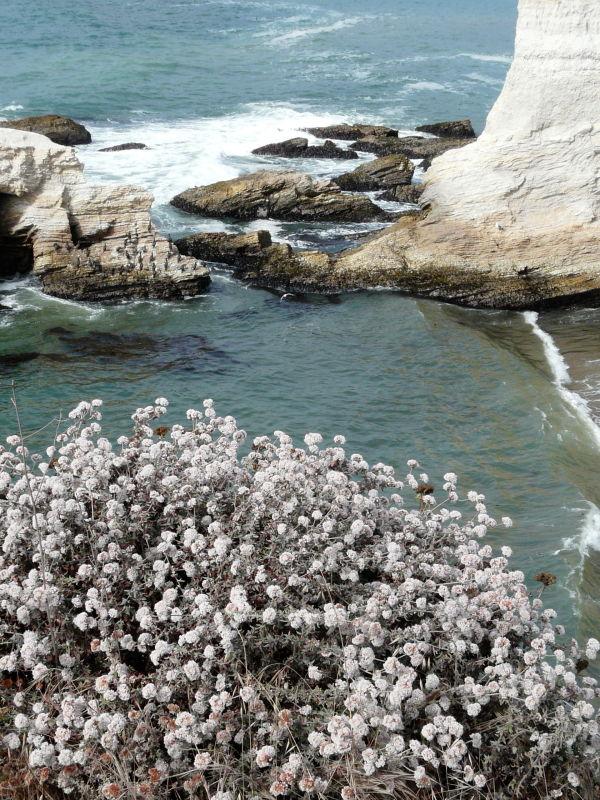
Eriogonum
parvifolium, Cliff Buckwheat is
bushy coastal buckwheat that does well under seaside conditions. Cliff
Buckwheat has pinkish flowers and gray foliage. It also does well in
clay and in hotter areas.

Eriogonum roseum, Wand buckwheat is an annual buckwheat that is native all over the Santa margarita property.
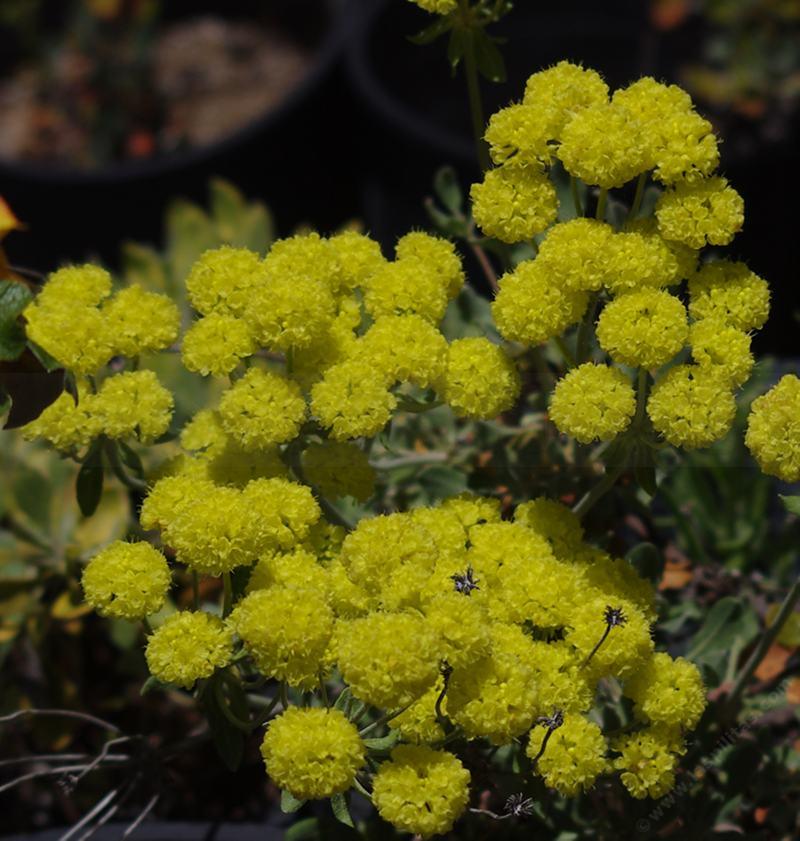
Eriogonum
umbellatum chlorothamnus, Shrub
Sulphur Buckwheat
Shrub
Sulphur Buckwheat is similar to Eriogonum
umbellatum But it grows 1 to 3 ft
tall. It also does well at high elevations. It has grayer foliage than
the other two subspecies here. It like good drainage.
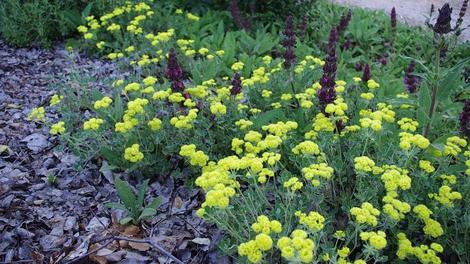
Buckwheat plants are beautiful!
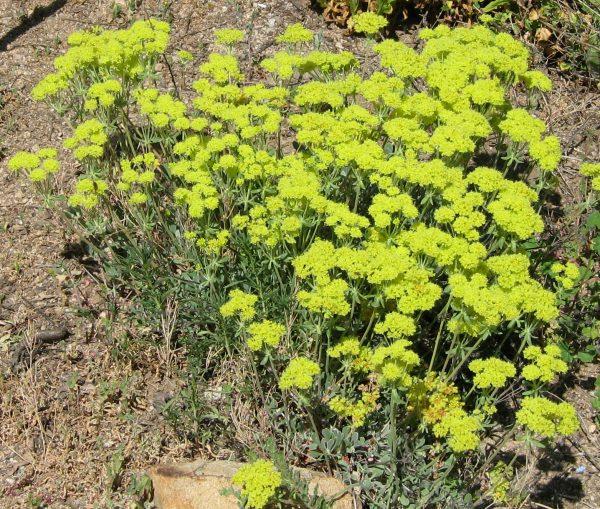
Eriogonum
umbellatum, Sulfur Flower
is
very
low growing, only a few inches tall, and very yellow. It grows at high
elevations, over 4000 ft, and likes good drainage. It does well in the
Santa Margarita nursery garden in decomposed granite and 110 deg.
summers.
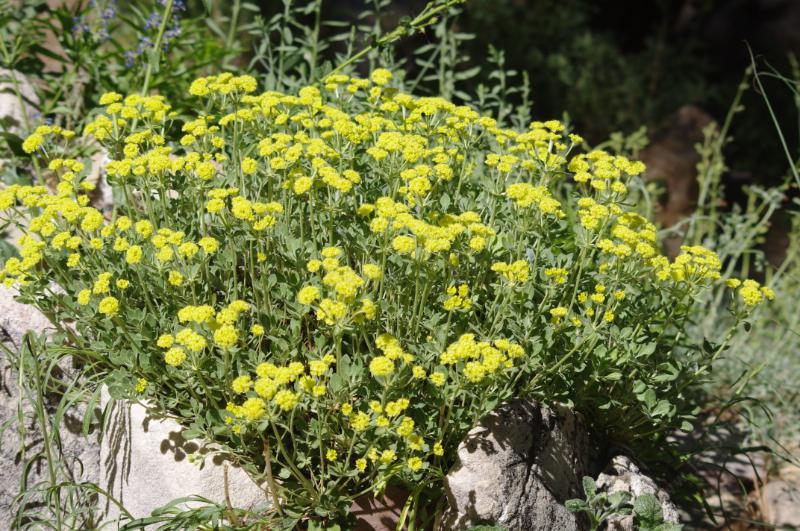
Eriogonum
umbellatum polyanthum, Shasta
Buckwheat is a very tidy, low growing buckwheat, with bright
yellow
sulfur colored flowers. It likes good drainage and can't tolerate clay.
It is fairly hardy and can tolerate our hot dry summers.
A short video about Eriogonum umbellatum polyanthum, Shasta Buckwheat (or Sulfur Buckwheat). and Salvia spathacea, Hummingbird Sage
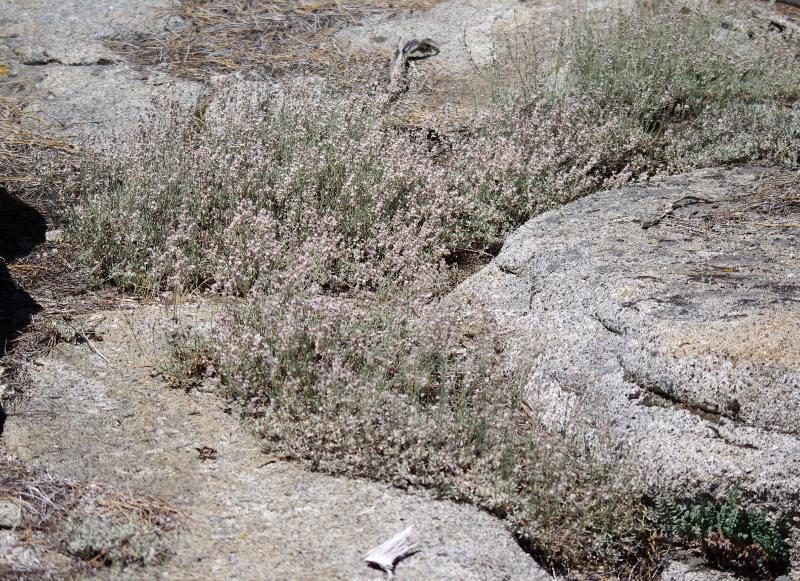
Eriogonum
wrightii subscaposum, Wright's Buckwheat is a tufted little mound
of gray that has a fireworks of pinkish white flowers in summer.
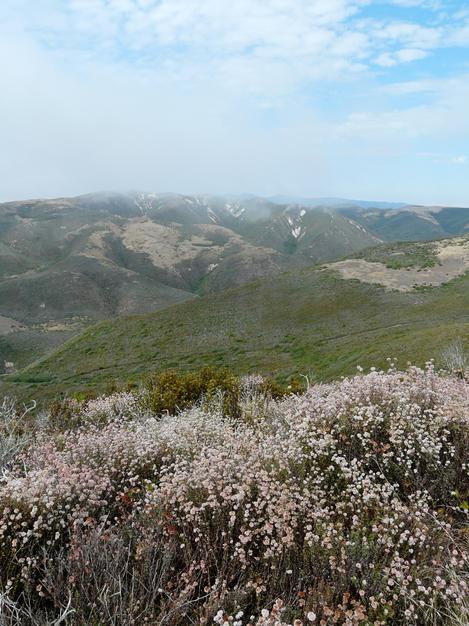
Mother nature is wonderful. Why people do not want to copy it is beyond me. Cliff buckwheat above Los Osos.
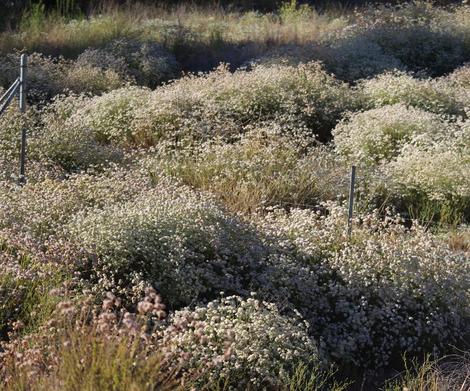
Vast areas of California used to have Buckwheat covering the ground.