How to build a cheap bird house
Some birds are cavity nesters and will use a house that you build. Some birds need bushes and trees (native to your state), others nest on the ground. All do not tolerate weeds. Yes, leave the weeds and you'll have less birds, more rodents. You can build all sorts of fancy birdhouses, or nest boxes, but the birds really do not care for fancy, they prefer simple, natural, and rough nests. They nest in holes in trees remember? Wild birds do not hire a wild land Realtor. When you start looking around there's all sorts of junk wood laying about. 1X6 cedar or redwood are probably best, but we've used 1/2 or thicker exterior plywood, OBS and pine before. The wood needs to be old and rough. Smooth particle board, metal, or plastic are not good. No paint, natural. The dimensions do not have to be perfect. Close is usually good enough. So if you do not have anything but a screw driver and hand saw look for wood that is close to the right thickness and width to start. A box that is an inch too big or small will still probably be used, if the hole is the right size and the right distance from the bottom. Placement of the boxes matter, put the boxes where birds want to be. Put the bird house along the edge of the the woods, on a fence, house or tree facing an open area with the hole pointing away from spring winds. This is usually south.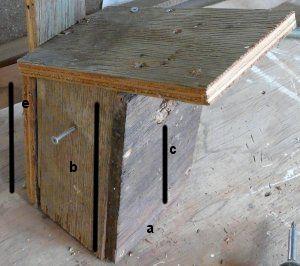
A picture showing the dimensions.
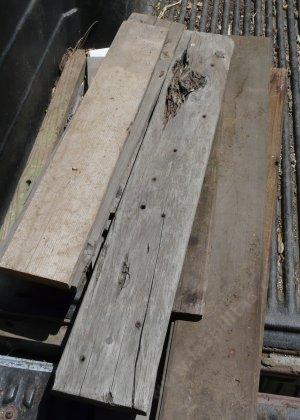
Junk wood that you 'found' laying around your yard or a vacant lot works fine. 1x6 cedar or redwood is preffered, but plywood or pine also work fine
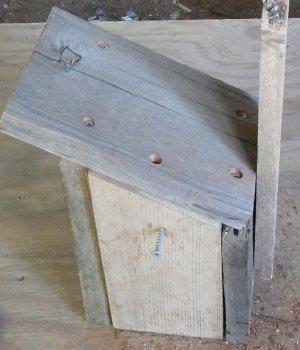
A completed bird house.
The roof slope can be forward or backward according to the box size.
The hole over the side that opens is to hold the door closed. It doesn't have to be screwed in all the way, just enough to hold the birds in, varmints out.
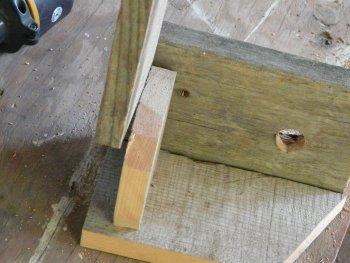
The hinged side of incomplete bird house open, this is why bottom, is not bottom
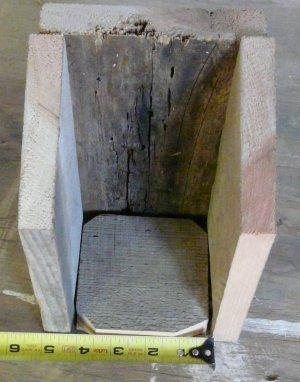
Inside bottom, a on dimensions list.
The bottom has a couple of tricks. Notch the corners so there is some ventilation. The bottom is actually not at the 'bottom' but up about 1/2 inch so that the side can hinge. I found it is easier to put the sides on first, then put the bottom on.
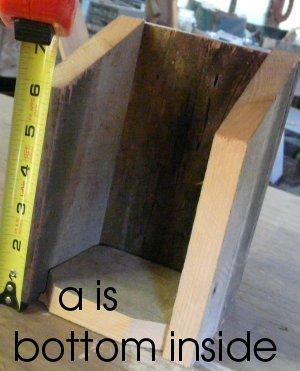
A side view with the bottom exposed, notice gaps for ventilation.
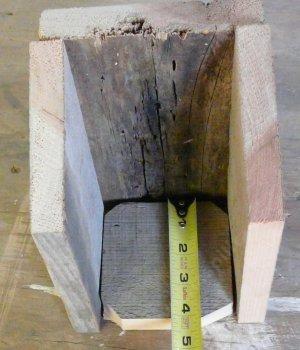
Remember the vent notches, no cooked bird please.
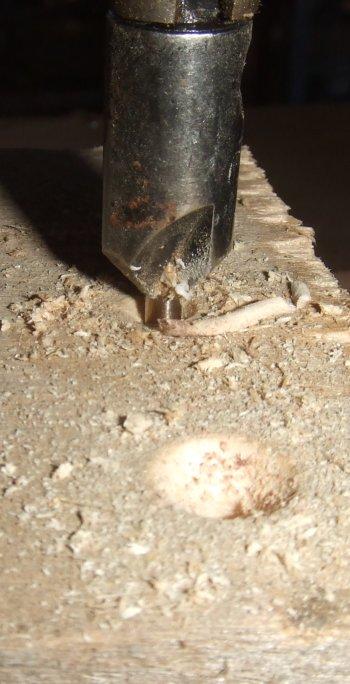
The counter sink bit for a drill in action. Counter sink the holes! The wood will split easily, you will have nothing but little bitty twigs. unless you counter sink and predrill the holes.
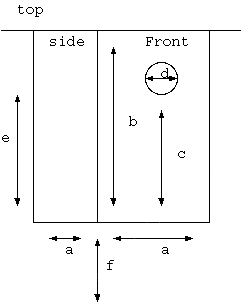
Basic birdhouse plan. Keep it simple.
The wood should be at least 1/2 inch thick, 9/6-1 inch would be better, larger wood is hard to work with, but might be used where the temperatures are below 0F or above 120F when the birds are nesting.
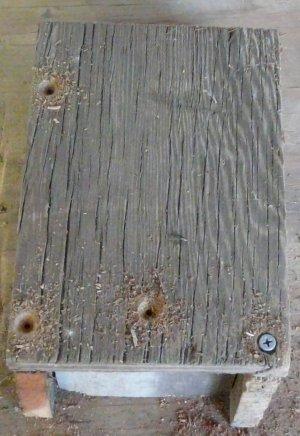
Sometimes the hinge screws can be difficult, so play attention to those and do not screw them all the way in. Leave the hinge screws a little loose or besides splitting the wood, you'll not be able to open the door.
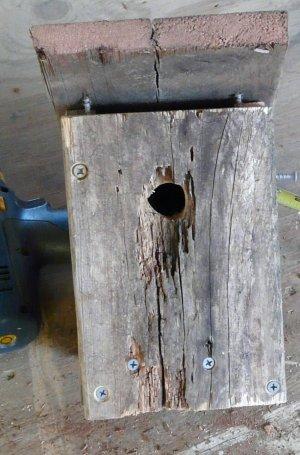
Do not get fancy with your bird house roof. It needs a little breathing roof. Do not try to jet it really close and tight.
Here are the basic sizes for nest boxes. Much of this information came from "Wildlife Management Techniques Manual", but other books and our experience are also included. A board sticking up is to attach it to the tree or post. Sometimes one of the sides is extended high and that is attached to the tree. My concerns are spring showers running into the box. attaching the board on separately keeps the house dry.
|
Bird Species |
A inches |
B inches |
C inches |
D inches |
F above ground in feet |
|
5x5 |
8 |
6 |
1 1/2 |
5-10 |
|
|
6x6 |
8 |
one open side |
6-15 |
||
|
4x4 |
8-10 |
6-8 |
1 1/8 |
6-15 |
|
|
4x4 |
8-10 |
6-8 |
1 1/4 |
6-15 |
|
|
4x4 |
8-10 |
6-8 |
1 1/4 |
12-20 |
|
|
4x4 |
6-8 |
1-6 |
1-1 1/4 |
6-10 |
|
|
4x4 |
6-8 |
1-6 |
1-1 1/4 |
6-10 |
|
|
5x5 |
6 |
1-5 |
1 1/2 |
10-15 |
|
|
Tree swallow |
5x5 |
5 |
1-5 |
1 1/2 |
10-15 |
|
Barn swallow |
6x6 |
6 |
one open side |
8-12 |
|
|
Purple martin |
6x6 |
6 |
1 |
2 1/2 |
8-12 |
|
6x6 |
6 |
one open side |
8-12 |
||
|
6x6 |
8 |
8 |
6 |
2 |
|
|
7x7 |
16-18 |
14-16 |
2 1/2 |
6-20 |
|
|
4x4 |
9-12 |
6-8 |
1 1/4 |
6-20 |
|
|
6x6 |
12-15 |
9-12 |
1 1/2 |
12-20 |
|
|
Screech owl |
8x8 |
12-15 |
9-12 |
3 |
10-30 |
|
Sparrow hawk |
8x8 |
12-15 |
9-12 |
3 |
10-30 |
|
Wood duck |
10x18 |
10-24 |
12-16 |
4 |
10-20 |
|
|
|||||
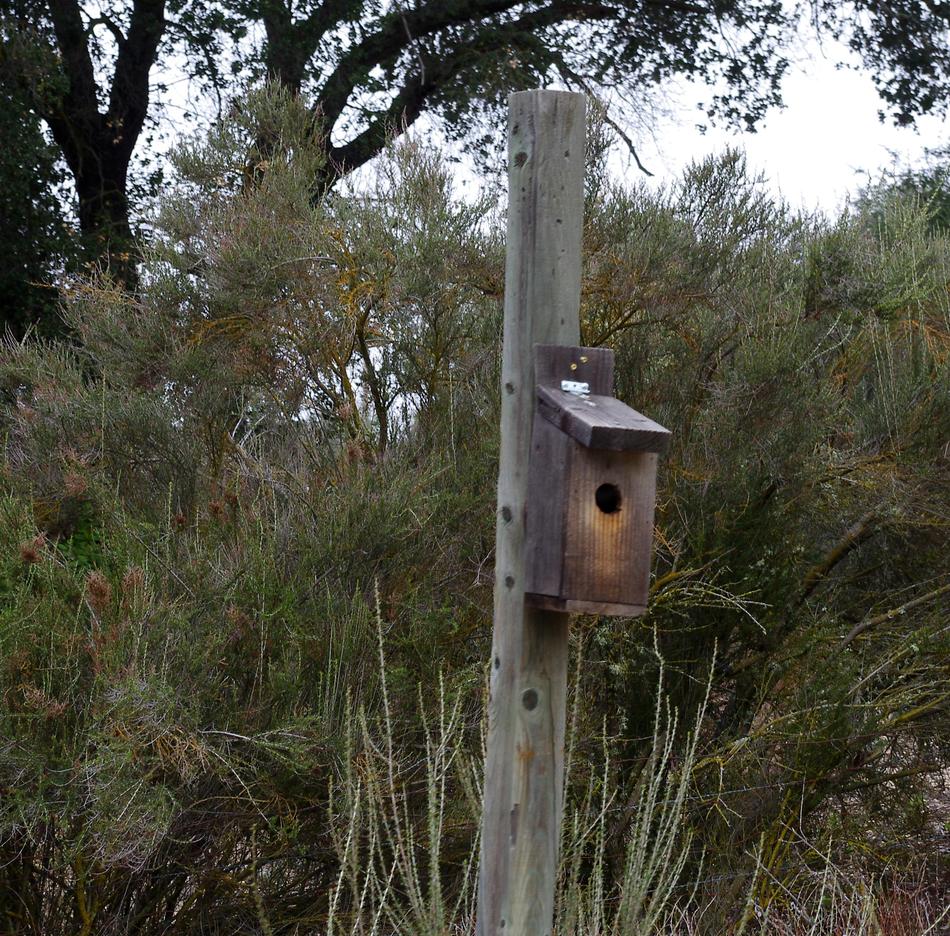
This bird house has been up for about 10 years and used every year.