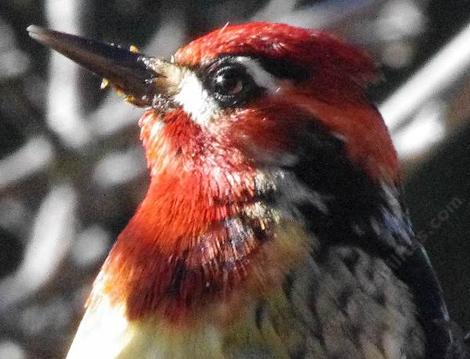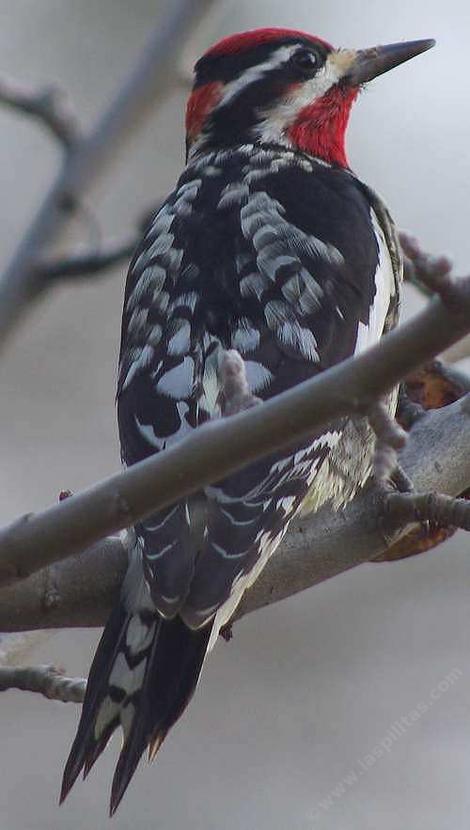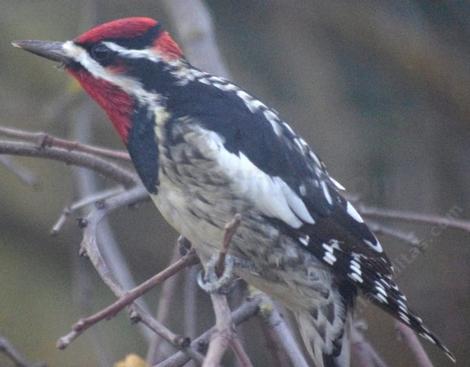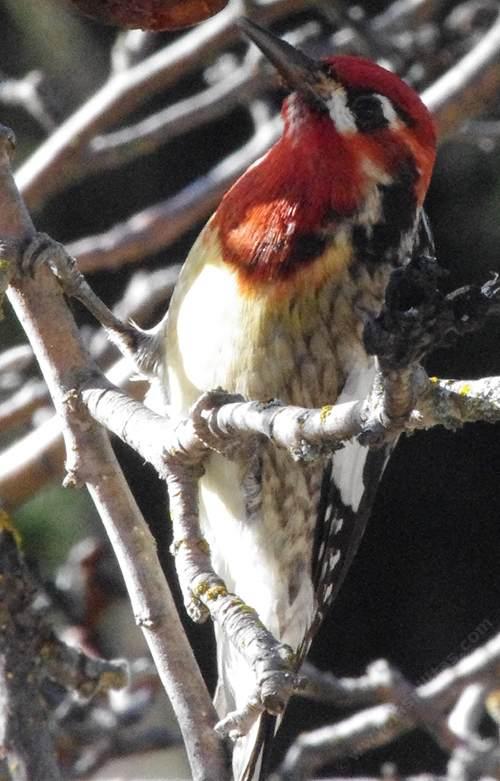
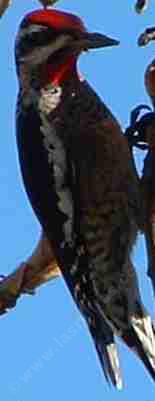
Red-naped Sapsucker, Sphyrapicus nuchalis
 Reproduction
in the Red-naped sapsucker
Reproduction
in the Red-naped sapsucker
The Red-naped sapsucker prefers to nest in almost any kind of tree but prefers riparian trees bordering forest.
Diet of the red-naped sapsuckers
The Red-naped sapsucker has a very varied diet. This includes various insects, sap, cambium, and fruits. Sap is acquired by drilling sap wells lots of little holes that the tree bleed sap out of. The sap sucker eats this sap as well as the insects that are attracted to it.
 Niche
filled by the Red-naped sapsucker
Niche
filled by the Red-naped sapsucker
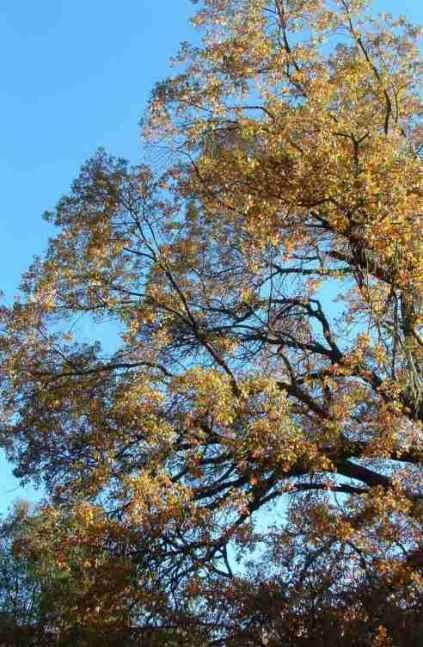
This species of sapsucker uses a wide variety of trees and is not too closely linked to one species and therefor is not as sensitive to habitat availability.
Habitat/Plant communities used by the Red-naped sapsucker
In California the Red-naped sapsucker inhabits more arid climates. In the summer it prefers riparian and coniferous forest habitats.
Creosote scrub Joshua tree woodland
Migratory status of the Red-naped sapsucker
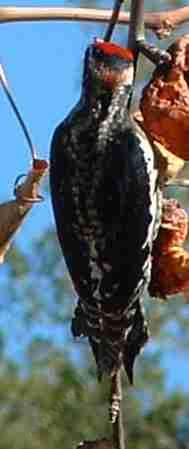 The
Red-naped sapsucker moves into the warmer desert riparian areas
of California during the winter.
The
Red-naped sapsucker moves into the warmer desert riparian areas
of California during the winter.
How to attract the Red-naped sapsucker to your garden
If you live in or near this birds rang just plant some lager native trees and this would probably be enough. Remember not to remove dead wood as it is used for nesting.
Range of the Red-naped sapsucker
The Red-naped sapsucker inhabits the Mojave and Sonoran deserts of southern California in the winter.
Learn more about California's flora from our front page.
Return to Bird page
Check out the butterflies