see also Habitats
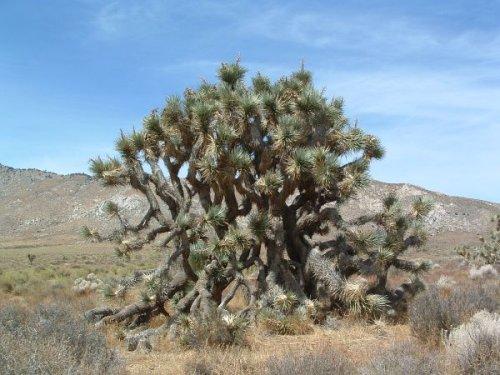
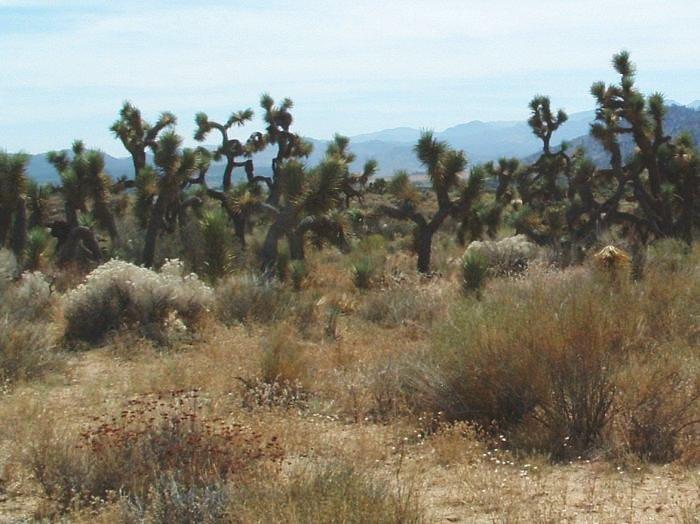
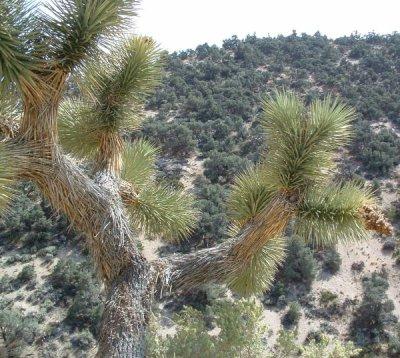
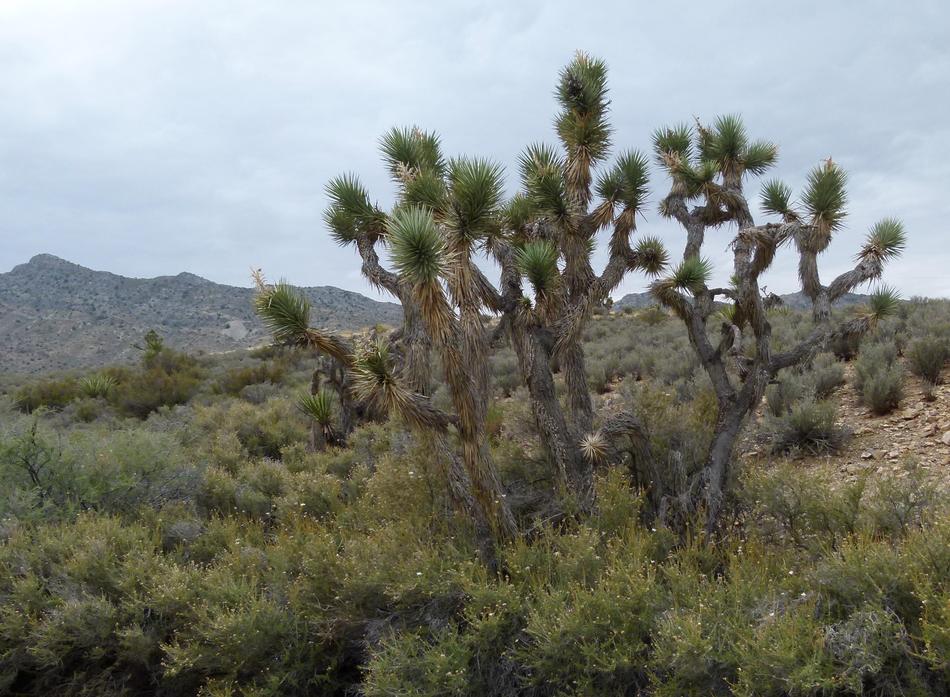
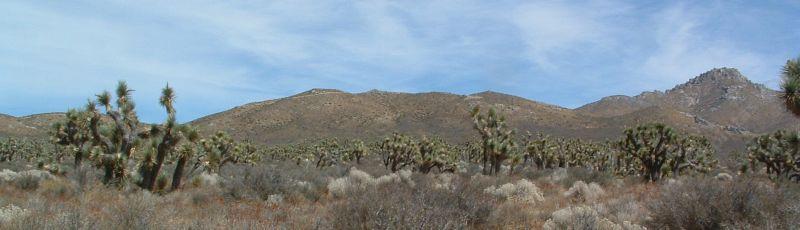
Joshua Tree Woodland.
Annual Precipitation:
5-10 inches of precipitation
Common Animals
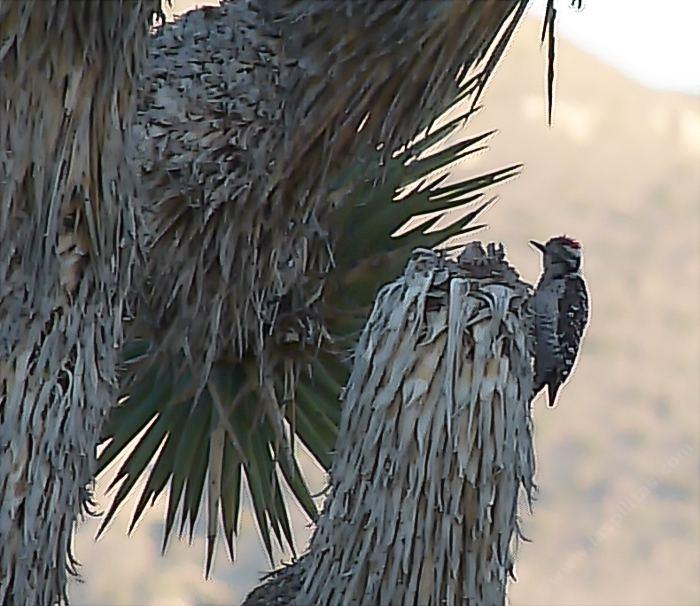
Ladder-backed woodpecker, scorpions, lizards, snakes, small mammals, butterflies and moths.
Common Plants
Joshua Tree (Yucca brevifolia), Buckwheat(Eriogonum species, E. fasciculatum var. polifolium), Apache Plume (Fallugia paradoxa), Desert Alyssum (Lepidium fremontii), Juniper (Juniperus spp.),
Soil and climate notes:
Generally sandy to sandy loam soils rapidly being converted by annual European grasses. pH is near neutral to alkaline(7.2-7.9) This community is under siege by Bromus species. When Bromus (small weedy foxtail type grasses) invades, the site is much more fire prone. 5000-10000 acre fires burn in an area that used to never see fire. Fire favors more Bromus.
The Joshua Tree Woodland extends along the eastern edge of the Sierra Nevada, up into south Nevada and Northeastern Arizona and basically defines the edges of the Mojave Desert.
The soils in the Joshua Tree Woodland are usually a slightly acidic sandy loam. Rainfall is commonly higher than the lower areas of the Mojave desert and can range from seven to twelve (8-10 commonly) inches annually. The climate is pleasant much of the year, but because the elevation is 2500-5000 feet, the winter winds can sometimes blow through you. The lows are not that bad, in a twenty year period a 0F or even lower may be experienced, but it is only for a few hours. Then the wind picks up and the daytime temperature may be in the 50's or even 70's. The wind chill at 0F and 30 mile per hour winds is dangerous. The ground doesn't freeze deeper than about an inch. This plant community will commonly get a dusting of snow, rarely more than an inch or two. You learn to wait until the sun comes up to wander outside; pity the poor chump in the light sleeping bag.
Summer temperatures can be above 100F for eight months of the year, but
it is generally for only a few hours. It's dry heat, and there is
usually wind or a breeze. Night time temperatures in Joshua tree areas
usually cool off into the 70's or lower.(Unlike Creosote Bush Scrub
that can stay at 100 F all night; yuk!)
Cactus are not common in this plant community; odd shrubs and wildflowers are. A clean, weed free, Joshua tree woodland is not adapted to fire. When sheep or other grazing animals are introduced they bring grasses. Bromus and other grasses spread like wildfire when grazing is allowed; then this plant community burns and is completely replaced by small dead (most of the time) grass. If you live in this plant community, control the grass, mustards and other flammable weeds.
Joshua Tree Woodland has a great deal of associated wildlife that you might see if you look carefully as you walk either through the wildflowers in spring, or bare ground the rest of the year. (If you disturb any Joshua tree branches on the ground, make sure you return them how you found them. This is usually the only place for ground dwelling wildlife to hide from the wind, sun, and predators.) The standing Joshua trees are the only place for birds who want to nest off the ground except maybe the occasional cliff.
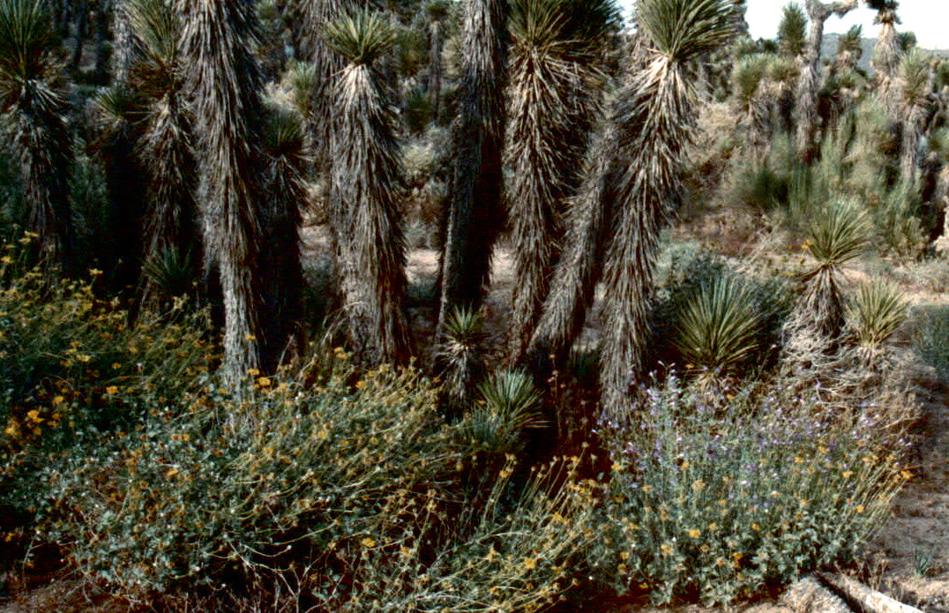
The tightly packed dead leaves that line the trunks of these strange trees are very important for insects, spider, lizards, and bird to hide in. They probably also help block the wind that whistles around them, helping slow desiccation of themselves and the wildlife they harbor.
There's often a bird in the Joshua tree keeping a watchful eye on you.
The enclosed areas are commonly Joshua Tree Woodland. Where the rainfall drops below about seven inches, there is still extreme summer heat, and the ground freezes in winter you'll find Blackbrush (Coleogyne sp.). Blackbrush becomes dominant and Joshua tree a minor element as the rainfall and/or temperatures drop. Where the rainfall is less and the soil doesn't freeze you'll move into a Creosote Bush Scrub plant community. The Blackbrush plant community is fairly minor in California.
To grow a Joshua Tree Woodland plant community, you need warm to cool, and dry conditions, some Joshua trees (Yucca brevifolia), sunny days, and lots of elbow grease to keep out the weeds! If you are starting a new garden and your yard is devoid of vegetation: to get started, plant some California Buckwheat (Eriogonum fasciculatum var. polifolium), Gutierrez' Bush (Gutierrezia microcephala), Bur Sage (Ambrosia dumosa), and Cotton -Thorn (Tetradymia glabrata). When they are established (after one year), use these as nurse plants, and plant the Joshua Tree (Yucca brevifolia) right next to them (on the east side of them). Keep the soil bare of weeds between the shrubs.
Plants
A list of California native plants that grow in the Joshua Tree Woodland plant community.