Coast Redwood Forest
Annual precipitation
50-100 inches
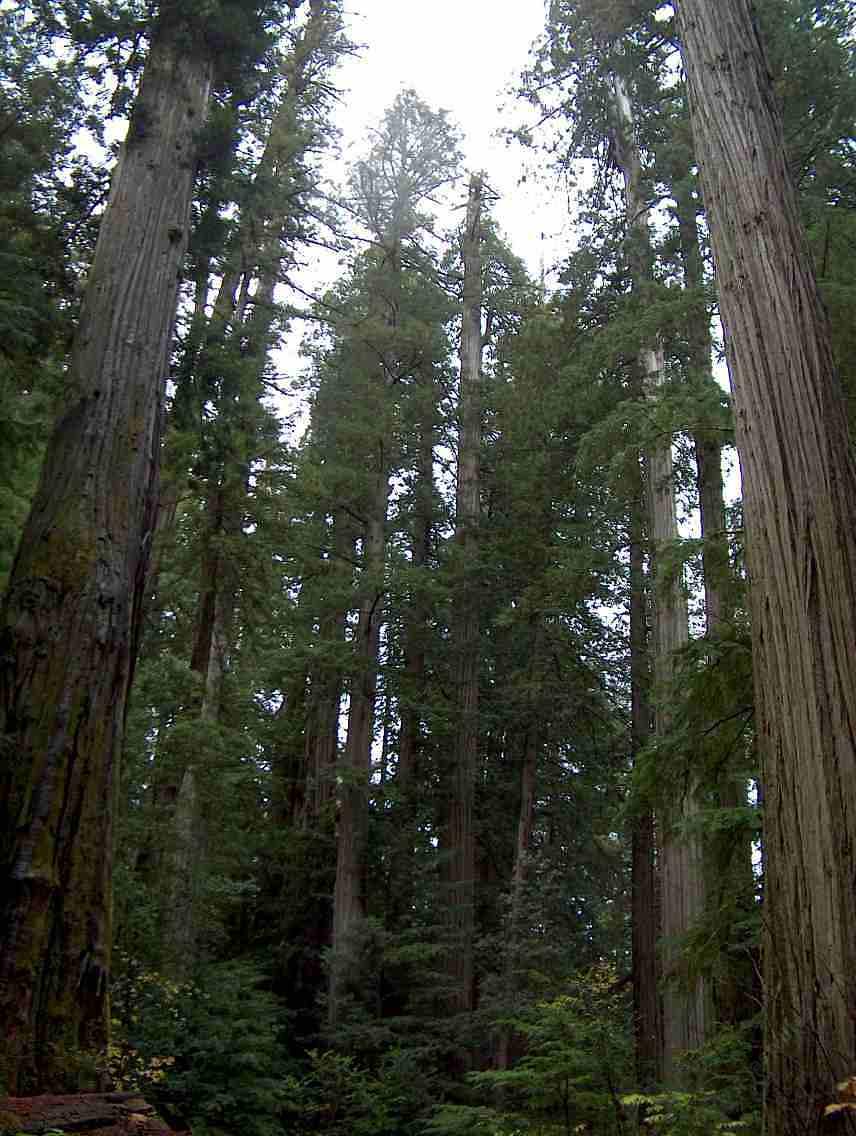
Drippy, dark and closed in. Cut the forest down, you usually get Northern Coastal Scrub, and no more forest as the forest is recycling much of it's moisture.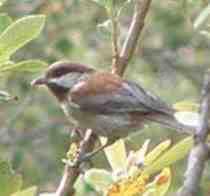
Common Animals of the Redwood
Forest.
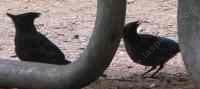
Stellar's Jay, Chickadee, Racoons, Banana Slug, Hummingbirds, Vaux Swift,
Common Plants
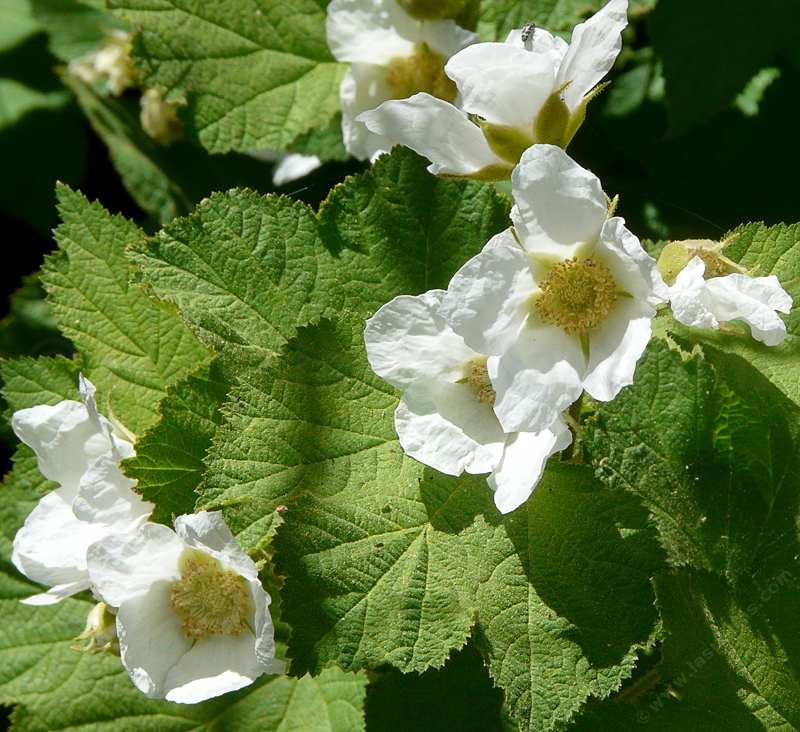
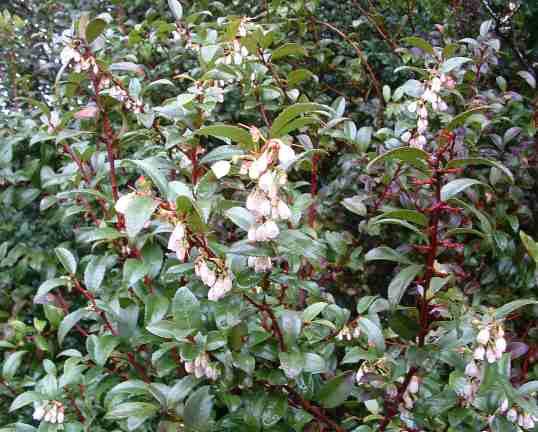
Coast Redwood (Sequoia sempervirens), California Huckleberry (Vaccinium ovatum),Yerba de Selva (Whipplea modesta), California rose-bay (Rhododendron macrophyllum), Western Sword Fern, (Polystichum munitum) , Redwood Sorrel, (Oxalis oregona),Salmon Berry (Rubus spectabilis), Thimbleberry, (Rubus parviflorus),Wood Rose (Rosa gymnocarpa)
Soil and climate notes:
The redwood forest commonly has
acidic
sandy soils, usually with hard pan layer down a few feet.
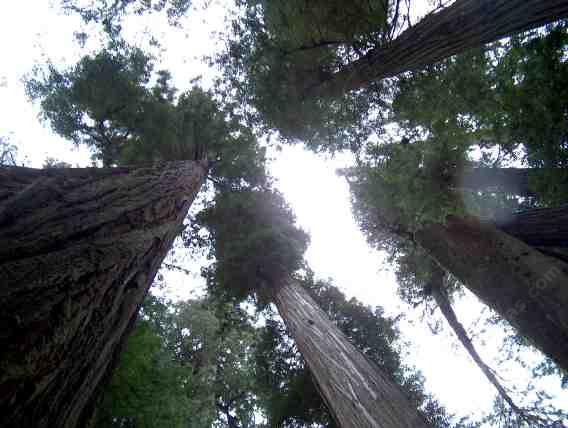
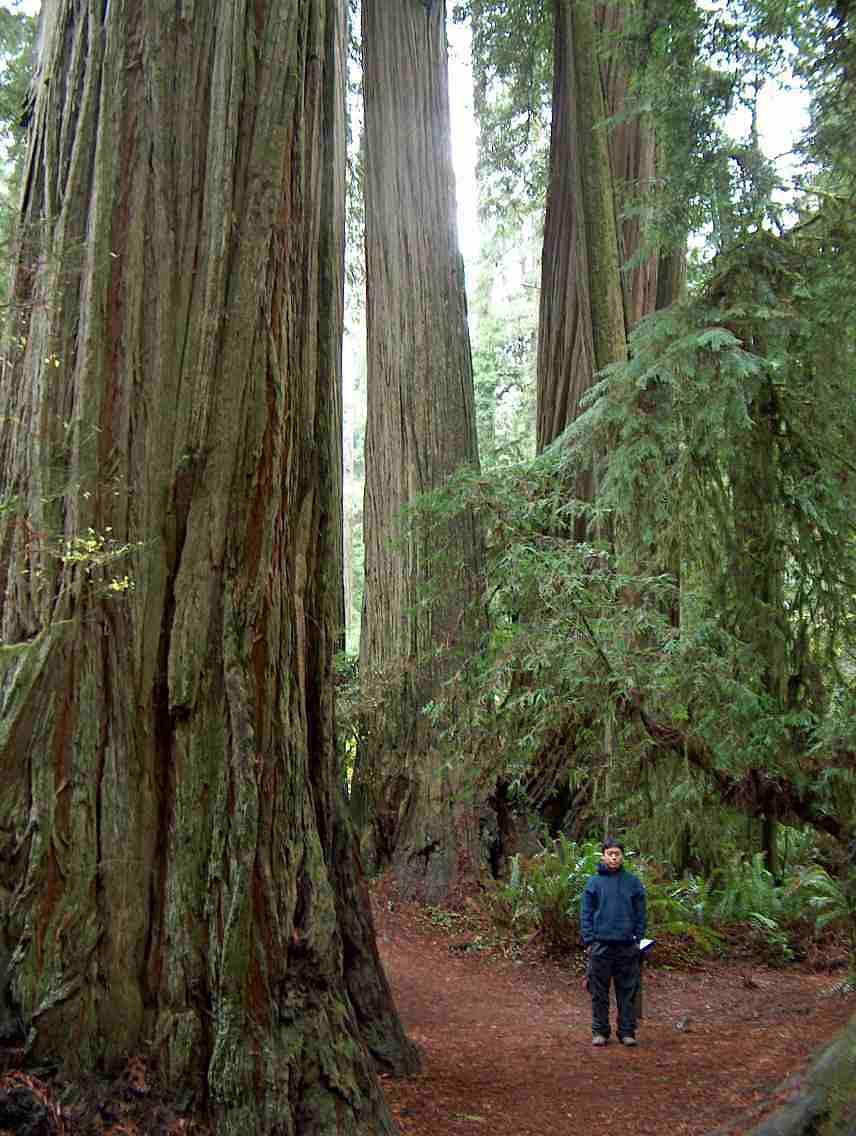
The Redwood Forest is found along the ocean side of the coast ranges of California. It is almost endemic to California with the exception of a small portion in the most extreme south western corner of Oregon. The redwood forest can be found as far south as Monterey county, in coastal canyons. Common species in the Redwood Forest include Coast Redwood (Sequoia sempervirens), Douglas Fir (Pseudotsuga menziesii), California rose-bay (Rhododendron macrophyllum), Western Azalea, (Rhododendron occidentale) and Tanbark Oak (Lithocarpus densiflora), The keystone species of the Redwood Forest, the Coast Redwood tree (Sequoia sempervirens), can live for more than a thousand years. The Coast Redwood is the world's tallest tree, reaching in excess of 300 feet tall. It is prized for its lumber which inhibits rot. Its heart wood is filled with its own biological waste which makes it unfavorable to many organisms that usually prey on untreated lumber.
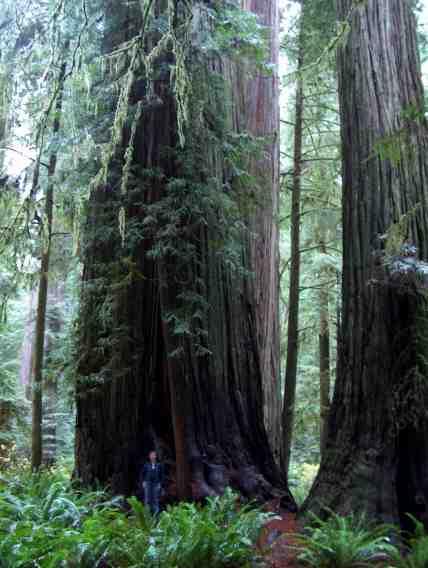
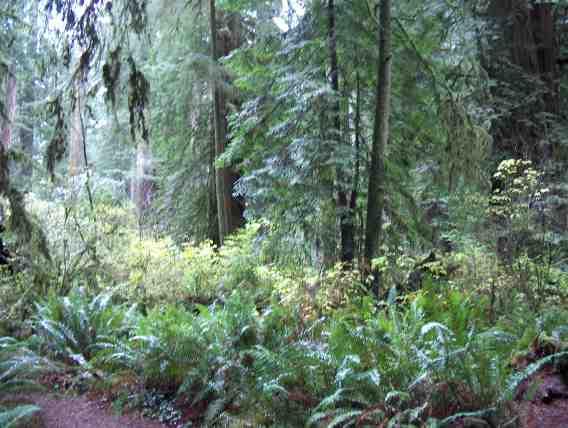
The forest floor is covered with Western Sword Fern, (Polystichum munitum) and Redwood Sorrel, (Oxalis oregona) in the dense shade and Salmon Berry (Rubus spectabilis), Thimbleberry, (Rubus parviflorus) and California Huckleberry (Vaccinium ovatum) in more open areas.
The Climate in the Redwood Forest
The rainfall can vary anywhere from 40 to 100 inches; much of the summer precipitation comes as fog. The temperatures are mild although it often freezes in the more northern areas. Summer temperatures rarely exceed 90 degrees. The forest is so moist that a banana slug is quite happy sliming along in the middle of the day, with no fear of dessication. The forest under the canopy is very dark, cool and wet. It is probably the closest thing California has to a rain forest. Wood Rose (Rosa gymnocarpa) can be seen flowering in a little sunlight. Road sides or along streams are the best places to see wild flowers.Ferns grow in the open, moss and lichen are abundant.
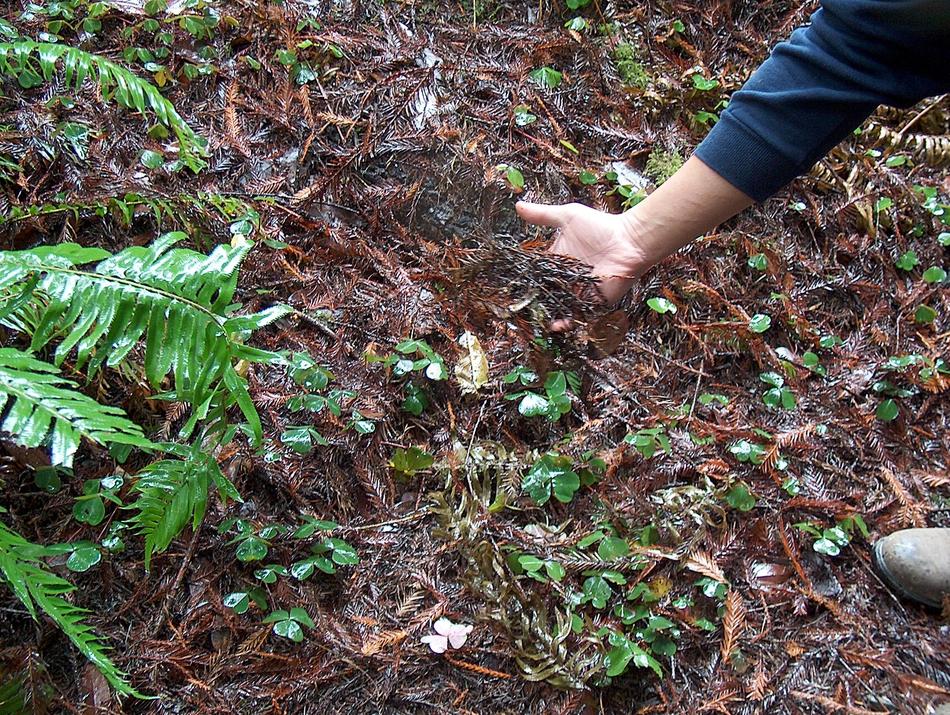
The importance of mulch in the Redwood forest
Debris is
very important in the forest. Fallen
trees provide habitat as well as a source of nutrients after
decomposition. On the forest floor it is not uncommon to see ferns and
other small herbaceous plants take root on top of a fallen tree. Young
redwood trees can actually be seen growing out of dead logs.
About the Coast Redwood Tree
The Coast
Redwood is one of the only coniferous
trees that can tolerate burial. In fact it often enjoys the silt
deposited from creeks when flooded; it can often be seen growing in
alluvial fans. When a live redwood falls over it will often just keep
growing even after the original trunk is buried. The original trunk is
similar to an underground rhizome. The coast redwood can also sprout
back from stumps cut by logging or even burned by fire; hence its name
sempervirens, or 'evergreen'. To learn more go to the coast
redwood page.
How to create a coastal redwood forest in your garden
To make a Redwood Forest in your garden you need high humidity. One way to simulate this is with a series of misters; place one every few feet, up on on the redwood tree. This may be difficult, as California's Coastal Redwood is the tallest tree in the world. Sprinkling it in the mornings can raise the humidity and simulate fog. Also, if you plant a grove of redwood trees instead of just one, the trees will be more healthy, as the association is more than the sum of its parts! If you're not that adventurous you can plant under cover of other trees . The coast redwood can withstand an extended period of dense shade (100's of years). If planting in the shade of other established species you still will have to augment your normal rainfall in the summer if you are in a more arid climate. The coast redwood can be grown in full sun in hot, dry environments

More BIG redwood forest pictures
A list of California native plants that grow in the Redwood Forest plant community.