Northern Coastal Scrub Plant Community
Annual precipitation
(High
humidity, low heat),
35-70 inches.
Common Plants
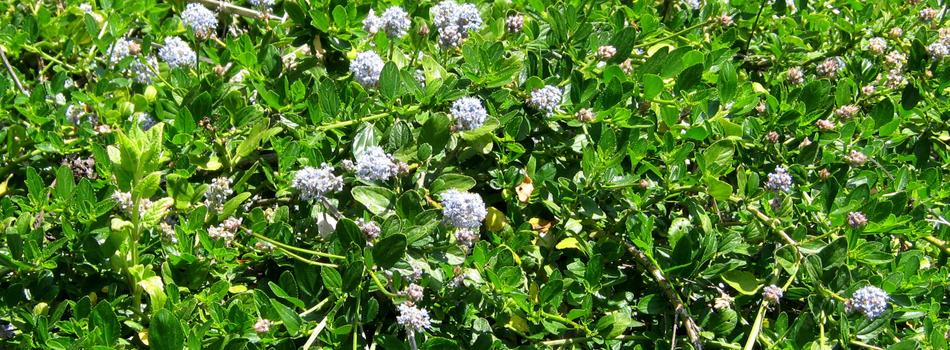
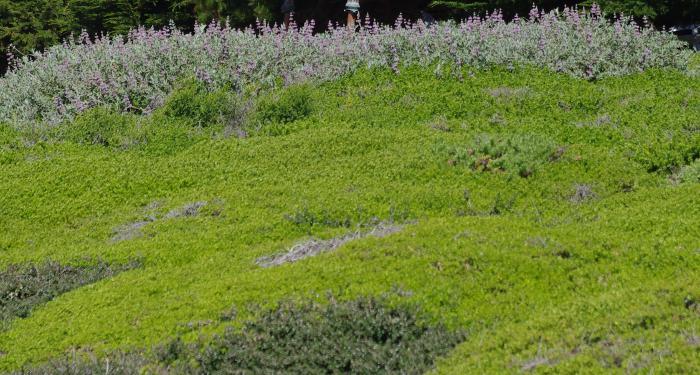
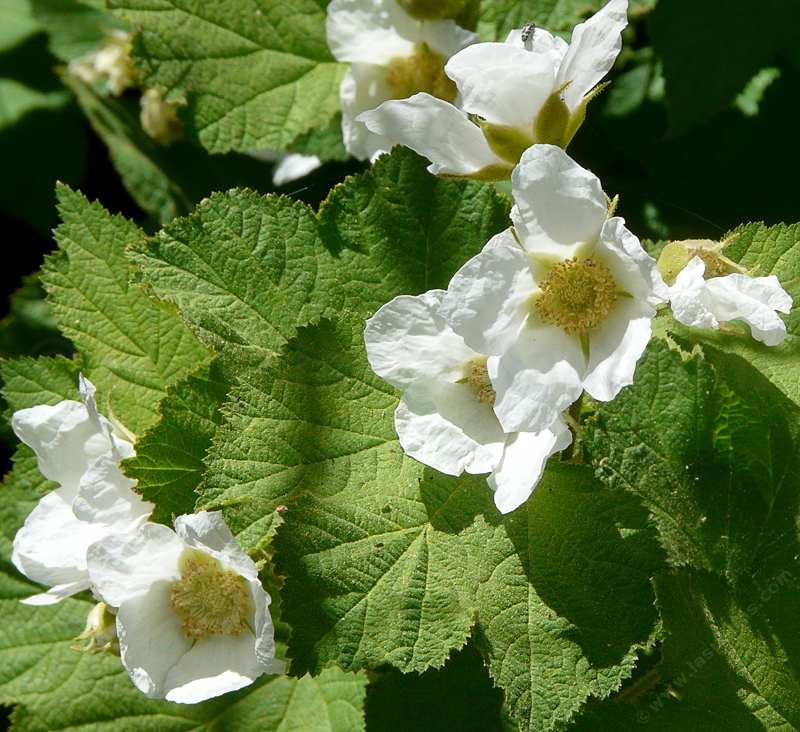
California Lilac (Ceanothus thyrsiflorus var. repens), Coyote Brush (Baccharis pilularis), Coastal Golden Yarrow (Eriophyllum staechadifolium) Seaside Daisy (Erigeron glaucus), and Sticky Monkey Flower (Mimulus aurantiacus). Thimble berry and Blackberries (Rubus ursinus)
Soil and climate notes:
Soft and cool chaparral along the Northern California Coast. Plants from this area lend themselves to regular garden conditions.
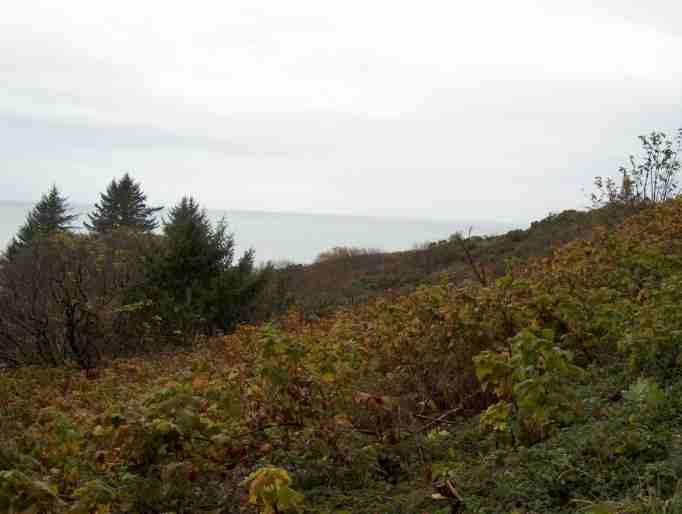
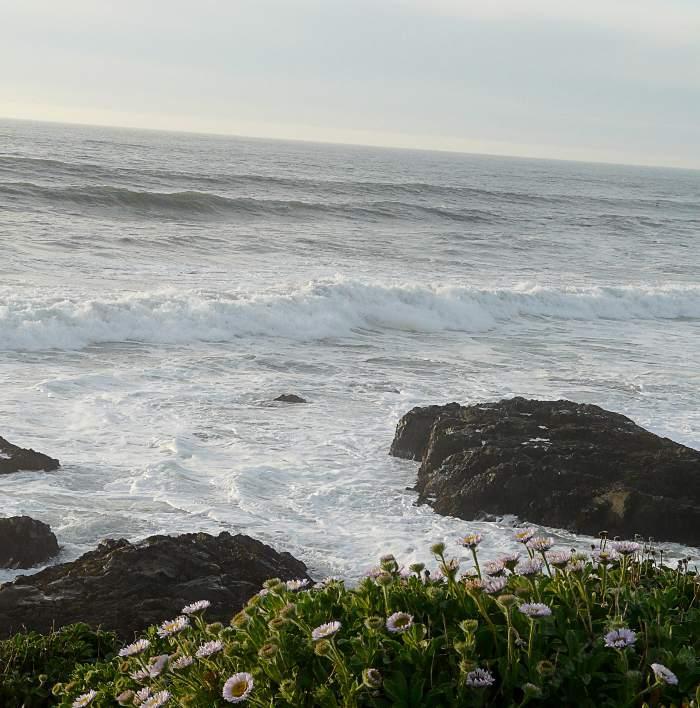
The annual rainfall in the Northern Coastal Scrub plant community can vary from 25 to 75 inches. Temperatures remain mild throughout the year because of the proximity to the ocean. Although the temperature is mild here the wind and salt spray make this a harsh environment for plants. Plants remain low forming a dense or open scrub. This cover is home to such birds as the California Thrasher, a species endemic to California. The California Thrasher enjoys thrashing around in the leaf litter for insects. It is quite a fascinating and entertaining bird to watch. In the spring this plant community is in full bloom making quite a show of itself.
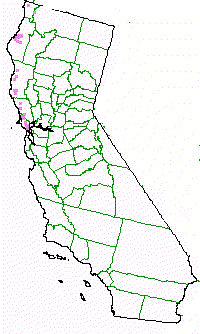
The Northern Coastal Scrub plant community is found near the ocean along northern California's coastline. The Northern Coastal Scrub forms a narrow band between the beach and the forest. Some common species include California Lilac (Ceanothus thyrsiflorus var. repens), Coyote Brush (Baccharis pilularis), Coastal Golden Yarrow (Eriophyllum staechadifolium) Seaside Daisy (Erigeron glaucus), and Sticky Monkey Flower (Mimulus aurantiacus). Thimbleberry and Blackberries are also prevalent in the coastal sage scrub plant community.
There are a few cities and towns in Northern Coastal Scrub.
Don't lock yourself in to an absolute description of these plant communities, because they are essentially mosaics, and again, lots of times you cannot tell where one starts and the other ends. On one beachfront property, you may have three plant communities; for example Coastal Strand, Northern Coastal Scrub, and Redwood Forest!
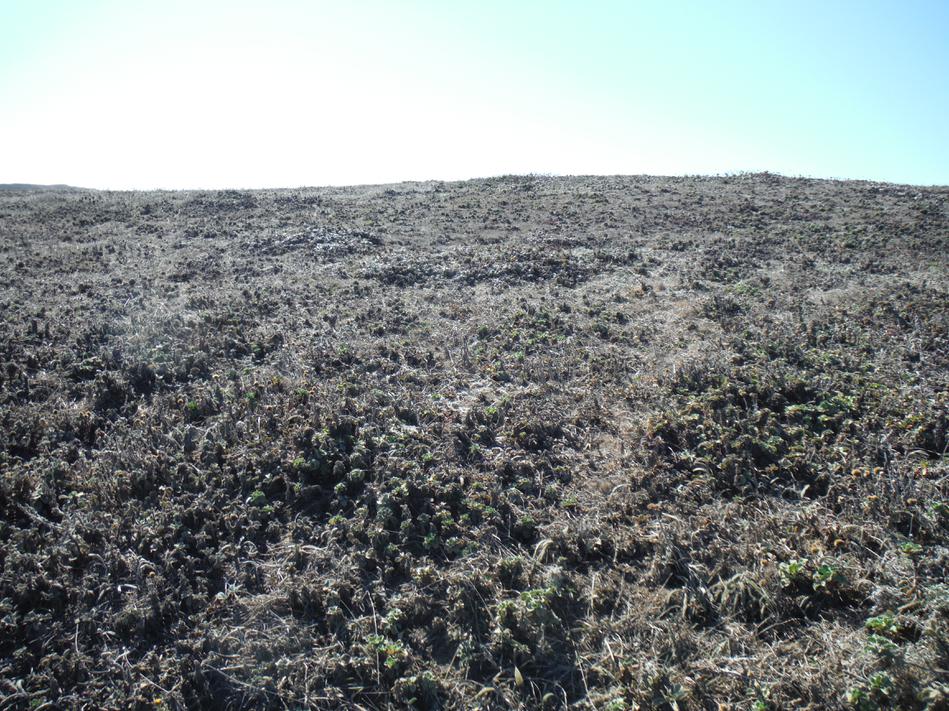
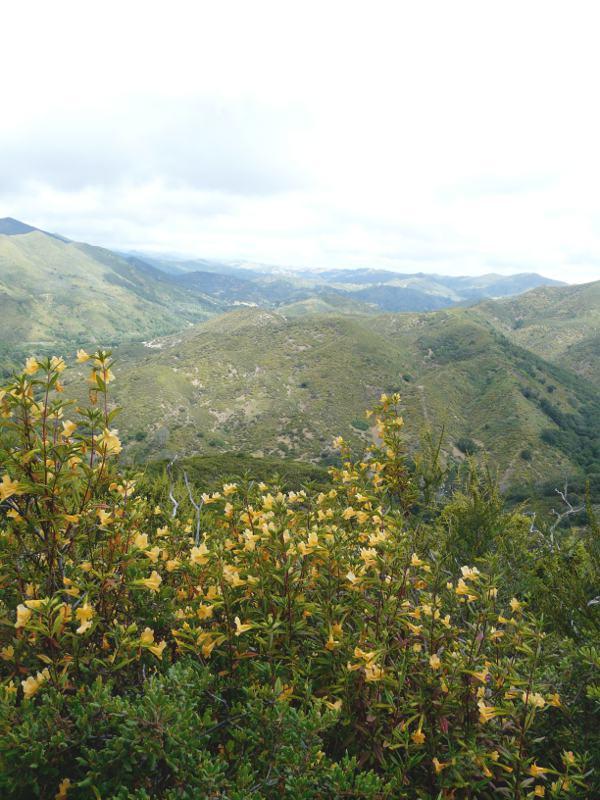
How to make a Northern Coastal Scrub plant community in your garden
To make a Northern Coastal Scrub plant community in your garden is actually quite easy. Most of the dominant species in this plant community can withstand hot and cold temperatures even though they grow in a mild climate. Some of the smaller herbs may not be able to withstand extremes but they can take a lot if they are under the protection of your shrubs. One thing to keep in mind while designing your garden is that although these species are low on the coast they may not stay so low in your yard. Without the constant high wind and salt-laden air, some of these species will grow differently, so be forewarned. Some of these species grow better with a layer of mulch such as shredded redwood bark, and others prefer just a boulder placed next to them. Check the planting guide for more information.
Plants
A list of California native plants that grow in the Northern Coastal Sage Scrub plant community.