see also Habitats California
Mountain Meadows
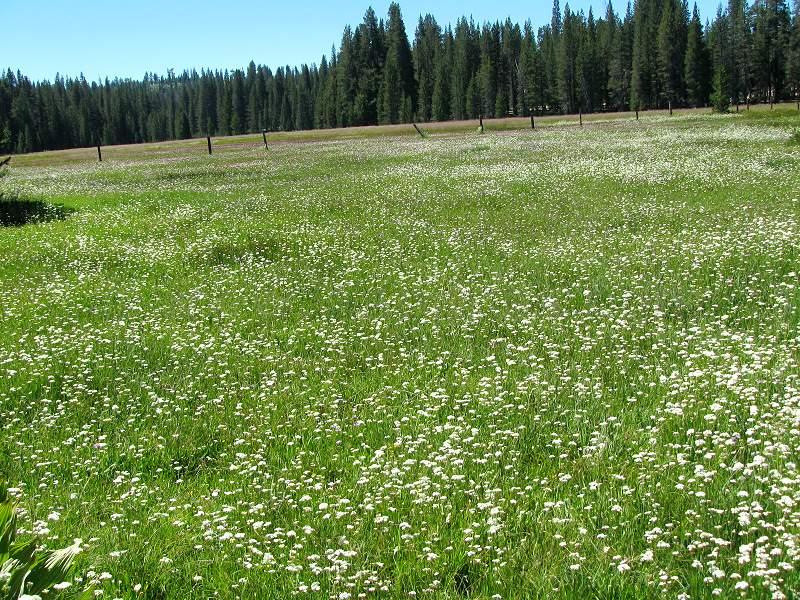
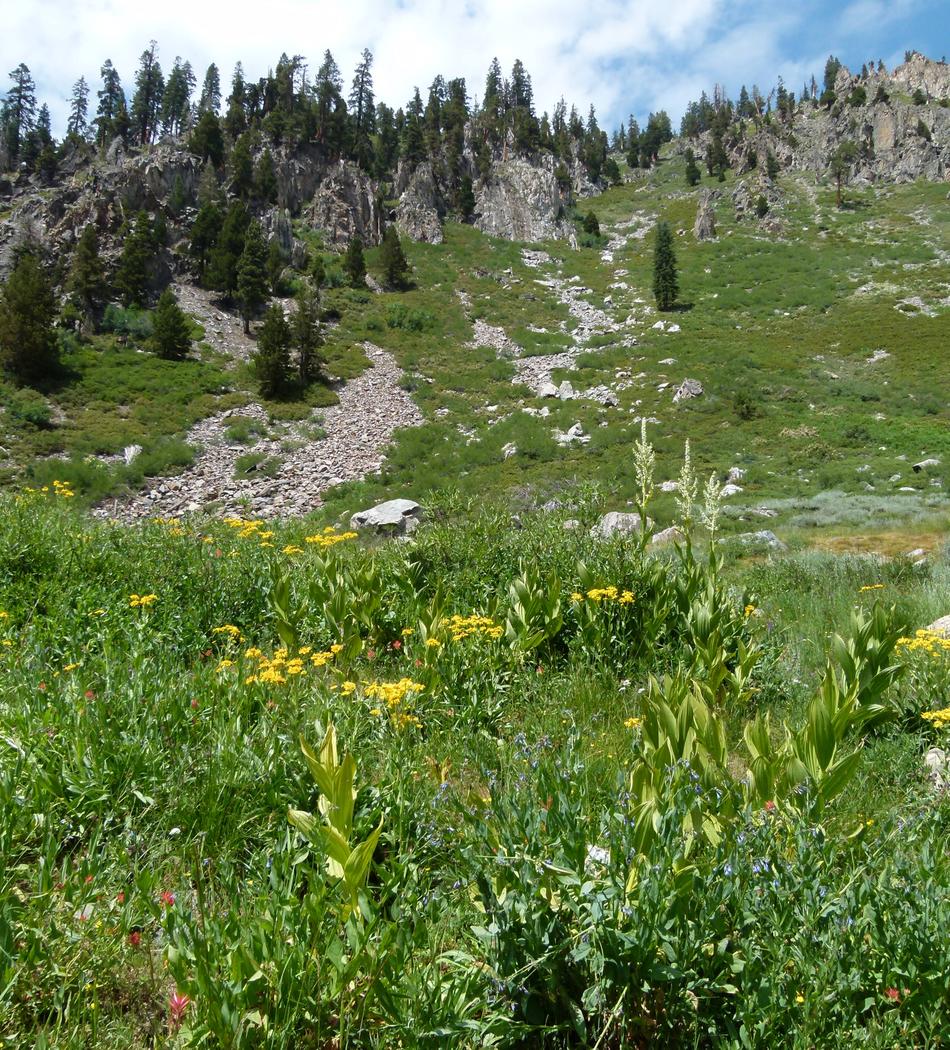
Always moist and usually wet in the spring. You'll find this in areas of shallow soils where the snow melt will accumulate in the Sierras, and Siskiyou Mt's, Transverse range, and occasionally the highest spots of the coast ranges. At lower elevations this moves into the grassland mode because it will dry out. This community can see frost at anytime, is a desert 9 months of winter, and a near swamp in summer.
Annual precipitation:
Varies
Common Animals:
Mosquitoes, Frogs, tons of butterflies, Flycatchers, Gophers, Meadowlark, Meadow Mouse (lots of small things. Large animals, like humans, will sink into the mud. It looks solid till you go out there...)
Common Plants
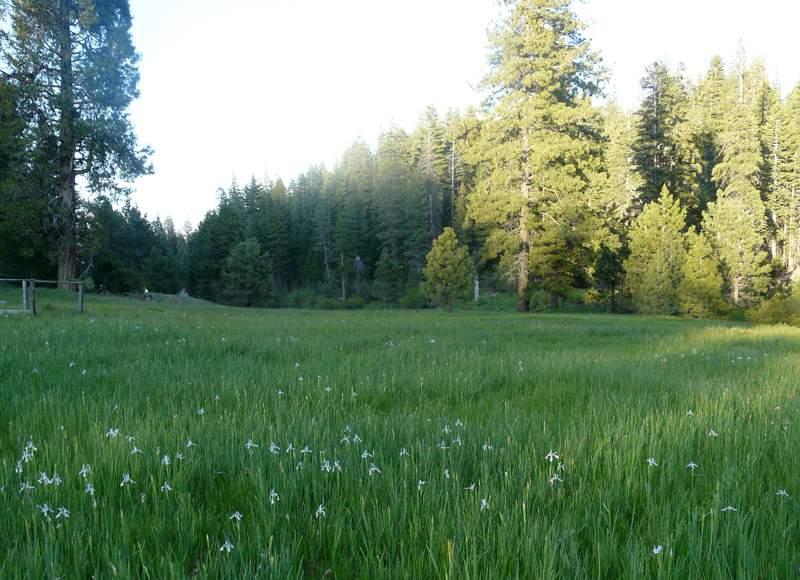
Iris
missouriensis, Cone-flower
(Rudbeckia spp.),Frog Flower Arnica
spp., Rush
(Juncus spp.), Sedge (Carex
spp.), Corm-Lily (Veratrum californicum) Goldenrod
(Solidago spp), Willow,
salix spp.
Soil and climate notes:
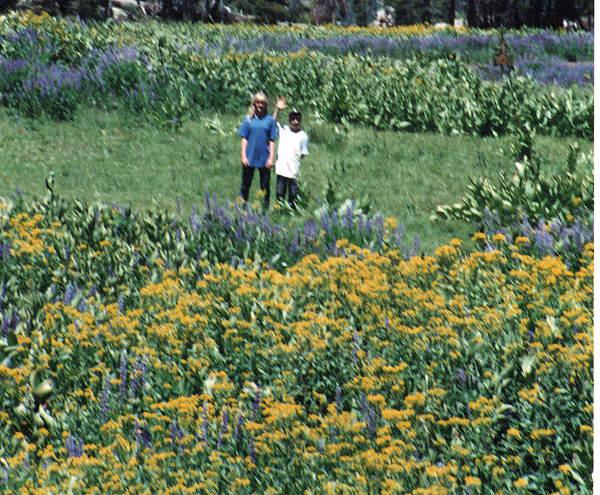
Commonly hard pan or rock under 1-10 ft. of acidic organic soil. We do not have true peat bogs but some of these are close. (I walked across one time to photograph a Rhododendron in flower and dropped through the crust to my waist. The crust appeared dry and solid.) Other times the area can be a mud hole in spring after the snow melts, followed by a massive flower show.
How to create a mountain meadow in your garden!
It is fairly easy to simulate a mountain meadow in your garden. Most of the plant species that occur in a mountain meadow can tolerate garden water as well as fertility. This is also one of the few California native plant communities that does not prefer mulch. One of the best places to put mountain meadow species is around your lawn edges, in sunny places. In this location you may need to watch out for invasive species.
Mountain Meadows are a plant community found within coniferous forests throughout California. It is very similar to a seasonal marsh. Mountain Meadows are covered by snow in the winter and are abuzz with life in spring. Many forms of wildlife use and require this type of habitat. The surrounding forest provides cover for birds that use the meadow as a source of insects or seeds.
A Mountain Meadow is formed when an obstacle ( a tree or a road embankment for example) slows water flow from a creek or normal drainage area ( kind of like an immature bog). This allows water to build up behind it. The area is too wet for the conifers to survive. This area behind the barrier is fairly flat to begin with. The leaf litter, or duff, mixed with some soil, of the coniferous forest, floats to the surface. This layer supports, and is filled with herbaceous herbs that form a solid (looking) surface. However, the ground is not firm, and under this layer of duff and herbs is standing or slow -moving water. Because this layer is so thin, and is basically floating on water, it can be easily torn apart and damaged, by people or animals walking on it. Cattle or hikers, curious about what is out there, tear up this fragile layer supporting plant and animal life. When this happens, many years go by, before the layer can grow together again and form a plant community. Another form of a mountain meadow is where the snow melt drainage is poor, as in low areas, and trees can't survive and you have a high elevation freshwater marsh.
You want to see butterflies? Drive for four hours up into the meadows in July and August or plant some butterfly plants!
Plants
A list of California native plants that grow in the Mountain Meadow plant community.