Critter Problems?
So far we have lost plants to deer, squirrels, gophers, birds, customer's feet, dogs, voles, mice, snails, slugs, locusts, grasshoppers, horses, cattle, ostriches, Chickens, Ducks, Geese. Critters have the characteristics of long lost relatives that have moved in with you. You loved to see them, but when will they leave? Ever?
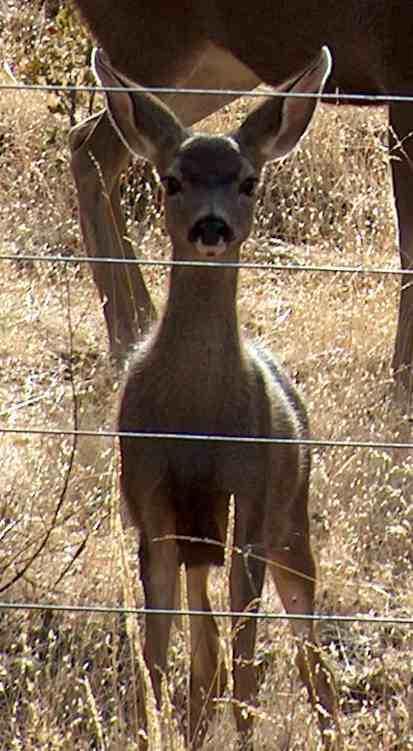
1. Deer
Turn the water off of the plants as fast as possible. Take a look at plants you should and shouldn't use in our deer guide. Cage for the first few years. Plant in the spring when there is other vegetation for them to eat. DO NOT FERTILIZE OR WATER WITH DRIP. Weeds mess with native plants and help make them edible, do weed control.
We've been told to do the following (all do not work when there are too many deer and we do not recommend them);
Pee on the plant and pee on the fence posts.( We asked these folks to leave. And watched them until they had driven away.)
Large animal (Lion) pee.(It scares the poo out of your animals. Your cat may not come out from under the house for a week or so. If they're hungry, deer wouldn't care if you had a saber toothed tiger in your garden. (I would though. Get a picture!)
Tie bits of your hair to the plants.(You're bald and Bambi still will eat the plant but he may have a whiskers!)
Tie soap to the plants.(Some whole neighborhoods smell like bathrooms. I think Bambi likes the woodsy bars the best. He may be cleaner but he is still eating your plants. Picture a woodsy commercial with Bambi in the shower.) At one of the local botanic gardens there are multiple bars of Ivory soap tied to the mangled, smashed plants that have one or two leaves left. You could find each one amongst the weeds by the drip tubing.
Put yarn on the bushes. Deer apparently can't throw up so they will not eat things like yarn. Really? What's the difference between yarn and a stem or a rock? They manage no to eat those while they're eating your plants....
Build forts around each plant. Ever try to get a 200 lb. deer out of a 5-5' box when he's alive, upside down and terrified? You can build cages. We make a 6' tall 1-2' wide chicken wire circle to slide over the plant. Close the top(this will stop the squirrels). Tie one side to a 't' post(metal fence post), or in bad areas use 3 tee pots or rebar. stakes. (Cut a 20 foot piece of rebar into 3 sections.) After a year or two move the cage to more new plants.
I think the deer sit in the woods and laugh at us.
2. Squirrels
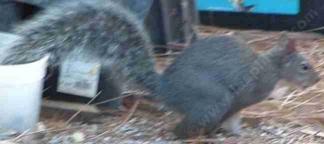
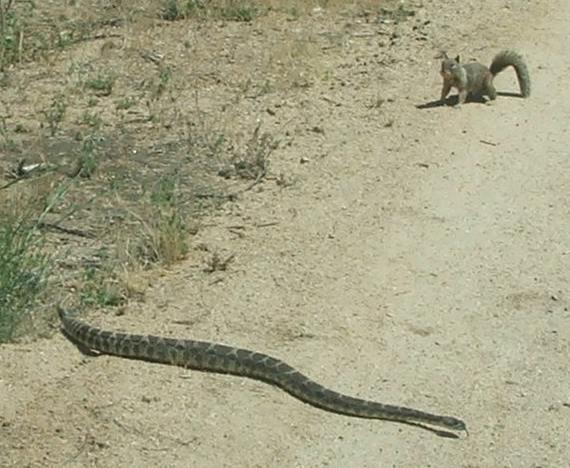
When you have a huge number of squirrels in your yard it usually the symptom of another problem. No predators around that would normally control population like coyotes, lots of over watered or over fertilized plants, a huge weedy field next door to your house, etc. It also depends on what kind of squirrel you are having problems with. California ground squirrels, Spermophilus beecheyi, usually become a problem in areas where there are large expanses of weedy fields. For example a cattle pasture or old fire disturbance where non native invasives have been introduced like Brome or Oats. Getting rid of their food by removing the weeds can help a lot. Also keep the weeds as far away from your plants as possible. Mulch and or preemergent helps a lot with this. When we cleared for one of the out buildings we uncovered a squirrel nest we found it full of hay and filleree seeds. Cage the plants with aviary mesh and get the water turned off as fast as possible. If you do decide to kill them that may be affective temporarily but if you don't remove their habitat they will soon be back. You can encourage hawks by providing perches for them just a T post in a field makes a difference. Make sure it is really a ground squirrel that you are dealing with and not a squirrel that is protected. Ground squirrels are not protected but many other squirrels are. So don't kill any good guys. And if you do decide to use poison make sure to use a proper bates station and talk to you neighbors. Most have had problems like yours.. It is illegal and VERY environmentally harmful to just throw poison out. You may be killing any animal including dogs, coyotes, foxes, rabbits or even children that may happen along. Very a bad idea. Also many other harmless animals may be poisoned from eating the dead poisoned squirrel. We used poison for years and we can tell you it is not worth it. It causes way more problems then it's worth. Trapping and drowning is a lot safer for everyone else but again make sure you are catching ground squirrels. (Just hope God is not a squirrel...) And you still will only be treating the symptom of another problem. Tilling up their holes works well but at a huge cost. You will immediately remove their home and their food source but totally destroy any chance of native plants or animals reestablishing the site for a long time. It will also really hurt any established oaks or pines in the area. This soil disturbance is the reason the weeds were there to begin with so you are starting the whole cycle over again soil disturbance leads to weeds, leads to more California ground squirrels.
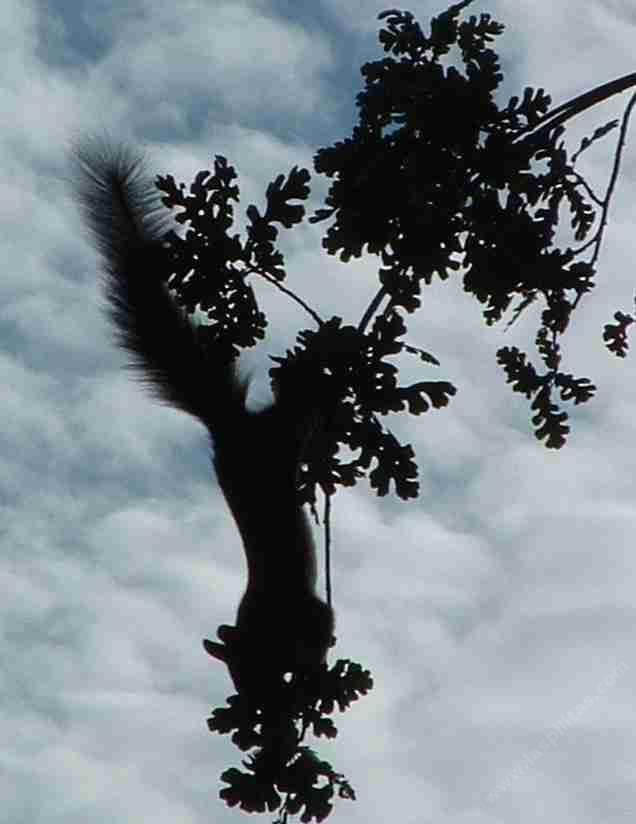
The other squirrel that is a major problem occurs in more urban areas, that is the non native eastern fox squirrel, Sciurus niger and the Eastern grey squirrel, Sciurus carolinensis. Do not get these confused with our native western gray squirrels, Sciurus griseus. For these guys, don't feed them. Duh. Don't feed them on purpose or unintentionally. You may be feeding them unintentionally with pet food or bird seed. Bird seed is just a bad idea on multiple levels. 1. you are feeding wild animals ( yes the birds are wild animals) which is always a bad idea for any reason. 2. many of those bird seeds contain lots of non native and sometimes invasive plants that you are putting out for distribution by the squirrels, birds, rats, and who know what else. And 3. wich kind of relates to 1. and 2. you are attracting animals to your yard. For the most part not good animals either. The kind of animals who like sunflower seeds and grass seeds are not usually good guys. So no bird feeder no cat food outside no dog food outside.
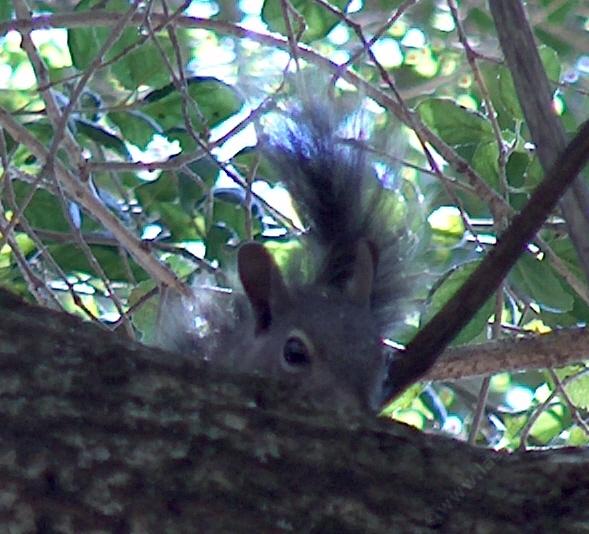
We've lost a pickup load of tulip bulbs in a month before, with the squirrels chirping (taunting) us the whole time, we bone mealed the planting holes, that was a huge mistake. You could use bone meal in the have-a-heart traps.
3. Gophers
They go to your watered plants. The less you water the less problems with the gophers. Bait or trap the gophers out of the yard to a perimeter and then control them within that area. It will take 2-3 years before the gopher-runs cave-in and your war is over.(The battles will continue.) Gophers will eat any black poly tubing out there. If you have gopher problems do not use it.(Gopher gum.) Mulch seems to really confuse gophers and can greatly reduce the problems. They will follow inputs of fertilizer, weeds, ruderal plants(vegetables and color annual/perennials) and water.
4. Birds
We like them and have no real problems with them most years (other than the cherry trees). We have had problems with birds at the height of the drought. One of their population controls is normally driven by drought. When the drought was at its height here we had 10-20 or more thrashers fighting over every bug or worm and digging up everything with 20 or more jays fighting above them. For fruit trees foil works a little. Fake owls work for a day or so. The jays will figure out most defenses as you put them in place. We stopped them in the cherries by spraying the tree with a little dish washing soap and hot pepper.(Make sure you wash them off!) The birds are starving during a drought, pray for rain. Do not become part of the problem and feed them. You will attract and support a population that cannot live on its own and has a messed up social system.(It's like putting them in a cage). You go on vacation and birds die. Putting native plants in to provide habitat and food is not a problem and should leave you with a clear conscience. Plant non-natives from Europe if you do want to support European birds.(You can have our starlings, English sparrows and pigeons.) We do not like starlings and try not to help them. For good birds check out our bird page.
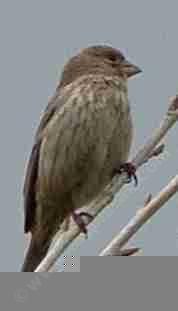
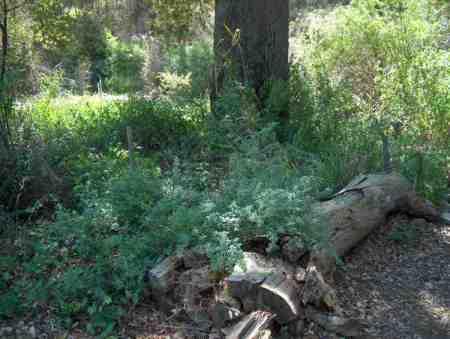
If you wish to help things further either leave a few snags(dead branches, tall standing stumps) or dead logs in the background of your property. In towns this may mean tying one up to a back fence, or up on the roof. Harmon et. al. found that 42 species of birds nest in the snags and 20 species in the logs. In the wilds these sites do not need to be closer than every 100-200 ft..
Weeds create habitat for weedy species.
5. Customer's Feet
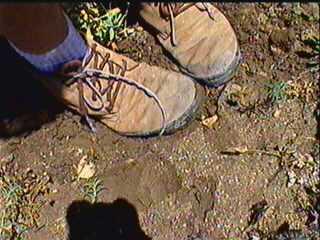
I've lost more plants to these than anything. We've taken to planting rocks next to the plants to protect the plants. Planting in rows helps a great deal. After you've mulched, the little 2-6" plants 'kind-uh disappear'.(They are normally small going in and big enough after 6 months that people can see them.) Always make sure where your paths are before you plant because people will take the straightest root regardless of where you put your path or your plants! Seen big foot lately?
I've yet to find a delicate way to tell a customer that they are standing on the plant they are looking for...

6. Dogs and Cats
Isolate young dogs from the plants for at least a year. Dog urine kills! They've dug the plants up, peed on , laid on , scratched themselves on, eaten, and run over the plants. We've found that if you leave the first 3' along the insides of the fences unplanted you'll do yourself and your dog a favor. They love to run the fence line so plant for it. In small backyards with big dogs this 3' is critical, design it in. Design in a dogie bathroom if you can, so the dog knows where he is supposed to go and you can easily clean it up.
Cats? You may laugh, but we've been called in a couple of times now where the customer has covered their entire your with chicken wire to keep the neighnor cats from pooping in their yard. Try walking through a yard of chicken wire with cleats! Even five cats pooping every day under your kitchen window adds a zest to you breakfast. The only controls we've seen is a have a heart trap and calling animal control. They'll usually pick them up if you trap them. Neighbors go to work and you catch cats. Usually after the second cat the neighbor will start controlling their cats.
7. Voles and Mice
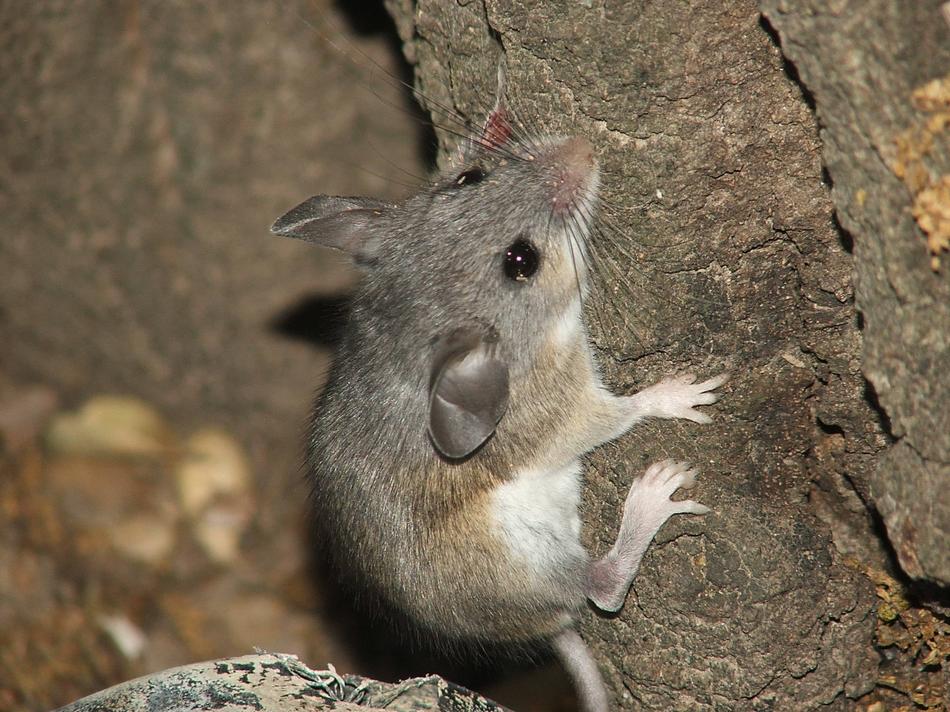
We've only had problems with these where there are no predators (A freeway center median.) or on really dry years. Try watering less. You may want to get a cat, the foxes help us.
Mice and other rodents LOVE weeds and non-native grasses. Weed control and garden hygiene remove an amazing number of rodents. They will be running everywhere as you remove their cover.

8. Snails and Slugs
Water or fertilize only if you have to. Do nightly patrols in the spring and summer. We have managed to almost knock them out of the nursery with night patrols and a couple of foxes, foxy-loxy and loxy-foxly. If you have a snail problem do not plant plants from the RIP, FRESH and MEADOW communities along with Erysimum, Stanleya, Oenothera, Lilies and some Clematis. Control the weeds. If you plant only stress tolerant plants the snails will leave or die. They love the 4 inch color stuff form the box stores. Stop feeding the snail gods.
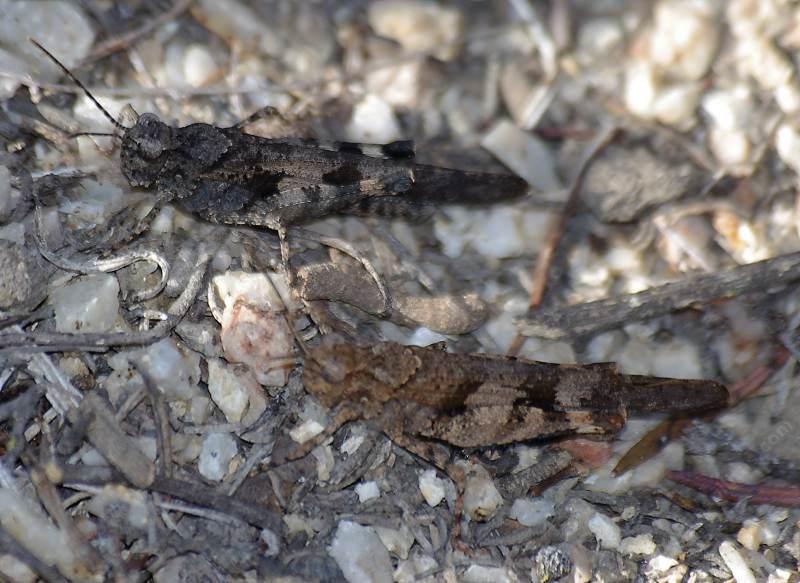
9. Locusts and Grasshoppers
If you get hit by these it can be dramatic but the plants will usually recover as long as they do not have to come back, and back and back... If you have a small problem insect baits work. If you are in an area that is repeatedly hit, look around in the area and see if there are plants not being eaten, identify and use those. Also look and see if the plant is getting too much water. Water will remove the natural protections of the plant.(see advanced section)
There are also tons of insects and birds that prey on grasshoppers.
A native landscape should protect your native plants from day to day
predation, but, sorry, not from a swarm.

10. Horses or Ponies
Other than the grasses and rushes our plants are not normally bothered by horses. The grasses get eaten down to nothing fast. If your horses are in a small corral and bored they may eat your plants (along with the fence and barn). Hooves can be more destructive than teeth. All that weight and four little pointy things. They break and crush everything in their wake. Our horses eat more of the buildings and fences than of the plants we've planted.
Having said that, if the hillside is free of weeds and alien grasses, please keep the horses or cattle off. If there are native forbs and grasses still left on your site and they're mixed with alien species use the horses to knock the non-native plants down, but wait until the natives set seed first. The big debate for us is how to graze down the flashy fuels so we do not lose out trees, but not graze out the native annuals.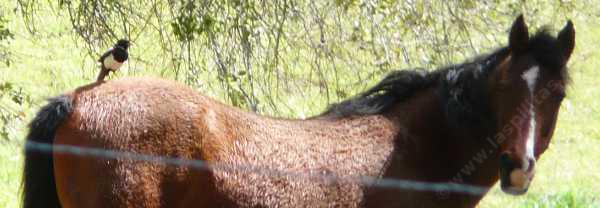
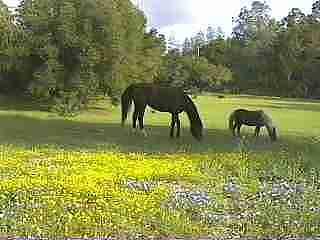
Native clovers and wildflowers are much less common than horses or cattle.

11. Cattle
Cattle eat all. They've eaten out oleanders, yucca, and cactus (we were down to trying anything on one bad site.) If they can reach it, it will be destroyed. Holistic Range Management is better than none, and it is much better on the feed and soils, but the cattle still will eat your plants and change the ecology of the site. Cattle are useful for eating plants you do not want. If you are forced to plant a plant you do not want, plant it where the cattle can get to it!
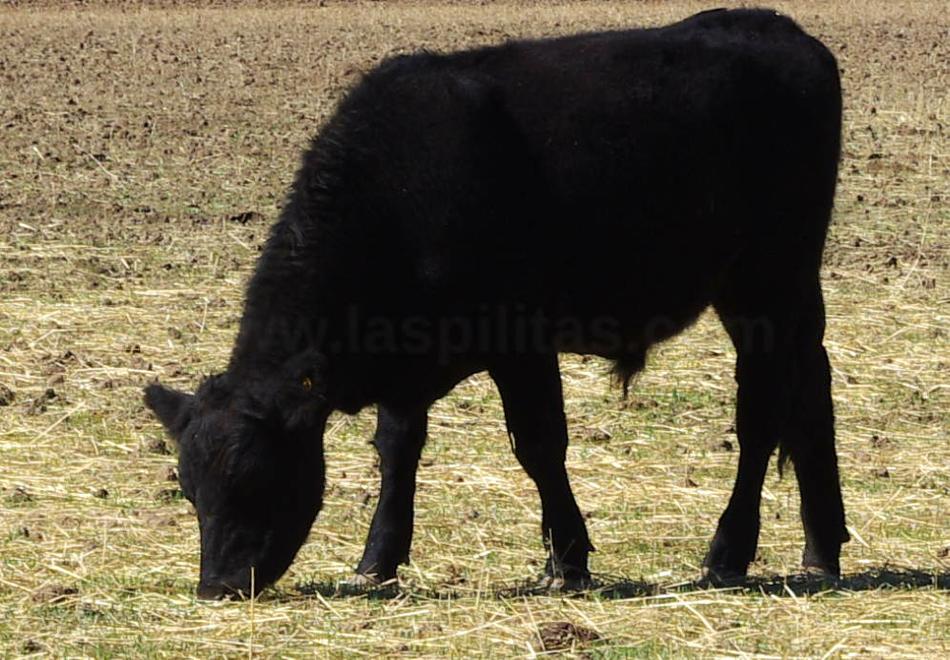
If you have a clean and all native area, keep the cattle out
of it. If you have a weed filled area with some natives, cattle can be
a useful tool to graze against the weeds. Usually you put them in after
the natives set seed or before they've germinated.
12. Ostriches
You cannot have ostriches and plants.
13. Chickens, geese and ducks
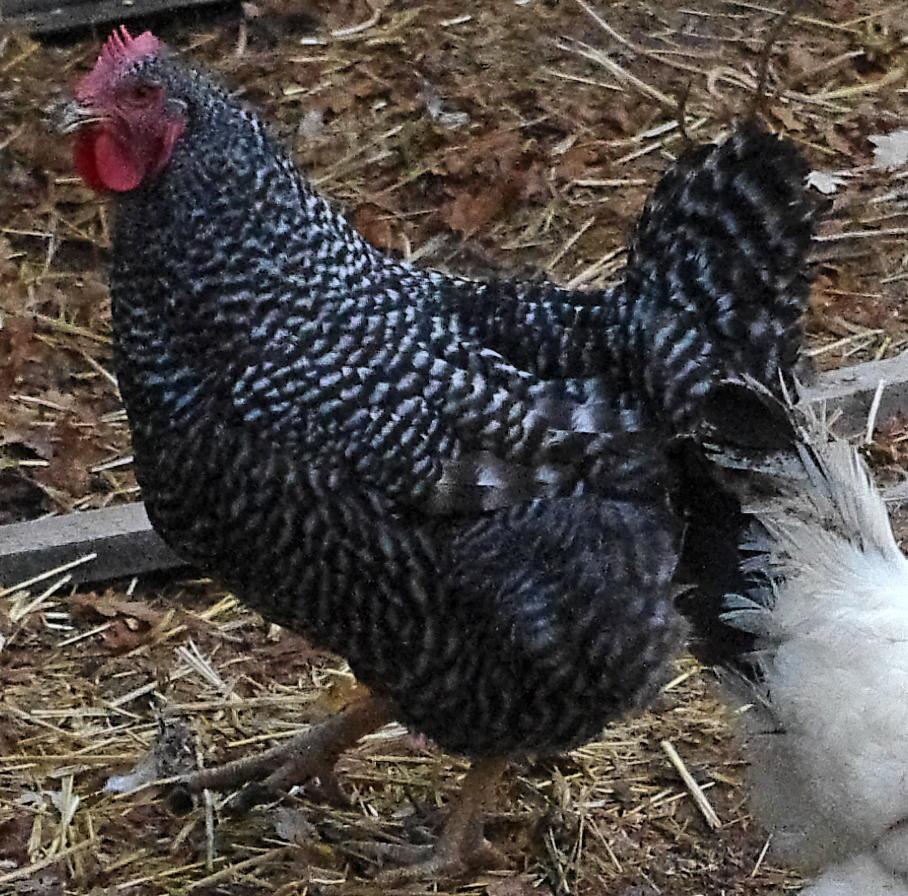
Chickens and ducks love the mulch. If you have them in a small area or high numbers they will love your site to death. Chickens dig or scratch up everything. The saying about a Bull in a china shop can apply to a chicken in a landscape. Ducks and Geese are much easier to deal with and really only mess the mulch up and eat the tender rare stuff. (They look like little Sherman tanks as they run over your plants. Quack-Quack! on the Attack!)
14. Wild Rabbits
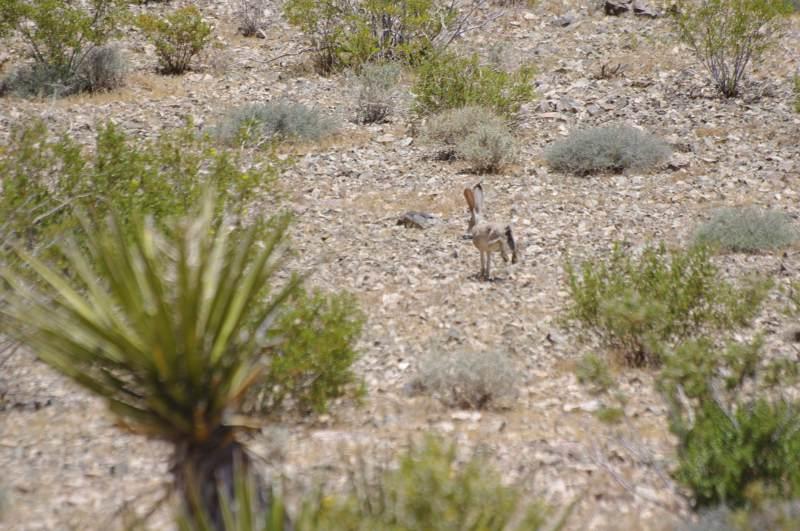
Wild rabbits eat only the low tender stuff. We have 20 or so wandering around the nursery. (Including some Godzilla jackrabbits that could carry off the dog. Harezilla?) The only native plants they seem to bother are Potentilla and Aster. They love the Filaree, grass, and other weeds. On project sites we have had some problems with Atriplex until it gets above their heads. There is one 50' from the house they eat every night, 200' in from the outer pots... A 4-5' removable cage seems to solve this problem along with turning off the water and planting in winter.
15. Raccoons
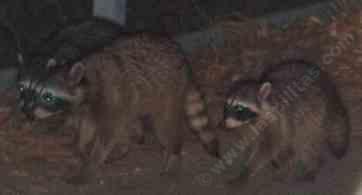
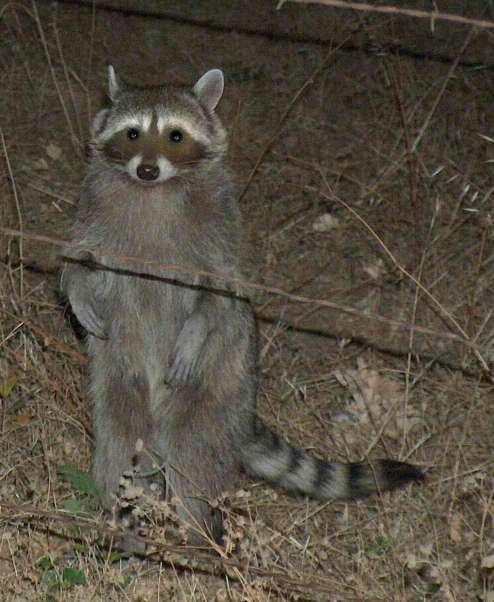
Raccoons love ponds! In search of snack's like your really expensive Koi, they will completely destroy your pond. They have very dexterous hands and can open and pry apart anything. The best way to deal with raccoons is to get a big dog (Sorry small dogs are a tasty dish.) Some of our dogs in the past, have refused to chase things alone when it gets dark. (Chickens in dog suits) When I put my dogs out to chase things they all sit by the front door fighting for the place closest to where it opens. Don't worry to much about the raccoons most domestic dogs are pretty poor hunters. Even Harry the cattle dog has had problems with them. The dogs have a night run behind the house that the raccoons decide to test occasionally. That usually turns out badly for the raccoon. But one morning Harry found one in the office, what a kerfuffle! It sounded like world war three, then the raccoon ran out and Harry has hated raccoons since. His nose looked like it had been put in a pencil sharpener, maybe a hundred bites and claw marks. Next day it had swollen to maybe twice it's normal size, and Harry was depressed. Raccoons can climb trees and hopefully your dog can not. That's what happened to Harry's Raccoon. Of course make sure Fido has his rabies shots!
The other morning one of the sprinkler systems didn't turn off,
discovered that a raccoon had turned it on. At least he didn't poop on
the valve afterwards.
16. Chipmunks.
Real cute, real destructive. Smarter than either squirrels or mice. They are so fast that mouse traps do not work. The only real controls are cats. In the wild foxes, ringtails and other small to minimum predators eat them. If you have a native garden they're really not a problem and they're really cute, did I mention adorable? If you have a nursery they eat about $100 a day of seed each.17. Rats.
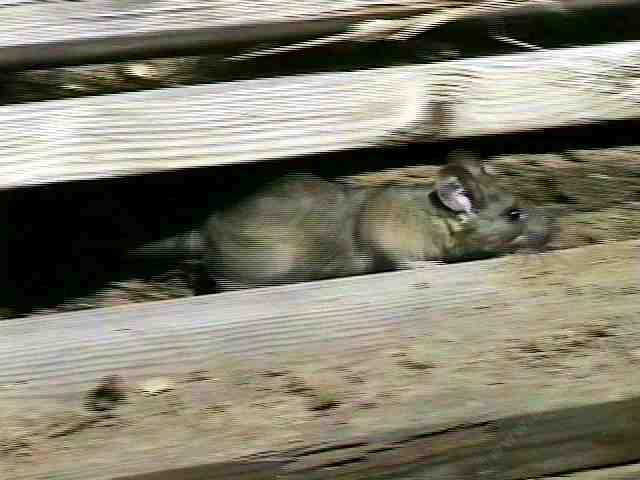
Wood rats are native and they only occasionally cause problems by clipping the tops off of newly planted plants. They behave like a small beaver, cutting their one foot 'trees' down. After a few days, when the 'wood' has dried, they drag it back to their nest, along your car keys, coins and other trinkets.
Norway Rats on the other hand are really nasty. They eat the food on your table, garbage from your can, fruit from your tree, and basically have a nasty party every night. They like ivy berries and other non-native shrubs. I highly recommend ivy as a groundcover if you like rats. If you do not like rats, remove all fruit setting plants and plant a hummingbird or butterfly garden. Remove all water sources and clean the place up. NO debris.