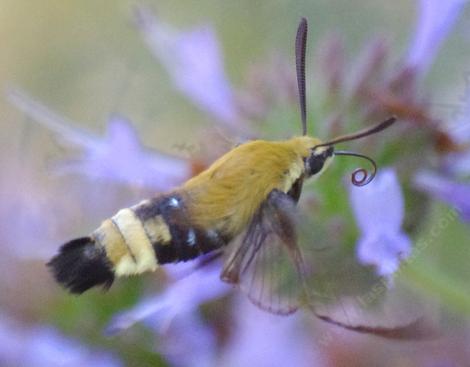
Bumblebee Moth or Snowberry Clearwing, Hemaris sp.
Plants used by the adult Bumblebee Moth as a nectar source.
The adult Bumblebee Moth will feed on their
larval food plants, honeysuckle and snowberry, for nectar. They also
will get nectar from milkweed, Monardella, and some thistles.
Monardella is an excellent garden plant for butterflies as well as
Moths. It has perennial and annual forms from white to purple flowers.
It also has a fresh minty scent.
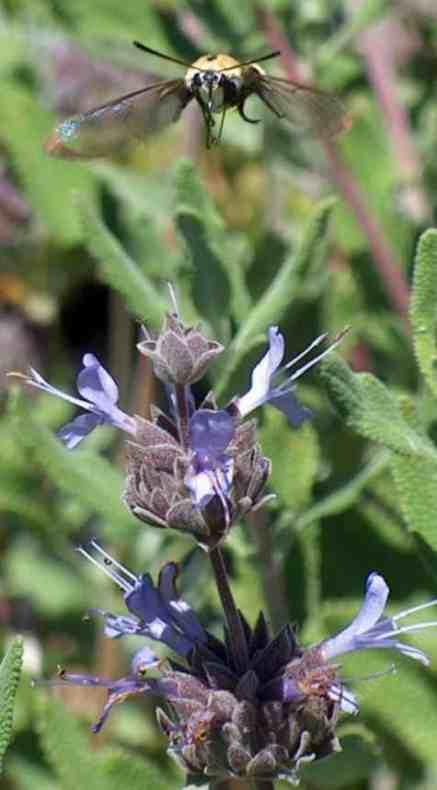
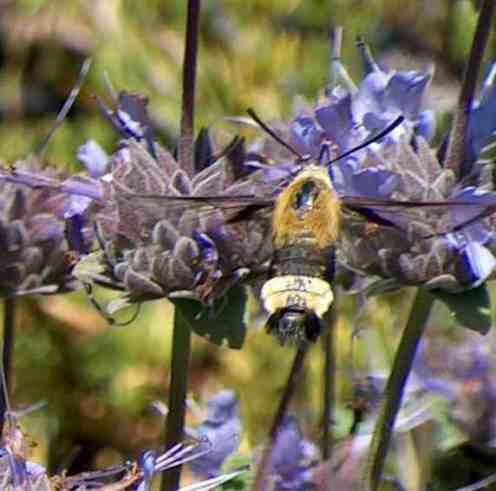
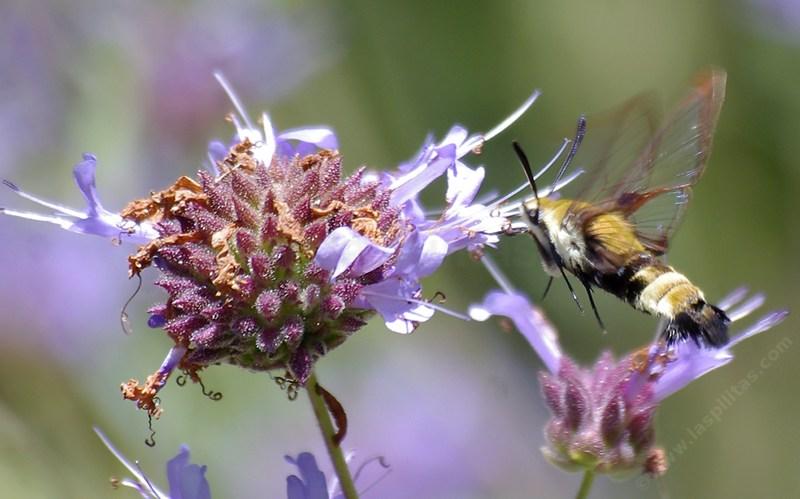
The Bumblebee Moth really likes these 'Pozo blue' sages.
I was observing them for a couple of hours and they fed on this block
of 'Pozo Blue' sages in the nursery the whole time, hovering around
with the true bumblebees. They're really fast!
Bumblebee Moth breeding
When the female Bumblebee Moth is ready to mate she releases pheromones to attract the male. You will not notice much other than bees appear to be chasing each other all over the garden.
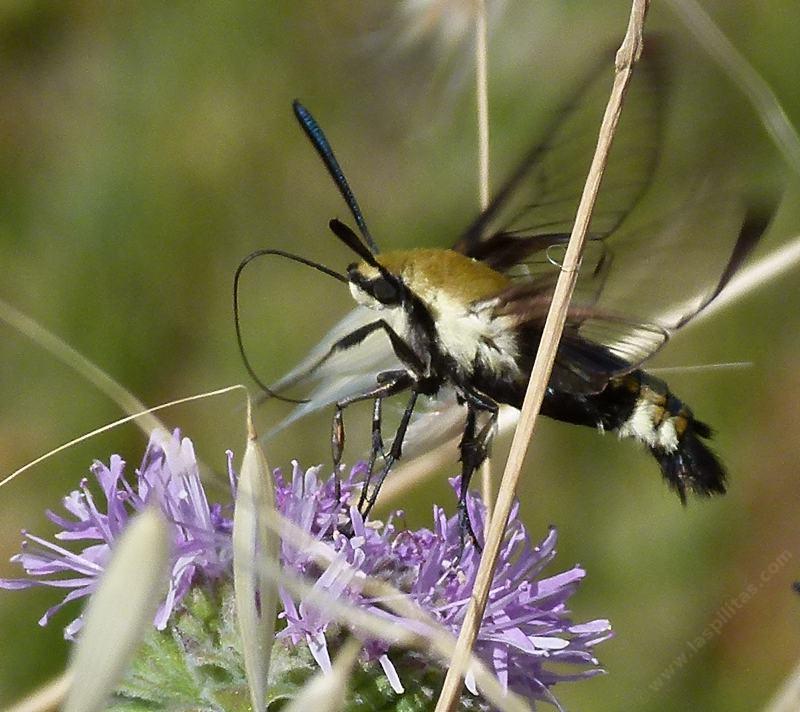
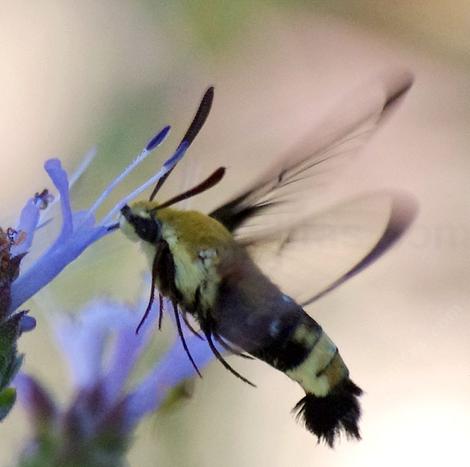
The Bumblebee Moth looks uncannily like a Bumblebee.
This disguise is to dissuade any predators who might otherwise find them a tasty treat. But when you look closer it has moth characteristics. Although sparse it does have scales. The soft and fuzzy looking ones on the top of the thorax are the most obvious but there are also scales on the veins of the wings and in a few cells. They also differ from Bumblebees in that they are able to hover while feeding, unlike the Bumblebee (that must land). Another interesting thing about this bee mimic is that it is in the Sphinx Moth family (Sphingidae). This odd Moth flies around and feeds during the day!
Plants used by the Bumblebee Moth larva
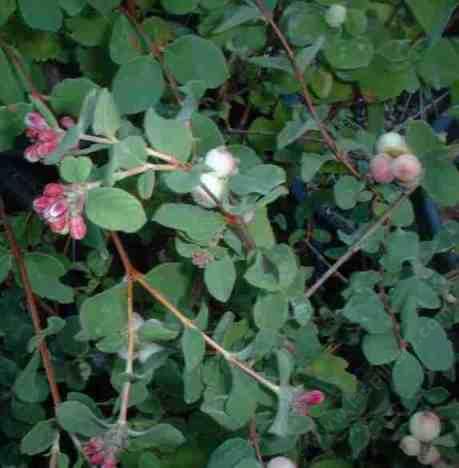
The Bumblebee Moth larva feeds on Snowberry plants and honeysuckle primarily. Snowberry is a very drought tolerant shrub that has pink flowers and snow white berries.
Las Pilitas Nursery Return to California Butterfly main page Go to Butterfly Plants Page Go to Wildlife Page
Salvia clevelandii Alpine