Western Whiptail, Cnemidophorus tigris
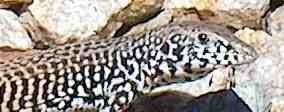
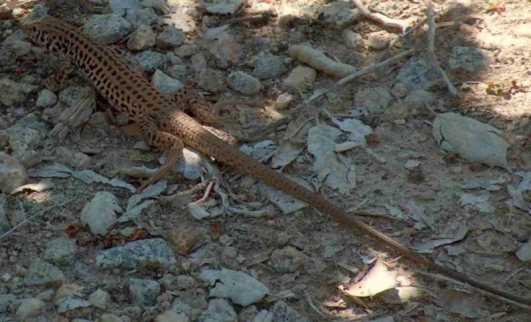
The Western Whiptail is a long snake-like lizard with a narrow elongated head. It can often be seen running along in an alligator like fashion from bush to bush.
Habitat of the Western Whiptail
The Western Whiptail likes cover. It tries to stay to the shade and protection of shrubs. It likes plants that touch the ground. It does not like weeds as they interfere with hunting and movement and have low arthropod availability. It likes leaf litter for hunting. Leaf litter (or mulch) is easy to dig in as it is loose and well aerated. It also has a wealth of arthropods. Leaf litter is also very good for your plants, retaining moisture and adding nutrients to the soil.
Diet of the Western Whiptail
The Western Whiptail eats arthropods (spiders, insects, etc.) They hunt in the leaf litter and soil.
The Western Whiptail is an avid hunter. They use their front legs to dig in the leaf litter for insects or other arthropods. They stick out their tongues, probing the air in search of prey.
Coloration of the Western Whiptail
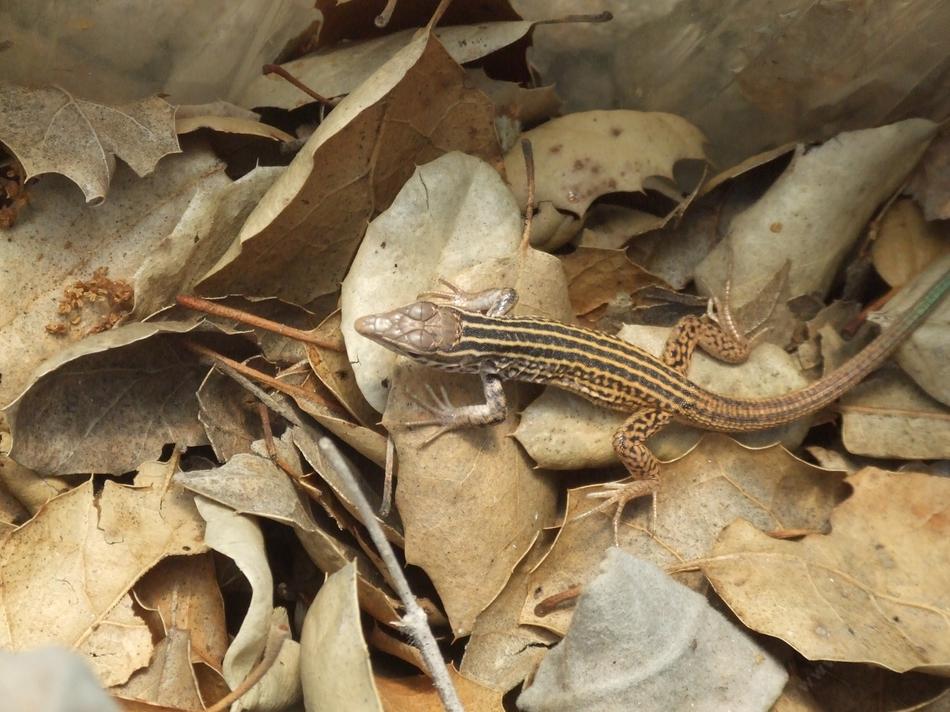
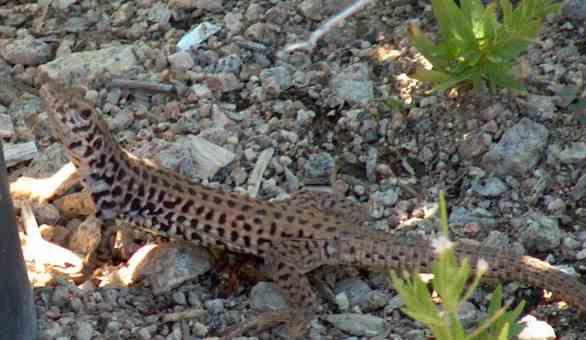
The Western Whiptail is covered with black and white to brownish orange scales. It has parallel stripes down its dorsal side to the base of the tail where the stripes turn to rings and then fade to a dull color. They have very long tails which exceed the length of their bodies. Because of its coloration, it blends in well with the speckled shade under shrubs, and the mulch, and gravely soil that it resides on.
Behavior of the Western Whiptail
The Western Whiptail is a shy lizard. It does not like people or other potential predators coming too close.
Like most lizards, when the Western Whiptail is being attacked by a predator, it will drop its tail. The muscles in the tail continue contracting causing the tail to flop around. This is distract s the predator from the lizard. However, this is a last ditch effort. It is very stressful for the lizard. It takes a lot of energy to regrow their tail, and they lose a lot of stored food. This is often a tactic they use with domestic and feral cats. As they are formidable predators where they occur.