Garden Chair
Our basic theory in the garden, cheap, easy, fun and healthy for you
and the environment.
It's hard for me to pay $50 dollars for a little garden or patio chair that was harvested from an ancient forest and collapsing the entire ecosystem and the people in it. And it is not even that good of a chair. The wood is thin and the seat size would have been for children 50 years ago, and our behinds are bigger now. If you go down to the local lumber yard and buy some hardwood material it may cost you more than $50 just for the materials that was harvested from an ancient forest and collapsing the entire ecosystem and the people in it. AND, since you do not have a clue what you are doing about half of the material may have to be used as kindling.
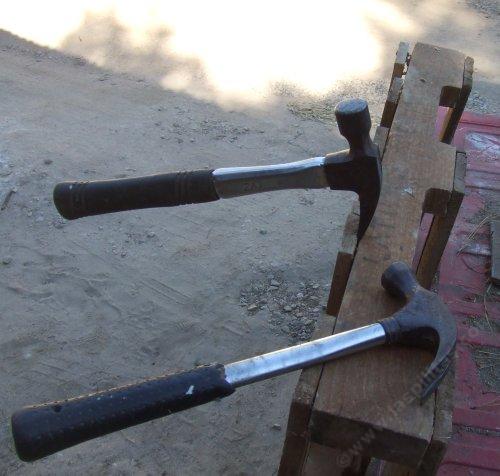
Solution? Hardwood pallets. Beer distributors, and many businesses that deal with heavy items have pallets available for free. You'll need about two for each chair. Try to find ones that have a long span between nails.
It's hard for me to pay $50 dollars for a little garden or patio chair that was harvested from an ancient forest and collapsing the entire ecosystem and the people in it. And it is not even that good of a chair. The wood is thin and the seat size would have been for children 50 years ago, and our behinds are bigger now. If you go down to the local lumber yard and buy some hardwood material it may cost you more than $50 just for the materials that was harvested from an ancient forest and collapsing the entire ecosystem and the people in it. AND, since you do not have a clue what you are doing about half of the material may have to be used as kindling.
Solution? Hardwood pallets. Beer distributors, and many businesses that deal with heavy items have pallets available for free. You'll need about two for each chair. Try to find ones that have a long span between nails.
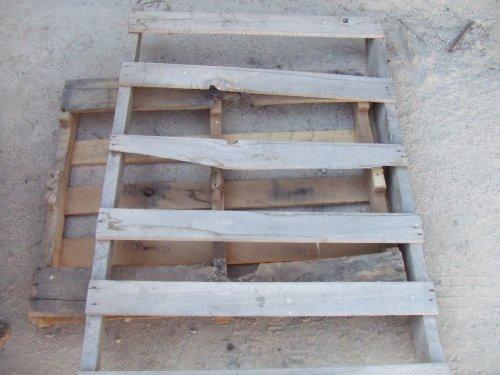
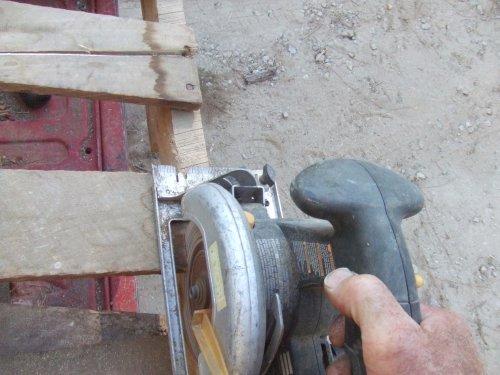
Stapled pallets you can take apart, nails
ones you may have to saw apart.
The nails on pallets are closer to nailed screws. They are very difficult to remove without breaking the wood.
The nails on pallets are closer to nailed screws. They are very difficult to remove without breaking the wood.
Ok you've made yourself a pile of wood. You'll need.
a pound of 1 5/8 deck screws, a few 1 1/4 deck screws, and a few 2 inch
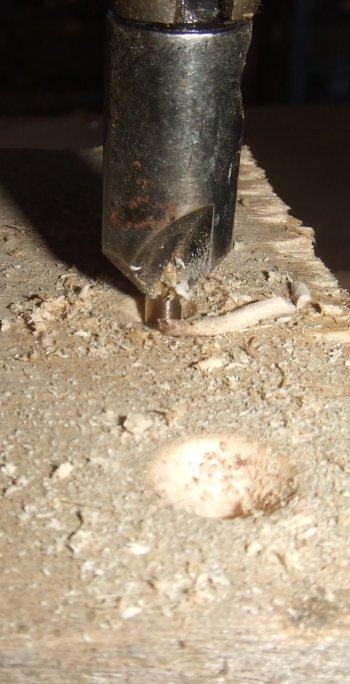
deck screws. A counter sink and bit for the deck screws, saw, screw bit
for drill and square. A cordless drill would be nice. You can justify a
whole set of tools when you figure out how much 4 wobbly
chairs would cost.

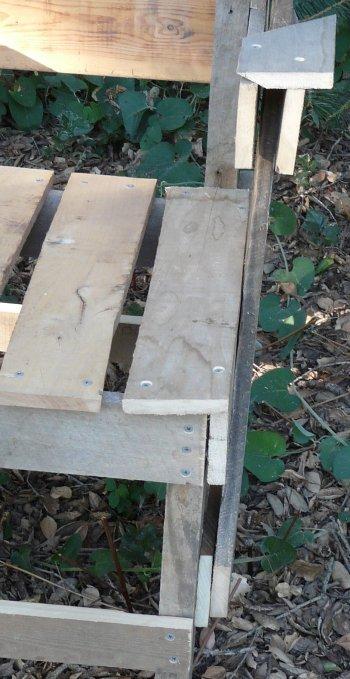
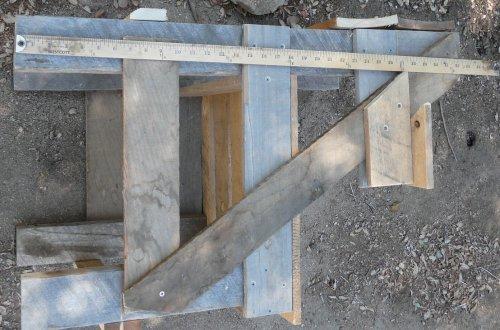
The back leg needs to be about 34-36 inches long. Attach the h together first, the side brace can be attached later, or if your family is light, ignored. The depth of the seat should be at least 18 inches as the pad will shorten the seat and a seat less than 14 inches long is not comfortable. Check the "h" with a square, measure the runners and make sure they are parallel.
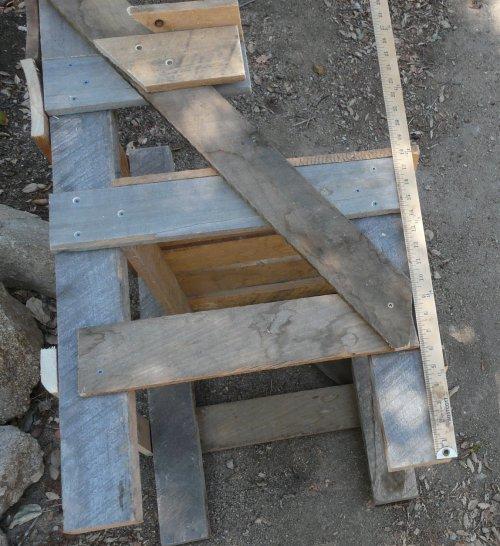
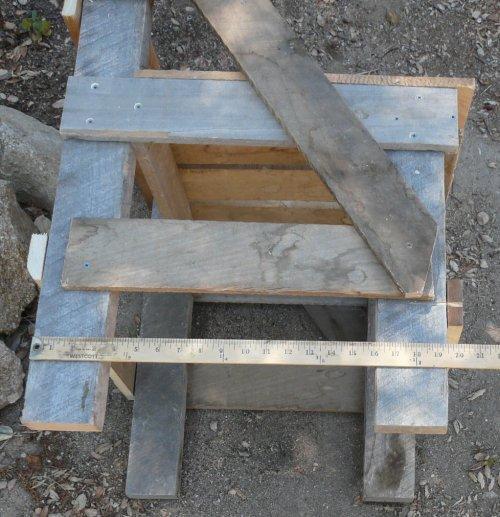
The slats and seat width need to be 18-22 inches wide. The pallets themselves will be one of the limiting factors.
Set the two "h's" on a table with the long back piece down. and screw the back runner on.
Notice that the back runner goes on the inside, so if the back of the chair is on the table or ground if you've not built the table yet, the runner goes on the side up towards you.
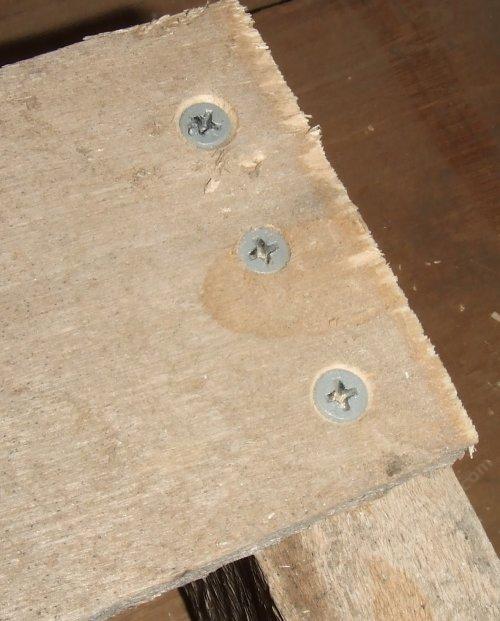
Be careful not the be rough or try to do it all at once. Counter-sink one hole and screw in one screw on each side first, then put in the other one or two screws each. Do not put the screws closer than an inch apart or you may split the wood.
After you get the two runners on, carefully put the 'chair' on the ground and line up the slats to make the seat. Counter-sink and screw one screw on each slat. Then go through and put the rest in. Notice the end slats have a slightly different pattern.
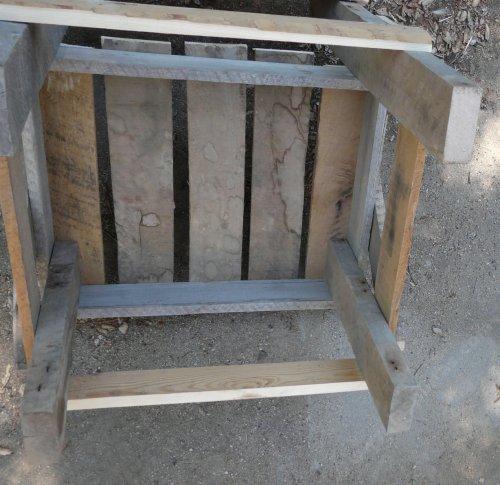
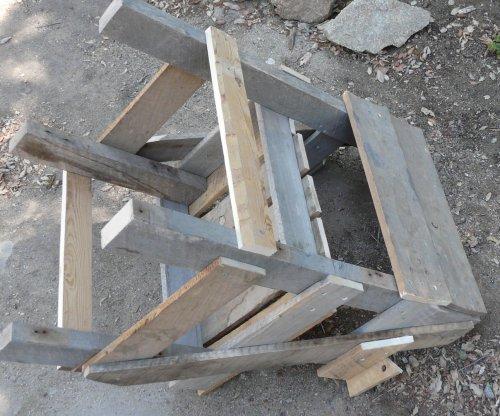


Because this is built out of old hardwood it will split unless you pre-drill every hole.
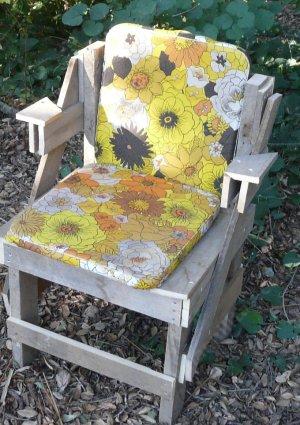
The resulting chair is a tough one and only weighs maybe 12 pounds.
The resulting chair is a tough one and only weighs maybe 12 pounds.