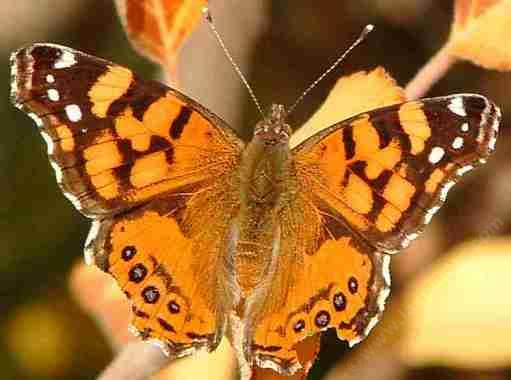
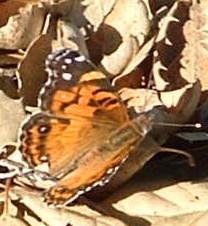
West Coast Lady, Vanessa annabella
Plants used as nectar sources by the Adult West Coast Lady
Butterfly
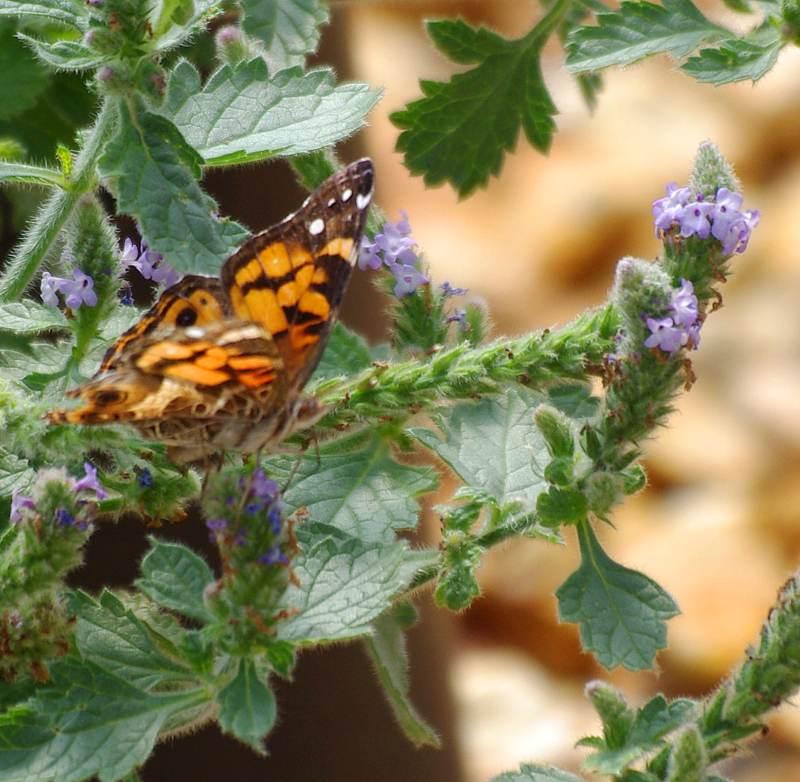
The West Coast Lady butterfly likes sages such as the ground cover Salvia gracias (photo right). Salvia gracias is excellent for rock walls and steep hot banks. It has attractive light purple flowers. It is very drought tolerant. Sages are very popular with butterflies as well as hummingbirds. Deer don't eat them unless there is nothing else to eat. (If you have deer that will eat this you should grow rocks.)
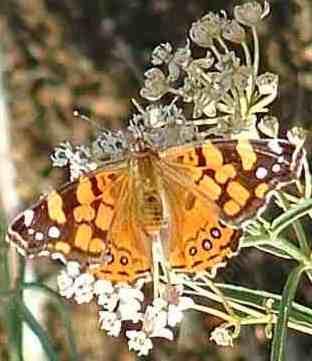
Another popular butterfly plant is the Narrow Leaf Milkweed, Asclepias fascicularis. ( photo below)This Milkweed is an insect magnet in the summer. All sorts of butterflies visit it and lots of interesting beetles, bugs, and other flying things. This is definitely the most hopping (crawling, creeping, buzzing etc.) place to be in the summer. It needs water and will spread wherever the ground is wet. If you have a dry native landscape, you can put it near a drippy bird bath and it should stay put. It is also a larval food plant of the Monarch butterfly.
Plants used by the Larva of the West Coast Lady Butterfly
The West Coast Lady Butterfly larva feeds on plants in the mallow (Malvaceae) and nettle (Urticaceae) families.
Some of the Mallows that are enjoyed by the larva are Sidalcea spp. and Spheralcia spp. There are many species of Spheralcia that are beautiful in a garden setting.
California Checker Mallow, Sidalcea malvaeflora sparsiflora is a small delicate perennial that likes moist shady areas. It does well under traditional garden conditions.
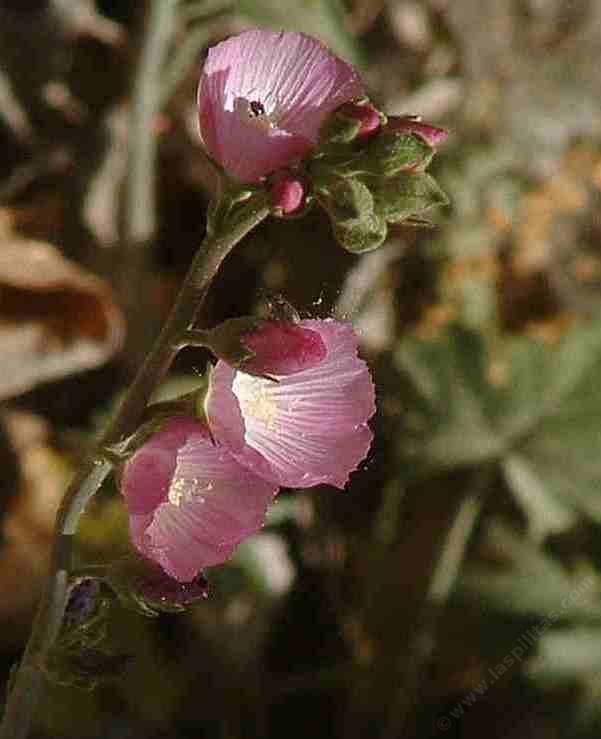
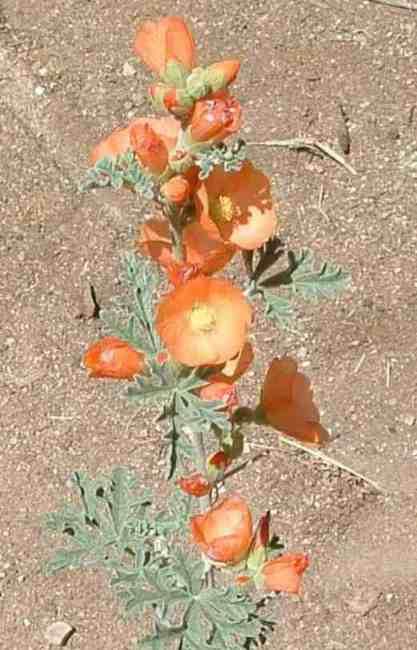
Desert Mallow, Sphaeralcea
ambigua, (photo below) is a two to three feet tall perennial.
It likes hot dry full sun landscapes, as it is native from Baja
California to Utah. It is showy with lots of
orange flowers and gray foliage. It has a very long flowering period
especially if it gets a few summer rain showers ( a.k.a. you with your
garden hose).