Corylus cornuta var. californica
Western Hazelnut.
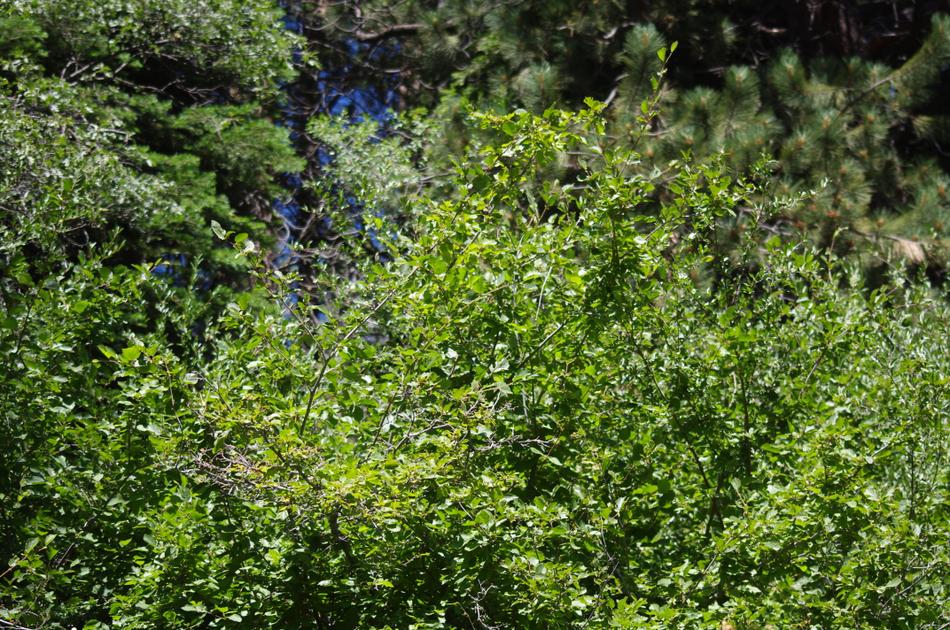
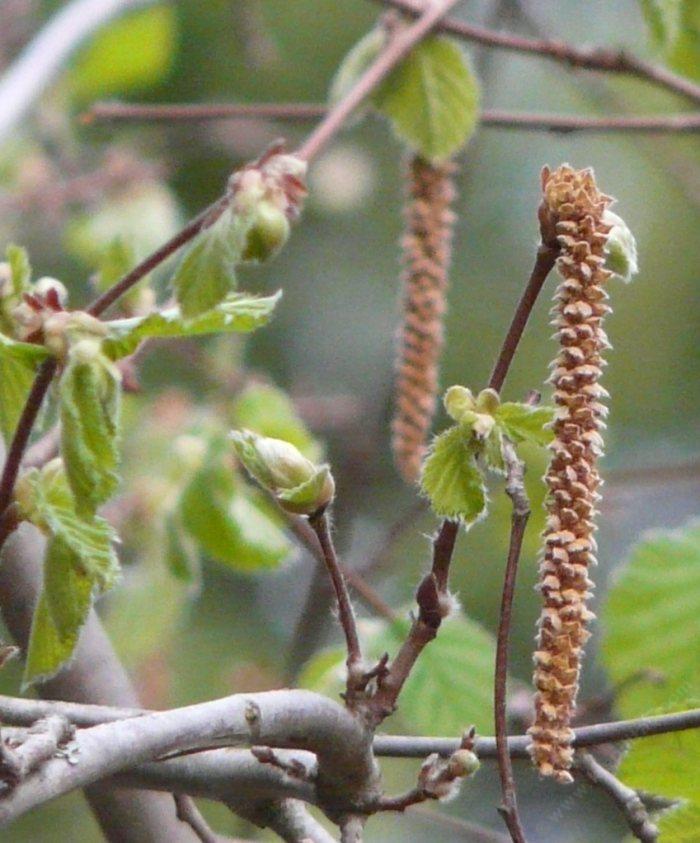
Western Hazelnut native to many shady moist spots from Santa Cruz and Yosemite north to B.C. One of our customers report a grove in the Santa Barbara Area. One of the early Spanish expeditions along the coast in 1543 said the Indians in Santa Barbara had abundant quantities of hazelnuts and it was part of their diet. I've seen in two sites to date. The first was around Ben Lomond next to a seasonal stream. It was in a narrow opening in a Douglas fir forest (full shade). Companion plants were Acer macrophyllum and Umbellularia californica. The duff was 2" deep and the soil was an old sand dune with a shallow hard pan with a pH of about 5.5. The other site was in the Sierra Nevada mountains at about 4000' in granitic soils. In was on a stream bank in part-shade and moist soil, and pH was 6. The area was predominantly Quercus wislizenii, Ceanothus cuneatus, Arctostaphylos viscida, and Rhamnus californica. The companion plants were Cornus nuttallii, Aesculus californica, and Acer macrophyllum. Sawyer, et.al. in Barbour & Major lists the companions on a site on Siskiyou Mountain at the Oregon/California border: Pseudotsuga menziesii, Chamaecyparis lawsoniana, Polystichum munitum, Acer circinatum, Gaultheria shallon, Berberis nervosa, and Acer macrophyllum.
A comment by Lila "corylus cornuta...you mentioned the location of a few groves on the page for that plant . Because it is perhaps my most favorite plant (who knows why...) I am happy to tell you that there are 2 young groves on my 90 acre property near Willits in Mendocino county. The higher parts of the property were logged, looks to me like 40 years ago, maybe? The hazels are on steep slopes among the second growth fir accompanied by bay, and a few young-ish oaks (not getting much light), some ferns, and nearby where it was drier, some buckeyes. As you noted, the hazels had found the places where a shaft of light could get through. One grove was on a west facing slope, the other north facing, both at about 1500'. Each grove had one mature specimen bearing nuts (this year) and several smaller specimens nearby without nuts. I am encouraged to see the youngsters. "
A comment by Lila "corylus cornuta...you mentioned the location of a few groves on the page for that plant . Because it is perhaps my most favorite plant (who knows why...) I am happy to tell you that there are 2 young groves on my 90 acre property near Willits in Mendocino county. The higher parts of the property were logged, looks to me like 40 years ago, maybe? The hazels are on steep slopes among the second growth fir accompanied by bay, and a few young-ish oaks (not getting much light), some ferns, and nearby where it was drier, some buckeyes. As you noted, the hazels had found the places where a shaft of light could get through. One grove was on a west facing slope, the other north facing, both at about 1500'. Each grove had one mature specimen bearing nuts (this year) and several smaller specimens nearby without nuts. I am encouraged to see the youngsters. "
Foliage of Corylus cornuta var. californica is deciduous.
Flower of Corylus cornuta var. californica has color na.
Fruit of Corylus cornuta var. californica is edible.
Communities for Corylus cornuta var. californica:Chaparral and Douglas Fir Forest.
| ph: | 5.00 to 7.00 |
|---|---|
| usda: | 7 to 10 |
| height[m]: | 3.00 to 4.00 |
| width[m]: | 2.00 to 3.00 |
| rainfall[cm]: | 100.00 to 175.00 |