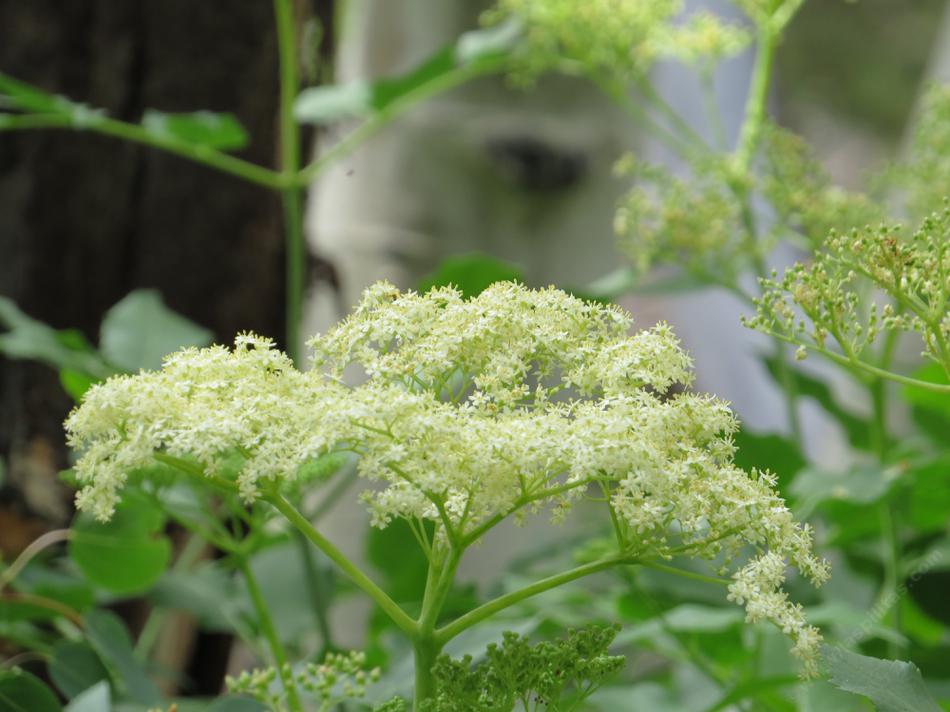
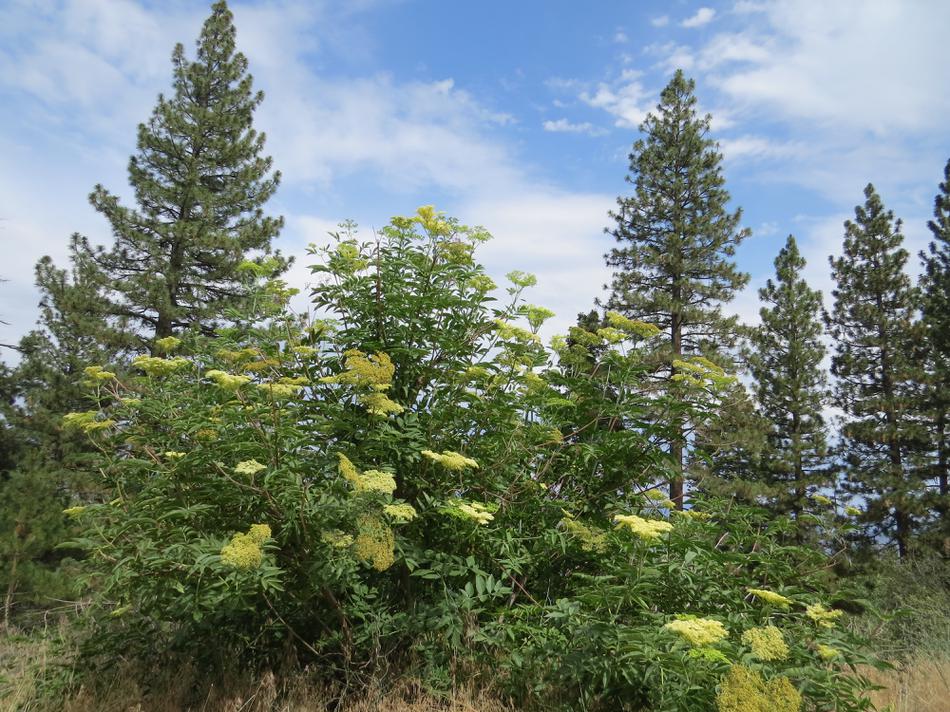
Sambucus caerulea

Sambucus caerulea

Identification

Genus: Sambucus Species: caerulea Variety: Cultivar:
Common name: Blue Elderberry.

Description

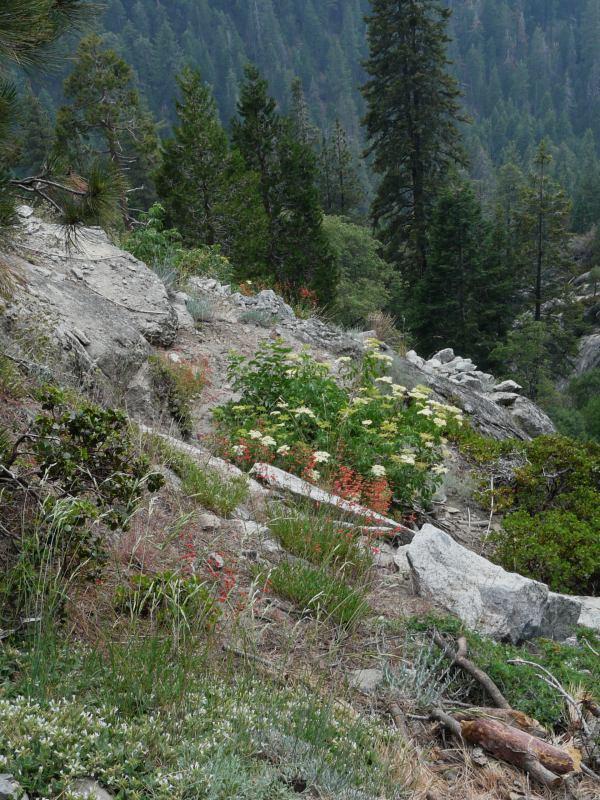
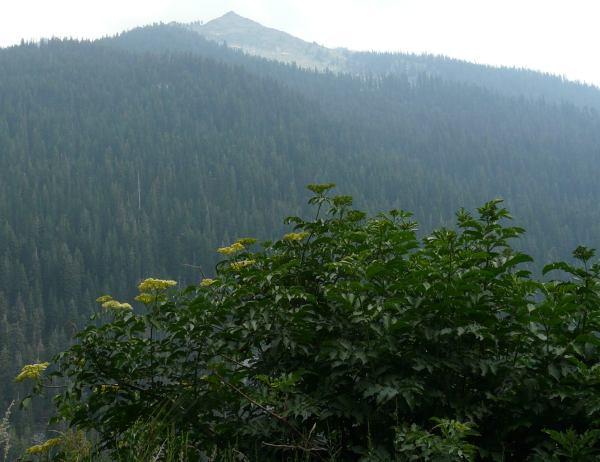
Native from Alberta to Mexico. It is very similar to S.mexicana but needs more water and better soil. It might be more desirable in a watered back yard as it will handle water better. It has slightly larger berries but I think that is because of the extra water. This species can be easily propagated by us from cuttings where S. mexicana does not propagate from cuttings at all. This species is happiest at moist cool spots. I\'ve only seen good looking ones of this at 8000\' or so. There is a mangy looking one at Tehachapi barely growing in a seasonal creek down out of the wind. That is at 3000\'. This species looks the same at our site. The botanists have really screwed this one up. I know by propagation these are different species. I think the reason the S. caerulea will root is it grows in areas of snow. As it has evolved one of its means of reproduction is to root where the branches are pushed to the ground by the snow. S.mexicana on the other hand grows in areas of little or no snow (or like our area that snow melts off after a day or two). \"There are also interspecific variations reflecting selection due to snow cover. Cryptomeria japonica segregates into two types differing in life form and mode of propagation. Such cryptomerias readily propagate by vergetative means; they generate adventitious roots when their lower banches are pressed into the uppermost layers of the soil under heavy snow cover.\"(Sakai) The botanists list these as the same species, as sub-species of each, they have 3 spellings of caerula(cerulea,coerulea), caerula as glauca, mexicana as coerulea var. arizonica, mexicana as velutina. One key has caerulea as having leaflets of 5-9, and mexicana 3-5 leaflets. Another key says they both have 5-9 leaflets. The best way to tell if you have one or the other is that S.caerulea grows from 4000\' up to 10000\' and S.mexicana 4500\' down. That\'s not exact but close. This is one of the reasons revising our pricelists or catalog takes so long. The trade does the same as the botanists with these. REMEMBER IF IT IS LOW ELEVATION IT IS S.MEXICANA.


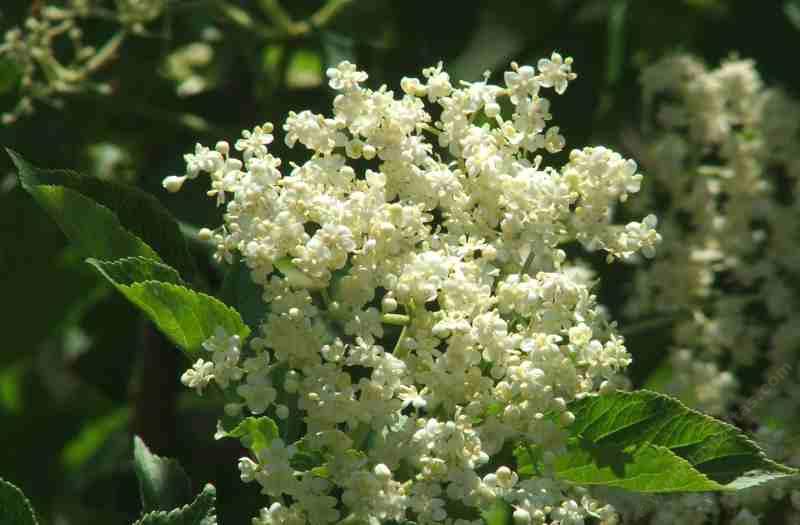
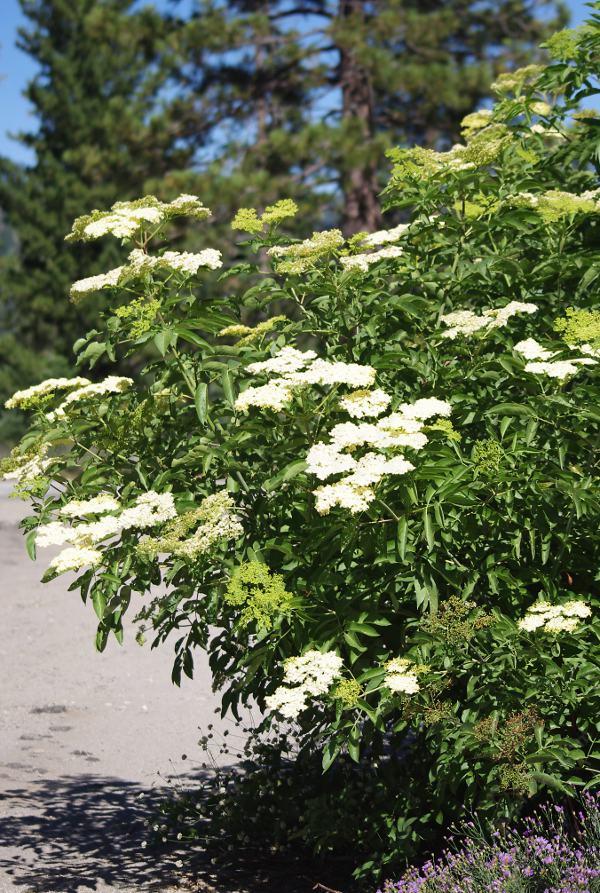
Sambucus caerulea, Blue Elderberry

Characteristics

Sambucus caerulea Blue Elderberry tolerates seasonal flooding.
Sambucus caerulea Blue Elderberry is great for a bird garden.
Sambucus caerulea Blue Elderberry's foliage type is deciduous.
Sambucus caerulea Blue Elderberry's flower color is yellow.
Sambucus caerulea Blue Elderberry's fruit is edible.

Communities

Communities for Sambucus caerulea Blue Elderberry:Red Fir Forest and Yellow Pine Forest.

Ranges for Sambucus caerulea

ph: 6.00 to 7.00
usda: 5 to 10
height[m]: 2.00 to 3.00
width[m]: 2.00 to 4.00
rainfall[cm]: 100.00 to 895.00

What does all this mean!?!

Plants available Online

Gallon Price
8 $ 7.99

Shopping Cart

Mail order ? Information about shipping charges and general mailorder help. Due to state regulations, a $25 phytosanitary fee will be charged on shipments to Alabama, Idaho, Florida, Oregon, and Virginia (As this charge does not appear on your order, we cannot ship unless you acknowledge this extra charge in the message box, located at the bottom of your order). Sorry but we do not ship to Georgia, Indiana, Mississippi, Montana, Tennessee, Texas and West Virginia.

Plants available only at our Santa Margarita (Central Californa) location.

Gallon Price Five Price Fifteen Price
8 $ 7.99 Out of Stock $ 0.00 Out of Stock $ 0.00

Plants available only at our Escondido (Southern California) location.

Gallon Price Five Price Fifteen Price
Out of Stock $ 6.99 Out of Stock $ 0.00 Out of Stock $ 0.00

View Information About Other Plants

plant lists alphabetized by scientific name: A - B - C - D - E - F - G - H - I - J - K - L - M - N - O - P - Q - R - S - T - U - V - W - X - Y - Z
plant lists alphabetized by common name: A - B - C - D - E - F - G - H - I - J - K - L - M - N - O - P - Q - R - S - T - U - V - W - X - Y - Z
plant lists alphabetized by cultivar: A - B - C - D - E - F - G - H - I - J - K - L - M - N - O - P - Q - R - S - T - U - V - W - X - Y - Z

Las Pilitas - Home Page