Arctostaphylos cruzensis
Arroyo de la Cruz Manzanita.

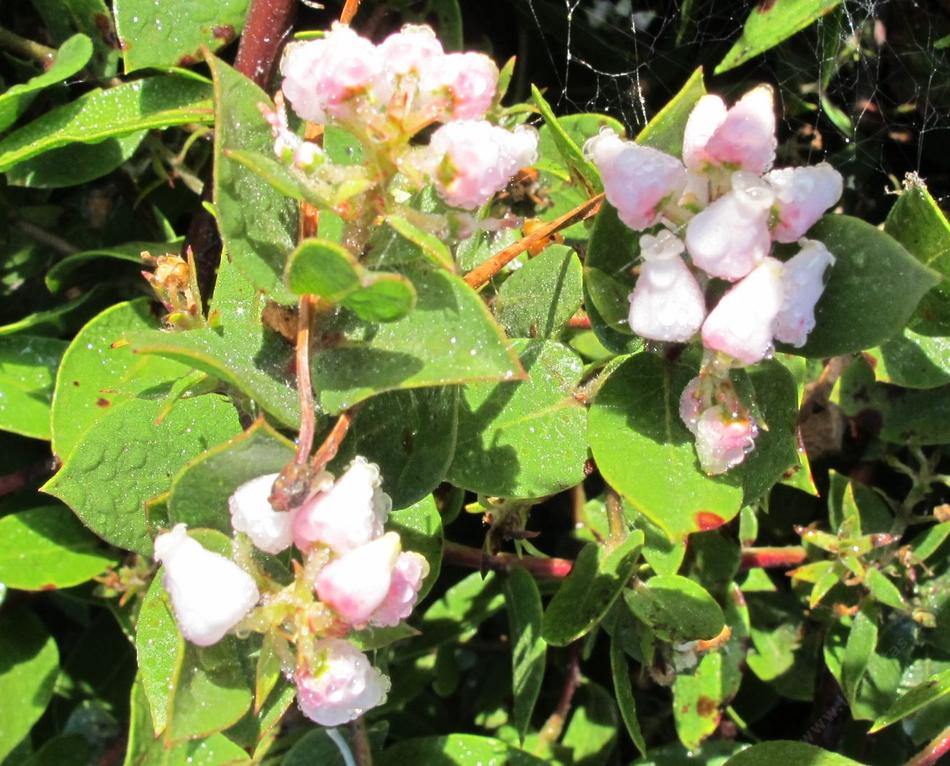
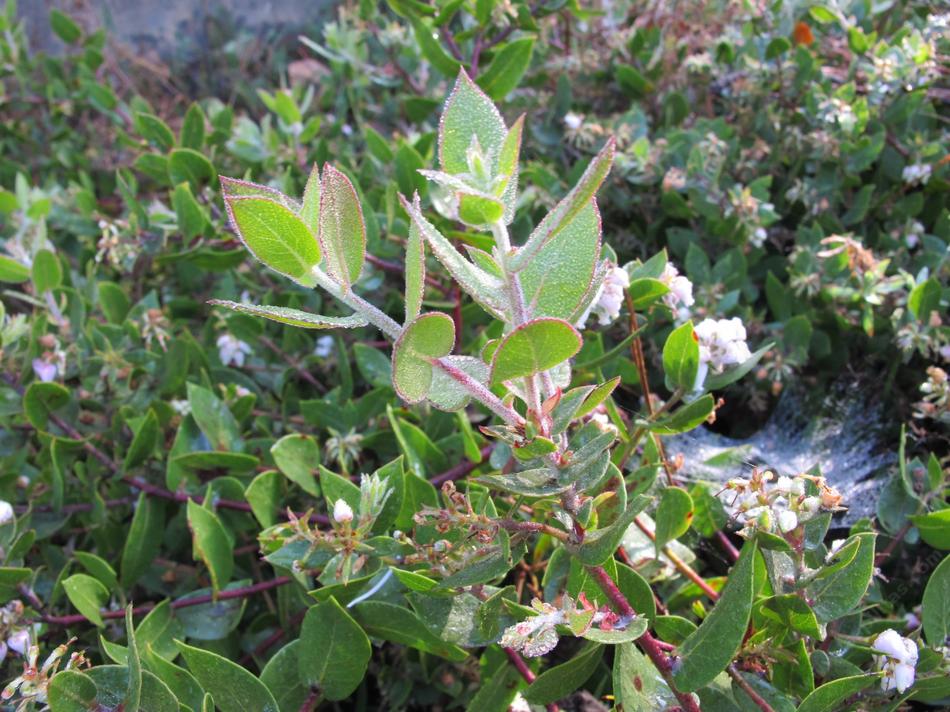
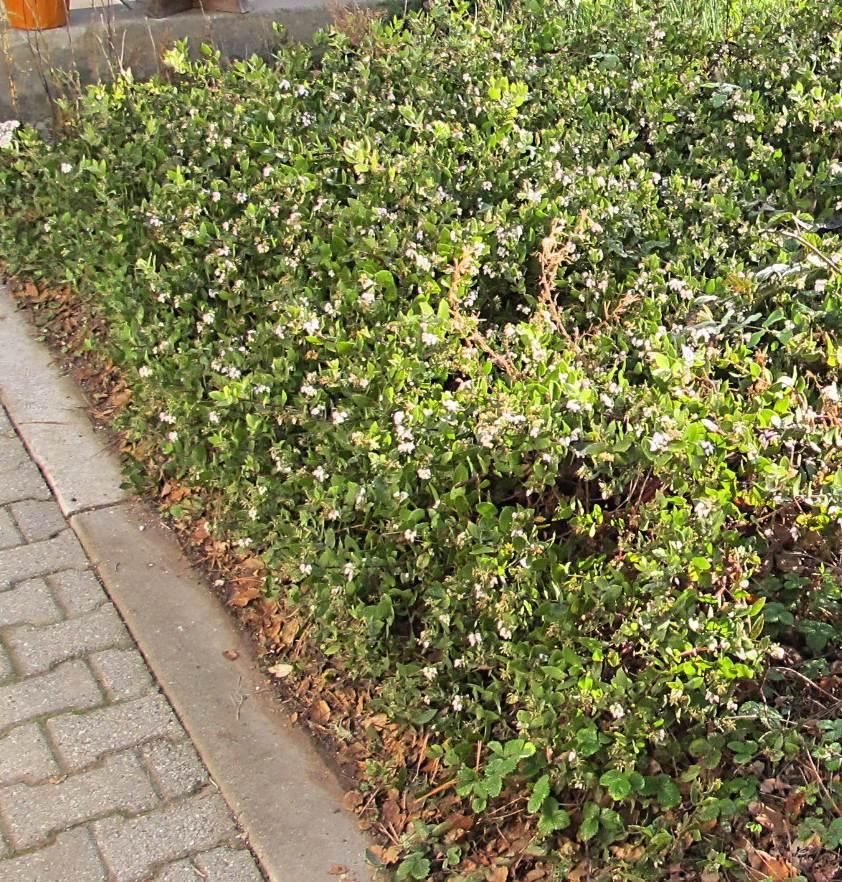
This manzanita is a little shrub that grows to 2-3' tall and 4-5' in width. It has auriculate leaves that are gray on smooth dark red stems. It grows on old ocean beaches and bluffs from San Luis Obispo county to Monterey county. The soil varies from a near adobe thru red clay overlaying hard pan to a gray, sand-rock composite. This species receives summer fog and rainfall of about 20-30 inches per year. La Cruz Manzanita grows in one of the most moderate climates in the world. Every day has a high of 60-65 degrees F. and a low of 50 degrees F. The coastal sage scrub/coastal chaparral plant communities in which it lives also have Ceanothus hearstiorum, Ceanothus thyrsiflorus, Ceanothus griseus, Adenostoma fasciculatum, Iris douglasii, Lonicera involucrata, Baccharis pilularis, Salvia mellifera, Toxicodendron diversilobum, Diplacus aurantiacus, and Lupinus arboreus (among others). We were given one of these years ago by Austin Griffith at Native Sons nursery. It will often grow in snarled and twisted ways, in behind boulders where the cattle cannot reach. New growth is reddish. I could see it mixed in with boulders and mulched in coastal gardens.
Arctostaphylos cruzensis tolerates salt and sand.
Foliage of Arctostaphylos cruzensis has color reddish-green and is evergreen.
Flower of Arctostaphylos cruzensis has color white.
Fruit of Arctostaphylos cruzensis is edible.
Communities for Arctostaphylos cruzensis:Chaparral and Coastal Sage Scrub.
| ph: | 6.00 to 8.00 |
|---|---|
| usda: | 7 to 10 |
| height[m]: | 0.20 to 0.50 |
| width[m]: | 1.00 to 2.00 |
| rainfall[cm]: | 50.00 to 77.00 |