Asclepias vestita
Woolly Milkweed.
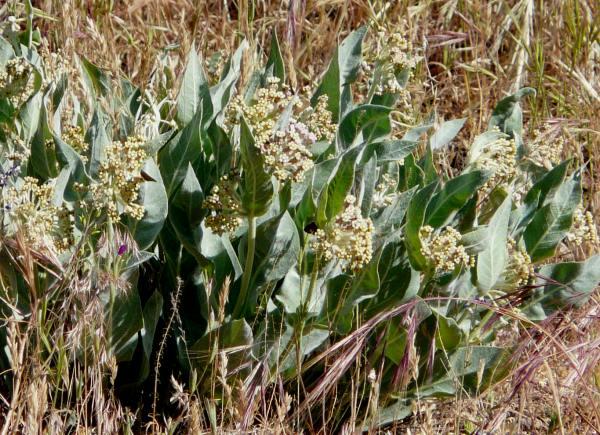
A gray-green sprawling perennial that grows along the east edge of the San Joaquin Valley. One of the milkweeds that are used by the butterflies as a food source. Poisonous to cattle, horses and people if they are forced to eat it. A. vestita looks like A. eriocarpa and A. erosa (but the lateral umbels are sessile.) Milkweeds were used by the indians for fiber plants. The dead stems are used by the Orioles for the same purpose. (The nests look like small fiberglass hand bags.) An aside, even though the nests are at the end of branches, 50 ft. in the air, suspended by a fiberglass bungee cord, snakes still get the eggs. This milkweed is one of the upland ones that likes to be dry in summer-fall, moist in winter-spring. Plant with a boulder or rock next to it, plant bunch grasses and poppies around it. You will commonly find these plants at the edge of deciduous oaks like Quercus lobata, the valley oak. The alkaloids associated with this plant give the butterflies that feed on it protection. Alkaloids from the wrong milkweed(South American, Mexican, etc.) can expose the butterflies to predation. If the monarch or other butterfly has not evolved with the milkweed they have no tolerance for the particular alkaloid of the species. The California flyway runs from Baja to Canada, it does not include Mexico proper nor Central America. If you live in Chicago you can plant Mexican species (Asclepias mexicana) or Asclepias tuberosa, don't plant our species. I would guess the symptoms to be similar to the problem of intolerance to legumes that some people have.
Asclepias vestita is great for a bird garden and a butterfly garden.
Foliage of Asclepias vestita is stressdeciduous.
Flower of Asclepias vestita has color white.
Communities for Asclepias vestita:Chaparral, Valley Grassland and Central Oak Woodland.
| ph: | 6.00 to 8.00 |
|---|---|
| usda: | 7 to 10 |
| height[m]: | 0.50 to 1.00 |
| width[m]: | 0.50 to 1.00 |
| rainfall[cm]: | 40.00 to 80.00 |