Stipa pulchra
Purple Stipa and Purple Needle Grass.
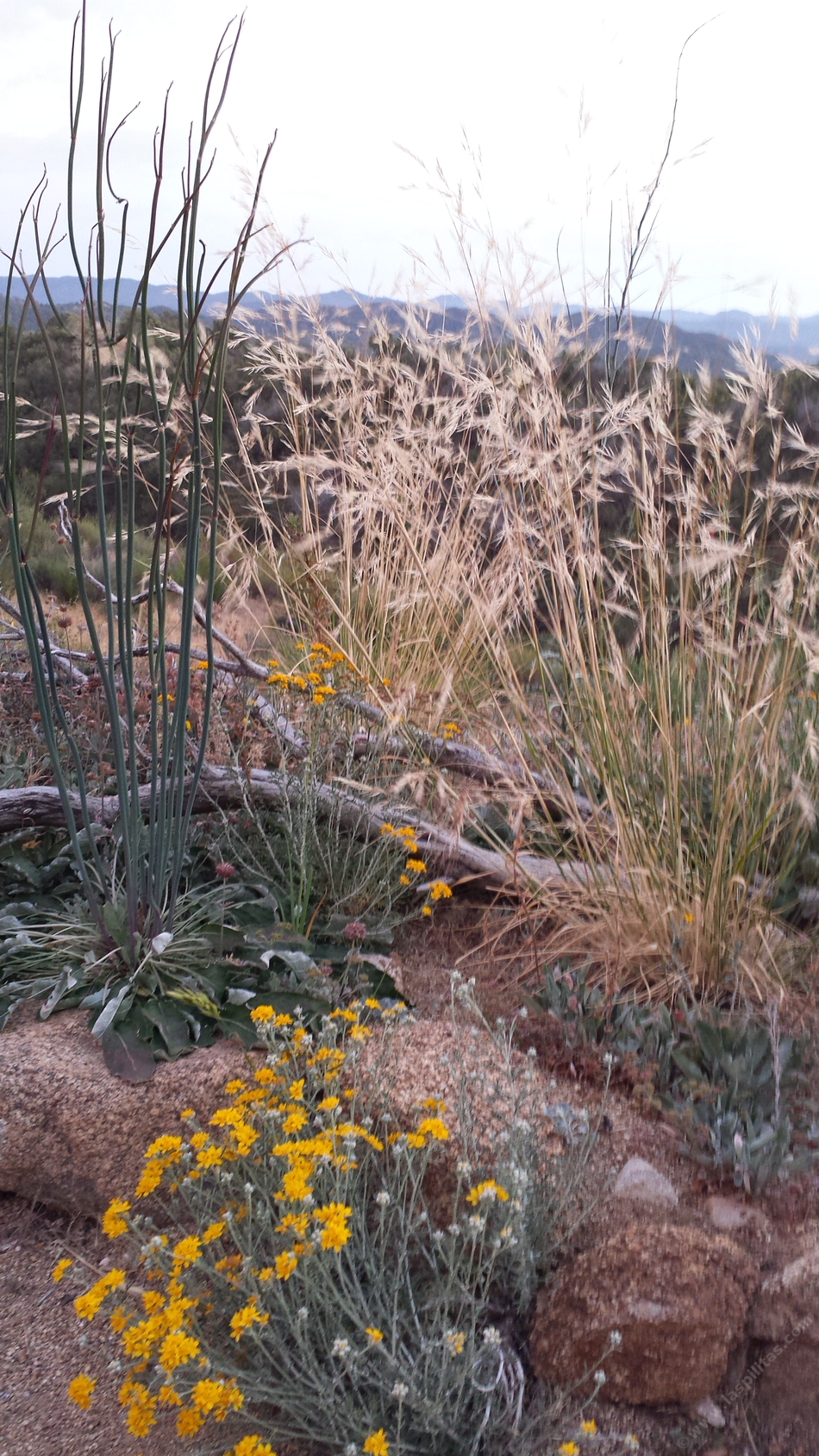
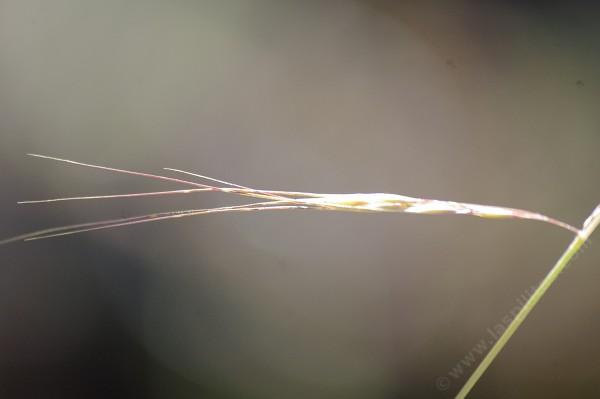
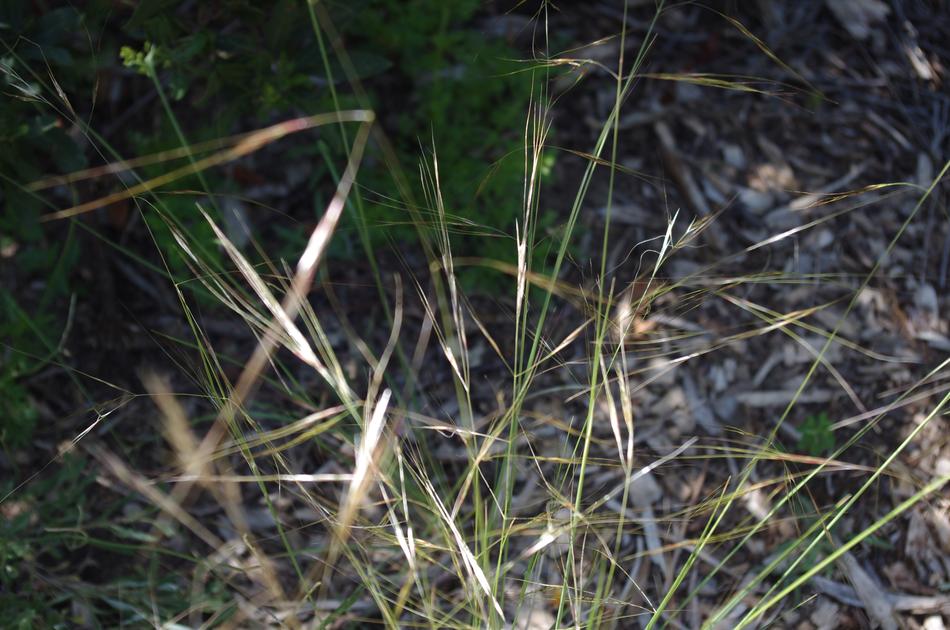
Purple Needle Grass is dry-land bunch grass. In the wild it is in the open spots in Oak Woodland mixed with Calochortus species, Long stem Buckwheat, Yucca whipplei, Golden Yarrow and wildflowers like poppies, lupines, and owls clover. There used to be a stunning Purple Needle Grass plant at the Hungry Valley turn off of I-5 50 miles north of Los Angeles. It stood out of a mess of trash and introduced weeds. The site has burned many times since I saw this plant in the 1970's. It is no longer there (not much else either). The plant was huge for a stipa, 3ft tall and 2ft wide. No dead mass at all. It was growing in an alkaline clay-loam in full sun and on a gentle, fast-draining slope. The Stipas occur throughout California in many plant communities. They do not form large solid stands except in 20-50' clumps and grow in shallow soils, and/or soils with high boron, serpentine, but in most areas they stand as locus individuals. In the Coastal Prairie and Valley Grassland they occur with annual wildflowers, buckwheats (Eriogonum), Golden Yarrow (Eriophyllum), Salt bush (Atriplex spp.), Sagebrush (Artemisia spp.).
Purple Needle Grass has leaves that are bright green up close, appear gray from a distance. I In clumps of 5-10, when in seed, it looks like a golden sea. The Desert communities have many of these same species along with the bunch grasses. For the bunch grasses to be stable long-term, plant the Stipas at 3 ft. intervals with at least some of the wildflowers from the native community between the Stipa. If you can plant a perennial for every 5-10 Stipas all should be happy. If you want to plant an Oak woodland with Stipas, plant them in the open areas between the evergreen trees, and under the deciduous oaks.
Weeds are a problem in these type plantings so keep an eye on them. Weed removal will be a constant, as the alien plant species will seed in every year, to compete with the bunch grasses and wildflowers. Plant three or five, if after a couple of years they spread, plant more. If all of them dissatisfy, plant something else.
Purple Needle Grass is the California State Grass. (Syn. Nassella pulchra)
Stipa pulchra tolerates alkaline soil, clay and seasonal flooding.
Foliage of Stipa pulchra has color green and is deciduous.
Flower of Stipa pulchra has color na.
Communities for Stipa pulchra:Chaparral, Coastal Sage Scrub, Valley Grassland, Coastal Prairie, Southern Oak Woodland and Central Oak Woodland.
| ph: | 6.00 to 8.00 |
|---|---|
| usda: | 7 to 10 |
| height[m]: | 0.70 to 1.20 |
| width[m]: | 0.10 to 0.50 |
| rainfall[cm]: | 32.00 to 100.00 |