Osmaronia cerasiformis
Oso Berry.
 play movie
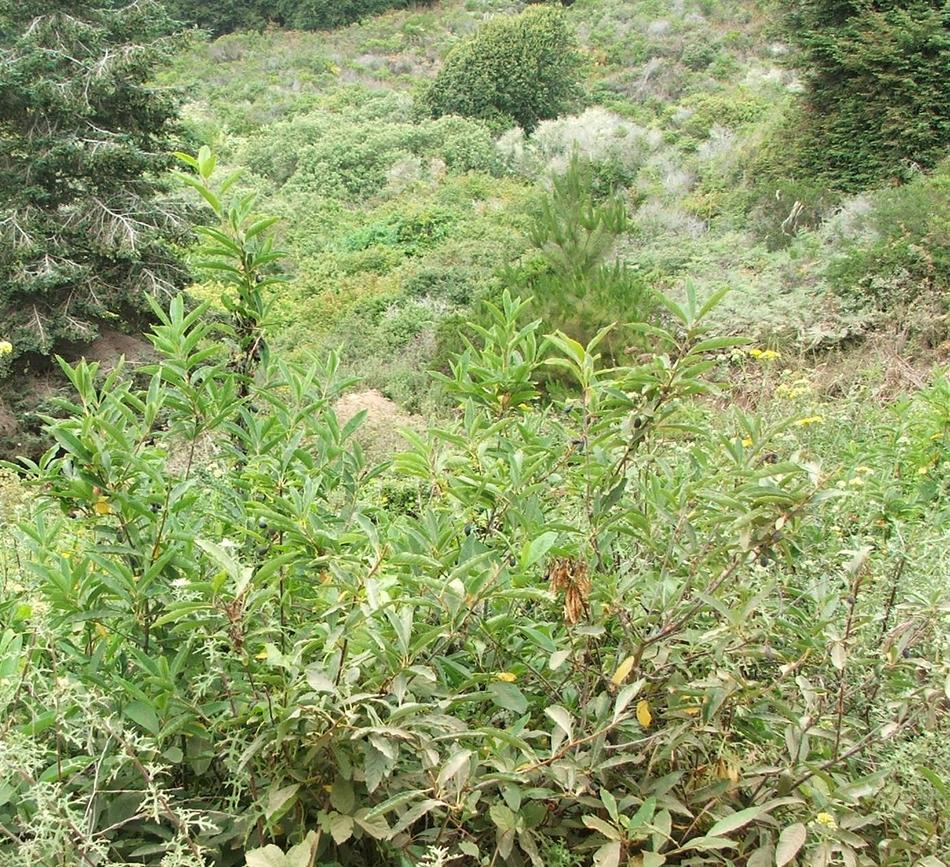
Oso Berry, Osmaronia cerasiformis, is found in the wild in either relatively highly forested areas in part or high shade or north slopes in fairly moist partial shade, sandy topsoil, clay subsoil. Uncommon in closed-cone pine forest, chaparral, mixed evergreen forest, assoc. plants, Pteridium aquilinum var. pubescens, Toxicodendron diversilobum, Heteromeles arbutifolia, Rubus species, Quercus agrifolia, Quercus chrysolepis, Lithocarpus densiflorus, Diplacus aurantiacus, Rhamnus californica, Umbellularia californica, Cornus stolonifera and Populus trichocarpa.
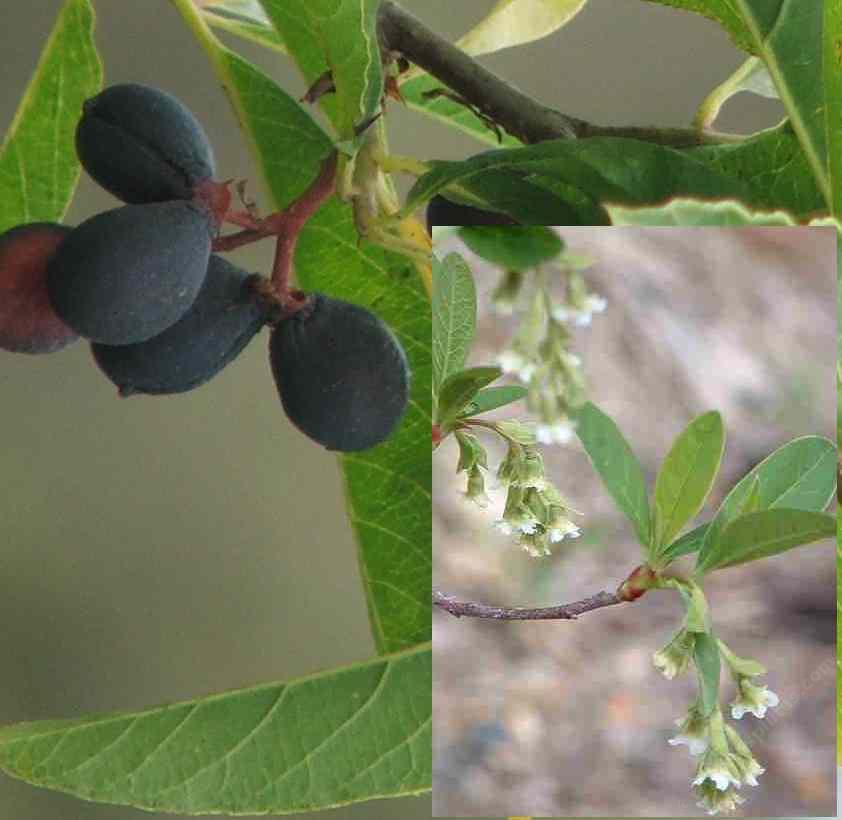
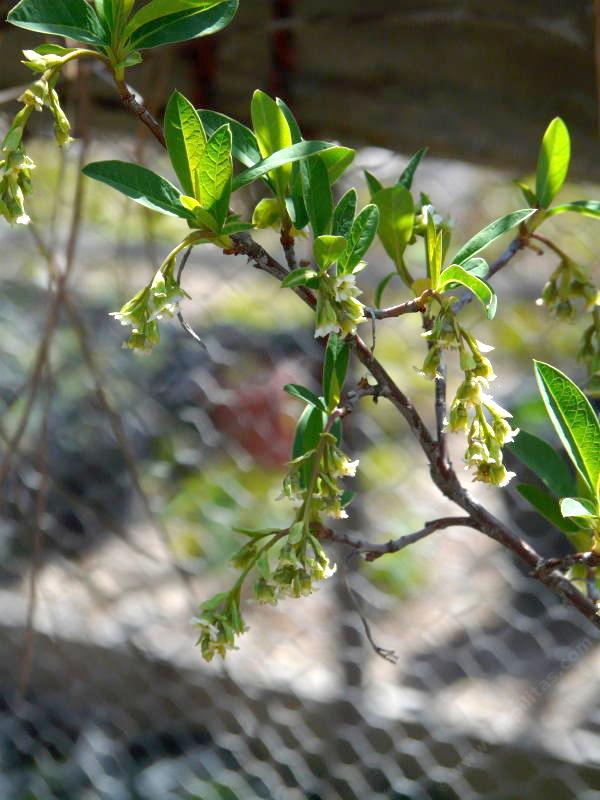
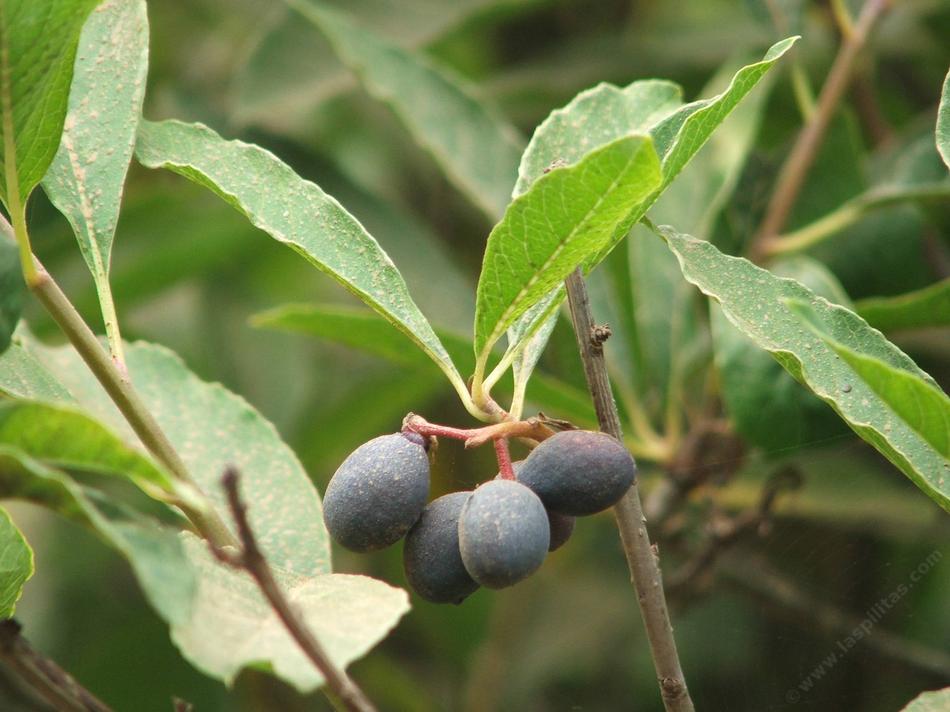
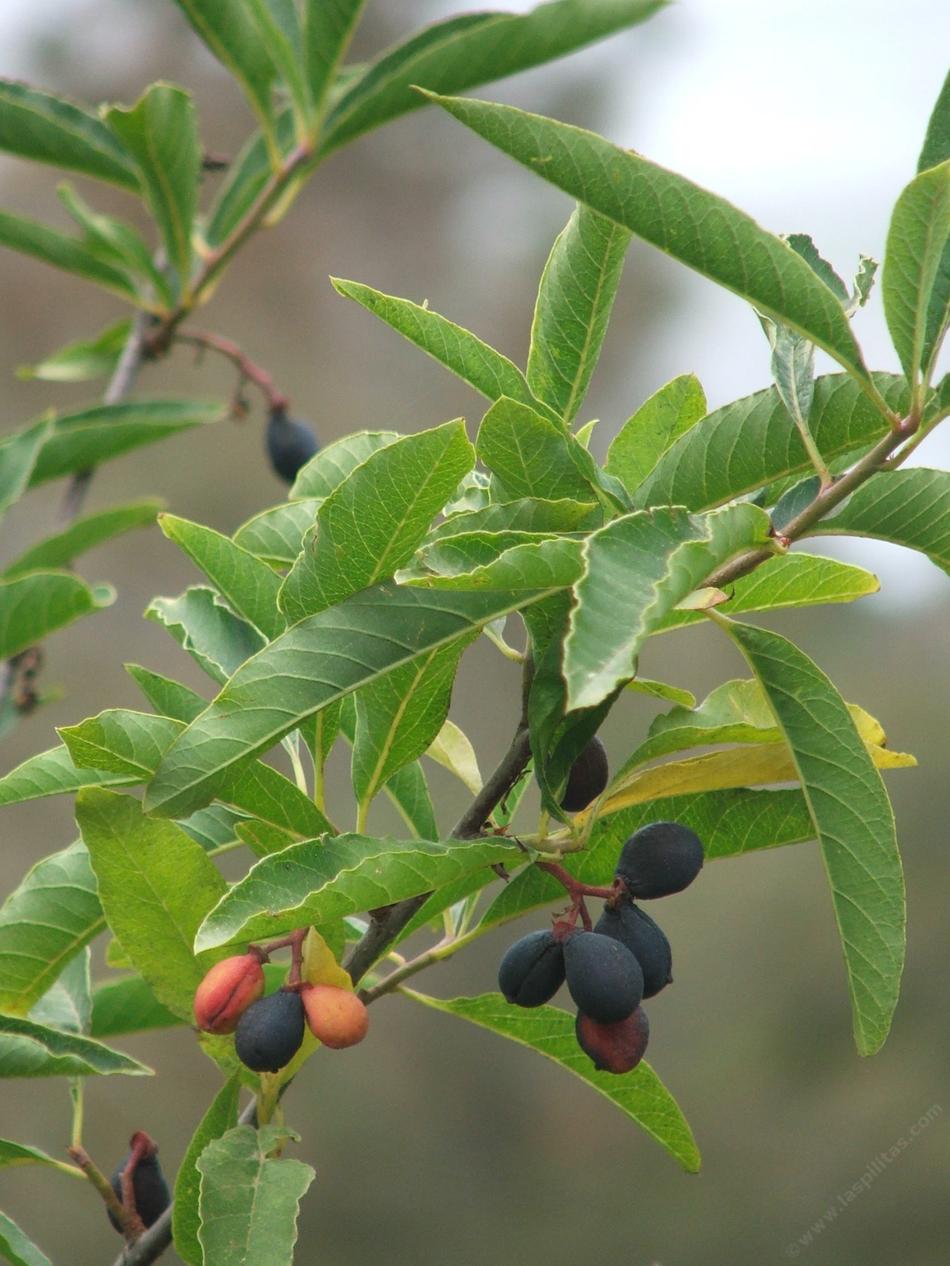
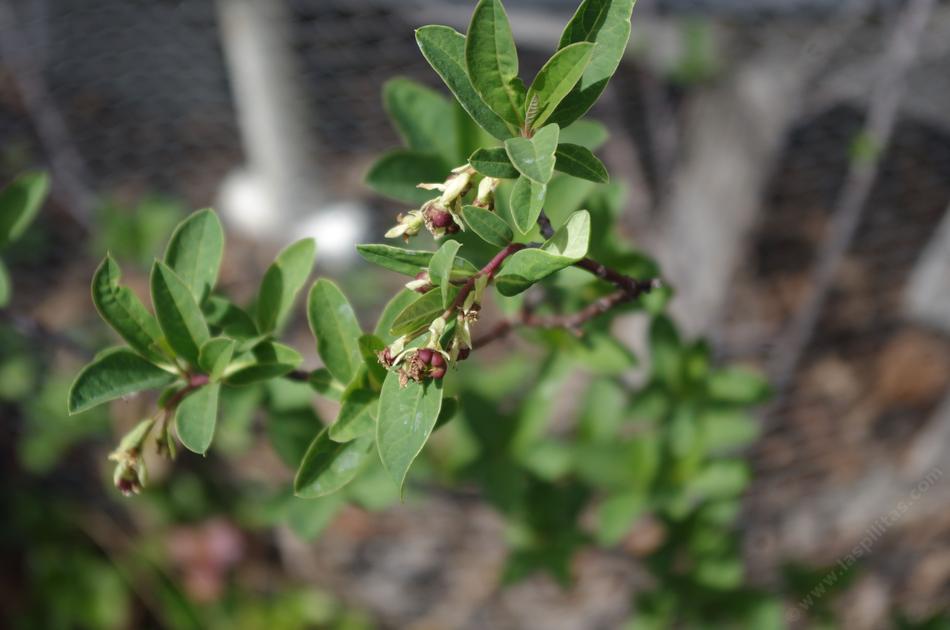
Oso berry, an attractive deciduous shrub to small tree, a green woodsy plant that resembles a pussy willow until it flowers or fruits. Oso berry flowers at the same time as Ribes species(very early spring) and make a good mix with them. Flowers are like many natives, usually males on one plant and females on others, except on good years(or maybe bad years?) then you will find both on the same plant. (Redundancy in native systems is common.) Crushed foliage smells like a green watermelon. The inch (1cm) fruits are like a olive-blueberry(and, from all the literature says, tastes like that) There's not much meat on the fruit (at east here), mostly skin and seed. But it tastes like a very weak plum mixed with a blueberry. Not bad, but a lot of work for a hand full. Partly dioecious, maybe by stress.
( Syn. Oemleria cerasiformis)
Osmaronia cerasiformis tolerates clay.
Osmaronia cerasiformis is great for a bird garden.
Foliage of Osmaronia cerasiformis turns a different color in the fall, has color green, is deciduous and has fragrance.
Flower of Osmaronia cerasiformis has color white.
Fruit of Osmaronia cerasiformis is edible.
Communities for Osmaronia cerasiformis:Chaparral, Closed-cone Pine Forest, Coastal Sage Scrub, Mixed-evergreen Forest, Redwood Forest and Yellow Pine Forest.
| ph: | 4.00 to 7.00 |
|---|---|
| usda: | 8 to 10 |
| height[m]: | 1.00 to 4.00 |
| width[m]: | 1.00 to 3.00 |
| rainfall[cm]: | 90.00 to 300.00 |