Distichlis spicata
Saltgrass.
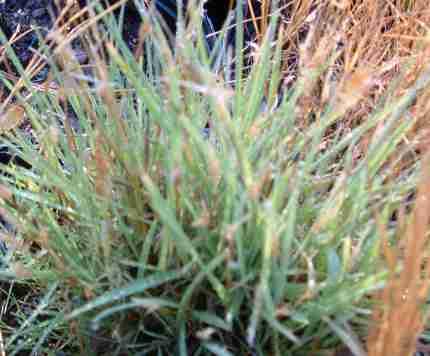
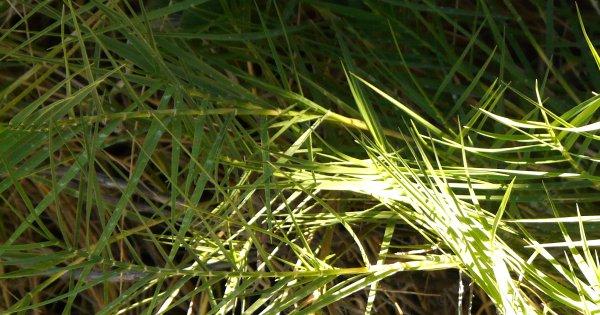
This species looks like bermuda grass and can be treated as such. Use as lawn, for restoration in salt marshes, excellent in parks. It will handle heavy traffic if it is in its element. Gallon plants can be divided into 5-10 divisions and each planted 1-3 feet apart. This var. is the coastal form. There is not a terribly big difference between the coastal and interior form. Both forms will handle regular water or alkaline water. The botanists do not agree on this one, so you best specify a site specific stolon collection. Often Creeping, perennial grass, grows in alkaline, saline areas, such as coastal salt marshes and alkali sinks, possesses rhizomes and sometimes stolons, good utilized in erosion control for these moist saline and alkaline areas. Larval food plant for several species of butterflies (skippers). This species ranges from California, throughout the U.S. souther Canada.(as long a the ground does not freeze deeper than 3-6 inches.)
Distichlis spicata tolerates seaside conditions, alkaline soil, sand, clay and seasonal flooding.
Foliage of Distichlis spicata has color silver and is deciduous.
Flower of Distichlis spicata has color na.
Communities for Distichlis spicata:Alkali Sink, Coastal Salt Marsh and Coastal Strand.
| ph: | 7.00 to 9.00 |
|---|---|
| usda: | 6 to 10 |
| height[m]: | 0.00 to 0.10 |
| width[m]: | 1.00 to 5.00 |
| rainfall[cm]: | 169.00 to 1095.00 |