Ruby-crowned Kinglet, Regulus calendula
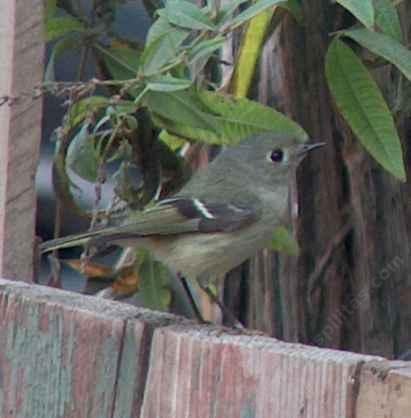
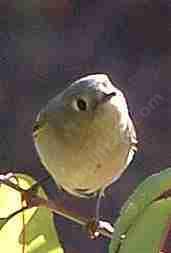
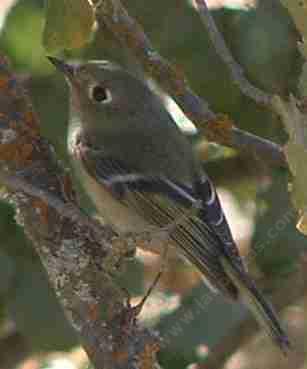
The Ruby-crowned Kinglet looks similar to a goldfinch. However the Ruby-crowned kinglet is more of a solitary bird, not moving in a flock. It also has a rounder body and a less upright posture. The Ruby-crowned Kinglet is also an insect eater, notice its small pointy beak.
Nesting habitat of the Ruby-crowned Kinglet
The Ruby-crowned kinglet builds a nest similar to that of a bushtit. It is a hanging nest usually placed in a conifer. Some of it's favorite nesting locations are lodgepole pine, fir, and Mountain Hemlock.
How to Attract the Ruby-crowned Kinglet to your garden
In the summer the Ruby-crowned Kinglet needs coniferous forest habitats for nesting and feeding. In the winter the Ruby-crowned Kinglet will use all sorts of habitats. In the picture below, a ruby-crowned kinglet hunts for insects in the very dry chaparral of late summer. They will use the birdbath especially if you are near a coniferous forest where they might be hanging out.
Diet of the Ruby-crowned Kinglet
The Ruby-crowned Kinglet eats almost entirely arthropods (insects, spiders, etc.) They also occasionally eat berries and seeds. They catch their insects by gleaning them from foliage, fly catching, or hovering. They may form flocks especially in winter with other insect eating birds.
Habitat/Plant community used by the Ruby-crowned Kinglet
Range of the Ruby-crowned Kinglet
The Ruby-crowned Kinglet spends its winters throughout California in the lower elevations. Moving out of these areas in the summer and moving to the higher elevations. This allows them to take advantage of the fluctuation in insect populations.